
Edge computing deployments often run into a hard constraint: racks are dense, airflow is limited, and link budgets are tight. This article helps network engineers and field technicians decide between DAC and active optical cable (AOC) when building leaf-spine, aggregation, or edge access links. You will get practical tradeoffs tied to real optics specs, switch compatibility, and operational failure modes seen during rollouts.
What DAC and AOC actually do at the physical layer
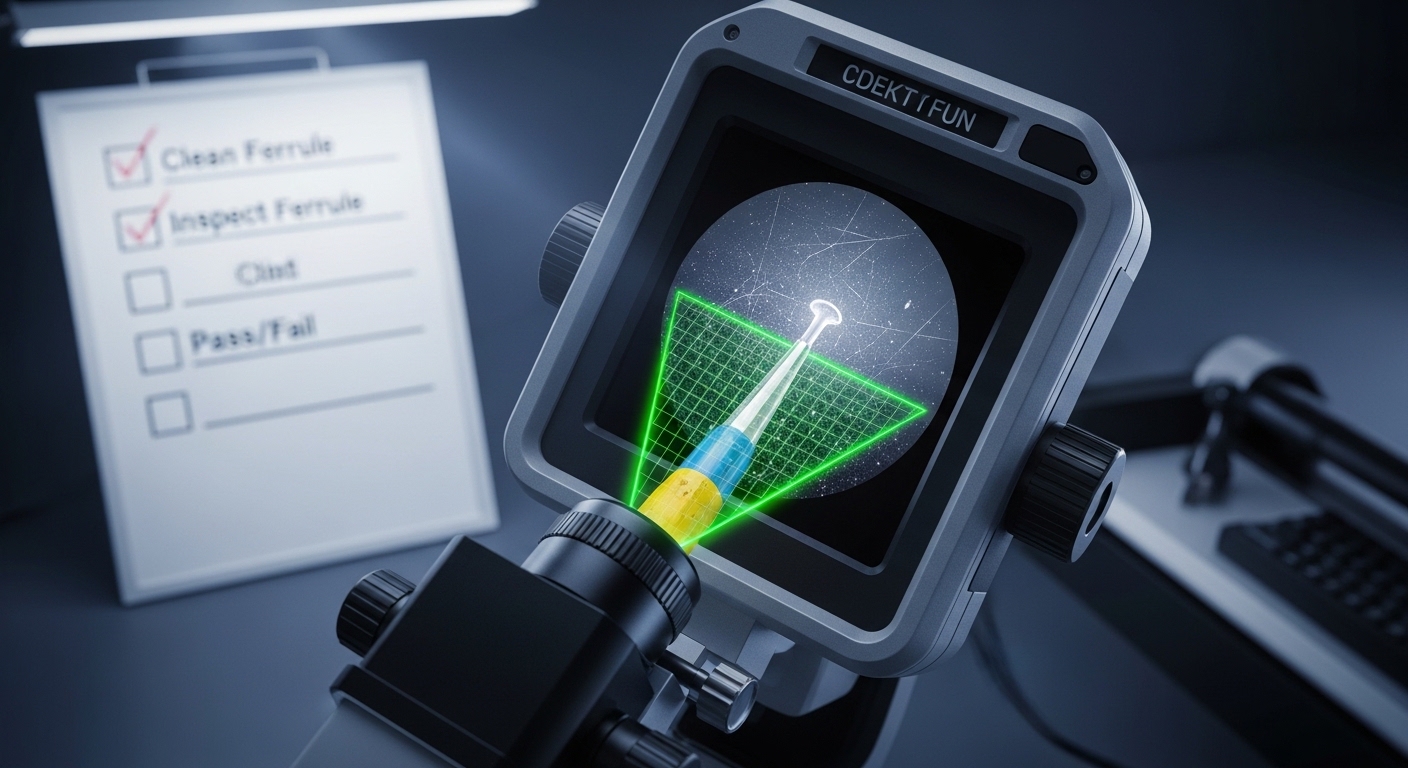
A DAC (direct attach copper) is a copper cable assembly carrying Ethernet signaling over short reach, typically replacing optic transceivers in 10G to 100G ports. An AOC (active optical cable) is a cable with integrated optics that converts electrical signals to optical, then transmits over fiber; it behaves like an optical interface to the switch. In practice, DAC is easiest to plug in and works best within its rated reach, while AOC shifts constraints from copper loss and EMI to optical budget and thermal/connector quality.
At the standards level, both are used to satisfy the link-layer requirements of IEEE 802.3 Ethernet variants (e.g., 10GBASE-SR style optics behavior for optical media, or the equivalent electrical channel behavior for DAC). The key operational distinction is that AOC typically offers better immunity to electromagnetic interference (EMI) and reduces copper-induced attenuation across short-to-medium distances inside harsh cabinets.
Best-fit scenario: Choose DAC for clean, short patching (for example, between a top-of-rack switch and a nearby server or within a single rack) where cable management is controlled. Choose AOC when you must span multiple racks or route through areas with high EMI, such as industrial edge sites, outdoor cabinets, or locations with power electronics.
- DAC pros: Lowest cost per port in short runs; no fiber handling.
- DAC cons: Copper loss and EMI sensitivity; tighter reach ceiling.
- AOC pros: EMI resilience; often easier multi-rack routing.
- AOC cons: Higher cost; fiber cleanliness requirements.
Key specs that decide reach, power, and thermal behavior
Engineers usually start with data rate and reach, then check power, connector type, and operating temperature. DAC channel performance is constrained by copper attenuation, return loss, and crosstalk; AOC performance is constrained by optical transmit power, receiver sensitivity, and fiber attenuation. In edge environments, thermal limits matter because transceivers and cable assemblies sit near power supplies, fans, or variable-temperature enclosures.
| Spec | Typical DAC (10G/25G/40G/100G) | Typical AOC (10G/25G/40G/100G) |
|---|---|---|
| Data rate | 10G, 25G, 40G, 100G (varies by form factor) | 10G, 25G, 40G, 100G (varies) |
| Reach class | 1 m to 10 m (common), sometimes up to ~15 m depending on vendor | 10 m to 100 m+ depending on wavelength and design |
| Wavelength | N/A (electrical copper) | Often 850 nm for short-reach multimode AOC; some use other windows |
| Connector / interface | Direct attach to switch ports (SFP+ / SFP28 / QSFP+ / QSFP28 form factors) | Typically integrated optics with switch-compatible form factor (SFP+/QSFP+/QSFP28) |
| Power | Often lower than pluggable optics; varies by vendor and reach | May consume more than DAC, but can still be competitive vs separate optics |
| Operating temperature | Commonly limited to ~0 to 70 C for many commodity cables; some extended options exist | Often similar baseline; extended industrial versions may support wider ranges |
| EMI resilience | More sensitive to noisy power environments | Typically far better immunity due to fiber transport |
Best-fit scenario: If your edge cabinet forces longer internal routing than DAC tolerates, AOC is often the pragmatic step up. If you are staying within a rack and you want the lowest CAPEX while keeping airflow stable, DAC remains attractive.
For authority on optical Ethernet classes and power budgets, review IEEE 802.3 Ethernet standards portal and vendor datasheets for specific reach and temperature ratings.
Why AOC can win in edge computing: EMI, cabling, and deployment speed
Edge sites frequently include variable electromagnetic noise sources: motor drives, inverters, large power converters, and long grounding runs. DAC copper links can become the weak point because they are susceptible to common-mode noise and crosstalk, especially when cable routing crosses power busbars or runs near high-current cabling. AOC replaces the copper transport segment with optical fiber inside the cable assembly, which typically improves immunity to EMI and reduces the likelihood of marginal eye-diagram failure after physical rework.
During field deployment, technicians also value predictable troubleshooting. With DAC, a bad cable often looks like a link flapping or CRC spike that correlates with movement or re-termination. With AOC, failures more commonly correlate with optical hygiene: dirty connectors, damaged patch segments, or incorrect cleaning procedures. That difference matters because edge teams often have limited time and may not have a robust fiber cleaning workflow.
Best-fit scenario: Choose AOC for edge locations where you must route between cabinets or through noisy electrical zones. Choose DAC when you can keep copper runs short and segregated from power.
- AOC pros: Better EMI tolerance; often smoother cross-rack routing; less sensitive to nearby power equipment.
- AOC cons: Requires fiber connector cleanliness discipline; higher unit cost.
- DAC pros: Faster to deploy in short runs; fewer fiber handling steps.
- DAC cons: EMI and attenuation can become unpredictable after cabinet changes.
Compatibility and DOM: operational reality with switch vendors
Compatibility is not just “does it light up.” Many modern switches expect specific electrical characteristics, and some platforms enforce transceiver authentication or require vendor-specific optics behavior. DAC and AOC assemblies are usually offered in vendor-agnostic versions, but the safest approach is to verify support lists and test with your exact switch model and firmware. DOM (digital optical monitoring) matters for AOC because optical power and temperature telemetry can help you catch degradation early.
Field teams often log symptoms like “link up but unstable” or “high BER under load.” For AOC, DOM can reveal low received power, rising temperature, or drift that precedes complete failures. For DAC, telemetry may exist depending on the form factor, but it is less directly tied to optical power budgets.
Pro Tip: If you are standardizing cables across multiple edge sites, require that AOC assemblies expose DOM telemetry (TX power, RX power, and temperature) and that your monitoring system can alert on trending degradation, not just thresholds. In the field, many “mystery outages” are preceded by slowly falling optical power that you would never notice with binary link status.
Cost and ROI: CAPEX, failure modes, and total cost of ownership
DAC is typically cheaper per port than AOC, especially when you can keep runs short and avoid recabling. In many enterprise and industrial edge builds, DAC might land around $20 to $80 per link for 10G-class short assemblies, while AOC often costs more, commonly $60 to $200+ depending on reach, data rate, and temperature grade. For higher speeds like 40G and 100G, these ranges increase substantially, and price spreads depend heavily on whether the vendor offers extended temperature and tested platform compatibility.
ROI depends on more than purchase price. AOC may reduce truck-rolls and minimize recurrence of “marginal link” incidents in EMI-heavy cabinets, lowering labor and downtime cost. DAC can be cost-effective when the environment is stable and cable routing is disciplined, but it can become expensive if you repeatedly re-seat connectors, troubleshoot CRC bursts, or replace failing assemblies after cabinet modifications.
Best-fit scenario: If your edge sites have consistent thermal and EMI conditions, DAC can be the economical default. If conditions vary across sites or you expect frequent hardware rework, AOC often pays back through reduced operational risk.
- DAC TCO risk: higher likelihood of marginal performance under EMI or longer-than-rated routing.
- AOC TCO risk: higher unit cost and potential for failures due to connector contamination.
Always include spares and plan for lifecycle handling. For AOC, enforce cleaning kits and inspection procedures; for DAC, enforce bend-radius discipline and strain relief.
Selection checklist: a field-engineer decision sequence for DAC vs AOC
Use this ordered checklist to avoid common selection mistakes. It is designed for edge deployments where you must balance compatibility, physical routing constraints, and operational maintainability.
- Distance and reach margin: Choose a rated reach that includes a conservative margin for routing complexity and connector handling.
- Data rate and port form factor: Confirm the switch port type (SFP+, SFP28, QSFP+, QSFP28) and the transceiver electrical class.
- Switch compatibility: Validate with your switch model and firmware; check vendor interoperability notes and optics support matrices.
- DOM and monitoring needs (AOC): If you require telemetry for proactive maintenance, confirm DOM support and accessible monitoring via your platform tooling.
- Operating temperature: Compare the cable assembly’s rated range with your enclosure profile; extended industrial grades may be required for outdoor cabinets.
- EMI environment: If cables cross or run near high-current power electronics, lean toward AOC.
- Vendor lock-in risk: Prefer assemblies with clear documentation and predictable behavior; if you must use OEM, price spares early.
- Maintenance workflow: If your team can enforce fiber cleaning discipline, AOC becomes easier to manage; if not, DAC may be operationally safer.
Common Mistakes / Troubleshooting
Even experienced teams make repeatable errors. Below are concrete failure modes with likely root causes and practical fixes, drawn from typical edge deployments.
Mistake 1: Buying DAC for a distance that only barely fits
Root cause: Copper attenuation and return loss degrade margin under real routing (tight bends, imperfect seating, additional patching). The link may appear stable during install but fail under temperature swings or load.
Solution: Recalculate against the vendor’s stated maximum reach, then add margin. If you are near the limit, switch to AOC or shorten the physical path.
Mistake 2: Running DAC alongside noisy power cabling without segregation
Root cause: EMI couples into the copper channel, causing CRC errors, link flaps, and performance collapse during power switching events.
Solution: Reroute cables away from power busbars and inverters, improve grounding and cable shielding practices, or migrate that segment to AOC for optical isolation.
Mistake 3: Treating AOC like copper and skipping connector hygiene
Root cause: Dirty or damaged optical interfaces reduce received power, increasing bit error rate until the link becomes unstable or fails completely.
Solution: Implement a fiber cleaning standard: inspect endfaces, clean with approved methods, and replace damaged connectors. Use DOM to verify RX power is within vendor thresholds.
Mistake 4: Ignoring DOM and not alerting on trends
Root cause: Operators watch only link up/down, missing gradual optical degradation. By the time the link drops, the edge site may already be in degraded service.
Solution: For AOC with DOM, configure alerts on TX/RX power and temperature trends. Correlate with environmental data (cabinet temperature, fan failures).
FAQ
When should I choose DAC over AOC at the edge?
Choose DAC when the run is short, stable, and within the vendor’s maximum reach with comfortable margin, and when you can keep copper routing away from high-current EMI sources. DAC is also simpler if your operations team does not have a mature fiber cleaning workflow.
What is the main advantage of AOC for edge computing?
The most consistent advantage is improved EMI immunity because the optical path isolates the signal from copper noise. AOC also often supports better monitoring options via DOM, enabling predictive maintenance when your platform reads telemetry.
Do I need DOM for AOC to be useful?
No, links can work without telemetry, but DOM becomes valuable for reliability engineering. If you operate many edge sites, DOM lets you detect degradation early and reduce downtime by acting before hard failures.
Can DAC be used across multiple racks?
Typically no, unless you are still within the DAC’s rated reach and have excellent cable management and EMI control. If you need multi-rack routing, AOC is often the safer design choice.
Why does an AOC link sometimes work initially and then fail after rework?
Rework often introduces connector contamination or slight damage to endfaces, which reduces optical power. Clean and inspect the connectors after any handling, and use DOM to confirm that RX power remains above the minimum operating threshold.
Are third-party DAC or AOC cables reliable for production?
They can be, but reliability depends on compatibility testing with your exact switch models and firmware, plus consistent manufacturing quality. For production edge networks, require documentation, run acceptance tests, and standardize on vendors that provide clear temperature and reach specifications.
In edge deployments, the decision between DAC and AOC is about more than reach: it is EMI tolerance, monitoring capability, and how your team maintains physical links over time. If you want a next step, review optics monitoring.
Author bio: I have deployed Ethernet interconnects in edge and data center environments, validating optics and cable assemblies against vendor limits and switch telemetry. My work focuses on measurable link margin, thermal/EMI interactions, and field-ready troubleshooting workflows.
