
When AI training and inference burst across clusters, optical links become the hidden budget lever. This guide helps network and facilities engineers predict cost implications before they buy transceivers, upgrade fiber, or touch switch optics. You will get pragmatic selection criteria, a real deployment scenario with numbers, and troubleshooting patterns that prevent expensive rework.
Why AI optical upgrades change the cost implications equation
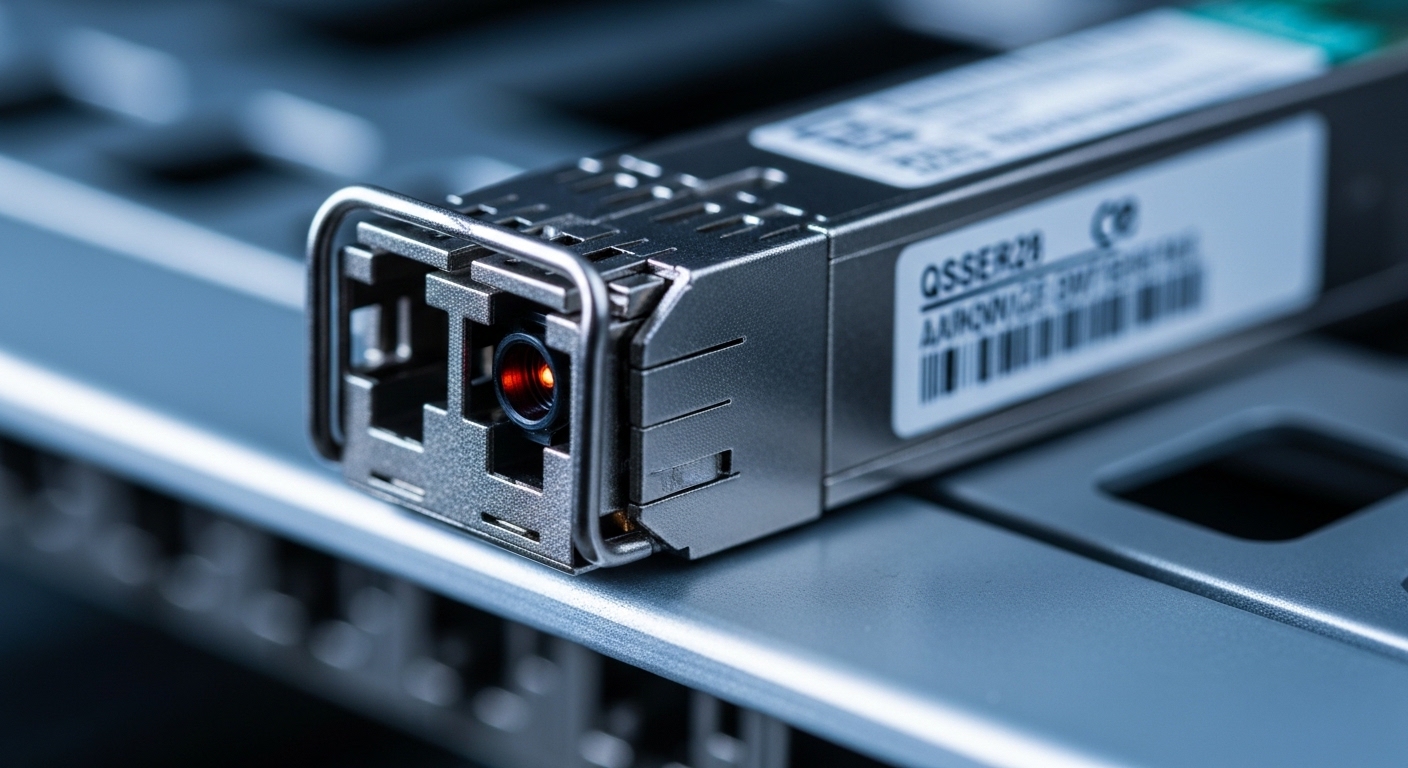
AI workloads shift traffic from steady east-west flows to spiky, synchronized phases: dataset staging, gradient exchange, and checkpoint writes. That pattern stresses link utilization, optics count, and power draw, making per-port transceiver cost and lifecycle cost both matter. In practice, the “cheapest” optics can become the most expensive after you factor in spares, downtime risk, and compatibility constraints with switch vendor optics firmware.
Two cost centers dominate: (1) acquisition cost of modules and optics-friendly optics, and (2) operational cost from cooling, power, and field failures. For high-density leaf-spine fabrics, a single upgrade wave can add hundreds of optics and several hundred watts of heat, so thermal margins influence whether you must upgrade airflow or rack cooling. For authority on baseline Ethernet link behavior and optics classes, see [[EXT:https://standards.ieee.org/standard/802_3 IEEE 802.3]] and vendor module datasheets such as Cisco QSFP-10G-SR datasheet and [[EXT:https://www.itu.int/rec/T-REC-G.652/en ITU-T G.652]] for fiber context.
Spec-first planning: reach, wavelength, power, and connector reality
AI fabrics often move from 25G/100G to 50G/200G and from 100G to 400G per lane, depending on GPU generation and switch silicon. Your cost implications hinge on whether you can reuse existing singlemode fiber (SMF) or must replace multimode fiber (MMF), and whether the optics match your plant’s attenuation and dispersion. Always validate link budgets using the fiber plant measured values, not just “typical” specs.
Typical module families you will see in upgrades include 10G SFP+ SR, 25G SFP28 SR, 50G/100G SR4 or FR4, and 400G QSFP-DD SR8 or DR4. Example part numbers you can compare during procurement include Cisco SFP-10G-SR (10GBase-SR), Finisar FTLX8571D3BCL (10GBase-ER class examples vary by code), and FS.com optics such as FS SFP-10GSR-85 (reach and temperature class vary by SKU). Treat every SKU as unique; reach claims depend on lane rate, encoding, and vendor calibration.
| Optics type | Typical wavelength | Target data rate | Connector | Reach class (typ.) | DOM support | Operating temp (typ.) | Power (order-of-magnitude) |
|---|---|---|---|---|---|---|---|
| 10GBase-SR SFP+ | 850 nm | 10 Gbps | LC | ~300 m MMF | Yes (2-wire I2C) | 0 to 70 C (commercial) or -40 to 85 C (extended) | ~0.8 to 1.5 W |
| 25GBase-SR SFP28 | 850 nm | 25 Gbps | LC | ~70 m (OM3) / ~100 m (OM4) class | Yes | 0 to 70 C or -40 to 85 C | ~1 to 2 W |
| 100GBase-SR4 QSFP28 | 850 nm | 100 Gbps | LC | ~100 m (OM4) class | Yes | 0 to 70 C or -40 to 85 C | ~3 to 6 W |
| 400G QSFP-DD DR4 | 1310 nm | 400 Gbps | LC | ~500 m (SMF class) | Yes | -5 to 70 C or wider (depends on vendor) | ~12 to 20 W |
For Ethernet optical link behavior, the baseline physical layer expectations align with IEEE 802.3 families, while transceiver electrical interfaces and management follow vendor implementations of standard digital optics monitoring patterns. For fiber attenuation and grading, use [[EXT:https://www.itu.int/rec/T-REC-G.651/en ITU-T G.651]] and [[EXT:https://www.itu.int/rec/T-REC-G.652/en ITU-T G.652]] for SMF baselines, and consult ISO/IEC and TIA guidance for OM grades via your fiber vendor documentation.
Pro Tip: In field audits, the “DOM mismatch” cost is often underestimated. Even when optics work electrically, a switch may reject modules due to vendor identification or specific threshold defaults. Before you scale procurement, validate DOM readout and alarm thresholds on a single port, then run 24-hour BER/PCS health checks during a realistic traffic burst window.
Real deployment scenario: AI leaf-spine with measurable cost drivers
Consider a 3-tier data center leaf-spine topology with 48-port 10G ToR switches upgraded to 25G uplinks, supporting a GPU cluster of 320 GPUs. The design uses 2 leaf layers and 4 spine switches, each leaf providing 16 uplinks. In the first wave, you replace only uplinks and keep existing MMF for short reach. Each leaf needs 16 transceivers, so across 24 leaves you purchase 384 optics, plus spares for 10 percent coverage.
The cost implications show up in three places. First, power: if you move from 10G SFP+ (~1 W) to 25G SFP28 (~1.8 W), that is roughly (0.8 W × 384) = 307 W additional electrical load, which converts into cooling demand. Second, compatibility: if the chosen optics require a specific switch firmware release to pass diagnostics, you may incur a maintenance window and rollback risk. Third, failure rates: third-party optics sometimes exhibit higher infant failure, so your spares and RMA handling become recurring TCO expenses.
Selection checklist: how engineers minimize cost implications
Use this ordered decision list during design and procurement. The aim is to avoid “optics churn,” where you buy one batch, discover incompatibility, then replace under time pressure.
- Distance and plant loss: Verify measured attenuation per link, including patch cords. Use OTDR traces and connector loss budgets; do not rely on vendor reach alone.
- MMF vs SMF strategy: If you have OM4, SR optics may be cheapest per port. If you need longer reach or expansion, DR/FR optics on SMF can reduce future fiber retrofit costs.
- Switch compatibility and optics policy: Confirm whether the switch enforces vendor ID whitelisting. Check your switch release notes and optics support matrix.
- DOM and management behavior: Ensure digital optics monitoring reads correctly and that alarm thresholds map to your NOC tooling. Validate I2C access and event reporting.
- Operating temperature and derating: For aisle hot spots, prefer modules with extended temperature ranges and validate derating curves if provided in datasheets.
- Vendor lock-in risk: Compare OEM lead times and pricing versus third-party or compatible optics. Include RMA logistics and warranty terms.
- Power and cooling impact: For 400G-class optics, watt differences can be meaningful. Convert electrical watts into estimated cooling overhead based on your facility efficiency assumptions.
- Spare strategy and MTTR: Buy a spare pool sized to your historical failure rate and expected maintenance windows. Faster swaps reduce downtime cost.
When you compare modules, keep the optics family consistent. For example, SR optics at 850 nm typically use LC connectors and MMF; DR optics at 1310 nm often use SMF with different link engineering. Mixing families inside a rack can also complicate spares and troubleshooting workflows.
Common pitfalls and troubleshooting patterns (with fixes)
Optical upgrades fail in repeatable ways. Below are concrete failure modes you can recognize quickly on the floor.
“It links up, but performance is unstable”
Root cause: Link budget marginality due to connector contamination, patch cord aging, or underestimated insertion loss. At higher lane rates, small losses can push the receiver toward its sensitivity floor.
Solution: Clean connectors with approved procedures, inspect with an optical microscope, and re-measure using a calibrated light source and power meter. If available, run vendor diagnostics for BER/eye or PCS errors during a traffic burst.
“Transceiver not recognized / DOM alarms flood”
Root cause: Switch optics compatibility policy rejecting modules due to identification fields, or firmware expecting a specific DOM threshold profile.
Solution: Update switch firmware within the supported window, then validate DOM readout on a single port before scaling. Capture transceiver diagnostics (temperature, bias, received power) and compare against vendor threshold guidance.
“Random link drops after thermal cycling”
Root cause: Operating outside temperature range, or poor thermal contact in a high-density cage. Some high-power optics (especially 400G-class) can be sensitive to airflow patterns.
Solution: Verify front-to-back airflow constraints, check rack fan status, and confirm module temperature telemetry. If needed, adjust cable routing to restore unobstructed airflow and replace modules with extended temperature variants.
“Reach is shorter than expected during expansion”
Root cause: Plant renovations added patch cords or changed fiber grade, shifting effective reach. The new patch path may include additional connectors and splices.
Solution: Recompute budgets per physical path and update documentation. Standardize patch cord lengths and connector types for future growth.
Cost & ROI note: what budgets actually feel like
Typical pricing varies by generation, quantity, and warranty terms, but a practical range for budgeting looks like this: 10G SFP+ SR often lands in the tens of dollars to low hundreds per module depending on OEM vs compatible sources; 25G SFP28 SR and 100G QSFP28 SR4 move higher; 400G QSFP-DD optics can be several hundred to several thousand dollars each depending on DR vs SR and vendor.
OEM modules may cost more upfront, yet their reliability and switch certification can reduce operational churn. Third-party optics can lower acquisition cost, but the ROI depends on your RMA handling capacity and the failure curve. In TCO terms, the biggest hidden spend is often downtime and labor: an RMA cycle plus a maintenance window can outweigh the module price gap, especially when you operate in tight change windows.
FAQ
Q: How do I estimate cost implications before buying optics?
Start with a bill of materials that includes module quantity, spares (commonly 5 to 15 percent depending on risk tolerance), and expected maintenance windows. Then add power and cooling overhead estimates from module wattage deltas and convert into facility cost using your utility and PUE assumptions.
Q: Are compatible or third-party transceivers always cheaper in practice?
They are often cheaper per unit, but the true cost depends on switch compatibility, warranty terms, and RMA logistics. Validate on a single port for DOM and diagnostics, then run a controlled traffic test before scaling.
Q: What DOM or telemetry details should NOC teams log?
At minimum, log temperature, transmitter bias/current, laser output power, receiver power, and any alarm flags exposed through your telemetry stack. Map these to actionable thresholds so you can predict degradation rather than react to hard link failures.
Q: If we already have MMF, should we still consider SMF upgrades for AI?
It depends on reach needs and future expansion. If your current OM grade and patching strategy already meet budgets with margin, SR optics can minimize cost. If you anticipate longer intra-fabric distances or rapid growth, SMF with DR optics can reduce later retrofit costs.
Q: What is the most common reason optics upgrades require rework?
The most common reasons are connector cleanliness, inaccurate link budgets, and switch optics policy incompatibility. Treat physical layer hygiene and compatibility testing as part of the procurement process, not a post-install cleanup.
Q: How should we size our spare optics pool?
Use your historical failure rate, maintenance window length, and criticality. For many enterprise fabrics, field teams target a small but intentional spare pool so replacements happen within hours, not days.
Upgrading optical networks for AI is less about chasing a spec sheet and more about managing the cost implications across compatibility, power, reach, and operational risk. Next, map your current fiber plant and switch optics policy using optical transceiver compatibility so your next procurement wave arrives without surprise churn.
Author bio: I design and operate high-availability network fabrics, validating optics with measured link budgets, DOM telemetry, and maintenance workflows in production data centers.
Author bio: My focus is resilient scaling: fewer outages, predictable TCO, and automation-friendly troubleshooting grounded in IEEE expectations and vendor datasheets.
