
If you are planning Open RAN and optical upgrades in the same budget cycle, the biggest risk is paying twice: once for hardware, then again for rework caused by reach, power, and thermal mismatches. This article helps network and reliability engineers run a practical cost analysis across Open RAN integration decisions and optical transport components. You will get spec-level tradeoffs, field-tested troubleshooting, and a selection checklist that aligns with ISO 9001 thinking around repeatable quality and measurable outcomes.
Where optical integration changes the cost model in Open RAN
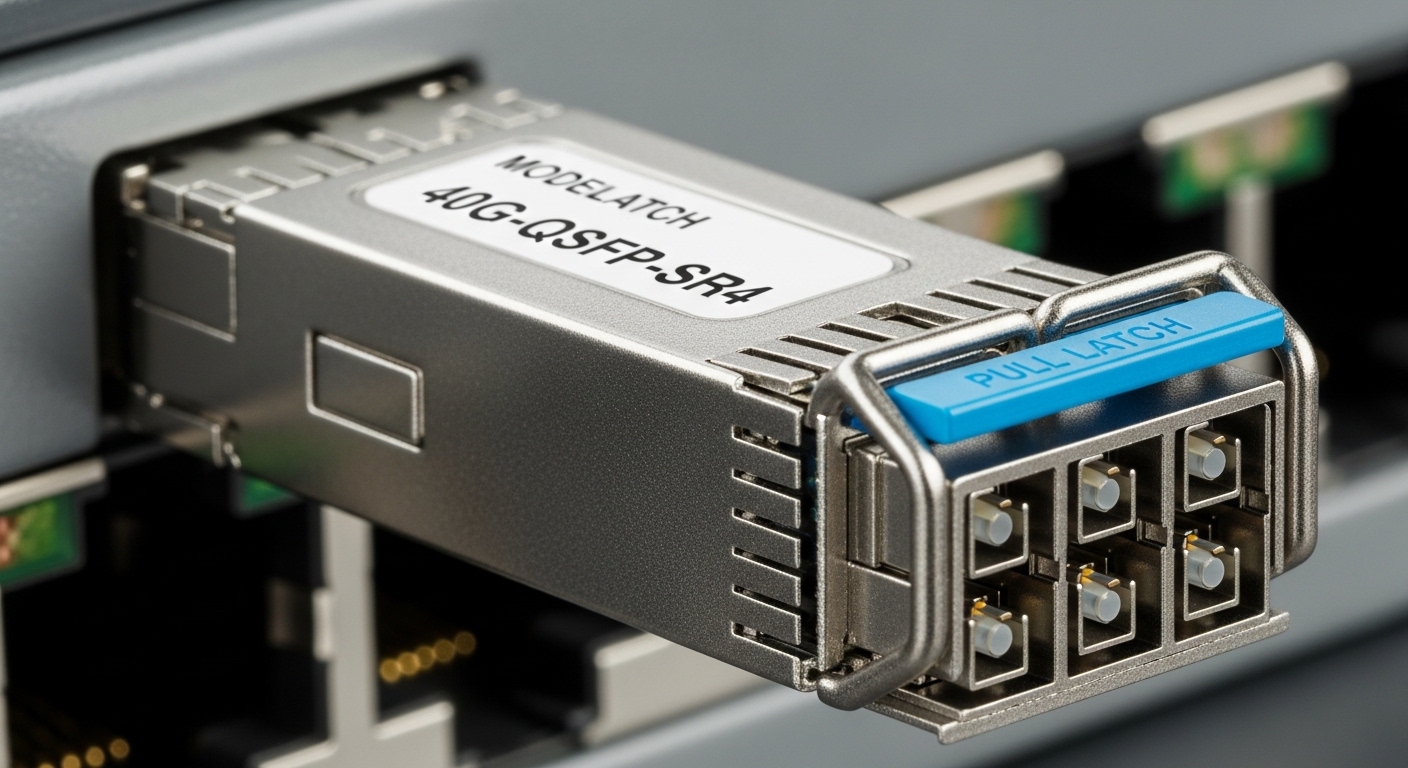
In many radio access networks, Open RAN functionality is split across the DU and CU, with fronthaul and midhaul carried over fiber using defined line rates and latency budgets (often using Ethernet-based transport). Optical choices influence not only the bill of materials, but also spares strategy, power consumption, and the probability of link bring-up delays. For reliability teams, the cost analysis must include failure rate drivers like connector contamination, optical power margin, and thermal derating in outdoor cabinets.
Practically, the integration cost shifts from “module price per port” to “system readiness per site.” A typical operator rollout might include multiple sites with different fiber plant quality, different ambient temperatures, and different vendor implementations of optics and optics management. That means your cost analysis should track: (1) optics and optics management costs, (2) installation and testing labor, (3) spares and warranty terms, and (4) environmental qualification effort for the enclosure.
Operational metrics to include in your cost analysis
To keep the analysis auditable, capture these as measurable inputs before you compare options. Many teams track them in spreadsheets, but the key is repeatability and traceability.
- Optical link margin: measured receive power (dBm) at commissioning and after temperature stabilization.
- Latency budget: end-to-end fronthaul latency including serialization and any intermediate switching.
- Environmental conditions: cabinet temperature range, airflow assumptions, and dust exposure.
- MTBF assumptions: vendor-stated reliability plus your own field return data.
- Turn-up time: time to first light, time to stable link, and number of truck rolls.
Optical transport options: what to compare before you price it
Open RAN deployments are sensitive to wavelength plan, reach class, and power consumption. Your optics must align with the switch or line card optics (SFP/SFP+/QSFP/QSFP-DD/CFP2 types), and also with the optical standards used by the transport layer. For cost analysis, you want apples-to-apples comparisons that include both transceiver specs and system behaviors like DOM support and link monitoring.
Practical spec comparison for common short-reach and extended-reach choices
The table below gives a realistic comparison set for engineers who need to compare options quickly. Exact part numbers vary by vendor, but the reach and power class are what usually drive both TCO and operational risk.
| Parameter | 10G SR (850 nm) | 25G SR (850 nm) | 10G LR (1310 nm) | 100G SR4 (850 nm) |
|---|---|---|---|---|
| Typical data rate | 10.3125 Gbps | 25.78125 Gbps | 10.3125 Gbps | 103.125 Gbps (4 lanes) |
| Wavelength | 850 nm | 850 nm | 1310 nm | 850 nm |
| Reach class (typical) | Up to 300 m on OM3 | Up to 400-500 m on OM3/OM4 | Up to 10 km on single-mode | Up to 100 m on OM4 (often) |
| Connector | LC duplex | LC duplex | LC duplex | LC (4-lane module, MPO/MTP variants possible) |
| Typical optical power (class) | Low single-digit dBm range | Low single-digit dBm range | Higher launch power typical | Higher aggregate power; lane-level optics |
| DOM / diagnostics | Common: yes (vendor dependent) | Common: yes (vendor dependent) | Common: yes (vendor dependent) | Common: yes (vendor dependent) |
| Operating temperature | Often -5 to 70 C or wider | Often -5 to 70 C or wider | Often -5 to 70 C or wider | Often -5 to 70 C or wider |
| Where it fits | Short fronthaul in controlled cabinets | Higher capacity short reach | Longer fiber runs between DU/CU sites | High-density aggregation in racks |
For standard references, anchor your requirements to IEEE Ethernet optical specifications and vendor datasheets. Common starting points include IEEE 802.3 family references for optical transceivers and reach classes, and the vendor module datasheets for compliance details. See [Source: IEEE 802.3] and [Source: vendor SFP/QSFP datasheets]. For example, many integrators reference specific module families like Cisco SFP-10G-SR, Finisar FTLX8571D3BCL, and FS.com SFP-10GSR-85 when mapping compatibility and DOM behavior to their switches.
Pro Tip: In cost analysis, do not treat DOM as a “nice to have.” When Open RAN monitoring is tied to alarms (laser bias, temperature, receive power), modules without compatible diagnostics often force you into manual troubleshooting workflows, which increases truck rolls and erodes the savings from buying a cheaper transceiver.
Quantifying total cost of ownership for Open RAN plus optics
A credible cost analysis uses a TCO model with at least three time horizons: procurement, commissioning, and operations over 3 to 7 years. OEM optics can reduce compatibility friction, while third-party optics can reduce upfront cost, but the reliability and integration effort may shift to your side. For ISO 9001-style control, ensure every cost line item is traceable to a policy, measurement method, or supplier contract term.
A sample TCO model engineers can adapt
Below is a practical structure you can reuse. Use your site count and your labor rates.
- Hardware CAPEX: transceiver/module price, optics management licenses (if any), and spare modules inventory.
- Installation OPEX: time for cleaning, termination, labeling, and testing; costs for OTDR or inline loss verification.
- Commissioning OPEX: time to achieve stable link and meet latency and BER targets.
- Reliability OPEX: replacements, RMA handling time, and downtime costs based on MTBF and observed field returns.
- Energy cost: power draw per module and cooling impact; even small deltas add up at scale.
Realistic price ranges to ground the analysis
Pricing varies by region and contract volume, but typical ranges for planning often look like this (ballpark values): OEM-grade optics can be 1.2x to 2.0x the price of comparable third-party modules. For example, a short-reach 10G SR module might be budgeted in the tens of dollars to around a low-hundreds range depending on brand and warranty tier; 25G and 100G modules can increase substantially. The key is not the exact number, but the ratio and the risk adjustments you apply for compatibility and operational support.
When you compare vendors, include warranty length (for example 3 years vs 5 years), RMA turnaround time, and whether the supplier provides a measurable reliability statement. If you lack field data, you can still model risk using conservative return rates and allocate contingency for commissioning failures.
Selection criteria checklist for cost and reliability
This ordered checklist is what teams should use to decide under time pressure while keeping the decision defensible during audits and supplier negotiations. It is intentionally optimized for Open RAN integration work where both optics and transport behavior matter.
- Distance and fiber type: confirm OM3/OM4 grades for SR and verify single-mode run loss for LR; do not rely on “planned” distances.
- Switch and line-card compatibility: validate optics type and vendor compatibility matrix; confirm supported transceiver IDs and DOM format.
- DOM and monitoring requirements: ensure receive power and temperature telemetry map into your NMS and alarm thresholds.
- Operating temperature and thermal derating: confirm module temperature range and cabinet airflow; include worst-case summer conditions.
- Budget vs integration effort: if third-party optics lack consistent DOM behavior, add labor and testing costs to the cost analysis.
- Warranty and RMA terms: price the downtime and truck-roll probability, not just the module price.
- Vendor lock-in risk: consider multi-vendor sourcing strategy and define acceptable alternates for each optics type.
- Standards alignment: ensure compliance to relevant IEEE 802.3 optical expectations and match vendor datasheet parameters.
Common mistakes and troubleshooting in the field
These are failure modes that frequently appear during Open RAN turn-up and optical integration. Each includes the root cause and a solution that reliability engineers can execute quickly.
“Link up, but performance fails” after temperature stabilization
Root cause: optical power margin is too tight, and the link degrades as module temperature rises; some modules also drift differently under enclosure thermal profiles. Solution: measure receive power at commissioning and after a controlled thermal soak; adjust optics choice or reduce path loss (clean connectors, re-terminate, or change reach class).
Sporadic LOS alarms caused by connector contamination
Root cause: dust or micro-scratches on LC/MPO interfaces; SR modules are especially sensitive in high-density patching environments. Solution: enforce a connector cleaning SOP (inspection microscope, cleaning cards, correct lint-free wipes), replace suspect jumpers, and document each cleaning event for auditability.
DOM alarms not matching thresholds, causing false positives or missed failures
Root cause: DOM telemetry scaling differs across vendors, or the switch expects specific diagnostic interpretation. Solution: validate telemetry mapping during acceptance testing; update alarm thresholds and confirm that laser bias and RX power units are interpreted correctly.
Incompatibility between switch optics and transceiver firmware behavior
Root cause: some platforms enforce transceiver vendor constraints or require specific EEPROM fields; the link may initialize slowly or fail during resets. Solution: test with the exact target switch models and firmware versions; maintain a compatibility matrix and require supplier proof for EEPROM/ID behavior.
Concrete deployment scenario: where the numbers show up
Consider a 3-tier data center leaf-spine topology supporting an Open RAN deployment: 48-port 10G ToR switches connect to aggregation switches, and each site backhauls DU traffic over fiber to a regional CU. Suppose you deploy 120 DU connections across 10 sites, each needing two redundant fronthaul paths, and each path uses two optics for redundancy on the switch side and patching side. In a typical commissioning window, you might aim for under 2 hours per site for optical verification, including cleaning, OTDR checks, and stable link validation.
In this scenario, optics choice affects both labor and downtime. If a third-party module saves $40 per unit versus OEM but causes even one extra truck roll over a 7-year horizon, the cost analysis flips quickly because a truck roll and rework can exceed the savings by an order of magnitude. Meanwhile, if OEM optics reduce bring-up variance and provide reliable DOM telemetry, you reduce mean time to restore and improve audit defensibility for your quality system.
FAQ
How do I start a cost analysis when Open RAN and optics are procured separately?
Build a combined TCO spreadsheet where each optics decision is tied to a specific DU/CU transport path and switch model. Include commissioning labor and planned spares, not just unit price, and require a BOM-to-port mapping so you can audit assumptions.
Are third-party optics always cheaper, and are they always risky?
They are often cheaper upfront, but the risk depends on compatibility and diagnostics behavior. If DOM and EEPROM fields behave differently, you may pay back the savings via integration time, extra testing, and higher failure handling costs.
What should I verify about temperature range for Open RAN optical modules?
Confirm the module operating temperature range and validate it against the enclosure airflow and cabinet ambient extremes. In the field, thermal soak and post-soak link tests are the fastest way to detect margin problems early.
Which standards and sources should I cite in procurement requirements?
Use IEEE 802.3 references for Ethernet optical expectations and rely on vendor datasheets for power, reach, and DOM specifications. For quality documentation, keep supplier statements as traceable evidence and align acceptance tests with those requirements. anchor-text: IEEE 802.3 standards portal
How do I estimate reliability impact using MTBF in cost analysis?
Use vendor reliability claims only as a starting point, then incorporate your field return rates and RMA turnaround time. For a conservative model, assume a higher replacement probability during the first year if your integration process is new or you change module vendors.
What is the fastest troubleshooting path when fronthaul links flap?
Start with connector inspection and cleaning, then check receive power and temperature telemetry. If DOM is unavailable or mismapped, temporarily add a known-good module to isolate whether the issue is optical path loss, module behavior, or switch compatibility.
Update date: 2026-05-03.
Author bio: I am a QA and reliability engineer who has supported optical bring-up for carrier-grade networks, focusing on measurable link margin, thermal validation, and audit-ready evidence trails. I also build MTBF-informed TCO models that help teams choose optics with fewer commissioning surprises and lower total cost of ownership.
Next step: apply the checklist to your current BOM and validate optics compatibility before you lock procurement by reviewing optical transceiver compatibility testing.
