
In machine-vision lines, a single optics mismatch can turn stable inspection into intermittent faults. This article helps field engineers and integrators selecting Cognex optics (and compatible SICK vision transceivers) for industrial Ethernet, fiber runs, and camera-to-controller links. You will get practical selection criteria, measured operational limits, and troubleshooting patterns you can apply during commissioning.
Where machine-vision optics fail: latency, reach, and link stability
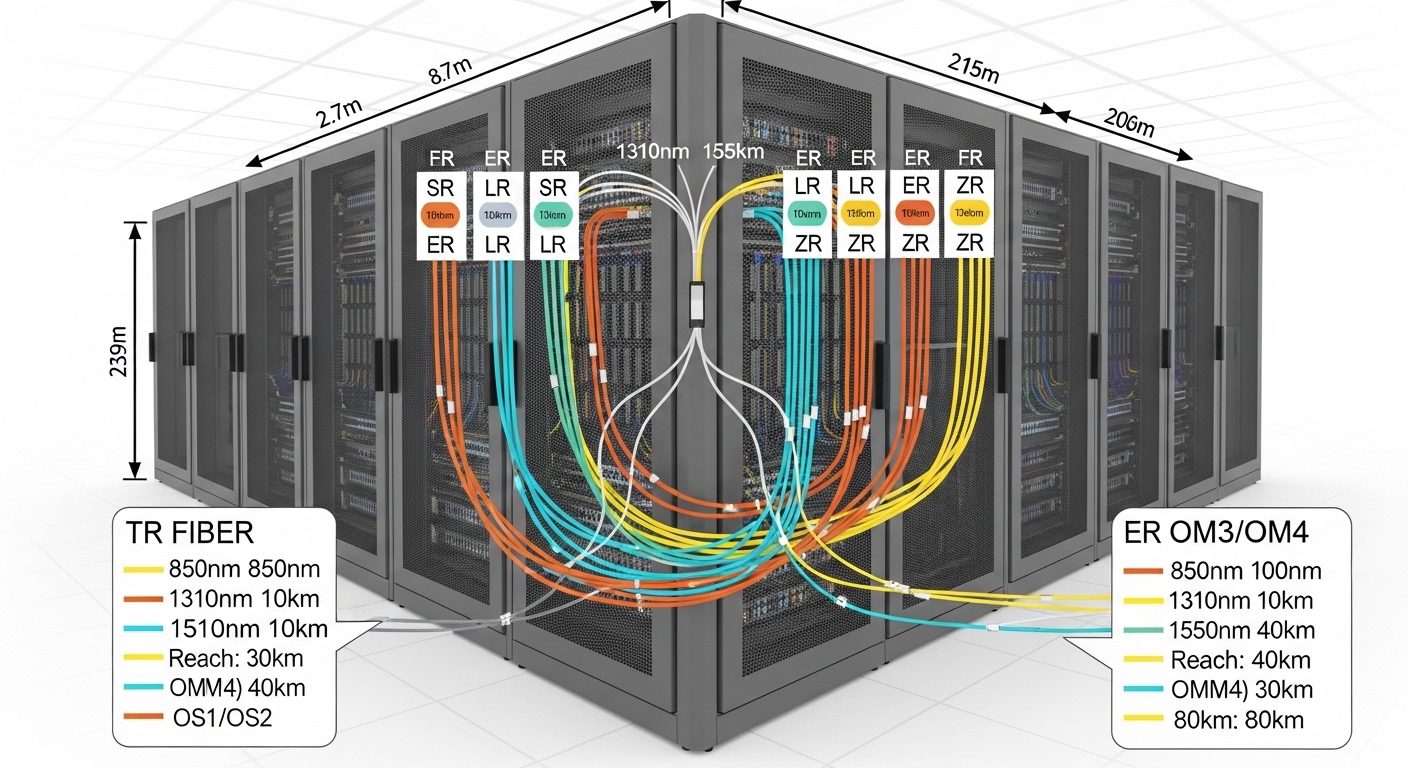
Vision systems often run at the edge: cameras capture, preprocess, and trigger inspection against a controller. When you extend connectivity over fiber, you replace electrical timing uncertainty with optical power budgets, connector losses, and transceiver lane/laser behavior. In practice, most “optics problems” are actually budget problems: insufficient receive power, excessive connector contamination, or a transceiver that is not matched to the expected wavelength and fiber type. For integrators, the result is a link that trains intermittently, then drops under temperature swings on the plant floor.
What to verify before you buy Cognex optics
Start with the interface type the vision device expects and the network topology. Many machine-vision deployments use industrial Ethernet over fiber (often 1000BASE-X/SFP-class or 10G-class depending on camera bandwidth), plus deterministic timing requirements from the control layer. Then verify the optical parameters: wavelength (typically 850 nm for multimode short reach or 1310 nm for single-mode), fiber core type (OM3/OM4 multimode vs OS2 single-mode), and the connector style (LC is common). Finally, confirm transceiver support for the switch or media converter behavior in your rack; some industrial switches are strict about link partner capabilities.
Pro Tip: If your machine-vision line shows link flaps only after warm-up, check DOM-reported laser bias current and temperature drift. Several third-party modules will still “link up” but violate the host’s timing expectations during thermal stabilization, causing intermittent CRC bursts that your monitoring system may misclassify as traffic congestion.
Key optical specifications for SICK and Cognex transceivers
Even when the data rate matches, optical reach depends on launch power, receiver sensitivity, fiber attenuation, and the insertion loss of each mated connector. For industrial environments, also account for vibration, frequent maintenance, and dust exposure around machine cells. When planning a fiber run, do not rely on nominal reach alone; use an engineering budget that includes splices, patch panels, and worst-case connector loss after re-termination.
Typical SFP/SFP+ style parameters you must match
Below is a representative comparison for short-reach multimode and longer-reach single-mode optics commonly used with industrial media converters and switch uplinks. Exact part numbers vary by vendor and camera/controller platform, but the matching logic is consistent: wavelength, fiber type, and reach class must align with your fiber plant.
| Transceiver class (example) | Wavelength | Target fiber type | Nominal reach | Connector | Tx/Rx power class | Operating temperature | Typical use in vision cells |
|---|---|---|---|---|---|---|---|
| SFP-10G SR (multimode) | 850 nm | OM3/OM4 | ~300 m (OM4) | LC | Tx up to a few dBm; Rx sensitivity roughly -8 to -10 dBm class | -5 to 70 C (varies by model) | Camera-to-controller within a machine bay |
| SFP-10G LR (single-mode) | 1310 nm | OS2 | ~10 km | LC | Tx higher; Rx sensitivity roughly -12 to -14 dBm class | -5 to 70 C (varies) | Line-side uplinks to the cell network |
| 1G SX (multimode) | 850 nm | OM2/OM3/OM4 | ~550 m (OM2) to 1 km (OM3) | LC | Tx/Rx values depend on SFP family | -5 to 70 C | Legacy vision links and media conversion |
When you select Cognex optics specifically, treat the transceiver like a calibrated component: confirm the exact form factor (SFP vs SFP+ vs QSFP), data rate, and optical profile. If your system documentation specifies a particular wavelength and fiber type, follow it even if a “compatible” part looks close on a distributor page.
Standards and authority references
For electrical and optical behavior of common transceiver families, engineers often reference IEEE Ethernet PHY behavior and vendor datasheets. IEEE 802.3 defines the Ethernet PHY requirements for fiber-based links; transceiver modules implement those optical PHY specs. For optical transceiver interfaces and diagnostics, also consult vendor datasheets and transceiver MSA-style documentation as referenced by module manufacturers.
IEEE 802.3 and SNI A may help with broader optical and storage-related context, while individual OEM datasheets remain the source of truth for your exact Cognex optics and SICK transceiver models. Use [Source: IEEE 802.3] as your baseline for PHY expectations, and [Source: vendor datasheets] for optical budget and DOM details.
Decision checklist: selecting Cognex optics that actually link
Integrators succeed when they treat optics selection as a compatibility engineering task, not a catalog exercise. Use the ordered checklist below during procurement and commissioning.
- Distance and fiber plant loss: Measure or calculate end-to-end attenuation including splices and patch cords; include worst-case connector loss after rework.
- Wavelength and fiber type: Match 850 nm multimode to OM3/OM4, and 1310 nm single-mode to OS2; do not “assume” because the connector fits.
- Data rate and form factor: Confirm the vision link uses the same transceiver family your switch or media converter expects (SFP vs SFP+ vs QSFP).
- Switch and media converter compatibility: Validate link partner behavior (some industrial switches have stricter auto-negotiation and diagnostic policies).
- DOM support: If your management stack expects digital optical monitoring, verify the module exposes temperature, bias current, and received power in the expected format.
- Operating temperature and power budget: Industrial cells can exceed ambient spec during summer; ensure the transceiver supports your enclosure thermal profile.
- Vendor lock-in risk: For Cognex optics, consider whether the host firmware or QA process flags non-OEM modules; pilot test before a full rollout.
Real-world deployment scenario
In a 3-tier plant network supporting machine vision, an integrator deployed 12 inspection cells across two production halls. Each cell contained 6 cameras feeding a local edge controller via fiber, using 10G SR optics over OM4 from the machine bay to a hardened aggregation switch. The average fiber run was 85 m with 6 mated LC connectors and 3 mechanical splices. During commissioning, one cell experienced link drops only after the enclosure warmed from 24 C to 41 C: the root cause was a third-party module with weaker receiver sensitivity margins, combined with slightly higher connector insertion loss from an earlier re-termination. Replacing the module with a Cognex optics-matched transceiver and re-polishing the LC ends restored stable links without changing higher-layer configuration.
Common pitfalls and field troubleshooting for machine-vision optics
Optics troubleshooting is faster when you separate optical-layer causes from configuration and traffic causes. The patterns below are common in SICK and Cognex machine-vision deployments using fiber transceivers.
Pitfall 1: Wrong fiber type that still “seems to work”
Root cause: Using an 850 nm multimode transceiver on a fiber run labeled as OM2/OS2 or with mixed patch leads can produce low margin links that fail under temperature or after connector re-mating. Multimode launch conditions differ from single-mode; the modal distribution can collapse unpredictably.
Solution: Verify fiber type with OTDR or documented certification records. Clean and re-terminate LC connectors using lint-free wipes and proper alcohol, then re-test with an optical power meter at the receiver interface.
Pitfall 2: Connector contamination and intermittent CRC bursts
Root cause: Industrial environments generate airborne particulates; a contaminated LC endface can create sporadic attenuation spikes. You may see link flaps or CRC error counters rising without obvious traffic anomalies.
Solution: Inspect with a fiber microscope, clean both ends, and confirm insertion loss reduction. If you use patch panels, also check the panel ports; failures often repeat on the same rack locations.
Pitfall 3: DOM expectations mismatch between host and transceiver
Root cause: Some vision controllers or media converters expect DOM fields to conform to a particular mapping; third-party modules may report different thresholds or scaling. The link can remain up while the host flags faults, or it can flap during thermal ramp.
Solution: Compare DOM readings from the working module versus the replacement: temperature, bias current, and received power. If thresholds differ, swap the optics to a module verified for the specific host platform.
Pitfall 4: Budget calculations ignore worst-case splice and patch loss
Root cause: Engineers often use “typical” connector loss and assume splices are near zero. In the field, splices can be higher after rework, and patch cords can be older or damaged.
Solution: Use conservative values in your engineering budget. If you have no certification, assume higher loss and test with a margin policy: target at least 3 to 6 dB additional receiver headroom for industrial reliability.
Cost and ROI: OEM vs third-party optics in vision networks
Pricing varies by data rate, reach class, and whether you require OEM-specific compatibility. As a practical range, common 1G and 10G SFP/SFP+ modules can differ significantly: OEM-branded Cognex optics may cost roughly 1.5x to 3x more than third-party compatible optics, depending on availability and temperature grade. Third-party modules can reduce upfront capex, but they can increase commissioning time due to DOM and compatibility validation.
TCO should include the cost of downtime during production line commissioning, the labor time for fiber cleaning and re-termination, and the failure rate under thermal cycling. In my experience, the ROI flips when you have high rework rates or strict uptime requirements: paying more for optics that behave predictably with the host can be cheaper than repeated truck rolls. If you standardize on a single module family and validate it with your vision controllers and SICK media converters, you reduce both operational risk and spare inventory complexity.
FAQ: Cognex optics and SICK vision transceiver selection
What fiber type should I use with Cognex optics for machine vision?
Match the transceiver wavelength to the fiber plant: 850 nm optics typically use OM3/OM4 multimode, while 1310 nm optics use OS2 single-mode. If your documentation specifies a reach class, follow it and validate with measured link loss rather than relying on nominal specs. related topic
Can I use third-party optics with SICK or Cognex equipment?
Often yes, but compatibility is not guaranteed. The biggest risks are DOM behavior, receiver sensitivity margins, and host platform policies. Always pilot-test the exact transceiver model in the same enclosure and temperature conditions before scaling.
How do I troubleshoot link drops that happen only after warm-up?
Check DOM temperature and bias current, and compare received power against a known-good module. Then inspect connectors and patch cords for marginal contamination or insertion loss that becomes worse as components warm. If the receiver margin is tight, replace with a transceiver that matches the required optical budget with additional headroom.
What connector and cleaning method do industrial teams standardize on?
LC connectors are common for SFP/SFP+ optics; standardize on a fiber cleaning workflow using microscope inspection, lint-free wipes, and appropriate cleaning tools for your connector type. Record which ports fail repeatedly and treat those patch panel locations as maintenance hotspots.
Do I need DOM support for all machine-vision links?
Not always, but it becomes valuable when you want proactive maintenance. If your operations stack reads DOM thresholds for alarm generation, verify that the module exposes compatible diagnostics. Without DOM, you may only notice issues after packet loss or link flaps.
Where can I confirm the Ethernet PHY requirements for these optics?
Use IEEE 802.3 for the baseline PHY behavior and then rely on vendor datasheets for the optical parameters and diagnostics. For practical deployment, always validate with your host switch, media converter, and the exact fiber run measurements.
If you align wavelength, fiber type, reach budget, and DOM/host compatibility, Cognex optics deployments for SICK and machine-vision links become predictable and serviceable. Next, review your fiber plant documentation and run a pilot with the selected transceiver family using measured margins; then standardize via related topic.
Author bio: I am a telecom engineer specializing in 5G transport and industrial fiber networks, with hands-on commissioning experience using DWDM, SDH, and PON-to-enterprise interconnects. I write field-focused guidance on optical transceiver selection, DOM diagnostics, and link-budget validation for high-availability deployments.
