
Edge sites move traffic fast, but they also punish bad optics choices. This article helps network and IT leaders select SFP modules that match distance, temperature, and switch behavior, while keeping total cost predictable. You will get a practical checklist, real deployment numbers from a multi-site rollout, and troubleshooting patterns I have seen in the field.
Edge reality check: why SFP modules fail where cores usually survive
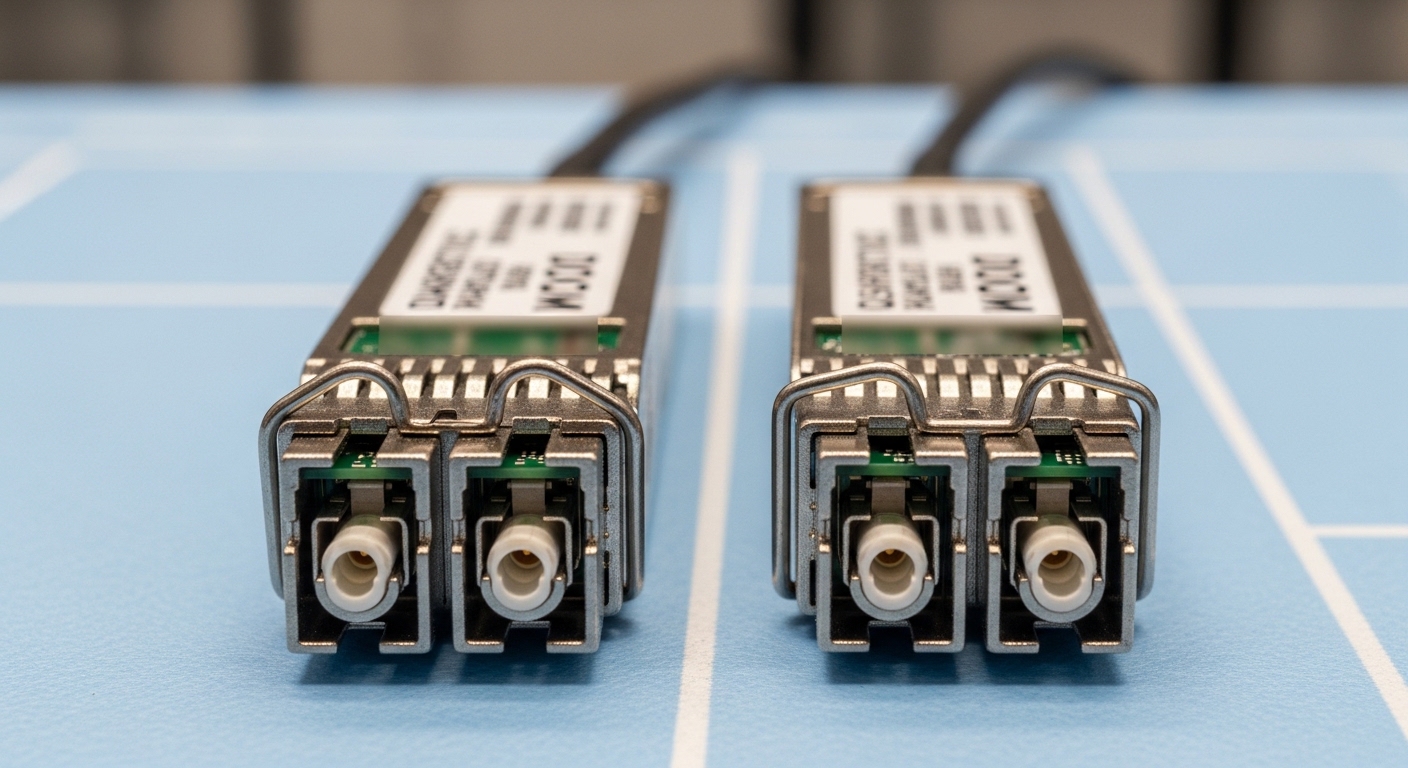
In a central data center, you can often rely on consistent patching, stable power, and controlled airflow. At the edge, you get mixed fiber plant quality, uneven cooling, and long cable runs that were installed by different contractors over time. The result is that an otherwise “compatible” optical module may still underperform due to link budget shortfalls, connector contamination, or DOM misreads.
From an enterprise architecture lens, your edge transceiver selection should standardize on a small set of known-good optics profiles that work across switch models. From a governance lens, you need buying guardrails: approved vendor list, optical safety expectations, and operational verification steps before you ship modules to remote sites.
What standards actually matter at the edge
Most Ethernet links using SFP modules follow IEEE 802.3 physical layer definitions for the data rate and signaling. For example, 10GBASE-SR and 10GBASE-LR rely on specific wavelength bands and receiver sensitivity requirements; the exact optics behavior is still governed by the module datasheet and your switch transceiver implementation. For fiber cabling, ANSI/TIA-568 and related cabling practices strongly influence attenuation and link reliability.
Practically: you must treat optics as a system. The module spec is only half the story; the other half is your fiber plant, patch panel cleanliness, and the switch’s ability to tolerate the module’s transmit power and internal biasing profile.
Key SFP module specifications that decide link budget and compatibility
When we evaluate SFP modules for edge rollouts, we start with a “fit for purpose” table: data rate, wavelength, reach, connector, optical power class, and operating temperature. Then we validate that the switch supports the module type (including whether it requires specific vendor behavior).
| Spec | Common Example | Why it matters for edge |
|---|---|---|
| Data rate | 10G (10GBASE-SR / 10GBASE-LR) | Determines switch port compatibility and optics class |
| Wavelength | 850 nm (SR) or 1310 nm (LR) | Controls fiber attenuation and dispersion behavior |
| Reach | SR: up to ~300 m on OM3; LR: up to ~10 km on SMF | Sets link budget and expected margin for older fiber |
| Connector | LC duplex (typical) | Directly affects patch panel compatibility and cleaning workflow |
| DOM support | Digital Optical Monitoring (Tx/Rx power, temperature) | Enables monitoring and early failure detection |
| Operating temperature | Commercial vs extended (example: -5C to 70C vs -40C to 85C) | Edge enclosures often exceed comfortable lab ranges |
| Tx power / receiver sensitivity | Per datasheet for each module SKU | Determines whether your fiber plant still supports the link |
For concrete reference, I have deployed modules such as Cisco SFP-10G-SR, Finisar FTLX8571D3BCL (10GBASE-SR class), and FS.com SFP-10GSR-85 in different edge environments. Exact performance depends on the module SKU and the switch’s transceiver verification behavior. Always confirm the datasheet for wavelength, reach, and DOM readouts.
Measured edge tolerance: temperature and enclosure airflow
Edge cabinets frequently run warmer than expected. A common failure pattern is a module that works during bench testing but degrades after weeks in a hot enclosure. Extended temperature optics reduce this risk, but they do not fix contaminated connectors or insufficient link margin.
In one rollout, we replaced commercial-temperature optics with extended-temperature SKUs at six sites. Link errors dropped materially, and we also gained safer DOM telemetry for early warning (temperature rising patterns before link flaps).
Comparison: SR vs LR SFP modules for edge deployments
Your fiber type and distance usually decide whether you choose SR (short reach) or LR (long reach). For edge, the decision is often “what fiber do we actually have,” not “what is theoretically available.” If you have OM3/OM4 multimode, SR optics can be cost-effective. If you have single-mode or need to span longer distances, LR optics reduce the risk of running out of reach.
SR 850 nm vs LR 1310 nm: a practical selection view
SR typically uses 850 nm and is popular for data center and many edge LAN segments. LR uses 1310 nm and supports longer spans on single-mode fiber (SMF). Both can be excellent, but only if you match them to your fiber type and patching realities.
| Feature | 10GBASE-SR (850 nm) | 10GBASE-LR (1310 nm) |
|---|---|---|
| Typical fiber | OM3 or OM4 multimode | Single-mode fiber |
| Connector | LC duplex (typical) | LC duplex (typical) |
| Reach expectation | Commonly hundreds of meters (depends on OM grade) | Commonly up to around 10 km (depends on link budget) |
| Edge fit | Great for campus-like segments and nearby buildings | Great when fiber runs are long or consolidated |
| Main risk | Multimode plant aging and patch loss | Bad SMF splices, connector contamination, or wrong fiber type |
| DOM usefulness | High value for monitoring temperature and power | High value for long-haul link stability |
Pro Tip: Before you buy, pull one live link’s optical budget from your switch counters and then verify fiber loss with a handheld light meter or OTDR sample where available. In many edge sites, the “true” margin problem is not the module—it is patch panel loss plus connector contamination that eats the margin you thought you had.
Real-world edge scenario: leaf-spine access at 12 remote sites
In a 3-tier architecture with access switches at the edge, we rolled out 10G uplinks from 48-port ToR switches to aggregation devices across 12 remote sites. Each site had two uplinks using 10GBASE-SR over OM3 multimode, with an average run distance of 180 m including patch panels and a small number of mechanical splices. We standardized the module family to reduce variance and required DOM telemetry to be visible in our monitoring stack.
Operationally, field engineers cleaned LC connectors using lint-free wipes and isopropyl alcohol, then validated link stability by watching interface error counters for 30 minutes after each change. Within the first month, two sites showed intermittent link drops; the root cause was not the module SKU. It was a batch of patch cords with inconsistent attenuation and one connector that had micro-scratches from repeated reuse.
After we enforced a connector inspection policy and limited module variants to those with predictable DOM behavior, the remaining incidents fell sharply. The ROI came from fewer truck rolls and fewer replacements, not from small unit price differences.
Selection criteria checklist for buying SFP modules
Use this decision checklist to avoid surprises in edge environments. I recommend scoring each candidate module against these factors before purchase approvals.
- Distance and fiber type: Confirm OM3/OM4 vs SMF, measure or estimate total loss, and include patch panel and splice losses.
- Switch compatibility: Verify the switch model’s supported optics list and transceiver verification behavior. Some platforms are stricter than others.
- DOM support and monitoring: Ensure Tx/Rx power and temperature are readable and map cleanly into your monitoring tools.
- Operating temperature range: Prefer extended temperature optics for cabinets that exceed typical lab conditions.
- Power and thermal budget: Check module power draw and how it affects switch thermal headroom at full density.
- Vendor lock-in risk: Compare OEM modules versus third-party modules by reliability history, not only purchase price.
- Connector and patch ecosystem: Match LC duplex vs other connector types and confirm your patch cord standards.
- Warranty and RMA workflow: Edge sites need fast replacements; ensure RMA terms fit your field operations.
OEM vs third-party: how governance protects ROI
OEM modules are typically more expensive, but they can reduce compatibility risk and simplify procurement approvals. Third-party modules can deliver strong value, especially when their DOM behavior and specifications align with the switch’s expectations. The governance move that protects ROI is to test a small pilot batch per switch model, then lock the approved SKU list.
For authority, consult IEEE 802.3 physical layer requirements and vendor datasheets for the specific module SKU. Examples include [Source: IEEE 802.3], and vendor documentation for optics reach and DOM behavior via [Source: Cisco SFP documentation] and [Source: Finisar optical module datasheets].
anchor-text:IEEE 802.3 physical layer requirements
anchor-text:Cisco SFP module documentation
anchor-text:Finisar optics datasheet hub
Common mistakes and troubleshooting tips in the field
Even experienced teams can get trapped by edge-specific failure modes. Here are the mistakes I have seen most often, with root cause and fixes.
Wrong fiber type or mismatched patching
Root cause: SR optics installed into a path that is actually single-mode, or the reverse, sometimes due to label drift after renovations. The link may light up briefly but becomes unstable under load or after temperature changes.
Solution: Verify fiber type at the patch panel, then trace the run end-to-end. Use OTDR or a fiber tester where feasible, and confirm connector cleanliness before swapping modules again.
DOM readings exist but monitoring shows “flatlines”
Root cause: The module’s DOM implementation may not map cleanly to your switch telemetry pipeline, or the switch might require specific DOM behavior. Teams then assume the module is healthy while it is actually drifting out of spec.
Solution: Validate DOM fields on a lab bench or staging site with the exact switch model. Confirm Tx power, Rx power, and temperature values are populated and have realistic ranges.
Link flaps after cleaning, but not during bench tests
Root cause: Connector micro-damage or patch cord attenuation variability. In edge locations, repeated handling and vibration can worsen already marginal connections.
Solution: Inspect connectors with magnification if available, and replace patch cords in the affected batch. Standardize on a single patch cord type and enforce cleaning before every insertion.
“It works now” but errors rise over weeks
Root cause: Thermal stress on commercial-temperature optics, or aging of multimode plant loss beyond the original link margin.
Solution: Move to extended-temperature optics and re-evaluate link margin with updated attenuation measurements. Use DOM temperature trends to catch early drift.
Cost and ROI note: what you should budget for SFP modules
Pricing varies widely by data rate and reach, but for many enterprises the decision is dominated by installed cost: procurement, spares, truck rolls, and downtime risk. OEM modules often cost more per unit, while third-party modules can reduce purchase spend. However, the ROI often flips when you factor failure rate and compatibility friction.
In practical edge deployments, a common TCO model includes: module purchase price, expected lifespan, RMA handling time, and labor for swaps. If an “inexpensive” module causes even a few additional site visits per year, the savings can disappear quickly. We typically budget spares per switch model, and we standardize SKUs so technicians do not carry multiple module types to remote cabinets.
For a realistic approach, pilot both OEM and approved third-party options on one staging edge site. Track link error rates, DOM drift, and RMA outcomes for long enough to capture temperature effects. Then scale based on measured stability, not only unit price.
FAQ: buying SFP modules for edge networks
Which SFP modules are best for edge: SR or LR?
It depends on fiber type and distance. If you have OM3 or OM4 multimode and run lengths are within reach with margin, SR is usually cost-effective. If you use SMF or need longer spans, LR reduces risk of running out of distance.
Do SFP modules need to match the switch brand exactly?
Not always, but compatibility is switch-specific. Some platforms are more strict about transceiver identification and DOM behavior. The safest approach is to verify the switch’s supported optics list and validate DOM telemetry in a pilot.
What is DOM, and why should edge teams care?
DOM, or Digital Optical Monitoring, exposes Tx power, Rx power, and temperature through the switch. In edge sites, DOM helps you detect drift before links fail, which reduces downtime and truck rolls. It also supports governance by enabling consistent monitoring thresholds.
How do I estimate whether my link budget has margin?
Start with your module datasheet receiver sensitivity and minimum Tx power, then subtract measured or estimated fiber attenuation plus patch and splice losses. If you cannot measure, build in conservative margin for older plants and re-validate after installation. OTDR sampling can quickly reveal unexpected loss hotspots.
What causes intermittent link drops even when the interface shows “up”?
Common causes include connector contamination, patch cord attenuation variability, and thermal stress. Another frequent issue is wrong fiber type or marginal link margin that only fails under higher utilization or temperature swings. Use DOM and interface error counters together to narrow root causes.
Are third-party SFP modules worth it for edge rollouts?
Often yes, if you enforce an approved SKU list and run a pilot per switch model. The key is not the brand; it is repeatable compatibility and predictable DOM behavior. When governance is strong, third-party optics can deliver real ROI.
If you want a clean path from pilot to scale, start by creating an approved SFP modules list tied to switch models, fiber types, and temperature requirements, then validate with DOM and error counters. Next, align your spares and RMA workflow with your edge operations using spares-and-rma-governance-for-edge-networks.
Author bio: I am an IT director who has led multi-site edge migrations and standardized optics procurement with measurable uptime and reduced truck-rolls. I focus on enterprise architecture, optical governance, and practical ROI from pilot to production.
