
Budgeting 800G transitions: who should use this
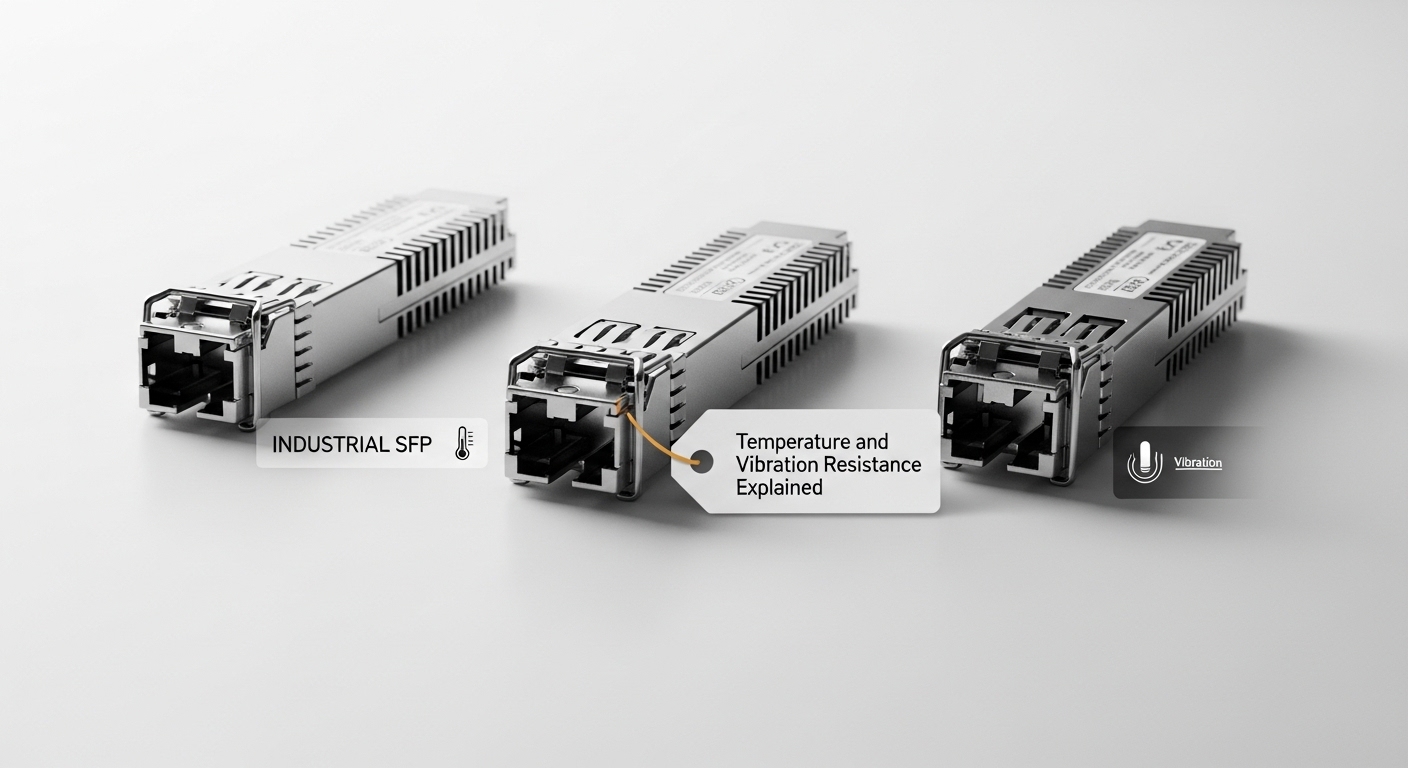
Upgrading to 800G transitions often fails not because optics do not work, but because budgets are built on guesswork. This article helps network owners, architects, and field teams create a cost estimate they can defend to finance and procurement. You will get a step-by-step implementation guide, a realistic TCO model, and troubleshooting inputs tied to operational realities.
Prerequisites for a defensible 800G cost estimate
Before you price anything, lock the scope and measurement approach. The goal is to quantify not only line card optics, but also installation labor, spares, test time, and any rework caused by compatibility issues. If you are missing any prerequisite below, your estimate will likely drift during procurement.
Define the exact transition footprint
Write down the port count and topology where the 800G transitions will occur. Example: “16 leaf switches, each with 48 server-facing ports and 24 spine-facing ports, transitioning spine links to 800G.” Then compute total required ports and plan for oversubscription or growth. Include a spares policy target such as 2% extra optics and 1 spare fanout module per cabinet group.
Expected outcome: a port matrix that totals “working optics ports,” “spare optics ports,” and “test ports.”
Identify optics standard and reach class
800G optics are not interchangeable by wavelength or interface type. Determine whether you are using 800G FR4 (e.g., 2 km class with MPO/MTP), 800G SR8 (short reach with MMF), or 800G DR8 (longer reach with SMF). Then map each link distance to a reach class and connector type; this prevents the classic “budgeted for SR8, installed for FR4” mismatch.
Expected outcome: a link-by-link table that classifies each path into a specific optics SKU family.
Confirm switch compatibility constraints
Vendor switching platforms often enforce optics constraints through EEPROM ID checks, DOM thresholds, and supported vendor lists. Validate that your target platform supports the planned optics type at the needed speed and FEC mode. For example, many 800G systems rely on vendor-defined electrical interface mapping and may require specific transceiver firmware/compatibility modes.
Expected outcome: a compatibility result set: supported optics part numbers, acceptable vendor ranges, and any required firmware baseline.
Collect field operational inputs
Budgeting must include real work: rack access time, fiber cleaning and test, and change windows. Use your last two transceiver rollouts to measure average labor hours per link, including cleaning, insertion, optical power verification, and rollback readiness. If you can, record values like “minutes per MPO termination check” and “minutes per channel power verification.”
Expected outcome: a labor model that uses measured minutes rather than generic estimates.
Cost model for 800G transitions: modules, labor, and risk
The most accurate budgeting approach separates costs into four buckets: optics hardware, installation services, validation/testing, and risk buffers. This structure also helps when procurement asks why a “small” optics line item is paired with a larger services line.
Build a bill of materials (BOM) with spares and test gear
Create a BOM per optics reach class and per connector type. Include: active transceivers (e.g., 800G SR8 or FR4 modules), any required breakout or fanout cabling, patch panels, cleaning supplies, and test consumables. If you rely on third-party optics, include a line item for additional verification time and potential higher RMA handling.
Expected outcome: a BOM that totals “net required optics,” “spares,” and “consumables.”
Use realistic price bands and calculate spares impact
Pricing varies by vendor, reach, and whether you buy OEM or third-party. As a practical budgeting range (not a quote), many enterprises see OEM 800G optics pricing often several hundred to over a thousand USD per module depending on reach and market cycles, while qualified third-party modules can be materially lower but may increase validation and RMA probability. Spares can be expensive: if you buy 2% spares on 2,000 optics, that is 40 additional modules—enough to affect budgets more than expected.
Expected outcome: a hardware cost estimate with explicit spares assumptions.
Add labor and validation time using operational metrics
Field installation varies with cable management and cabinet density. Use your measured minutes per link from Step 4, then apply multipliers for change windows and rollback readiness. Validation should include optical power verification, DOM readout checks, and link bring-up verification. If your process includes cleaning and inspection, add a time factor for microscope-based inspection and re-termination if needed.
Expected outcome: labor and validation costs with a defensible time basis.
Include risk buffers tied to compatibility and lead times
Risk is not a generic “10%.” Tie it to known failure modes: optics compatibility rejects, DOM mismatch, or fiber cleaning defects that cause intermittent loss. Also include lead-time risk: if your optics supplier has a 6 to 10 week lead time, your buffer should cover expedited shipping and potential temporary workarounds.
Expected outcome: a risk line item with explicit triggers and escalation options.
Technical specs that drive budgeting decisions
Budgeting becomes more accurate when you connect link requirements to specific optics classes and electrical/optical constraints. Engineers typically choose optics based on reach class, fiber type, connector standard, transmit power budget, and operating temperature range. These constraints also influence compatibility and vendor selection.
| Optics class (800G) | Typical wavelength / mode | Reach target | Fiber type | Connector | Operating temperature | Power / budget driver |
|---|---|---|---|---|---|---|
| 800G SR8 | Multi-lane short-reach (MMF) | Short reach (often up to a few hundred meters class) | OM4 / OM5 multimode | MPO/MTP | Commercial or industrial depending on SKU | MMF link loss and launch conditions |
| 800G DR8 | Single-lane long-reach (SMF) | Longer reach class | SMF | LC (varies by platform) or MPO via adapter | Commercial or industrial depending on SKU | SMF attenuation and dispersion tolerance |
| 800G FR4 | Four-wavelength mode (MMF/SMF per spec) | Metro reach class | Often OM4/OM5 for FR4 implementations | MPO/MTP | Commercial or industrial depending on SKU | Modal bandwidth and channel power balance |
For standardization context, consult IEEE 802.3 for 800G Ethernet PHY framework and vendor-specific transceiver behavior. In practice, the budgeting lever is that reach class determines optics cost and also determines whether you need fiber infrastructure changes. If your current fiber plant cannot support the required loss budget, the cost shifts from optics to cabling, spares, and rework labor.
Sources: IEEE 802.3; Cisco transceiver guidance (example PDF).
Pro Tip: In audits, teams often discover that the real cost driver is not the optical module price, but the mismatch between installed fiber plant loss and the transceiver’s assumed launch conditions. If you measure end-to-end link loss and connector cleanliness before ordering, you can prevent a “cheap optics” purchase that later forces expensive re-termination or a switch to a different optics class.
Selection checklist engineers use during 800G transitions budgeting
When finance asks for a single number, engineers still work from a prioritized checklist. Use the ordered factors below to keep your cost model anchored to engineering reality.
- Distance and reach class mapping: verify each link distance, fiber type, and expected loss budget before selecting SR8, DR8, or FR4.
- Switch compatibility and optics ID behavior: confirm supported transceiver families and whether third-party optics require a specific firmware baseline.
- DOM and monitoring support: ensure your platform can read DOM fields you need for NOC alerting and thresholds (Tx/Rx power, temperature, bias).
- Operating temperature and airflow constraints: budget for industrial-rated optics if cabinets run hot, or plan airflow upgrades.
- Connector and polarity plan: confirm MPO/MTP polarity handling, cleaning workflow, and patch panel labeling to avoid costly rework.
- Vendor lock-in risk: quantify the premium for OEM optics versus third-party qualified options, including added validation time and RMA handling.
- Lead time and substitution rules: define acceptable alternates and a fallback plan if a supplier misses delivery dates.
Real-world deployment scenario with measurable cost inputs
Consider a 3-tier data center leaf-spine topology with 48-port 10G ToR switches feeding a spine fabric that is being upgraded to 800G uplinks. You have 8 spine switches, each with 16 uplink ports transitioning to 800G, and you plan a gradual rollout: 4 spine switches in the first wave, then 4 in the second wave. The environment uses OM4 cabling with measured end-to-end link loss averaging 1.8 dB per path excluding patch connectors, with connector loss measured during pre-checks. Your optics plan selects an 800G short-reach class for intra-row links and a metro-reach class for longer spans; you budget 2% spares and 20% extra validation window time for the first wave due to new optics families.
Expected outcome: a two-wave cost curve where the first wave includes higher validation labor, and the second wave benefits from the confirmed compatibility results and cleaned fiber procedures.
Common mistakes during 800G transitions budgeting and troubleshooting tips
Even strong estimates break when assumptions do not match installation conditions. Below are the top failure points teams see, with root cause and corrective action.
Troubleshooting 1: “Port comes up intermittently” after optics install
Root cause: dirty MPO/MTP endfaces, wrong polarity, or damaged ferrules that pass initial inspection but fail under link training. Third-party optics can also be more sensitive to marginal cleanliness due to tighter receiver thresholds.
Solution: re-clean with lint-free wipes and approved cleaning tools, re-check polarity mapping, then perform optical power verification at both ends. If you see repeated errors, replace the patch cords and re-run the link bring-up procedure with a consistent cleaning workflow.
Troubleshooting 2: “DOM reads fail” or monitoring shows zeros
Root cause: transceiver EEPROM access issues, unsupported DOM field sets, or a mismatch between platform firmware and transceiver requirements.
Solution: update switch firmware to the vendor-recommended baseline, confirm transceiver EEPROM compatibility, and validate DOM fields using the platform’s diagnostics commands. If monitoring still fails, test with an OEM optics module to isolate whether the issue is optics-specific or platform-specific.
Troubleshooting 3: “Link never comes up” due to optics type mismatch
Root cause: selecting the wrong reach class for the fiber plant, or using the correct reach class but the wrong connector/adapter scheme (e.g., MPO-to-LC adapter assumptions not matching the switch’s expected interface).
Solution: verify connector compatibility and adapter use, then compare measured loss against the transceiver’s power budget. If the loss is too high, either correct the fiber plant (re-termination and cleaning) or switch to an optics class that matches the link budget.
Cost and ROI note: what to expect in total cost of ownership
Budgets often understate total cost of ownership because they ignore lifecycle costs: spares, RMA handling, validation labor, and potential airflow upgrades for higher power optics. OEM optics may cost more per unit, but they can reduce compatibility engineering time and lower operational risk. Third-party options can reduce upfront spend, yet they may increase testing time and raise the probability of returns if compatibility is not validated early.
ROI typically comes from higher utilization and reduced oversubscription constraints, but it also depends on minimizing downtime during cutover. A realistic TCO model should include at least: optics hardware cost, installation labor hours, test time, spare inventory value, and an explicit risk buffer tied to compatibility and lead time. If your rollout requires re-termination or fiber rebuild, those costs can exceed the optics delta, so pre-check measurements are usually the highest-leverage step.
FAQ
How do I estimate optics cost for 800G transitions without getting surprised later?
Start with a port matrix and split optics by reach class and connector type. Then apply spares and validation time assumptions, and include a risk buffer tied to lead time and compatibility checks. Finally, reconcile your loss measurements with the selected power budget so you do not budget for the wrong optics class.
Is it cheaper to buy third-party 800G transceivers for the transition?
Often it is cheaper on unit price, but you must price the hidden cost: extra validation labor, potential RMA handling, and possible compatibility rework. If you validate compatibility early against your switch firmware baseline, third-party can be cost-effective; if not, OEM may reduce operational risk.
What measurements should I collect before ordering optics?
Collect end-to-end link loss, connector insertion loss, and cleanliness inspection results. Also confirm polarity mapping and patch panel labeling accuracy. These measurements determine whether your chosen reach class is viable and prevent rework costs.
Do I need to budget for firmware updates during 800G transitions?
Yes, budget for firmware alignment because DOM support, optics EEPROM compatibility, and link training behavior can depend on switch software versions. Plan a change window and include rollback readiness, especially for the first wave of cutovers.
How many spares should we buy for a phased rollout?
A common baseline is 1% to 3% spares depending on rollout stage and operational risk tolerance. For the first wave, consider slightly higher spares and extended validation windows because you will learn about your specific fiber plant and compatibility outcomes.
What is the fastest way to reduce cutover risk?
Perform a structured pre-check: fiber loss verification, connector inspection, polarity validation, and optics compatibility testing with a small pilot group. Then standardize your cleaning and insertion workflow so every cabinet follows the same procedure.
By converting engineering constraints into a measurable BOM, labor model, and risk buffer, you can budget 800G transitions with confidence and avoid mid-project scope creep. Next, use related topic to map your fiber readiness plan to the same cost model.
Author bio: Field-focused network consultant specializing in high-speed Ethernet migrations, optics compatibility validation, and operational cutover planning. Hands-on experience deploying 10G to 800G transitions across data center fabrics with measurable fiber and DOM verification workflows.
