
When supply shortages hit optical components, leaf-spine fabrics and metro links can stall not because the design is wrong, but because the specific transceiver and fiber plant cannot be delivered on time. This article helps network engineers, data center operations leads, and procurement teams choose practical mitigation steps for SFP, SFP+, QSFP+, and QSFP28 optics without sacrificing link stability. You will get actionable selection criteria, a troubleshooting checklist, and a realistic cost-and-risk view grounded in IEEE link requirements and vendor datasheets.
Why supply shortages break optical designs (and where they show up first)
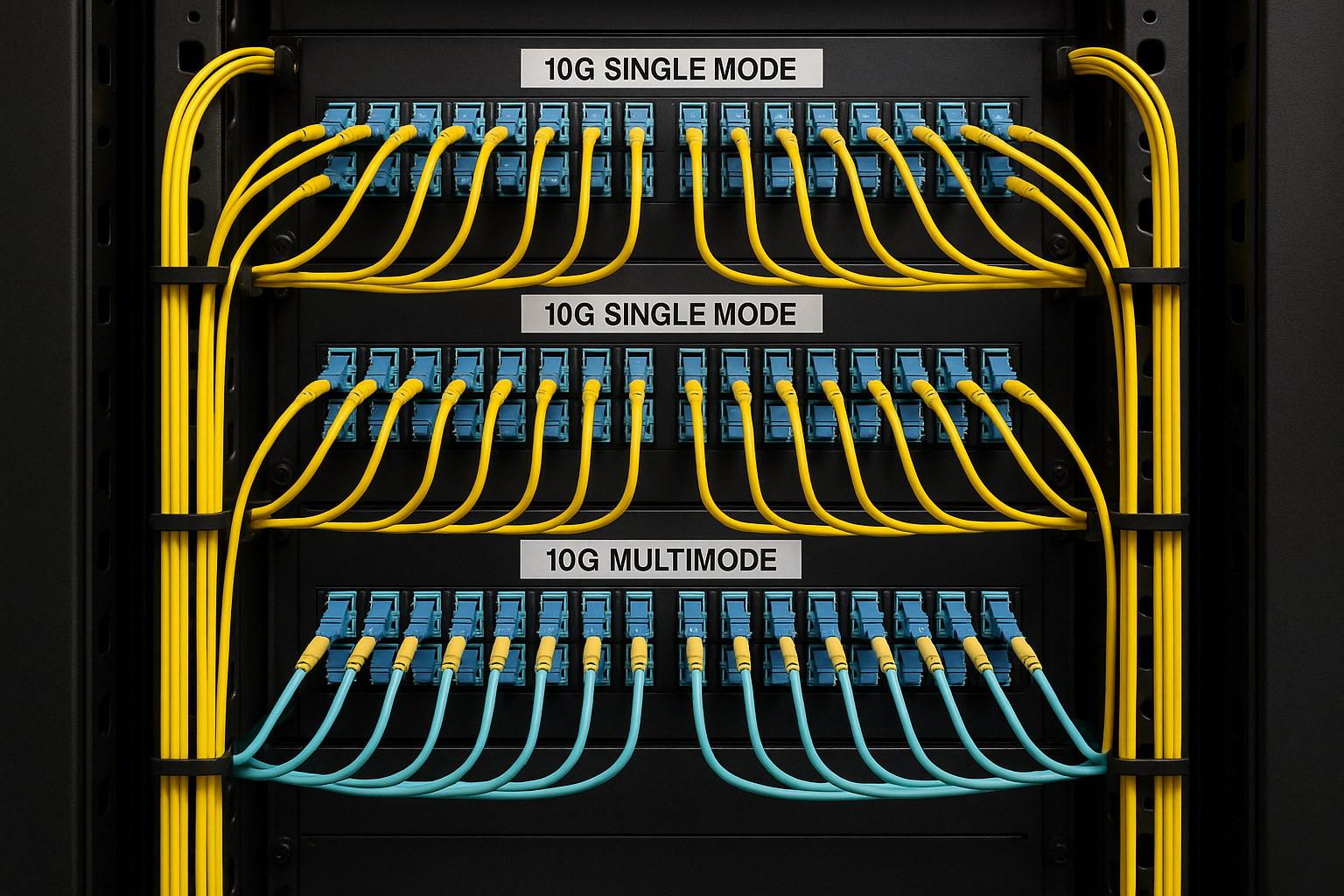
Optical supply constraints rarely affect every component equally. In most environments, the first pain points are higher-speed optics (10G/25G/40G/100G) with constrained laser supply, specific wavelength bins, or strict vendor compatibility for optics diagnostics. Even when a switch supports a transceiver form factor, it may enforce optics EEPROM checks, DOM behavior, or specific power budgets that third-party modules must match.
From a standards perspective, Ethernet optical links are governed by IEEE 802.3 specifications for electrical signaling and optical reach classes, while the module details are defined by vendor implementation choices (wavelength, launch power, receiver sensitivity). Field engineers typically see failures during change windows: a planned swap arrives later than expected, forcing the site to operate with older optics, reduced oversubscription headroom, or temporary patching that increases link loss. For authoritative baseline requirements, see IEEE 802.3 Ethernet Working Group.
In practice, supply shortages often correlate with four technical choke points: (1) laser subassemblies, (2) packaging and fiber-connector throughput, (3) tested inventory for specific temperature grades, and (4) DOM calibration for switch acceptance. If you are planning for resilience, you need to treat each of these as a separate risk track, not as one procurement problem. supply planning checklist
Optics specs that matter during supply shortages: compatibility, power, and DOM
To keep the network running while alternatives are sourced, engineers must map “supported by the switch” to “will pass link budget and diagnostics.” That mapping is where many mitigation plans fail. A module may be the right wavelength and reach class on paper, yet still fail at run time due to launch power mismatch, receiver sensitivity margins, or DOM reporting behavior.
The table below summarizes the most common optics families and the engineering parameters you should verify before accepting substitute inventory. Use it as a fast triage sheet when you are choosing between delayed SKUs and available alternates.
| Module type | Typical data rate | Wavelength | Connector | Target reach class | Operating temp | DOM / diagnostics |
|---|---|---|---|---|---|---|
| SFP (SR) | 1G | 850 nm | LC | Up to ~300 m (OM3) | 0 to 70 C or -40 to 85 C | Commonly supported (vendor-specific) |
| SFP+ (SR) | 10G | 850 nm | LC | Up to ~300 m (OM3) / ~400-550 m (OM4) | 0 to 70 C or -40 to 85 C | DOM varies by vendor |
| QSFP+ (SR) | 40G (4x10G) | 850 nm | LC | Up to ~100 m (OM2) / ~150-400 m (OM3/OM4 varies) | 0 to 70 C or -40 to 85 C | DOM varies by vendor |
| QSFP28 (SR) | 100G (4x25G) | 850 nm | LC | Commonly 100 m (OM3) / 150 m (OM4 typical) | 0 to 70 C or -40 to 85 C | DOM more strictly validated |
| CWDM4 / LR4 variants | 40G or 100G | ~1310/1550 nm bands | LC | 10 km to 40 km class (depends) | 0 to 70 C / -40 to 85 C | DOM strongly vendor-specific |
When supply shortages force substitution, you should validate at least: (1) wavelength and fiber type (OM2/OM3/OM4/OS2), (2) reach class versus measured fiber attenuation, (3) connector cleanliness and patch panel losses, and (4) DOM compatibility. For example, a 10G SR module such as Cisco SFP-10G-SR or Finisar FTLX8571D3BCL (exact ordering varies by vendor) may report acceptable DOM values that your switch expects, while a substitute module can differ in threshold behavior or calibration defaults. Always cross-check the switch vendor’s optics compatibility guidance (many publish validated lists).
Pro Tip: During shortage-driven substitutions, do not rely on “it links up once.” Instead, run a 30 to 60 minute traffic soak and monitor DOM-reported received optical power and error counters. Engineers often discover that marginal launch power or laser aging causes intermittent CRC errors that only appear under sustained load.
Comparison: vendor-validated vs third-party optics during constrained supply
When supply shortages tighten, teams typically choose between vendor-validated modules (higher cost, predictable acceptance) and third-party compatible optics (often faster availability, but higher variance). The decision is not only about price; it is about operational risk: boot-time rejection, intermittent link flaps, and diagnostic mismatches that complicate incident response.
Below are practical examples of modules engineers commonly consider, plus what to verify. Use these as reference points, not endorsements.
- Vendor-validated optics: Cisco SFP-10G-SR for 10G SR deployments; these are designed to match Cisco switch acceptance criteria and DOM behavior. Reliability is often higher during shortages because the acceptance path is well exercised.
- Third-party optics: Finisar/compatible families and FS.com SFP-10GSR-85 (example naming) are frequently available, but acceptance can depend on the switch model’s optics policy and firmware.
- Higher-speed risk: QSFP28 100G SR optics have less tolerance for mismatch because the receiver sensitivity margins and DOM validation are more sensitive to implementation details.
For baseline optical behavior and the role of transceiver parameters, consult vendor datasheets for each optical family and the switch’s transceiver compatibility documentation. As a general standards anchor for Ethernet optics, see IEEE Xplore search on 802.3 optical PHY.
Real-world mitigation plan: keeping a leaf-spine fabric stable
In a 3-tier data center leaf-spine topology with 48-port 10G ToR switches and 24-port 100G spine uplinks, a common failure mode during supply shortages is that 100G QSFP28 SR modules arrive late for only one corridor. The result is that four spine links stay down, reducing effective ECMP paths and increasing oversubscription. In one operational scenario, the team measured fiber attenuation at 0.9 dB/km on OM4 trunks and verified patch panel loss at < 0.5 dB per mated pair, then selected alternates that met the reach budget for the exact transceiver class.
The mitigation sequence was concrete: (1) quarantine substitutes in a lab switch using a spare VLAN and continuous traffic generator, (2) validate DOM readings (received power and temperature) against expected ranges, (3) clean and re-terminate connectors using lint-free wipes and IPA approved for optics, and (4) deploy during a maintenance window with link error monitoring. After deployment, they kept a 48-hour monitoring period for CRC and FEC-like counters (where available) and used syslog to catch transceiver resets. This is the difference between “module inserted” and “module accepted and stable.”
Selection criteria checklist for shortage-driven sourcing
When you must find replacements quickly, your process should be ordered so that you eliminate incompatible optics early and reserve expensive testing for the best candidates. Use the checklist below as a repeatable engineering gate.
- Distance and link budget: confirm fiber type, measured attenuation, patch panel loss, and connector cleanliness. Compute margin against the reach class rather than using a brochure number.
- Switch compatibility and optics policy: verify the exact switch model and firmware acceptance behavior (some enforce strict DOM threshold ranges).
- Wavelength and lane mapping: for multi-lane optics (40G/100G), confirm the correct lane configuration and that the transceiver type matches the interface (SR vs LR variants).
- DOM support and stability: confirm that DOM is enabled and that key readings (temperature, bias current, TX power, RX power) appear consistent. Prefer modules with documented DOM behavior.
- Operating temperature and derating: ensure the grade matches your environment; a module rated for 0 to 70 C can fail early in hot aisles.
- Vendor lock-in risk: decide whether you need “vendor-only” for mission-critical links or whether third-party optics are acceptable with testing and monitoring.
- Availability and lead-time variance: during shortages, prioritize suppliers who can provide consistent batches and traceability (lot IDs, calibration records).
- Return policy and RMA speed: plan for fast swaps if a substitute fails link acceptance or shows error bursts under load.
For procurement, tie the checklist to a documented acceptance test plan. If the plan is not written, it will not survive the pressure of shortages. optics acceptance test plan
Common mistakes and troubleshooting tips during supply shortages
Below are failure modes engineers repeatedly encounter when substituting optics under supply shortages. Each includes a root cause and a practical fix.
-
Mistake: Assuming “same reach class” means “same performance.”
Root cause: Vendor launch power and receiver sensitivity implementation differ, and patch panel loss or aging connectors reduce margin.
Solution: Measure fiber attenuation end-to-end with an OTDR or certified test method, then verify RX power via DOM after insertion under traffic. -
Mistake: Skipping connector cleaning after swapping modules.
Root cause: Even when optics are new, dust on LC ferrules introduces micro-reflections and increases bit errors.
Solution: Clean with appropriate inspection and cleaning procedure, inspect with a scope if you have one, and re-test link errors. -
Mistake: Deploying substitutes without checking DOM behavior.
Root cause: Some switches enforce DOM threshold ranges or interpret warning states differently, causing link flaps or port disable events.
Solution: Validate DOM fields and alarms in a staging environment; confirm that the switch does not treat warnings as fatal. -
Mistake: Mixing temperature grades across a thermal hotspot.
Root cause: A module that is marginal at high temperature can pass at boot but fail during sustained traffic due to laser bias changes.
Solution: Confirm airflow, measure inlet/outlet temperatures, and choose -40 to 85 C grades for hot aisles when required.
Cost and ROI note: what you actually pay for during shortages
Price comparisons can mislead because the true cost of supply shortages includes downtime risk, labor time for swaps, and the cost of failed acceptance tests. Vendor-validated optics often cost more upfront, but they reduce probability of port disable events and shorten troubleshooting cycles. Third-party optics can be cheaper per module, yet the total cost of ownership (TCO) can rise if you incur extra maintenance windows or if replacements increase error rates.
Typical street pricing varies by speed and contract, but as a planning baseline, 10G SR SFP-class optics may be in the low tens of dollars in volume for third-party sources, while vendor-validated modules can be higher; 100G QSFP28 SR optics often carry a much larger premium due to constrained components. Add labor: if each swap consumes 30 to 90 minutes including cleaning and verification, the ROI depends on failure rate and how quickly you can RMA. A practical approach is to budget a “test-and-hold” inventory pool for alternates and reserve vendor SKUs for the most failure-sensitive links.
FAQ
How do supply shortages affect optical transceiver lead times?
They often hit specific speed classes and wavelength families first, especially optics with constrained laser supply or strict DOM acceptance validation. The result is uneven lead times across the same equipment model, even within the same data center.
Can I use third-party optics if my switch supports the same form factor?
Sometimes, but not automatically. You must verify switch acceptance behavior, DOM interpretation, and that the optical parameters meet the link budget for your measured fiber losses. Staging tests and DOM monitoring are essential during substitution.
What measurements should I collect before swapping optics?
Collect fiber type, patch panel and connector losses, and measured attenuation (OTDR or certified results). After insertion, monitor DOM-reported RX power and error counters under sustained traffic for at least 30 to 60 minutes.
What are the fastest troubleshooting steps when a new module does not pass link?
First, inspect and clean connectors, then verify the fiber polarity and correct transceiver type (SR vs LR, multi-lane mapping). Next, confirm DOM status and check whether the switch logs optics warnings or fatal threshold violations.
How can we reduce future risk of supply shortages?
Create a cross-vendor, pre-tested spare strategy: qualify alternates in a lab, standardize on compatible fiber types (often OM4 for short-reach), and keep a controlled inventory pool. Document acceptance tests so procurement substitutions do not become ad hoc engineering work.
Do I need to follow IEEE 802.3 when selecting optics under shortages?
IEEE 802.3 defines the Ethernet PHY requirements, but real-world acceptance depends on module implementation and switch optics policy. Use IEEE as the baseline, then validate with vendor datasheets and your switch compatibility guidance.
If you are facing supply shortages, the fastest path to stability is a structured acceptance workflow: map link budget and DOM compatibility, test alternates under traffic, and clean fiber interfaces with disciplined procedures. Next, review optics acceptance test plan and adapt it to your switch models and maintenance windows.
Author bio: Field-focused network reliability researcher with hands-on experience deploying and validating Ethernet optical links in multi-site data centers, including DOM-based monitoring and RMA workflows. Published practical findings and test methodologies aligned with IEEE PHY behavior and vendor transceiver specifications.
