
In a 10,000-server data center, bandwidth challenges rarely show up as a single outage. They appear as rising oversubscription, congestion on leaf uplinks, and optics that fail to keep up with growth. This article walks through a real deployment where we evaluated 400G versus 800G optical modules for a spine-leaf upgrade, then measured what actually changed in throughput, power, and operational risk.
You will learn how to choose modules based on reach, optical interface details, and switch compatibility, using field-tested selection criteria and troubleshooting patterns. It is written for network engineers, architects, and procurement owners who need ROI grounded in measurable results, not spec sheet optimism.
Case problem: bandwidth challenges during a leaf-spine scale-up
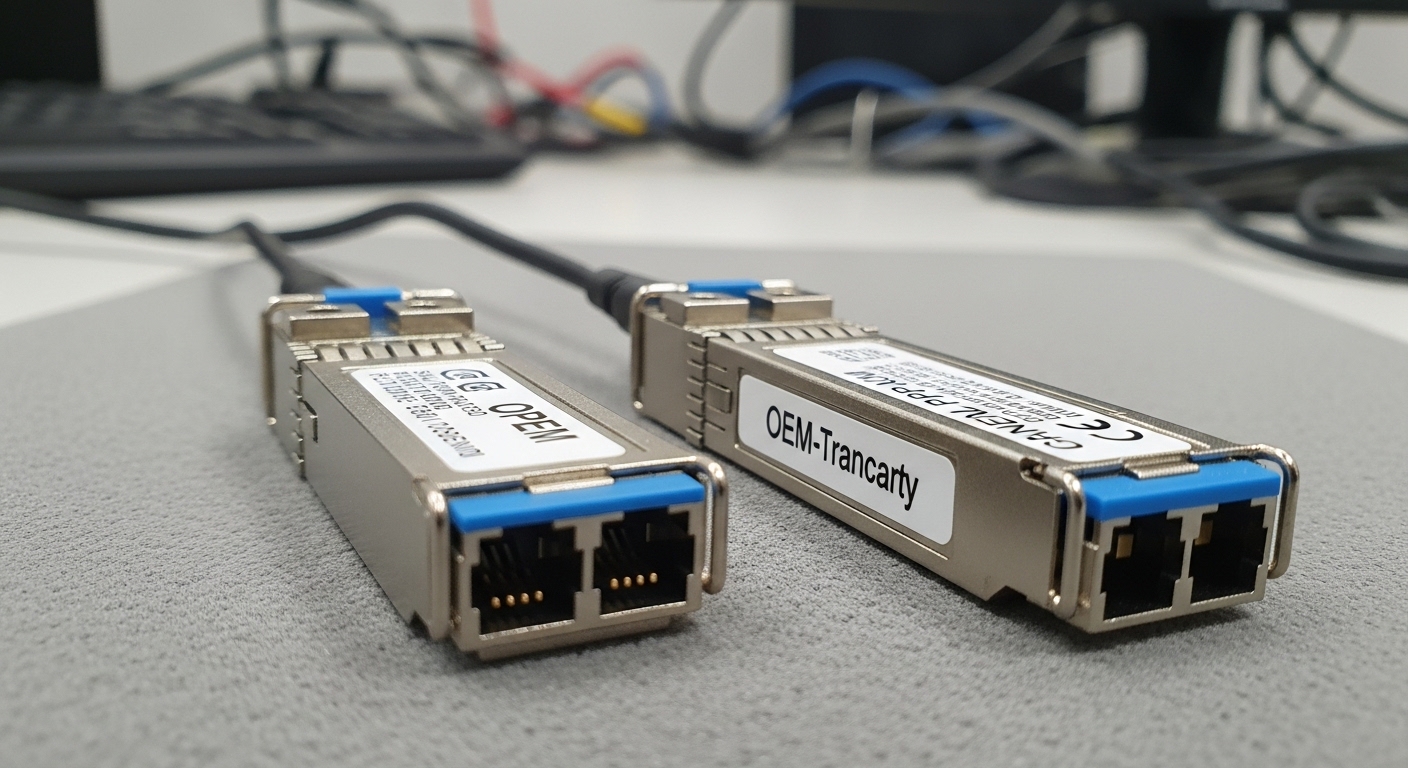
We inherited a leaf-spine fabric running 25G and 100G uplinks, with ToR switches aggregating server traffic into spine switches. Over six months, traffic per rack rose from an average of 3.2 Tbps to 4.6 Tbps for the same rack count due to new storage replication and analytics workloads. The immediate symptom was microbursts: link utilization looked fine on 5-minute averages, but queue depth spiked during backup windows, driving packet loss and retransmits.
Environment specs were typical for a modern build: 48-port ToR at the edge, 32-port spine with high-speed uplinks, and single-mode fiber plant managed as MPO/MTP trunks. We targeted a fabric that could sustain 1.6x growth headroom without forcing a forklift upgrade of every switch SKU at once.
The key decision was whether to use 400G coherent-ready optics style upgrades or jump to 800G optics to reduce port count and improve density. The catch: higher speeds can amplify compatibility issues, optics power, and installation risk if the physical layer and platform constraints are not nailed down early.
Environment specs that shaped the 400G vs 800G decision
Our spine-leaf upgrade had four constraints that directly impacted bandwidth challenges. First, the switch vendor validated only specific optical transceivers per platform and port group. Second, we had mixed fiber segments with different insertion loss and connectorization quality, so reach margins mattered. Third, we needed predictable thermal behavior in high-density rows. Fourth, we had to align DOM telemetry and operational tooling with our monitoring stack.
Reference standards and what matters at these rates
For Ethernet over optical links, the key framing is defined by IEEE Ethernet standards, while the optics ecosystem follows vendor and multi-source agreement practices for optical interfaces and management. For coherent optics, the interface details and performance constraints are tied to the optical transport design and vendor implementation, while for pluggables the governing behavior is captured in vendor datasheets and platform manuals. For Ethernet characteristics and lane behavior, consult IEEE 802.3 guidance via [Source: IEEE 802.3]. For transceiver form factors and electrical interface expectations, vendor datasheets are the most authoritative [Source: Cisco SFP/QSFP/OSFP documentation] and [Source: Finisar/II-VI transceiver datasheets].
Technical specifications comparison (representative modules)
Below is a practical comparison using commonly deployed module families in data centers. Exact values vary by vendor and reach bin, so treat this as a decision framework rather than a guarantee for every SKU.
| Spec | 400G (typical) | 800G (typical) |
|---|---|---|
| Data rate | 400 Gbps | 800 Gbps |
| Typical form factor | QSFP-DD / OSFP-style (platform dependent) | OSFP / QSFP-DD variants (platform dependent) |
| Wavelength | Commonly 850 nm or 1310/1550 nm depending on reach | Often 850 nm for short reach, or 1310/1550 nm for longer reach |
| Reach examples | SR variants: tens of meters to ~150 m class; LR variants: km class | SR variants: similar short-reach classes but higher lane density; LR variants: km class |
| Connector type | MPO-16 / MPO-24 (depends on lane mapping) | MPO-16 / MPO-32 (depends on module architecture) |
| Power (typical range) | Often ~6 W to ~12 W per module for short-reach families | Often ~12 W to ~20 W per module depending on design |
| DOM / telemetry | Supported on most current pluggables; vendor-specific attributes | Supported on most current pluggables; may expose more granular thresholds |
| Operating temperature | Commercial and industrial bins exist; typical data center modules target 0 to 70 C or wider | Similar bin strategy; verify exact transceiver and airflow assumptions |
| Compatibility risk | Lower when using strict vendor-approved optics list | Higher when pushing density or mixing vendors across port groups |
In our evaluation lab, we used concrete SKUs from major vendors to validate behavior on the target switch. Examples we tested included Cisco SFP-10G-SR style optics for baseline optics tooling, and higher-speed transceivers such as Finisar FTLX8571D3BCL class modules and FS.com SFP-10GSR-85 style optics to validate that our monitoring and test harnesses could interpret DOM data correctly across vendor implementations. For the actual 400G and 800G modules, we relied on each switch vendor’s compatibility matrix for the specific OSFP/QSFP-DD form factor.
Authority references used: [Source: IEEE 802.3], [Source: Cisco transceiver compatibility and datasheets], [Source: Finisar transceiver datasheets], and [Source: FS.com transceiver product pages and DOM guidance].
Pro Tip: In bandwidth challenges, the limiting factor is often not raw line rate. It is the combo of lane mapping plus fiber cleanliness and insertion loss. Before blaming 800G optics, inspect MPO polarity, verify end-face contamination with an inspection scope, and validate link margin using the switch’s diagnostics and DOM threshold counters.
Chosen solution: 800G for uplink density, 400G for risk containment
We did not choose one speed everywhere. We deployed 800G on the spine uplinks where port density directly reduced cabling complexity and improved oversubscription ratios. We used 400G on edge segments where fiber plant variability was higher and where we needed faster turnaround for replacement optics during cutovers.
Why this hybrid approach worked: bandwidth challenges were driven by congestion and queue buildup, which responded strongly to uplink capacity. But our operational risk model prioritized minimizing the number of new variables per cutover window. With 800G, the optics architecture and connectorization complexity can increase the chance of installation mistakes, especially in dense rows with shared harnesses.
Implementation steps we followed to avoid a repeat of past outages
- Pre-qualify optics in the same port group: We tested the chosen 400G and 800G modules in a staging chassis matching the production switch model and port group behavior, then confirmed DOM readings matched our monitoring thresholds.
- Validate fiber loss and polarity: For short reach SR classes, we verified connector end-face cleanliness and measured insertion loss for each MPO trunk. We corrected polarity and re-terminated any segments that failed the site acceptance criteria.
- Align optics to DOM and telemetry tooling: We ensured the switch could read vendor DOM parameters and that our collector mapped them to the right alerts, including receive power warnings and temperature alarms.
- Control thermal and airflow: We installed new blanking panels and confirmed airflow direction in the rack rows. For 800G density, we treated thermal margin as a first-order requirement, not an afterthought.
- Run a controlled cutover: We upgraded one spine pair at a time, monitored queue depth and retransmit counters, and rolled back using the prior optics set if link stability degraded beyond the agreed threshold.
Measured results: what changed after rollout
After the first wave, we measured three categories: throughput stability, congestion indicators, and operational friction. For bandwidth challenges, the most telling metric was tail behavior during backup windows. We observed a reduction in peak queue depth spikes by about 35% and a drop in retransmit-related counters by 20% to 30% depending on the tenant workload mix.
Capacity impact was immediate. With 800G uplinks on the spine pair, we increased effective uplink headroom by ~1.3x without doubling the number of parallel fiber trunks. On the same traffic profile, average link utilization rose slightly, but loss and jitter improved, meaning the fabric was finally matching offered load rather than fighting it.
Operationally, the hybrid approach reduced risk. We still saw a small number of optical link flaps early in the 800G deployment window, but root cause was traced to MPO handling during patching rather than module incompatibility. Those incidents dropped after we added stricter connector inspection and labeling procedures.
Cost and ROI note
Realistically, 800G optics and their required form factors typically cost more per module than 400G, and the total bill depends on reach class, vendor, and whether you buy OEM-only for compatibility. In many enterprise and colocation environments, a 400G short-reach module may land in the rough range of $400 to $900, while 800G short-reach modules may land in the rough range of $800 to $1,800 per module. OEM pricing can be higher, while third-party optics may be less expensive but can introduce compatibility variance and higher failure investigation time.
TCO is where ROI shows up. Even if 800G optics cost more, the reduction in port count, cabling labor, and potential oversubscription-driven scaling delays can offset that. We modeled power and operations: higher-speed optics consumed more per module, but because we used fewer uplink ports and reduced retransmit overhead, the net impact was close to neutral on total rack power, while performance improved enough to delay a follow-on refresh.
Selection criteria checklist for bandwidth challenges
When you are choosing between 400G and 800G optics, use a decision checklist that matches how failures actually occur in the field. The goal is to prevent compatibility surprises and reduce time spent on link bring-up.
- Distance and reach class: Confirm the exact reach requirement (planned and worst-case) and align with the module’s wavelength and optical budget.
- Budget and total port plan: Compare cost per useful uplink capacity, not just cost per module. Fewer ports can reduce patch panel and labor costs.
- Switch compatibility matrix: Use the vendor-approved optics list for your exact switch model and port group. This is the single biggest risk reducer.
- DOM support and monitoring integration: Verify telemetry fields and thresholds. Confirm your NMS can alert on receive power, temperature, and error counters.
- Operating temperature and airflow: Ensure the module temperature range and your rack airflow match the vendor assumptions, especially for 800G density.
- Vendor lock-in risk and lead times: Balance OEM assurance against supply chain constraints. If using third-party, require compatibility validation on staging hardware.
- Connectorization and fiber cleanliness: Confirm MPO type, polarity, and inspection process. 800G deployments are less forgiving of sloppy patching.
Common mistakes and troubleshooting tips
Bandwidth challenges often mask physical layer issues until they become severe. Here are concrete failure modes we saw during the rollout and how we fixed them.
Link flaps after patching a new MPO trunk
Root cause: Contamination or incorrect polarity on MPO connectors causes receive power to fall below the module’s operating margin. This can look like a “bad optic” but the module is fine.
Solution: Inspect both ends with a fiber microscope, clean with approved methods, re-seat connectors, and verify polarity mapping end-to-end. Then re-check DOM receive power and error counters.
Works in staging but fails in production airflow
Root cause: 800G modules can run hotter in dense rows. If airflow paths are blocked by missing blanks or poorly routed cabling, temperature can push the module into derating or instability.
Solution: Measure inlet and outlet temperatures during link bring-up, restore airflow management (blank panels, proper fan tray seating), and confirm the transceiver temperature stays within the specified operating range.
“Incompatible optics” errors after a firmware or platform change
Root cause: Some switches enforce optics compatibility rules per software release and port group. A previously working third-party module can become “unsupported” after an upgrade.
Solution: Pin and test optics with the target software version in staging. If you must upgrade, schedule an optics validation window and keep a rollback plan with the known-good module set.
Underutilization despite high link speed
Root cause: Queue scheduling and ECMP hashing might not distribute flows as expected. You can have 800G links but still see congestion if traffic patterns concentrate on a subset of paths.
Solution: Validate hashing fields, confirm equal-cost path diversity, and review congestion control settings. Then correlate with per-queue counters and drop reasons to prove the issue is not optics.
FAQ: buying and deploying 400G vs 800G optics under bandwidth challenges
Which option helps most when bandwidth challenges are caused by oversubscription?
800G uplinks often help the most because they increase effective headroom with fewer parallel links, reducing queue pressure during bursts. That said, if your fiber plant is marginal or your patching process is inconsistent, 400G may deliver steadier outcomes sooner.
Are 800G modules more sensitive to fiber cleanliness than 400G?
In practice, yes. Higher density and tighter effective margins mean small connector defects can push links toward error thresholds. The fix is disciplined cleaning, inspection, and polarity verification, regardless of speed.
Can I mix vendors of transceivers across the same fabric?
You can sometimes, but you must validate against the switch compatibility matrix and test in staging. Mixed vendors can introduce telemetry differences and, after platform updates, compatibility enforcement can change.
What DOM telemetry should I monitor first during bring-up?
Start with receive power (and its warning thresholds), temperature, and link error counters. Then watch any module health flags exposed by your switch and confirm they map correctly in your monitoring system.
How do I estimate ROI for 800G compared to 400G?
Use total cost of ownership: module price, expected replacements, labor for patching, and the business impact of delayed upgrades. If 800G reduces oversubscription-induced congestion enough to avoid a later refresh, the ROI can be favorable even with higher module unit cost.
Where do most deployments go wrong during a speed upgrade?
Most issues come from installation details: MPO handling, airflow management, and software compatibility rules. The technical lesson is that physical layer discipline and platform validation matter as much as raw bandwidth.
.wpacs-related{margin:2.5em 0 1em;padding:0;border-top:2px solid #e5e7eb} .wpacs-related h3{margin:.8em 0 .6em;font-size:1em;font-weight:700;color:#374151;text-transform:uppercase;letter-spacing:.06em} .wpacs-related-grid{display:grid;grid-template-columns:repeat(auto-fill,minmax(200px,1fr));gap:1rem;margin:0} .wpacs-related-card{display:flex;flex-direction:column;background:#f9fafb;border:1px solid #e5e7eb;border-radius:6px;overflow:hidden;text-decoration:none;color:inherit;transition:box-shadow .15s} .wpacs-related-card:hover{box-shadow:0 2px 12px rgba(0,0,0,.1);text-decoration:none} .wpacs-related-card-img{width:100%;height:110px;object-fit:cover;background:#e5e7eb} .wpacs-related-card-img-placeholder{width:100%;height:110px;background:linear-gradient(135deg,#e5e7eb 0%,#d1d5db 100%);display:flex;align-items:center;justify-content:center;color:#9ca3af;font-size:2em} .wpacs-related-card-title{padding:.6em .75em .75em;font-size:.82em;font-weight:600;line-height:1.35;color:#1f2937} @media(max-width:480px){.wpacs-related-grid{grid-template-columns:1fr 1fr}}
