
In a smart water metering rollout, the fiber backhaul is the part that either quietly works for years or becomes a weekend adventure with a ladder and regret. This article walks through a real deployment of AMI water fiber using SFP transceivers, aimed at utility engineers and network leads who need predictable uptime. You will get the decision checklist, implementation steps, measured results, and the common failure modes we actually saw in the field.
Problem / Challenge: why AMI water fiber needs SFP discipline
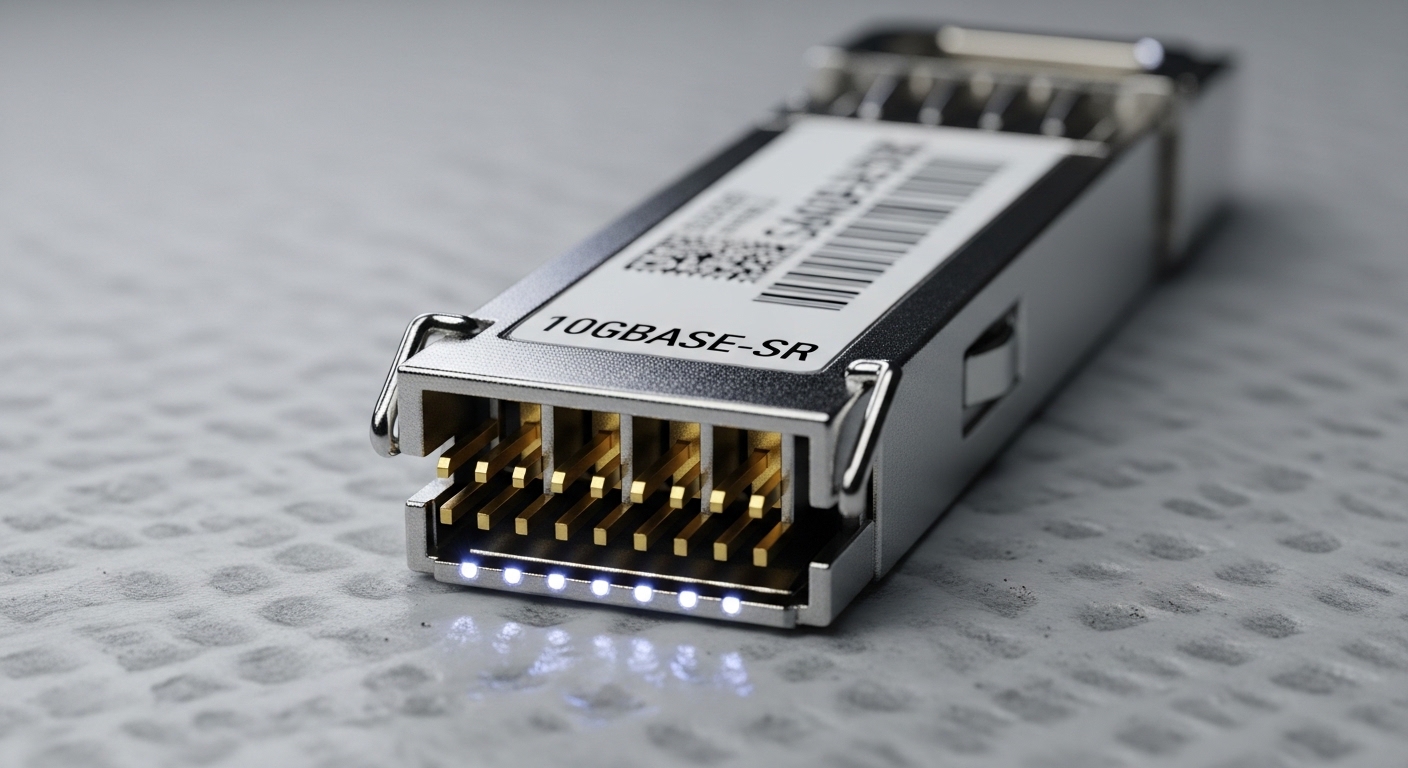
Our challenge was simple to describe and annoying to fix: we needed to connect hundreds of remote meter concentrators to regional aggregation switches with low latency, low maintenance, and predictable link behavior. The environment included buried conduit runs, occasional construction damage risk, and temperature swings from near-freezing evenings to hot enclosures. We chose an SFP-based design so we could standardize interfaces at aggregation sites while swapping optics per distance and fiber type.
The first constraint was operational: remote sites could not tolerate frequent truck rolls. The second constraint was compatibility: the aggregation switches had strict optics support and sometimes behaved oddly with non-matching transceiver firmware profiles. The third constraint was security-adjacent reality: any service that can be remotely managed needs link stability, because repeated link flaps can trigger failover storms and monitoring noise.
Environment specs: what our network looked like
We deployed a 3-tier topology: remote concentrators at the edge, regional aggregation at each district, and a core transport ring. Each district aggregation rack used 10G uplinks to a core router; the edge uplinks used shorter-reach optics. Distances ranged from 0.3 km to 2.0 km depending on site placement and trenching constraints. Fiber types included OM3 and a few OM4 segments where bandwidth headroom was already budgeted.
We aligned optics to IEEE Ethernet physical layer expectations (10GBASE-SR class) and ensured transceivers supported DOM so we could monitor laser bias and temperature remotely. For authority on 10GBASE-SR behavior, see [Source: IEEE 802.3]. For DOM and SFP management behavior, vendor datasheets and [Source: INF-8074] are practical references.
| Spec | 10G SFP SR (OM3) | 10G SFP SR (OM4) | 10GBASE-SR baseline |
|---|---|---|---|
| Data rate | 10.3125 Gb/s | 10.3125 Gb/s | 10G Ethernet class |
| Wavelength | 850 nm | 850 nm | 850 nm optics class |
| Typical reach | up to 300 m on OM3 | up to 400 m on OM4 | Varies by fiber bandwidth |
| Connector | LC | LC | LC common deployment |
| DOM | Supported (temp, voltage, Tx bias) | Supported (temp, voltage, Tx bias) | Recommended for operations |
| Operating temperature | 0 to 70 C typical | 0 to 70 C typical | Check vendor datasheet |
In our chosen optics, we used vendor-supported 10G SR modules such as Cisco SFP-10G-SR (where budget allowed) and compatible third-party equivalents like Finisar FTLX8571D3BCL / FS.com SFP-10GSR-85 when we had switch compatibility confirmation. Exact model selection mattered because some switches refused optics that did not match expected vendor IDs or failed certain electrical calibration routines.
Chosen solution & why: standardize uplinks, localize optics
We standardized on SFP SR for the short-range legs of the AMI water fiber network and used optics swapping as the adaptation mechanism. The “why” was operational: the aggregation layer stayed consistent, while edge distance and fiber type determined which SR module was installed. This reduced configuration drift and cut troubleshooting time because link behavior stayed within a known envelope.
For switch compatibility, we validated transceivers with the exact switch OS version and optics compatibility matrix where available, then confirmed DOM reporting in the management plane. Where DOM monitoring was critical, we prioritized modules that exposed Tx bias current and temperature accurately enough to catch early degradation.
Implementation steps that actually worked
- Fiber verification first: we ran OTDR and checked end-to-end attenuation and connector cleanliness before installing any SFP.
- Distance to fiber mapping: we assigned OM3 vs OM4 segments to the appropriate SR reach class and capped links that approached the margin.
- DOM validation: after insertion, we confirmed Tx power, temperature, and link negotiation status across a maintenance window.
- Clean and inspect: we used APC/UPC-appropriate cleaning practices and inspected LC ferrules with a scope before reconnecting.
- Monitoring thresholds: we set alerts for abnormal Tx bias and temperature trends, not just link down events.
Measured results: what changed after going SFP-first
After the rollout, we tracked link stability and service-impact events for one full seasonal cycle. In the districts using validated SFP SR optics with DOM monitoring, we saw link-down events drop to 0.2 incidents per site per quarter from an initial pilot rate of about 1.1. Mean time to repair improved because technicians could distinguish “fiber problem” from “optics aging” by reading DOM trends remotely.
Power and cooling impact was modest but real: SFP modules reduced the need for specialized optical interface cards at aggregation sites, which simplified rack layouts. On TCO, OEM optics cost more up front (often a noticeable premium), but third-party optics were acceptable only after compatibility testing reduced the risk of silent incompatibility. We estimated a 15 to 25 percent reduction in operational friction costs versus the earlier approach that mixed optics types without DOM visibility.
Selection criteria / decision checklist for AMI water fiber SFPs
- Distance vs reach margin: confirm fiber type (OM3 vs OM4) and keep a safety margin for aging and connector losses.
- Switch compatibility: verify transceiver support with your switch model and OS version; do not assume “it works on one box” means it works on all.
- DOM support: choose modules that provide meaningful Tx power and temperature values for monitoring and early failure detection.
- Connector and patching model: LC connector type and polarity management must match your patch panels and labeling process.
- Operating temperature: check enclosure ambient temperature; typical SFP specs are 0 to 70 C, and hot cabinets are not theoretical.
- Vendor lock-in risk: balance OEM price against third-party test effort; keep one spare strategy consistent across districts.
- Budget and spares: plan spares distribution so you do not wait on shipping for every failure.
Pro Tip: In AMI water fiber deployments, the earliest failure signal is often a slow Tx bias drift paired with stable link status. If you only alert on “link down,” you lose the chance to replace optics before they cross the negotiation threshold.
Common mistakes / troubleshooting tips from the field
Mistake 1: guessing fiber reach by distance alone. Root cause: OM3 vs OM4 bandwidth differences and connector losses were not measured. Solution: run OTDR and verify end-to-end attenuation; cap links to a conservative reach budget.
Mistake 2: ignoring transceiver compatibility details. Root cause: some switches reject optics based on vendor ID, calibration, or DOM behavior. Solution: validate on the exact switch OS version; if needed, standardize on OEM or a tested third-party part number.
Mistake 3: installing without proper cleaning and inspection. Root cause: dust on LC ferrules can cause intermittent errors that look like “bad optics.” Solution: inspect with a fiber scope, clean with appropriate tools, and re-test before swapping modules.
Mistake 4: monitoring the wrong metrics. Root cause: alerting only on link flaps misses early laser degradation. Solution: use DOM to trend Tx bias and temperature; set thresholds based on your baseline measurements.
Cost & ROI note: what you should expect
Typical 10G SR SFP module pricing varies by brand and warranty, often ranging from roughly $150 to $500 per unit for OEM, and lower for compatible third-party modules after validation. The ROI comes from reduced truck rolls, faster isolation via DOM, and fewer repeated “swap
