
When your core switches light up with new 800G capacity but the optics refuse to negotiate, the outage feels immediate and personal. This article helps network engineers and data center operators evaluate 800G transceivers for performance, reach, compatibility, and total cost, with the kind of operational detail you can use on a live rack. You will leave with selection criteria, a head-to-head decision matrix, and troubleshooting steps grounded in how optics actually behave.
800G transceivers vs 400G optics: performance and signal behavior
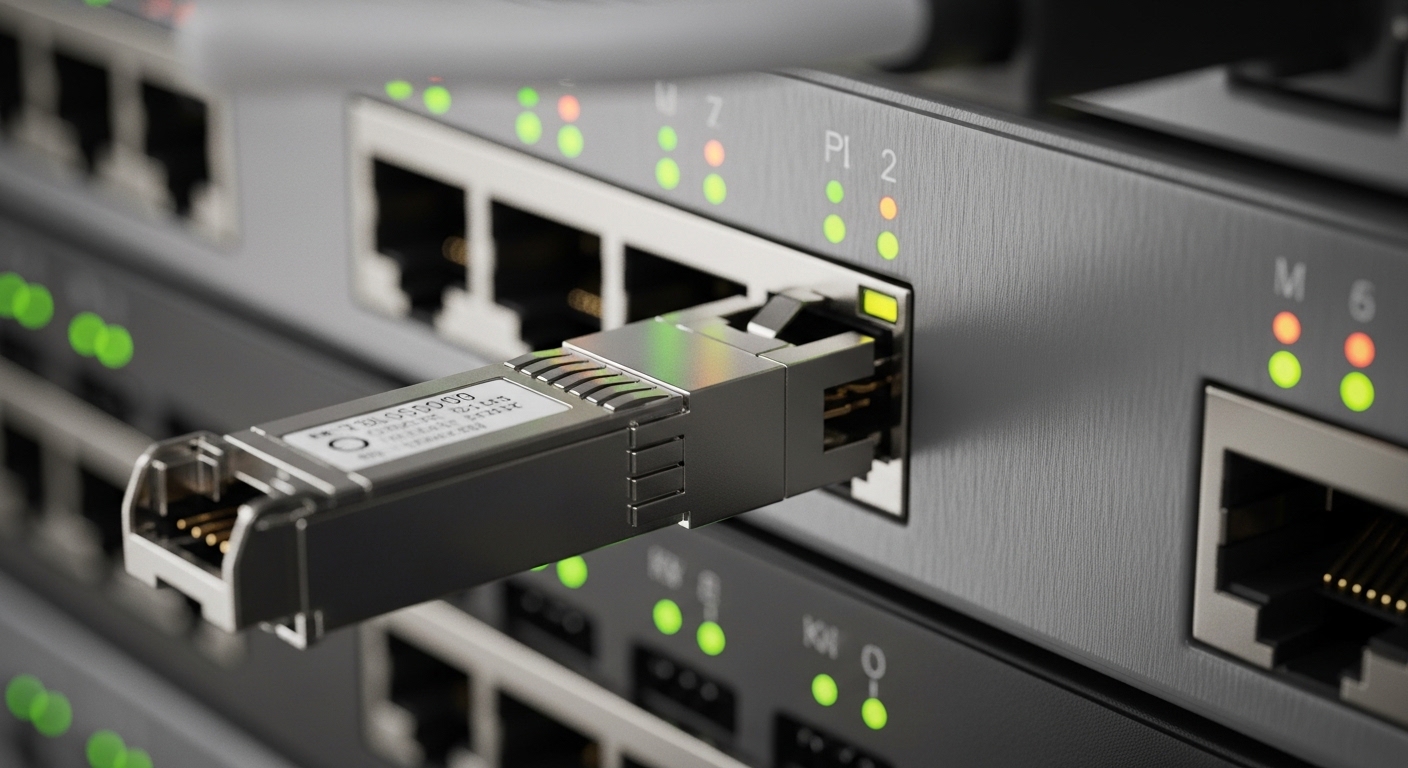
At 800G line rates, the transceiver design choices move from “fast enough” to “optically precise.” Most 800G solutions map to 8x 100G lanes internally (or a vendor-specific equivalent), then use either electrical lane mapping and coherent or direct-detect optics depending on the selected standard. For direct-detect 800G, you typically see OS2 multimode or OS1 single-mode variants, while coherent 800G often targets longer reach with more complex DSP and tighter optical budgets.
What changes in the field
Engineers notice three practical shifts when moving from 400G to 800G: (1) higher power density near the module cage, (2) stricter link diagnostics requirements, and (3) faster thermal sensitivity. In a typical leaf-spine upgrade, a 48-port 800G ToR switch populated with high-power optics can raise local cage temperatures by several degrees versus older 400G modules, especially under front-to-back airflow constraints. That matters because some modules will still transmit when slightly warm, but their BER margin collapses faster during maintenance cycles when fans ramp down.
Performance targets you should validate
Do not treat “meets the standard” as a synonym for “works in your plant.” Validate that your link budget supports at least the vendor-recommended safety margin for attenuation, connector loss, and aging. For direct-detect, check receive sensitivity and the required optical power range in the datasheet; for coherent, check the supported OSNR and dispersion tolerance. If your network uses optical splitters for monitoring or has patch panels with unknown history, assume extra loss until measured.
Pro Tip: In many data center deployments, the biggest source of unexpected 800G link instability is not the transceiver itself, but micro-bending from over-tight cable management. A small bend radius change can push a marginal multimode link over the edge, even when 400G previously “seemed fine.”
Compatibility and standards: how to avoid mismatched optics
Compatibility is the silent gatekeeper for 800G transceivers. Even when a module is nominally supported, the switch may require specific electrical interface behavior, digital diagnostic support, or vendor-specific lane mapping. Most modern platforms rely on pluggable optics management via I2C and standardized digital diagnostics (commonly including vendor-defined thresholds). Your job is to confirm support through the vendor interoperability list and, when necessary, by using controlled insertion tests.
Standards and interoperability checkpoints
Start with the IEEE ecosystem and vendor documentation: the underlying Ethernet PHY behavior is anchored in IEEE 802.3 family specifications, while optics form factors and management follow vendor and consortium guidance. For example, IEEE 802.3 for Ethernet physical layers defines link behavior and signaling expectations; the transceiver then implements the required electrical and optical interface. For operational compatibility, also consult ANSI/TIA cabling recommendations for optical fiber handling and link performance expectations. See [Source: IEEE 802.3] and [Source: ANSI/TIA-568] for baseline expectations and cabling practices. anchor-text: IEEE 802.3 anchor-text: ANSI/TIA-568 cabling guidance
Vendor examples engineers actually deploy
In the field, you will often see 800G optics paired with switch vendors that publish supported optics lists. Example optics families include coherent 800G pluggables and direct-detect 800G solutions from major vendors and distributors. For direct-detect 10G/25G-era comparisons, engineers commonly reference models such as Cisco SFP-10G-SR and Finisar FTLX8571D3BCL; for 800G, the exact part numbers differ by reach and interface, but the method remains the same: validate the switch’s compatibility matrix and confirm the module’s wavelength and connector type match your fiber plan.
Reach, wavelength, and power: head-to-head comparison table
The most decisive differences among 800G transceivers show up in wavelength selection, reach, connector type, and optical power budgets. Below is a practical comparison of common 800G categories you will encounter: direct-detect multimode (typically short reach), direct-detect single-mode (medium reach), and coherent single-mode (long reach). Use this as a planning lens, then verify exact numbers in each vendor datasheet.
| 800G transceiver type | Typical wavelength | Reach target | Fiber type | Connector | Power / thermal note | Operating temperature |
|---|---|---|---|---|---|---|
| Direct-detect 800G short-reach (multimode) | Near 850 nm class | ~100–300 m class (varies by vendor) | OM4 or OM5 | LC | Lower than coherent; still heat-dense at 800G | Commonly -5 to 70 C |
| Direct-detect 800G medium-reach (single-mode) | Near 1310 nm class | ~2–10 km class (varies by vendor) | OS2 | LC | Moderate optical power budget; verify Rx sensitivity | Commonly -5 to 70 C |
| Coherent 800G long-reach (single-mode) | 1550 nm band | ~40 km class (varies widely with DSP) | OS2 | LC | Higher DSP complexity; verify power and airflow | Commonly -5 to 70 C |
Energy and optics budget reality
For direct-detect, you usually have a simpler link budget: transmitter output power and receiver sensitivity define whether the sum of fiber attenuation plus connector and splice losses stays within the allowable range. For coherent, the budget depends on optical signal quality metrics and dispersion effects, not only total loss. In either case, treat patch panels and old cabling as unknown variables; measure with an OTDR or at least confirm end-to-end loss using calibrated test equipment.
Cost and ROI: what 800G optics really cost over time
Budgeting for 800G transceivers is not just about purchase price. Total cost of ownership includes expected failure rate, warranty coverage, spares strategy, and the cost of downtime during replacements. In many enterprises, OEM modules carry a premium but often reduce operational friction because they are on the switch vendor’s supported list and come with clearer interoperability documentation. Third-party modules can be cheaper, but you must assess risk: some are compatible electrically yet may expose different diagnostic thresholds or require updated firmware on the host platform.
Typical price bands and practical TCO
In the market, 800G transceivers often span a wide price range depending on reach and technology. As a planning heuristic, short-reach direct-detect modules may cost less per port than long-reach coherent solutions, while coherent can carry a significant uplift due to DSP complexity. From a TCO angle, if your cabling plant already supports the reach class you need, selecting the correct module type prevents expensive fiber rework. If you must redesign cabling, the optics savings can vanish quickly.
Operational ROI example
Consider a network upgrade where 64 uplinks require 800G each. If you can use a medium-reach direct-detect option instead of a coherent long-reach option, you might reduce optics cost and also simplify maintenance because the cabling is shorter and less sensitive to dispersion-related effects. However, if the facility layout forces longer runs, coherent optics may be the only feasible option without trenching new fiber. Your ROI should be measured against both optics cost and the cost of civil work, not only the line item on the procurement sheet.
Selection criteria checklist: engineers choose in this order
When time is tight and the rack is waiting, engineers default to a disciplined checklist. Use this ordered list to reduce surprises during staging, cutover, and post-move verification.
- Distance and reach class: confirm end-to-end fiber length, including patch panels, splitters, and slack loops.
- Fiber type and plant readiness: OM4, OM5, or OS2; verify connector cleanliness and patch cord type.
- Switch compatibility: confirm the exact switch model’s supported optics list and required module form factor.
- DOM and diagnostics support: ensure the host reads thresholds, alarms, and vendor-defined telemetry consistently.
- Operating temperature and airflow: check module cage thermal limits; validate front-to-back airflow direction and fan curves.
- Budget and warranty: compare OEM vs third-party warranty coverage, RMA turnaround, and local support.
- Vendor lock-in risk: consider multi-vendor sourcing strategy for spares and future refresh cycles.
- Power and electrical envelope: verify whether the host supports the module’s power draw and whether thermal throttling occurs.
Common mistakes and troubleshooting tips that actually work
Most 800G transceiver problems are not mysterious; they are repeatable patterns. Below are common failure modes with root causes and concrete solutions you can execute during an outage window.
Link comes up at lower rate or flaps under load
Root cause: marginal optical power budget due to excess loss, dirty connectors, or micro-bending. Some systems may temporarily pass training but fail under real traffic because the effective BER margin shrinks.
Solution: clean LC end faces with lint-free swabs and isopropyl-safe cleaner, then re-test with calibrated power meter or OTDR. Reroute patch cords to relieve bend radius stress and confirm connector mating with correct polarity and consistent patching.
“Module not supported” or missing diagnostics telemetry
Root cause: transceiver is electrically compatible but not fully recognized by the host’s expected identification or DOM mapping. This can happen with mixed vendor optics, older switch firmware, or incorrect transceiver family.
Solution: update switch firmware to the vendor-recommended release for that optics family, then re-check the supported optics list. If telemetry is missing, compare DOM logs for alarm fields and confirm the transceiver’s management interface behavior matches the host expectations.
High temperature alarms during insertion or traffic bursts
Root cause: airflow mismatch: modules can exceed local thermal limits if fan direction or intake filters differ from the design assumption. Coherent modules with heavier DSP loads can be more sensitive to thermal hotspots.
Solution: verify fan tray configuration, confirm airflow path is unobstructed, and measure cage temperature if your platform supports it. Reseat modules to ensure proper contact and check for damaged cages or misaligned airflow baffles.
Wrong fiber type or wavelength class planned for the topology
Root cause: using OM4/OM5 cabling for an optics family that expects OS2, or selecting a wavelength class that does not match the fiber attenuation profile. This often passes brief tests but fails longer soak tests.
Solution: confirm fiber type in labeling and verify with optical test results. Align the transceiver’s wavelength class to the fiber plant plan and ensure that patch cord types match the expected fiber mode conditions.
Decision matrix: which 800G transceiver option fits your constraints
Use the matrix to compare three practical options: short-reach direct-detect for within-row or nearby cabinet runs, medium-reach direct-detect for typical enterprise spine distances, and coherent long-reach for constrained layouts without rebuilding fiber. Scores are directional; your final choice must be validated by module datasheets and the switch vendor’s compatibility list.
| Criteria | Direct-detect MM (short reach) | Direct-detect SM (medium reach) | Coherent SM (long reach) |
|---|---|---|---|
| Distance flexibility | Low to medium | Medium | High |
| Plant dependence | High (OM4/OM5 quality) | Medium (OS2 quality) | Medium to low (but OS2 required) |
| Power and thermal risk | Medium | Medium | Higher (DSP complexity) |
| Cost per port | Often lowest | Mid | Often highest |
| Interoperability friction | Medium | Medium | Potentially higher (more parameters) |
| Operational simplicity | High | High | Medium (more diagnostics) |
Real-world deployment scenario: 3-tier leaf-spine with mixed reach
In a 3-tier data center leaf-spine topology with 48-port 800G ToR switches, an enterprise often needs two reach classes simultaneously. Suppose leaf-to-spine fiber runs average 220 m with patch panels and cross-connects adding about 6 dB total loss; that pushes you toward a short-reach direct-detect multimode option if the plant is OM5-ready. For spine-to-core and inter-aisle routes averaging 3.5 km, the enterprise typically selects a medium-reach single-mode direct-detect option, using OS2 trunks with connector loss verified via OTDR. Only when an expansion wing forces runs beyond the direct-detect reach do teams introduce coherent 800G transceivers, because trenching new fiber would cost more than the optics uplift.
Which option should you choose?
If your topology keeps most 800G links within the short or medium reach envelope and your cabling plant is already typed and labeled, choose direct-detect 800G transceivers first for operational simplicity and predictable link budgets. If you face longer distances, stringent dispersion constraints, or facility layout limitations that block new fiber builds, coherent 800G transceivers become the pragmatic path, provided you validate OSNR or equivalent quality metrics in the vendor datasheet and confirm thermal and airflow headroom.
For enterprises optimizing for stable operations and rapid change windows, prioritize switch-supported optics, clean connector practices, and a disciplined rollout plan. Next, compare specific module families against your switch’s interoperability list using compatible transceivers for your switch and confirm reach against measured fiber loss.
FAQ
Are 800G transceivers compatible with existing fiber cabling?
They can be, but only if the optics match the fiber type and reach class. Confirm whether your plant is OM4/OM5 for short reach direct-detect or OS2 for single-mode options, then verify end-to-end loss with test equipment. Fiber connectors must be clean and correctly polished to avoid BER margin collapse.
How do I verify switch compatibility before purchasing 800G transceivers?
Start with the switch vendor’s supported optics list for your exact switch model and firmware version. Then stage a small number of ports in a controlled environment and verify link training, DOM telemetry, and alarm behavior. If diagnostics fields appear missing or thresholds differ, do not scale out until the host behavior is confirmed.
What is the biggest cause of 800G link failures during cutover?
In practice, connector cleanliness, patching mistakes, and micro-bending from cable management lead the list. Even when the optics are correct, slight loss increases can make the link unstable under full traffic. Clean, re-seat, reroute with proper bend radius, and re-measure optical power.
OEM versus third-party 800G transceivers: which is safer?
OEM modules are often safer for interoperability and warranty handling because they are explicitly validated with the host platform. Third-party modules can be cost-effective, but you must validate DOM support and compatibility under your switch firmware. Consider a conservative spares and RMA plan when using third-party optics.
Do 800G transceivers require special airflow planning?
Yes. At 800G, module power density and thermal sensitivity increase, especially for coherent designs with more DSP workload. Ensure front-to-back airflow is unobstructed, verify fan tray configuration, and monitor cage temperature if your platform provides telemetry.
How should I plan spares for 800G links?
Plan spares by risk: include at least one spare per optics type and reach class, and keep them within warranty with verified compatibility. If you operate in harsh thermal conditions or have a history of connector issues, increase your spare quantity for the highest-risk link categories.
Updated: May 3, 2026.
I write as a hands-on engineer and technician who has staged optics in live racks, measured link loss with calibrated tools, and debugged DOM telemetry under production constraints. My goal is to translate datasheet language into operational confidence for your next 800G transceiver rollout—compatible transceivers for your switch.
