
800G optical deployments fail in predictable ways: marginal power budgets, ignored DOM telemetry, and fiber routing mistakes that only surface under thermal or load stress. This article helps data center network engineers, optical field techs, and capacity planners implement link management practices that keep 800G lanes stable across upgrades. You will get a practical checklist, a specs comparison table, and troubleshooting patterns tied to real-world optics and switch behaviors.
800G link management: what actually breaks in production
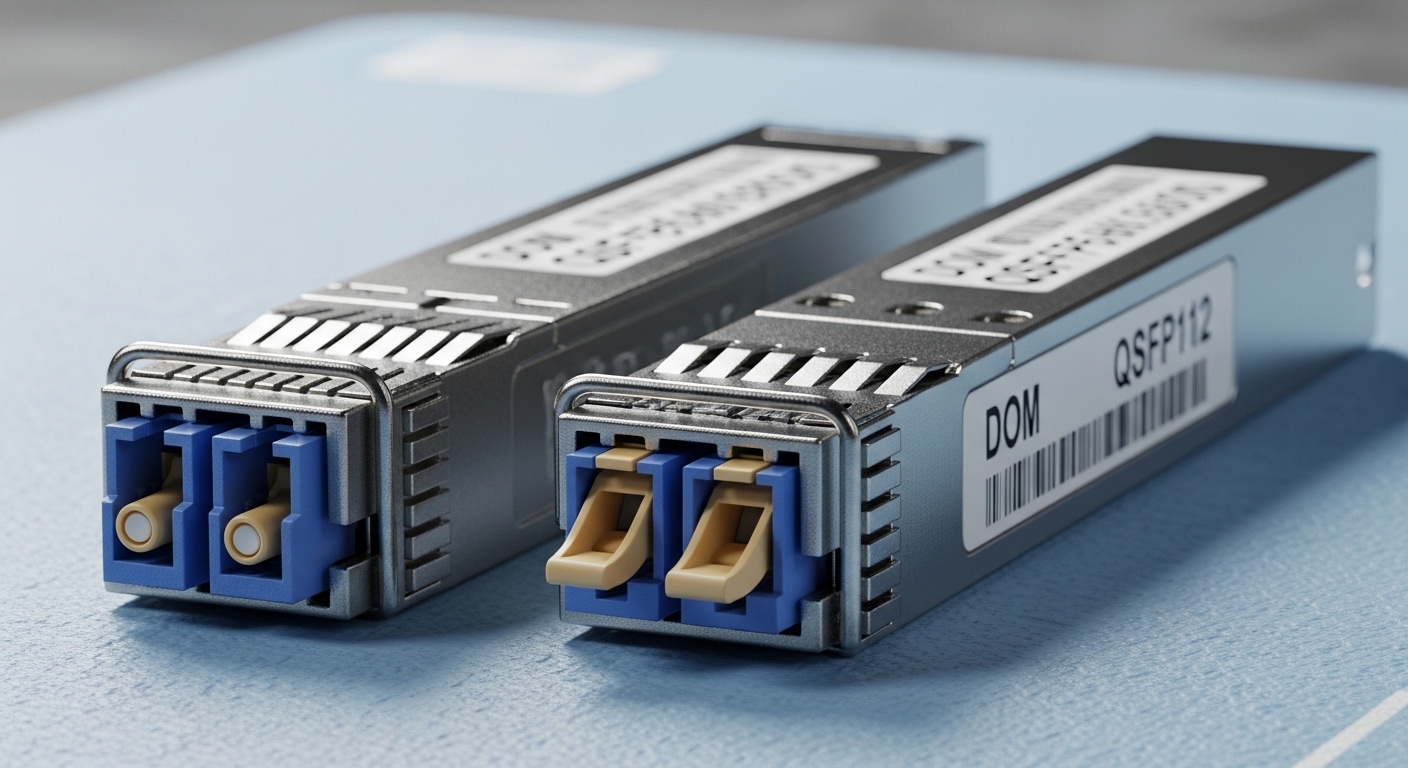
At 800G, you typically aggregate multiple high-speed lanes (often 16x50G or 8x100G depending on the transceiver and vendor implementation), so a single weak lane can trigger FEC escalation, CRC bursts, or link flap. Operationally, most failures trace back to three layers of link management: physical layer optics and fiber (loss, dispersion, cleanliness), digital diagnostics and control loops (DOM polling, EEPROM compatibility), and system-level verification (packet loss, BER/FEC counters, and alarm thresholds). Field teams also see “works on the bench” issues when patch panel routing changes connector angles, bending radii, or dust exposure during re-termination.
For standards context, IEEE 802.3 defines the Ethernet signaling framework; vendor transceiver datasheets define the workable optical interface ranges, while ANSI/TIA-568 and IEC connector/cleanliness guidance drive install quality. For optical diagnostics and monitoring, DOM behavior varies by vendor and module generation, so your link management must include telemetry normalization across optics SKUs. IEEE 802.3 and ANSI/TIA standards are good starting points for baseline expectations.
Optics and fiber constraints that shape link management decisions
Before you touch cabling, lock down the optical budget and component constraints: wavelength band, reach class, connector type, and the module’s supported temperature range. In 800G short-reach designs, the most common practical constraint is not just total loss, but also modal effects and launch/receive coupling through the connector and patch cords. Your link management plan should therefore treat every patch segment as a measurable variable, not a fixed assumption.
The table below compares common 800G optics families used in data centers. Exact reach depends on transceiver model, fiber plant (OM3 vs OM4 vs OM5), and vendor implementation details.
| Parameter | 800G SR8 (typical) | 800G DR8 (typical) | 800G LR8 (typical) |
|---|---|---|---|
| Data rate | 800G Ethernet aggregated lanes | 800G Ethernet aggregated lanes | 800G Ethernet aggregated lanes |
| Wavelength | Short-reach multi-lane, fiber-plant dependent | Near-IR single/multi-lane | Longer-reach near-IR |
| Reach class | Up to ~100 m over multimode (vendor limits apply) | ~500 m to 2 km over SMF (vendor limits apply) | ~10 km over SMF (vendor limits apply) |
| Connector | Often MPO/MTP (polarity and cleaning critical) | MPO/MTP or LC depending on design | LC or MPO depending on design |
| DOM support | Typically yes; thresholds and alarms vary | Typically yes; thresholds and alarms vary | Typically yes; thresholds and alarms vary |
| Operating temperature | Often 0 C to 70 C class (verify module) | Often 0 C to 70 C class (verify module) | Often 0 C to 70 C class (verify module) |
In practice, teams deploy known-good module models with documented compatibility to reduce link management churn. Examples of widely used optics include Cisco and Finisar/FS style short-reach and long-reach offerings; for instance, Cisco part families and third-party equivalents such as Finisar and FS.com transceivers may exist for similar reach classes, but DOM and alarm thresholds can differ. Always verify with switch vendor interoperability tools and the specific transceiver datasheet before scaling. [Source: vendor datasheets for Cisco, Finisar, FS.com; [Source: IEEE 802.3]].
Measurement-driven link management workflow for 800G
High-reliability link management is a workflow, not a checklist you glance at once. A field-proven approach is to define acceptance criteria for optical loss, connector cleanliness, and live telemetry behavior after installation and during burn-in. Your goal is to prevent “late discovery” events where errors appear only at peak traffic or after thermal cycling.
Step-by-step operational playbook
- Pre-terminate validation: Inspect MPO/MTP endfaces with a fiber microscope before mating. Remove dust and verify no scratches or haze; record contamination outcomes in the work order.
- Loss budgeting and segment accounting: Measure each patch cord and trunk segment where possible. Track total link loss against the transceiver’s budget and margin for aging.
- Polarity and lane mapping: Confirm polarity scheme matches the module’s expected transmit/receive mapping. A polarity mismatch can look like “no light” or constant FEC retries.
- DOM telemetry baselining: Poll DOM immediately after link-up and store time series: receive power, bias current, temperature, and any vendor-specific diagnostics.
- Traffic verification with error counters: Validate with line-rate or near-line-rate traffic while monitoring BER/FEC/CRC counters and link flap logs. Set thresholds aligned to your vendor’s recommended alarm levels.
Pro Tip: In 800G short-reach deployments, connector cleanliness and polarity errors often masquerade as “power budget” problems. If measured loss looks acceptable but DOM shows drifting receive power while CRC/FEC counters spike, re-check MPO/MTP endfaces and polarity mapping before swapping optics.
Selection criteria: how engineers choose the right link management strategy
Your module and cabling choice should be driven by measurable constraints and operational risk, not only reach marketing. The following ordered checklist reflects what teams weigh during 800G rollouts.
- Distance and reach class: Use measured fiber plant loss, not nominal reach claims.
- Budget margins: Leave headroom for aging, connector rework, and seasonal temperature shifts.
- Switch compatibility: Confirm transceiver interoperability with the exact switch model and firmware revision.
- DOM telemetry and alarm semantics: Ensure your monitoring system can normalize DOM fields and thresholds across module SKUs.
- Operating temperature and airflow: Validate module temperature under your rack’s airflow profile, not just ambient room temperature.
- Vendor lock-in risk: Evaluate third-party optics acceptance policies, RMA handling, and whether diagnostics differ enough to break your tooling.
Common mistakes and troubleshooting tips
Below are failure modes that repeatedly show up in 800G optical rollouts. Each includes the root cause and a practical mitigation that field teams use.
- Mistake: Ignoring polarity mapping on MPO/MTP
Root cause: Transmit/receive strands swapped due to incorrect polarity cassette or patch cord orientation.
Solution: Verify polarity scheme end-to-end (including patch panel cassettes), then re-inspect for correct lane mapping before re-measuring loss. - Mistake: Treating “pass” fiber loss results as sufficient
Root cause: Connector contamination or micro-scratches can intermittently raise attenuation and cause burst errors under load.
Solution: Re-clean and re-inspect endfaces under magnification; then compare DOM receive power stability and error counters before/after cleaning. - Mistake: Not baselining DOM telemetry after installation
Root cause: You lose the ability to detect drift (bias current changes, temperature excursions) that precedes failures.
Solution: Store time series for receive power, temperature, and any vendor-specific alarms; set alerts on rate-of-change, not only absolute thresholds. - Mistake: Swap-only optics without isolating the patch path
Root cause: The fault lies in one patch segment, bending radius violation, or damaged connector housing.
Solution: Perform a staged isolation: test a known-good patch cord, then test trunk segments, then replace optics only after physical path validation.
Cost and ROI note for 800G link management
Costs vary by optics type and sourcing. As a rough field range, enterprise OEM 800G optics can be materially higher than third-party equivalents, and the total cost of ownership often depends more on operational downtime and rework rates than on module sticker price. ROI improves when you invest in inspection microscopes, standardized polarity cassettes, and DOM telemetry integration, because these reduce truck rolls and shorten acceptance cycles. In practice, teams also budget for spare optics and spare patch components to avoid extended outages during RMA processing.
FAQ
How do I set link management alarms for 800G?
Start with vendor-recommended alarm thresholds for DOM fields and error counters, then tune based on your measured baseline. Use rate-of-change alerts for receive power and temperature to catch drift before BER/FEC escalation.
Are third-party 800G optics safe for production?
They can be, but only after interoperability validation with your exact switch model and firmware. Confirm DOM compatibility and alarm semantics so your monitoring does not misinterpret fields.
What should I verify after a patch panel reroute?
Re-check polarity, connector cleanliness, and measured loss for the full end-to-end path. Then compare DOM baselines and confirm error counters under load; reroutes often introduce subtle bending or connector stress.
Why do I see FEC increases even when link is “up”?
FEC increases can indicate marginal optical margin, intermittent contamination, or a single-lane impairment. Correlate FEC/BER trends
