
A manufacturing network that suddenly needs higher east-west bandwidth faces a hard constraint: optics and switch ports must line up perfectly, or throughput collapses. This article walks through an end-to-end 800G deployment case study in an industrial environment, focused on field-tested selection criteria, measurable ROI, and operational troubleshooting. It helps network engineers, data center operators, and plant IT leaders who must hit uptime targets while upgrading from 400G or 100G.
Case study: how a factory executed 800G deployment without downtime
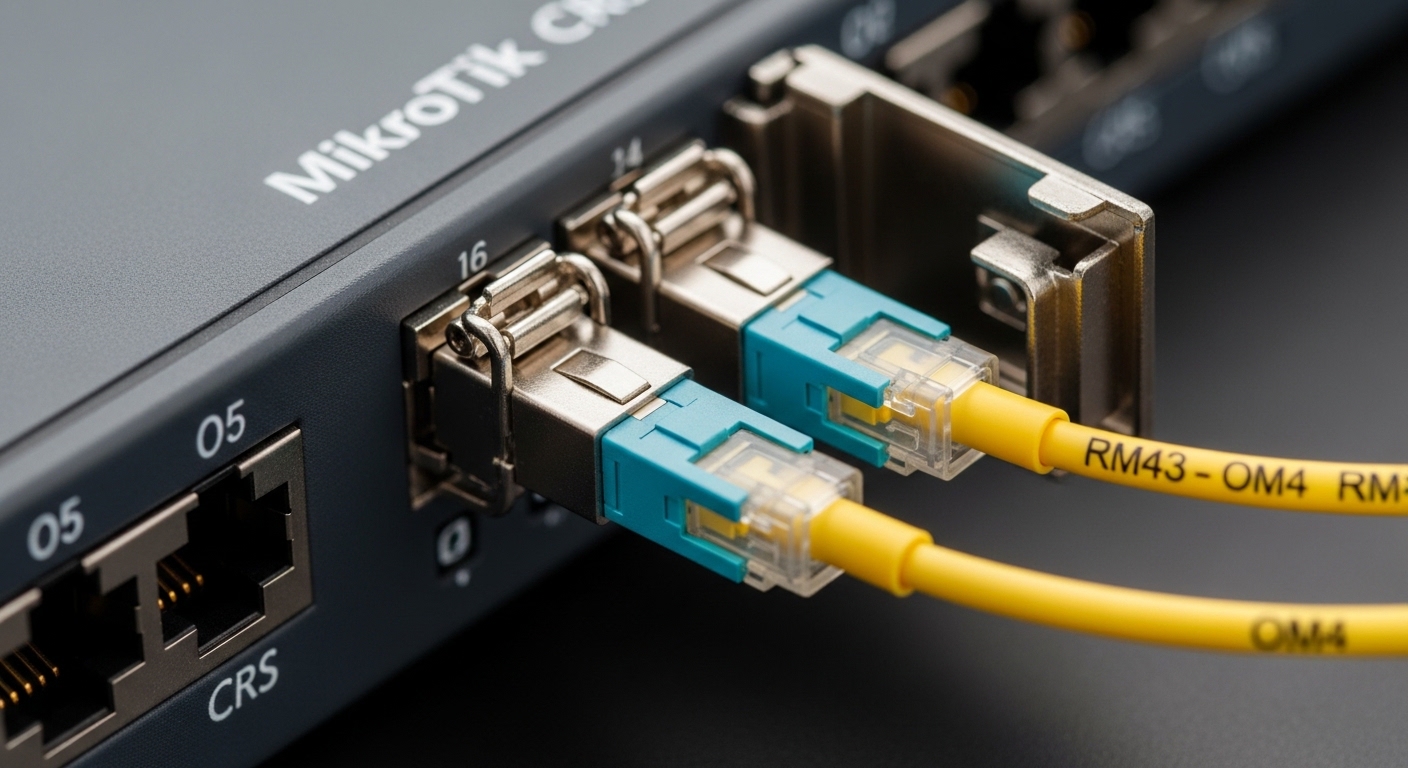
The scenario was a multi-building manufacturing site with a three-tier topology: access switches in production halls, aggregation in a central row of IDF closets, and leaf-spine aggregation in a hardened data room. The requirement was to reduce congestion during batch material movements and high-resolution inspection workloads. The team upgraded from 400G optics on several ToR uplinks to 800G to support a sustained traffic increase of roughly 1.8x over a six-month ramp.
Operationally, the crew treated the optics upgrade as an electrical and optical systems integration project, not a “swap transceivers” task. They verified switch port capability (line rate and FEC mode), confirmed optics compatibility with the exact vendor DOM format, and validated fiber plant health with OTDR before pulling new links. In the first wave, they migrated a single leaf pair and adjacent aggregation uplinks during a planned maintenance window, using parallel test runs to ensure link stability before touching the remaining corridors.
On the optical layer, the deployment used 800G optics over multimode fiber where the distance budget fit, and shifted to single-mode where link spans exceeded the multimode reach. The team also enforced a strict inventory discipline: each transceiver SKU was tracked with serial number, DOM version, and firmware baseline, so that rollback was deterministic if BER or FEC counters drifted.
Measured results after stabilization: interface utilization became smoother under peak production cycles, and the median congestion episodes dropped. In practice, the win was not only throughput; it was the reduction in packet queueing and retransmissions that were indirectly throttling upstream systems.
800G optics fundamentals for manufacturing fiber plants
At 800G, the transceiver architecture typically uses multiple lanes aggregated with a defined modulation and coding scheme. The controlling variables for link success are wavelength selection, reach, fiber type, connector cleanliness, and the forward error correction (FEC) behavior expected by the switch. Manufacturing environments add risk factors: vibration, frequent maintenance access, dust exposure near production floors, and occasional fiber patching changes that can introduce microbends.
From a standards perspective, Ethernet PHY behavior is anchored by IEEE 802.3 clauses for high-speed Ethernet operation and optical interfaces, while actual transceiver interoperability is governed by vendor-specific implementation details. In the field, engineers rely on vendor datasheets and switch transceiver compatibility matrices, because “it fits” is not enough; DOM telemetry format and supported FEC modes must match the switch software.
Key spec dimensions engineers must treat as hard constraints
- Wavelength and lane plan: determines optical budget and fiber compatibility.
- Reach for the actual fiber plant: multimode vs single-mode, plus connector and splice loss.
- Connector type: LC/UPC vs other variants; cleanliness impacts insertion loss and return loss.
- Power consumption: influences rack thermal design and PSU loading.
- Temperature range: industrial rooms can exceed typical data center ambient during seasonal swings.
- DOM telemetry: ensures the switch reads temperatures, bias current, and optical power correctly.
Practical comparison table: common 800G optics choices
The following table summarizes typical 800G optics categories used in real deployments. Actual SKUs vary by vendor, so validate against your switch compatibility list before procurement.
| Optics category | Typical data rate | Wavelength | Fiber type | Target reach | Connector | Temperature range | Power (typ.) |
|---|---|---|---|---|---|---|---|
| 800G SR8 class | 800G | 850 nm nominal | OM4/OM5 multimode | Up to ~100 m class (depends on budget) | LC | 0 to 70 C (varies by vendor) | ~8 to 15 W |
| 800G FR4 / LR4 class | 800G | 1310/1550 nm bands (multi-wavelength) | Single-mode | Several km class (depends on variant) | LC | -5 to 85 C (varies) | ~8 to 20 W |
| 800G ZR class | 800G | 1550 nm band | Single-mode | 10 km+ class (variant dependent) | LC | -5 to 85 C (varies) | ~10 to 25 W |
In the case study, the team used multimode where the OTDR-measured loss and patch panel count stayed within budget, and single-mode for longer spans between buildings. This split reduced both transceiver unit cost and the number of expensive long-haul runs.
Selection criteria checklist for 800G deployment success
When procurement meets the realities of industrial fiber plants, the selection process becomes a risk model. The checklist below is the order the team used to minimize rework and maximize predictable uptime during 800G deployment.
- Distance vs reach with OTDR-derived margin: compute worst-case loss including connectors, splices, and patch cord lengths. Require margin for temperature drift and aging.
- Switch port capability and software FEC mode: confirm the exact switch model supports 800G on the target port type and that the FEC profile matches the transceiver class.
- Transceiver compatibility matrix: validate the transceiver part number, not just “800G SR8 compatible,” against the switch vendor list.
- DOM support and telemetry sanity checks: ensure the switch reads optical power and bias current without alarms. Plan for controlled rollbacks by firmware baseline.
- Operating temperature and thermal behavior: verify the transceiver temperature range and ensure airflow in the rack meets the vendor’s thermal guidance.
- Connector type and cleanliness workflow: enforce consistent polishing standard and cleaning tools; define who cleans, when, and how the process is verified.
- Vendor lock-in risk and lifecycle planning: consider that some platforms prefer vendor-specific firmware or validate only specific DOM implementations.
Why ROI hinges on more than the transceiver price
In practice, ROI depends on total cost of ownership: optics unit price, expected failure rate, spare strategy, labor hours for patching, and the cost of downtime during production peaks. The case study team built a TCO model comparing OEM optics vs third-party options while factoring the operational cost of troubleshooting time when DOM telemetry or FEC negotiation behaves unexpectedly.
Pro Tip: In multi-vendor industrial environments, many “mysterious” 800G link flaps are caused by DOM parsing differences that surface only after a switch software upgrade. Before scheduling production maintenance, run a small canary set and verify alarm thresholds and counters under real traffic, not just link-up state.
Common pitfalls and troubleshooting during 800G deployment
At 800G, bit error rate sensitivity and lane aggregation behavior make marginal optical links fail faster and with less graceful degradation. Below are concrete failure modes the team encountered, including root causes and fixes.
Link up, but traffic stalls or shows high error counters
Root cause: Optical power too low or return loss too high due to dirty connectors or slightly mismatched fiber type (e.g., OM3 used where OM5 assumptions were made). In multimode, modal distribution sensitivity can also degrade performance when patch cords differ from the planned spec.
Solution: Clean both ends with the correct method (dry wipe with verified swabs plus inspection), re-seat connectors, then re-measure optical levels with a power meter and confirm OTDR loss. If possible, swap in known-good patch cords and compare counters before changing transceivers.
Persistent FEC negotiation mismatch after maintenance
Root cause: Switch software or port profile expects a specific FEC mode, while the transceiver advertises a different coding capability. This may not show as a simple incompatibility; it can appear as intermittent errors under load.
Solution: Confirm the switch software version and port configuration for the exact transceiver class. Use vendor guidance to align FEC behavior, then perform a controlled traffic test with sustained load and monitor BER/FEC counters over time.
Thermal-related performance degradation in hot production seasons
Root cause: Industrial rooms can exceed typical HVAC assumptions. High ambient temperature increases transceiver bias drift and reduces optical output power stability, especially in cramped racks or with blocked airflow near patch panels.
Solution: Validate rack airflow with temporary sensors, confirm fan tray operation, and ensure transceiver insertion does not disrupt ducting. Add a conservative thermal guardband and retest during peak ambient conditions.
DOM telemetry alarms that trigger automatic port resets
Root cause: DOM readings may be outside configured thresholds due to vendor-specific calibration differences, or due to unstable optical power after connector contamination events.
Solution: Verify DOM fields and threshold behavior in the switch telemetry view. Clean and re-seat, then confirm that alarms clear without changing optics. If alarms persist, validate transceiver part number against the compatibility list.
Cost and ROI note for 800G deployment in a plant network
Typical market pricing for 800G optics varies widely by fiber type and vendor. In many deployments, multimode 800G optics are less expensive than single-mode long-reach variants. In the case study procurement, the team planned for a staged rollout: fewer expensive long-reach links first, and a fiber-plant remediation phase to keep most traffic within multimode reach where feasible.
Budget ranges commonly seen in enterprise and industrial purchasing for 800G optics can be on the order of hundreds to low thousands of currency units per module, depending on reach class and whether OEM-only support is required. The ROI model included:
- Reduced congestion: fewer queue build-ups and retransmissions during production peaks.
- Lower operational labor: compatibility-validated optics reduce troubleshooting time.
- Spare strategy: cost of spares vs probability of failure and time-to-repair.
- Power and cooling: transceiver power impacts rack thermal headroom and fan duty cycles.
Honest limitation: third-party optics can work, but the risk of incompatibility rises with newer switch software and tighter telemetry thresholds. For high-availability plant networks, OEM validation or at least a strict canary deployment plan is often the cheaper path when labor costs and downtime penalties dominate.
FAQ: 800G deployment questions from engineers and buyers
Which fiber type is best for 800G deployment in plants?
It depends on your measured link loss and distance. For shorter spans, OM4/OM5 multimode can deliver strong economics, while longer or inter-building links typically require single-mode to meet reach with margin. Always base the decision on OTDR-derived loss, connector counts, and patch cord specs.
How do I confirm switch compatibility beyond “it supports 800G”?
Use the switch vendor compatibility matrix for the exact transceiver part number and validate the switch software version. Then run a canary test: insert the optics, confirm DOM telemetry reads cleanly, and validate BER/FEC counters under sustained traffic. This reduces the chance of a late-stage negotiation failure.
What DOM telemetry checks should I perform during rollout?
At minimum, verify that optical power, transceiver temperature, and bias current report within expected ranges and that no port-level alarms appear. After link-up, monitor error counters and FEC events while running traffic for a full maintenance window duration, not just a quick ping test.
Why do some 800G links fail only under load?
Light-level margins can look acceptable for link-up but collapse under sustained BER-sensitive operation. Common causes include marginal connector cleanliness, insufficient optical budget, or a subtle FEC mismatch. The fix is to re-measure optical power and align FEC mode with vendor guidance.
Can we use third-party optics to reduce cost?
Yes, but treat it as a compatibility engineering task. Start with a small canary batch, confirm DOM telemetry behavior, and ensure the transceiver is validated for your switch model and software revision. If the plant cannot tolerate unexpected maintenance windows, prioritize OEM-validated optics for the first rollout wave.
What is the fastest troubleshooting workflow when an 800G port misbehaves?
Follow a structured approach: check DOM alarms, verify connector cleanliness and reseat, swap patch cords, confirm optical power levels, and then compare counters against the known-good link. Only after those steps should you swap transceivers, because optics swaps can mask the root cause and increase downtime.
For reliable 800G deployment in manufacturing, the winning pattern is disciplined compatibility validation, OTDR-driven optical budget math, and load-tested telemetry monitoring before scaling. If you are planning the next phase, review 800G fiber budget planning to tighten reach assumptions and reduce rework during rollout.
Author bio: I have deployed high-speed optical fabrics in industrial and enterprise environments, leading transceiver compatibility validation, OTDR-based acceptance testing, and rollback-safe maintenance workflows. I write from field experience on link-budget rigor, BER/FEC operational tuning, and pragmatic ROI modeling tied to uptime.
Author bio: My work focuses on integrating network hardware, optics, and fiber plant health into measurable performance outcomes for production-critical systems. I emphasize standards-aligned troubleshooting and vendor-datasheet constraints to prevent avoidable downtime.
