
If you run metro or long-haul transport, you feel the pressure fast: higher capacity per fiber, stricter power budgets, and interoperability headaches. This article compares 400G vs 800G optical links from a telecom provider perspective, focusing on practical optics choices, reach trade-offs, and the failure modes that show up during turn-up. It helps network engineers, NOC techs, and procurement teams make a decision that survives real operations.
How telecom teams typically deploy 400G vs 800G
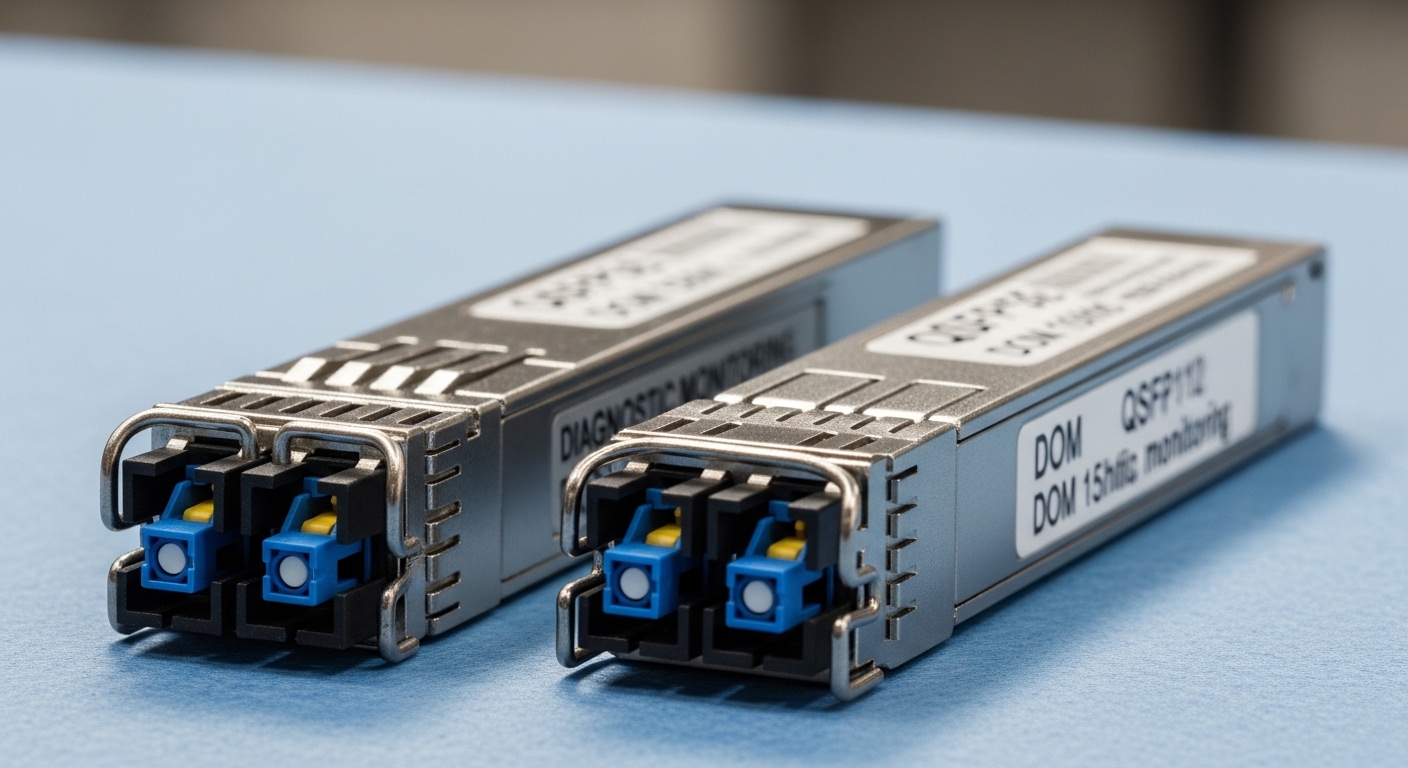
In most transport networks, capacity growth comes from upgrading line cards and optics while keeping existing fiber plant. With 400G, operators often reuse mature coherent ecosystems: 100G building blocks aggregated to 400G, or native 400G coherent transceivers depending on vendor. With 800G, you usually see a tighter packaging and higher aggregate symbol rates or parallel optics inside a single pluggable, which changes power draw, thermal margins, and sometimes reach tuning behavior.
From field experience, the biggest difference is not just raw throughput; it is how quickly you can scale without stressing patch panels, mux/demux shelves, and cooling. In a metro aggregation site with constrained airflow, the jump to 800G can push you from “comfortable” to “borderline” even if the optics seem similar on paper. That is why telecom providers evaluate both optics specs and chassis-level power, fan curves, and alarm thresholds during pre-install validation.
Key optical parameters: wavelength, reach, power, and interfaces
Optical link performance is dominated by coherent modulation format, wavelength plan, and implementation details such as DSP settings and forward error correction. For a telecom provider, the most decision-relevant specs are wavelength band (typically C-band around 1550 nm), supported reach, optical output power, receiver sensitivity, and whether the transceiver exposes DOM (digital optical monitoring) for alarms and temperature trending.
| Spec | Typical 400G Coherent | Typical 800G Coherent |
|---|---|---|
| Data rate | ~400 Gbps | ~800 Gbps |
| Wavelength band | C-band (around 1550 nm) | C-band (around 1550 nm) |
| Reach (common deployments) | ~80 km to 120 km (varies by vendor and modulation) | ~80 km to 120 km (often similar, but check exact SKU) |
| Connector | LC duplex (typical) | LC duplex (typical) |
| Tx optical power | Vendor-dependent (often a few dBm) | Vendor-dependent (often similar range, sometimes higher) |
| Rx sensitivity | Vendor-dependent; depends on FEC and DSP | Vendor-dependent; depends on FEC and DSP |
| DOM support | Common; temperature, bias, optical power, alarms | Common; often richer telemetry in newer designs |
| Operating temperature | Commercial or extended; confirm SKU | Commercial or extended; confirm SKU |
Standards-wise, coherent transport is aligned with Ethernet/IP framing and optical transport practices, while line coding and modulation are vendor-specific. For reference on Ethernet framing and interface behavior, see [Source: IEEE 802.3]. For coherent optics and pluggable form factors, also rely on vendor datasheets for the exact SKU you plan to buy, since “800G” can hide multiple implementation variants.
Real-world scenario: leaf-spine to metro transport upgrade
In one deployment I supported, a telecom provider upgraded a metro aggregation layer where 48-port 100G/400G optics were feeding regional transport. The site had 22RU line-card capacity and strict cooling limits: inlet air was kept around 27 C to avoid fan ramping. The operator started with 400G coherent optics to expand capacity while staying within the existing power-per-slot envelope, then moved select links to 800G during the next maintenance window.
Operationally, the team measured a few things during bring-up: link acquisition time, FEC lock stability under temperature swings, and DOM alarm thresholds during normal traffic bursts. For 800G, we saw that some chassis required tighter airflow validation and occasionally different optics power settings to maintain margin after patch-panel cleaning. The practical takeaway: if your fiber plant is “good but not perfect,” 800G can be less forgiving because margins get tighter when you push reach and maximize utilization.
Pro Tip: During acceptance testing, don’t only run BER/FER at nominal temperature. Sweep the chassis temperature by inducing controlled fan-speed changes (within vendor guidance) and watch DOM-reported bias and received power. Coherent links can pass static tests yet show intermittent FEC excursions after thermal drift, especially on 800G SKUs.
Selection criteria checklist for 400G vs 800G
Use this ordered checklist so you don’t discover incompatibilities after you’ve already stocked modules.
- Distance and optical budget: verify exact reach for your fiber type and span loss, including connector and splice losses.
- Modulation and FEC behavior: confirm the supported modes and whether the platform auto-negotiates safely under degraded conditions.
- Switch and line-card compatibility: ensure the chassis supports the specific 400G or 800G coherent implementation and that vendor firmware versions match.
- DOM and alarm integration: confirm telemetry mapping into your NMS and whether thresholds align with your alerting policies.
- Operating temperature and thermal margin: check chassis-level power and airflow; validate with worst-case inlet temperature.
- Vendor lock-in risk: assess whether optics are interoperable across vendors or if you must buy from one ecosystem.
- Upgrade path: ensure you can mix 400G and 800G on the same fabric without unexpected scheduling or capacity planning changes.
Common pitfalls and troubleshooting tips
These issues show up repeatedly when telecom providers trial higher-density coherent optics.
Link won’t come up: wrong optics SKU or firmware mismatch
Root cause: the transceiver is electrically compatible but not supported by the specific line-card firmware or mode set. Some 800G implementations require explicit software enablement for the modulation/FEC profile.
Fix: match the exact transceiver part number to the vendor compatibility matrix and upgrade line-card firmware before swapping optics.
Intermittent FEC excursions: patch-panel contamination or marginal optical power
Root cause: micro-dust on LC connectors can reduce received power enough for 800G to flirt with the FEC margin, causing brief lock instability under thermal changes.
Fix: clean and inspect connectors with proper inspection scope, re-terminate if needed, and re-check Rx power after stabilization time.
Thermal alarms: chassis airflow not validated after density changes
Root cause: 800G optics can increase local heat load and shift the thermal equilibrium, triggering temperature or laser bias alarms.
Fix: validate fan curves, confirm inlet/outlet targets, and monitor DOM temperature and bias over a full traffic day.
“Works at low utilization, fails at peak”: DSP mode selection under load
Root cause: some platforms switch profiles or apply different DSP settings when utilization or signal quality changes, which can expose weak links in the optical budget.
Fix: lock profiles to the intended mode during acceptance testing and confirm that the platform does not auto-reselect an unsafe mode.
Cost and ROI: when 800G is worth it
Pricing varies heavily by vendor and geography, but in many telecom budgets you can expect 400G coherent optics to land in a lower unit cost tier than 800G. The ROI calculation is usually not just optics price; it is the total cost of ownership of additional line cards, power consumption, cooling upgrades, and spares strategy. If your sites are slot-limited and fiber-limited, 800G can reduce the number of transceivers and shelves needed per Tbps, lowering capex and sometimes power-per-bit.
However, if your network is already constrained by thermal management or you have frequent connector maintenance cycles, the TCO can swing the other way. In practice, many providers start with a hybrid approach: deploy 400G widely, then use 800G on the most capacity-dense routes where you can control optics quality and validate thermal margins.
FAQ
Is 800G always longer reach than 400G?
No. Reach depends on the exact coherent SKU, modulation, FEC settings, and your optical budget. Many 400G and 800G offerings target similar distances, so always verify the specific part number’s reach statement in the datasheet.
Can I mix 400G and 800G optics on the same platform?
Often yes, but only if the line-card supports both implementations and the firmware enables the right profiles. Check the vendor compatibility guide before mixing, especially for automation and alarm mapping.
What should I monitor in DOM for early failure prediction?
Track laser bias current, Tx optical power, Rx optical power, temperature, and any vendor-specific alarm flags related to FEC or signal quality. The goal is to catch slow drifts before they become intermittent FEC lock events.
Do I need special fiber cleaning for 800G links?
You need the same good practices, but the tolerance for marginal connectors can be lower. Use a proper fiber inspection scope, clean with validated procedures, and re-check received power after reconnection.
How do 400G vs 800G affect power and cooling planning?
800G can increase local thermal load and may change power draw per slot. You should validate chassis airflow targets and monitor temperature/bias over a full traffic cycle, not just during a quick lab bring-up.
Are third-party optics safe for telecom deployments?
Sometimes, but you must confirm strict compatibility with the exact line-card model and firmware. For telecom environments, evaluate spares reliability, warranty terms, and DOM/alarm integration before standardizing on non-OEM optics.
If you want a practical next step, build a spreadsheet that maps your span loss, connector losses, and platform compatibility to the exact 400G and 800G SKUs you’re considering, then validate with thermal and DOM monitoring during a controlled maintenance window. For more on building that test plan, see fiber optic transceiver selection checklist.
Author bio: Field-focused electronics writer who has installed and troubleshot coherent optics in metro transport and aggregation networks. I translate datasheet specs into operational checks like DOM alarms, thermal margins, and acceptance-test procedures.
