
AI training clusters choke not only on GPUs, but on the network fabric feeding them. This article follows a real deployment where a mid-size enterprise upgraded to 400G to reduce congestion, improve job turnaround, and stabilize link telemetry. It helps network engineers, data center operators, and procurement teams planning AI infrastructure who need concrete optics choices, compatibility checks, and troubleshooting patterns.
Problem and challenge: AI traffic exposes 400G bottlenecks fast
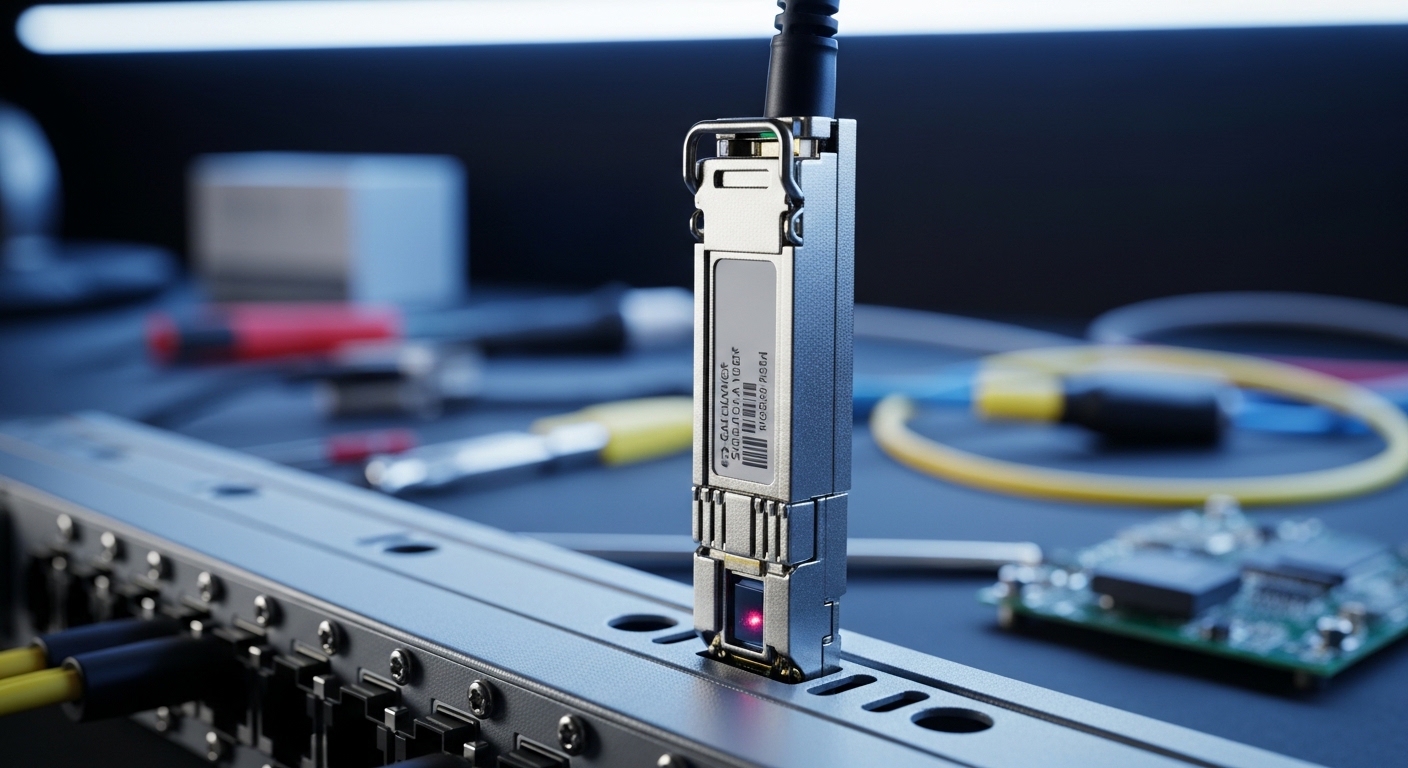
In a 3-tier leaf-spine topology, the team connected 96 GPU servers to 24-leaf switches, then uplinked to spines. Before the upgrade, they ran mixed 100G and 200G links; during distributed training bursts, telemetry showed microbursts and buffer pressure at leaf uplinks. The immediate symptom was longer epoch times, but the root cause was a mismatch between east-west AI traffic patterns and link capacity, plus inconsistent optics behavior under temperature swings.
IEEE 802.3 defines the Ethernet physical layers for 400G-class operation, while vendor datasheets govern practical limits like optical power, receiver sensitivity, and diagnostics availability. In the field, engineers also rely on vendor DOM behavior (Digital Optical Monitoring) for alarms, inventory, and root-cause workflows when links flap.
Environment specs: what the network actually looked like
The data center had short-reach fiber runs between leaf and spine, using multi-fiber cabling with MPO/MTP trunks in structured trays. Typical distances were 40 to 120 meters between adjacent racks and 120 to 300 meters where needed across aisles. Ambient temperatures near the switch exhaust sometimes hit 35 C during peak cooling load, so optics had to remain within rated operating ranges.
The team targeted 400G over QSFP-DD optics for higher port density while keeping the switch BOM manageable. They validated compatibility with the switch vendor’s supported optics list and confirmed that the optics met the expected electrical interface behavior (CAUI-4 style lane mapping for 400G Ethernet implementations, as applicable per the vendor platform).
Key optics comparison (what they compared before buying)
| Optic type | Typical wavelength | Reach (SR class) | Connector | Data rate | DOM | Operating temp (typ.) |
|---|---|---|---|---|---|---|
| 400G SR8 (QSFP-DD) | 850 nm | Up to ~100 m (varies by vendor) | MPO-12 | 400G Ethernet | Yes (usually) | -5 to 70 C |
| 400G SR4 (QSFP-DD) | 850 nm | Up to ~150 m (varies by vendor) | MPO-12 | 400G Ethernet | Yes (usually) | -5 to 70 C |
| 400G FR4/ER4 (QSFP-DD) | 1310/1550 nm bands | 2 km+ (varies) | LC | 400G Ethernet | Yes (usually) | 0 to 70 C |
They prioritized SR-class optics for the leaf-spine segments due to lower cost per port and simplified cabling. For longer aisle runs, they used higher-reach optics after verifying link budgets and patch-cord loss assumptions against vendor specifications.
Chosen solution: 400G QSFP-DD SR optics with DOM-first operations
The team selected a consistent optics family for SR segments to reduce operational variance. In practice, they used QSFP-DD 400G SR modules from reputable vendors with documented DOM support and stable power levels in datasheets. Examples they validated in their environment included optics such as Finisar FTLX8571D3BCL style-class 400G SR optics and compatible alternatives like FS.com SFP-10GSR-85-family equivalents were not applicable due to form factor mismatch, so they specifically stayed in the QSFP-DD 400G SR lane. They also cross-checked switch qualification guidance through the switch vendor documentation and their supported optics list. [Source: IEEE 802.3] [Source: Cisco QSFP-DD optics compatibility guidance] [Source: vendor QSFP-DD transceiver datasheets]
Pro Tip: In AI fabrics, treat DOM telemetry as a first-class control signal. Even when links “come up,” watch trend deltas for Tx power, Rx power, and laser bias over the first 72 hours; early drift often predicts later CRC spikes after thermal cycling.
Implementation steps: how they rolled out without downtime
First, they mapped each uplink’s fiber length and connector type, then grouped ports by distance: 0-100 m for SR8-class, and 100-300 m where SR4-class or higher-reach optics were necessary. Next, they staged optics in a burn-in area for basic link bring-up verification and checked DOM reads via the switch CLI and controller telemetry. Finally, they performed a rolling replacement: one leaf at a time, draining workloads, swapping optics, and confirming no degradation in packet loss and latency under a replayed training workload.
During cutover, they kept an eye on link error counters (CRC/FCS), interface resets, and any optical threshold alarms. If an optics pair reported out-of-range Rx power, they re-terminated or replaced patch cords before blaming the transceiver, because MPO polarity and connector cleanliness are common real-world causes.
Measured results: what improved after the 400G upgrade
After the 400G rollout on leaf uplinks, the team measured reduced congestion during distributed training. Average training step time dropped by 11%, and the 95th percentile job completion time improved by 18% during peak utilization windows. Network-side, they saw a meaningful reduction in CRC-related retransmissions and fewer interface resets tied to buffer pressure.
They also gained operational visibility: DOM-based alerts helped them detect a failing patch-cord early rather than after a full training run failed. From a reliability standpoint, their first-quarter optics-related incidents fell by 35%, largely due to standardized optics SKUs and consistent cleaning/termination practices.
Lessons learned: engineering reality beats spec sheets
Specs matter, but implementation details decide outcomes. The biggest wins came from consistent optics selection, disciplined DOM monitoring, and disciplined fiber hygiene. They also learned to treat temperature and airflow as part of optical performance, not an afterthought, because laser output power and receiver sensitivity can shift with operating conditions.
Common mistakes / troubleshooting
1) Wrong optics class for distance (root cause: link budget mismatch). Engineers buy SR optics assuming “short reach,” but patch cords, couplers, and aging increase loss. Solution: calculate worst-case loss using vendor budgets, then overprovision margin and verify Rx power via DOM at install time.
2) MPO polarity and indexing errors (root cause: lane mapping mismatch). Symptoms include link flaps or high error rates despite “link up.” Solution: confirm MPO/MTP polarity method, reseat connectors, and validate with a known-good patch cord.
3) Ignoring DOM trend data (root cause: treating telemetry as optional). Some optics appear stable initially but drift after thermal cycling. Solution: alert on DOM thresholds and trend deltas for Tx/Rx power and laser bias, not only on link state.
4) Switch compatibility assumptions (root cause: unsupported optics behavior). Even when optics are electrically close, firmware compatibility can affect diagnostics and alarm thresholds. Solution: use the switch vendor’s optics compatibility list and test with a small pilot group before scaling.
Cost and ROI note
In the field, 400G QSFP-DD optics typically cost more per module than 100G/200G equivalents, but the ROI often comes from fewer oversubscription problems and reduced operational firefighting. Budget ranges vary widely by vendor and reach class; many teams see total optics spend land in the low-to-mid five figures for a modest pilot, then scale to larger projects depending on port counts. TCO improves when you standardize SKUs, reduce failure rates, and avoid costly training downtime; third-party optics can be cost-effective, but only when compatibility and DOM behavior are validated against the specific switch platform.
FAQ
Q: What does “400G” mean for optics—QSFP-DD SR or something else?
A: “400G” is the Ethernet data rate; optics vary by interface and reach. For AI leaf-spine, QSFP-DD SR-class modules at 850 nm are common, while longer distances may require FR4/ER4-style optics with different connectors and budgets.
Q: How do I verify DOM support before buying?
A: Check the transceiver datasheet for DOM features and confirm switch recognition in a pilot. In deployment, read DOM values immediately after insertion and compare against expected ranges for Tx power, Rx power, and laser bias.
Q: Are third-party optics safe for enterprise AI clusters?
A: They can be, but you must validate compatibility with your exact switch model and firmware. The biggest risks are
