
Choosing between 400G optical modules and direct attach copper is a reliability and cost decision, not just a performance check. This decision guide helps network engineers, data center operators, and QA/reliability leads pick the right physical-layer option for leaf-spine fabrics, AI clusters, and high-throughput enterprise backbones. You will get practical selection criteria, real deployment numbers, common failure modes, and an ROI view grounded in field experience and vendor/module constraints.
Why the 400G choice is a reliability decision, not a bandwidth checkbox
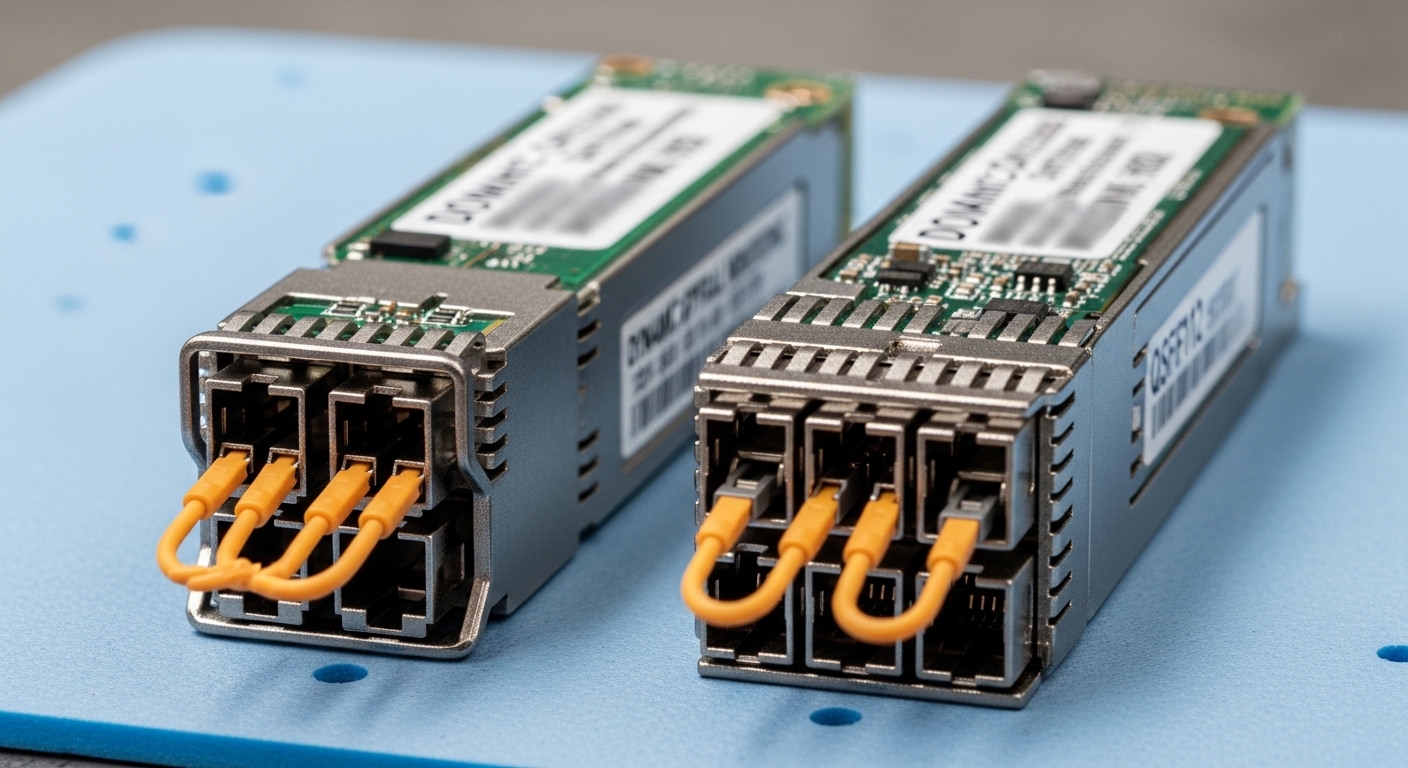
At 400G speeds, the physical layer becomes sensitive to signal integrity, thermal stress, connector cleanliness, and transceiver compatibility. Direct attach copper (DAC) typically wins for short reach inside the same rack or nearby row, where you can control cable routing and reduce optical cleaning overhead. 400G optical modules win when you need longer reach, better scalability across rows, and easier moves/adds to new paths. In ISO 9001 terms, treat this as a controlled selection process: define acceptance criteria (link margin, temperature exposure), document vendor part numbers, and verify performance with repeatable test procedures.
What IEEE 802.3 actually makes you accountable for
400G Ethernet physical-layer implementations follow IEEE 802.3 specifications for optical and electrical signaling (including reach classes and link behavior). In practice, you must ensure the transceiver type matches the switch port capability (for example, whether the switch supports 400G SR4 optics or a specific active electrical interface). If the port expects a particular electrical PCS/FEC mode or an optics control plane profile, a “compatible looking” module can still fail link training or degrade BER under temperature cycling. For a baseline reference, start with [Source: IEEE 802.3].
For optical options, also align with vendor datasheets on wavelength, lane mapping, and power budgets. For electrical options, align with the switch vendor’s DAC/retimer guidance and the expected cable length and construction (passive vs active copper, and whether it uses FEC-less operation or requires specific DSP behavior). Field failures often trace back to a mismatch between switch port expectations and cable/module electrical characteristics, not to “insufficient bandwidth.”
Key specifications comparison: 400G optical modules vs DAC
Below is a practical comparison focused on what engineers measure and what causes outages: reach, optics wavelength, thermal range, connector type, typical power draw, and operational constraints. Values vary by vendor and part number, so verify against the exact datasheet for the model you plan to deploy.
| Spec | 400G Optical Module (examples: 400G SR4) | 400G Direct Attach Copper (examples: active DAC) |
|---|---|---|
| Typical data rate | 400G (lane-based, e.g., 4 lanes with SR4) | 400G (electrical lanes with equalization) |
| Reach class | Short reach: typically 100 m over OM4 (verify budget) | Typically 1 m to 7 m depending on active/power class |
| Wavelength / signaling | Multi-mode SR: nominal around 850 nm | Electrical signaling over copper, no wavelength |
| Connector | MT ferrule MPO/MTP (8-fiber or 12-fiber style; verify) | Switch-specific high-density edge connector or cable assembly interface |
| Typical module/cable power | Often in the range of 6 W to 12 W per module (datasheet dependent) | Active DAC/cable assembly often 3 W to 8 W per end (datasheet dependent) |
| Operating temperature | Common ranges: 0°C to 70°C (commercial) or wider options | Common ranges: often 0°C to 70°C for active DAC; verify |
| Change management | Optics require cleaning/inspection; module swap is standardized | Cable swap is fast, but routing stress and connector wear matter |
| Best fit | Moves across rows, higher flexibility, longer reach | In-rack and short intra-row connections |
Example part numbers you may encounter in the field include Cisco optics such as Cisco SFP-10G-SR for 10G contexts, and for 400G short reach you will often see vendor equivalents of 400G SR4 using MPO/MTP. For reference optical vendors, you may see Finisar/Viavi-style 400G SR4 products and FS.com 400G SR4 variants (verify exact optics format and reach class). When you evaluate, prioritize the exact mapping to your switch model’s supported optics list and electrical interface.
Performance under temperature and aging
Optical modules age through laser output power degradation and connector contamination cycles. DAC/copper assemblies age through mechanical strain, contact resistance changes, and equalization limits as the signal channel loss increases. In a reliability test plan, you should include temperature cycling and repeated connect/disconnect cycles, because “it linked on day one” does not guarantee stable operation after month six in a high-traffic rack. For QA, set acceptance thresholds for link stability and error counters, not just link-up.
Pro Tip: In field audits, the highest “mystery” 400G failures are often traced to connector cleanliness and MPO polarity handling for optics, or to cable bend radius violations for DAC. Both issues can pass initial link training, then fail later under thermal expansion or after a service tech re-routes a cable during maintenance.
Selection decision guide: how to choose for your rack, rows, and budget
This decision guide uses ordered criteria engineers typically apply when selecting physical-layer components for 400G. Treat it like a checklist with evidence: measure reach needs, confirm switch compatibility, and validate environmental constraints.
- Distance and topology fit: If your target links are within rack-to-rack or short row distances, DAC can reduce optical handling. If you need cross-row reach beyond active DAC limits, opt for optical.
- Switch port compatibility: Confirm the switch supports the exact transceiver type or DAC electrical interface. Use the vendor compatibility list and match form factor (for example, QSFP-DD or OSFP depending on platform).
- Reach budget and optical power margin: For optics, validate fiber type (OM3 vs OM4), expected insertion loss, and connector/splice losses. Ensure you meet the vendor’s minimum and typical optical power requirements.
- Environmental operating temperature: Verify module and cable rated ranges. If your row routinely hits 60°C+, plan for derating and monitor temperature telemetry.
- DOM and diagnostics requirements: Decide whether you need digital optical monitoring (DOM) and whether your operations team relies on alarm thresholds. Some organizations require vendor-supported DOM behavior for change control.
- FEC and error counter strategy: Ensure the platform’s FEC mode and error reporting align with your monitoring. Plan how you will detect early degradation (rising FEC corrections, CRC trends, or BER proxies).
- Vendor lock-in risk: OEM optics often come with higher cost and tighter coupling to vendor support policies. Third-party can reduce CAPEX but may increase validation effort and RMA handling time.
- Maintenance workflow: If your staff can reliably clean and inspect MPO connectors, optics are manageable. If you cannot guarantee connector hygiene, DAC may reduce one failure class but introduces cable routing risks.
- Spare strategy for MTBF targets: Define how many spares you keep per aisle or row based on observed failure rates. For high-value fabrics, spares reduce mean time to repair (MTTR) even if MTBF is acceptable.
Real-world deployment scenario: leaf-spine 400G in an AI-ready data center
Consider a 3-tier data center leaf-spine topology supporting an AI workload. The leaf switches each have 48 x 400G uplinks, and the spine has dense 400G ports. The design places leaf-to-spine links at 2 racks apart, with a planned maximum path length of 12 m including patch panels and overhead trays. In this scenario, using active DAC for every uplink would exceed typical active DAC reach limits and would create severe cable management constraints. The team selects 400G SR4 optical modules for leaf-to-spine and uses short DAC only for within-rack server-to-top-of-rack aggregation where distances are typically 1 m to 3 m.
After rollout, the reliability team monitors link CRC counters and optical DOM telemetry. Over the first 90 days, they observe stable link-up rates and low error counts, but they also document two incidents: one MPO connector was installed without full ferrule inspection, and one active DAC experienced a routing kink after a cabling rework. Both were resolved with cleaning, re-termination, or replacement, and the incident reports were fed into the change-control training for field techs.
Common mistakes and troubleshooting: what causes link flaps and silent errors
Even when the part numbers look correct, physical-layer issues can surface as link flaps, rising error counters, or intermittent packet loss. Below are concrete failure modes with root causes and fixes.
Optics installed with incorrect MPO polarity or mismatched fiber mapping
Root cause: MPO polarity handling errors (or inconsistent patch panel mapping) cause receive lanes to be connected to transmit lanes. This can still show link-up during initial training but later exhibit errors or complete link failure after re-seating.
Solution: Use an MPO polarity method consistent with your patching standard (for example, adopt a documented polarity scheme across the site). Verify with a fiber tester and confirm lane mapping before final cable management. Train technicians to record polarity orientation during every change.
DAC failure due to bend radius and cable stress during routing
Root cause: Active DAC performance degrades when the cable is bent tighter than the vendor’s minimum bend radius or when it experiences repeated mechanical stress from rack vibrations or ongoing cable moves. The channel loss increases, pushing equalization beyond limits.
Solution: Apply strict bend radius guidance and use proper strain relief. During troubleshooting, inspect for visible kinks and measure channel stability by reseating both ends and comparing error counters before and after movement. Replace the cable if error counts rise consistently under the same load.
Thermal mismatch and airflow blockage leading to elevated module temperature
Root cause: Both optical modules and active DACs have operating limits. In dense 400G ports, blocked airflow can push transceiver temperatures above safe thresholds, accelerating aging and increasing BER.
Solution: Confirm thermal telemetry from the switch (module temperature, if available) and validate airflow paths. Add airflow baffles where needed, and avoid stacking cables that block vents. For QA, include thermal stress checks in acceptance testing for new deployments.
Silent incompatibility: unsupported optics or electrical interface profile
Root cause: Some platforms require specific transceiver capability sets, including vendor-specific control plane behavior, DOM interpretation, or supported FEC/encoding. A third-party module may link but not meet your operational thresholds.
Solution: Use the switch vendor’s compatibility list and validate with a burn-in test that includes sustained traffic. Track error counters over time, not just link-up state.
Cost and ROI note: CAPEX, TCO, and reliability math that field teams use
Pricing varies widely by OEM vs third-party, volume discounts, and region. As a realistic ballpark, 400G SR4 optical modules often cost more than active DAC per unit, but the total system cost depends on reach and cabling labor. Active DAC cables are frequently cheaper upfront for short distances, but they can increase operational cost if frequent moves create cable damage or if the reach limit forces optical deployment anyway.
For TCO, include labor, spares, cleaning tools, and downtime risk. In reliability terms, even if MTBF is comparable, MTTR can dominate total outage minutes. A swap of an optical module may be faster than troubleshooting a marginal DAC channel after a cabling re-route, depending on your spares and technician training. If your environment has inconsistent connector hygiene, the “hidden” cost of cleaning and rework can outweigh the initial cable savings.
For ROI planning, model scenario-based outcomes: for example, if you estimate a 1% to 3% probability of a connector-related incident per quarter in poorly controlled maintenance, optics can become more expensive unless you enforce inspection and cleaning standards. Conversely, if your team has mature cable management practices with strict bend radius enforcement, DAC can reduce optical handling labor for in-rack links.
FAQ: 400G decision guide questions engineers ask before ordering
Which is better for rack-to-rack 400G: optics or DAC?
If rack-to-rack distance stays within active DAC reach limits (often a few meters), DAC can be practical and reduce optical handling steps. For anything beyond that, optical modules provide more reach headroom and easier scaling across rows.
Do I need DOM support for 400G optical modules?
DOM is valuable for monitoring laser bias, receive power, and early degradation indicators. If your operations team relies on telemetry-driven alarms, DOM support can reduce mean time to detect (MTTD) and improve reliability.
Can I mix OEM and third-party modules on the same switch?
It can work, but it is not guaranteed. Validate against the switch’s compatibility list and run a burn-in test under your expected traffic profile and temperature range.
Why does a link sometimes come up but then error counters climb?
Common causes include optics polarity or lane mapping issues, connector contamination, or DAC equalization stress due to bend radius or channel mismatch. Compare error counters immediately after reseating and after any cable movement, then isolate the affected link end-to-end.
What testing should I run before accepting a 400G deployment?
At minimum, run sustained traffic tests long enough to capture thermal drift and link stability, and monitor error counters and optics telemetry if available. For QA, include temperature cycling or at least verify stability across your normal daily thermal envelope.
How do I plan spares to meet reliability targets?
Base spare quantities on observed failure rates, port density, and operational impact. Optimize for MTTR by stocking the exact transceiver/cable part numbers and ensuring technicians can quickly identify the failing component using switch telemetry and link diagnostics.
If you want the next step after choosing the physical layer, use fiber cleaning and MPO polarity best practices to reduce connector-induced outages. Then align your procurement to your switch compatibility list and validate with repeatable burn-in testing before you scale.
Author bio: I am a reliability and QA engineer who has validated 10G to 400G deployments using MTBF/MTTR models, environmental stress testing, and IEEE-aligned acceptance criteria. My work focuses on field failure prevention through disciplined module selection, telemetry monitoring, and maintenance workflow controls.
