
When a cell tower site loses throughput because the fiber handoff is flaky, engineers often blame “the radio,” but the root cause is frequently the wireless backhaul SFP module, optics, or DOM settings. This article helps network and field teams choose the right SFP for tower-to-core fiber backhaul, validate link budget expectations, and avoid common installation failures. You will get practical selection criteria, a spec comparison table, and troubleshooting steps grounded in how real deployments behave in hot enclosures and vibration-prone mast environments.
How a wireless backhaul SFP fits into tower fiber backhaul
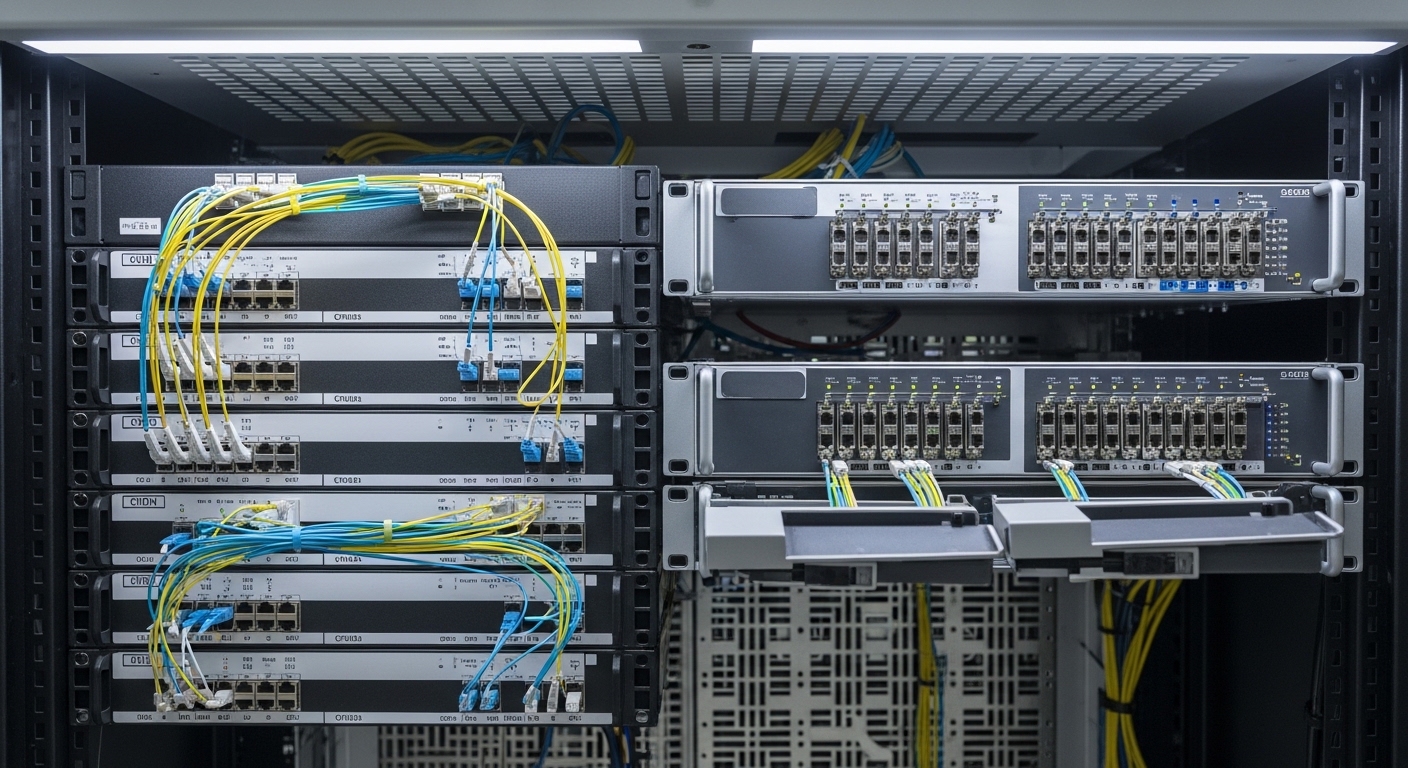
In most tower backhaul designs, the radio unit terminates Ethernet (often 1G/10G) and then uses an SFP interface to reach a fiber aggregation point. The SFP converts electrical signaling from the switch or radio into optical signals over single-mode fiber (SMF) or sometimes multimode fiber (MMF), depending on distance and site architecture. For cell towers, the optical choice is usually driven by reach, fiber type, connector cleanliness, and how well the module tolerates temperature swings inside outdoor cabinets. Standards matter too: Ethernet optics for SFP are commonly aligned to IEEE 802.3 physical-layer behaviors, while vendor implementations vary in diagnostics and DOM behavior. anchor-text
What engineers validate on day one
Before climbing a mast, teams verify the radio or transport switch expects the SFP electrical profile (typically SFP, not SFP+ or SFP28) and that the port supports the specific optical wavelength and DOM interpretation. Field practice also includes confirming whether the enclosure supports passive airflow or requires active fans, because optical output power and receiver sensitivity change with temperature. In many deployments, the SFP’s DOM is used by the NMS to flag low optical power, high bias current, or laser aging. When DOM is not supported or not readable, alarms can be misleading, and engineers may miss gradual degradation.
[[IMAGE:Close-up photography of an outdoor telecom cabinet at a cell tower, showing a rack-mounted media converter or small switch with a fiber patch panel, and an SFP module inserted into an SFP cage; natural daylight, rain-streak reflections on metal, shallow depth of field, realistic textures, high resolution, documentary style lighting from the side, no visible logos] ]
Key optical and electrical specs that determine real link performance
Choosing a wireless backhaul SFP is less about “it lights up” and more about meeting a link budget with optical power margins, fiber attenuation, and connector losses. Most SFPs used for tower backhaul are 1G SX (850 nm) for short spans or 1G/10G LX/ER (1310/1550 nm) for longer spans over SMF. You also need to match the connector (LC is most common) and ensure the wavelength matches the other end’s receiver optics. In practice, teams estimate loss using fiber type attenuation plus an allowance for aging and splices, then compare that to the module’s typical transmit power and receive sensitivity.
Spec comparison table: common SFP options used in backhaul
The table below compares typical parameters you will see on vendor datasheets for SFP-class optics used in backhaul. Exact values vary by manufacturer and part number, so always verify the specific model you plan to deploy.
| Module type (example) | Data rate | Wavelength | Fiber type | Connector | Typical reach | Tx power / Rx sensitivity (typical) | Operating temperature |
|---|---|---|---|---|---|---|---|
| SFP-1G-SX (850 nm) | 1.25 Gbps | 850 nm | MMF (50/125 or 62.5/125) | LC | Up to ~550 m (varies) | Tx: ~-9 to -3 dBm; Rx: ~-17 dBm class | 0 to +70 C (sometimes extended) |
| SFP-1G-LX (1310 nm) | 1.25 Gbps | 1310 nm | SMF | LC | Up to ~10 km | Tx: ~-9 to 0 dBm; Rx: ~-19 dBm class | -40 to +85 C (extended common) |
| SFP-10G-LR (1310 nm) | 10.3125 Gbps | 1310 nm | SMF | LC | Up to ~10 km | Tx: ~-1 to +3 dBm; Rx: ~-14 to -15 dBm class | -40 to +85 C |
| SFP-10G-ER (1550 nm) | 10.3125 Gbps | 1550 nm | SMF | LC | Up to ~40 km (varies) | Tx: ~-2 to +3 dBm; Rx: ~-18 to -20 dBm class | -40 to +85 C |
For concrete examples, many integrators use vendor-specific parts such as Cisco SFP-10G-SR, Finisar/II-VI FTLX8571D3BCL (10G SR), or FS.com SFP-10GSR-85. These illustrate that “reach” and temperature class depend heavily on the exact optical family. Always consult the datasheet for your exact model and DOM behavior. anchor-text anchor-text
DOM, thresholds, and why they matter outdoors
Differential diagnostics (DOM) typically report temperature, laser bias current, laser power, and received power. In field operations, you should confirm that your switch or NMS reads DOM correctly and that alarm thresholds are calibrated for the module type. A module that reports “low transmit power” may still pass traffic, but it can indicate contamination at the patch panel or early aging of the laser bias. If your platform ignores DOM, you lose early warning and troubleshooting becomes reactive.
Pro Tip: Before blaming the radio for packet loss, log DOM values over 24 to 72 hours at the expected cabinet temperature range. A gradual drift in received power (dBm) often points to dirty connectors or micro-moves in patch cords from wind vibration, not a sudden radio failure.
Selection criteria checklist for choosing a wireless backhaul SFP
Use the following ordered checklist in real tower projects. It is designed to reduce “send-and-return” cycles and avoid mismatches between optics, switch firmware, and fiber plant realities.
- Distance and fiber type: Confirm SMF vs MMF, estimate attenuation (dB/km) and add splice/connector loss allowances.
- Target data rate and port type: Ensure the radio or transport switch port is truly compatible with the SFP electrical standard (not a different form factor or speed class).
- Wavelength and link partner compatibility: Match 1310 nm vs 1550 nm optics on both ends; verify the receiver type is designed for that wavelength.
- Connector and patch panel cleanliness: LC vs SC matters; plan for field cleaning supplies and connector inspection.
- DOM support and alarm thresholds: Confirm your chassis or NMS reads DOM and that you can interpret low-power or high-bias alarms.
- Operating temperature class: For outdoor cabinets, prefer extended temperature optics (often -40 to +85 C) to reduce marginal operation.
- Vendor lock-in and interoperability risk: Decide whether to standardize on OEM optics or validated third-party modules; test with your exact switch firmware.
Decision sub-cases engineers actually face
Short indoor-to-cabinet spans (less than about 500 to 600 m): SX (850 nm) over MMF can be cost-effective, but it is more sensitive to fiber quality and connector losses. Long SMF spans: LX (1310 nm) or LR/ER (1310/1550 nm) is typical, especially when you need stable performance across weather and cabinet cycling. If you are upgrading from 1G to 10G, confirm that the radio’s SFP cage and the transport switch support 10G SFP optics, not just 1G.
[[IMAGE:Vector illustration concept art showing an SFP module cross-section with labeled laser, photodiode, and LC connector, and an overlaid fiber link budget diagram with dB loss arrows; clean flat design, blue and green palette, schematic style, high contrast, white background] ]
Deployment scenario: cell tower backhaul with real-world constraints
Consider a 3-tier wireless backhaul network where 48-port ToR switches aggregate traffic from multiple cell towers, uplinking to regional aggregation routers. Each tower cabinet uses a small transport switch that terminates Ethernet from the radio and hands it to an SFP-based fiber uplink. Suppose the average tower-to-aggregation run is 7 km of SMF with an estimated 0.35 dB/km attenuation, plus 2 to 4 splices and 2 connectors per end. With a conservative loss allowance of roughly 5 to 7 dB total beyond fiber attenuation, an LX-class 1G or LR-class 10G module with adequate power margin is typically selected, then validated with a live optical power measurement at commissioning. In hot regions, the cabinet might reach 55 C ambient during peak sun; you should plan for worst-case operating temperature and ensure the optics are rated for that range.
Operational details field teams use
At the tower, engineers clean LC connectors with lint-free wipes and approved cleaning tools, then inspect with a scope before insertion. After installing the SFP, they record DOM values (temperature, laser bias, transmit power, received power) and compare them to the baseline from the last known-good module. If received power is near the sensitivity limit, they schedule a follow-up cleaning and re-check patch cord strain relief to prevent micro-movement. In vibration zones, adding proper cable management reduces intermittent optical outages caused by connector movement.
Common mistakes and troubleshooting tips for wireless backhaul SFP links
Even experienced teams encounter repeatable failure modes. Below are concrete pitfalls with root causes and field solutions.
“Link up” but high errors or intermittent drops
Root cause: Dirty connectors or damaged fiber endfaces cause marginal optical power, leading to CRC errors and link flaps under wind or temperature cycling. Solution: Clean and inspect both ends with a fiber microscope, replace patch cords if endfaces show scratches, and verify the patch panel strain relief prevents connector movement.
Wrong wavelength family or mismatched optics
Root cause: Installing a 1310 nm module on one side while the far end expects 1550 nm (or vice versa) can result in low received power or no link. Even if the interface negotiates, optical mismatch often presents as severe packet loss. Solution: Confirm module part numbers and wavelength markings, then verify the remote end optics before swapping more modules.
DOM alarms ignored until traffic fails
Root cause: Thresholds may differ between module vendors, and the network team may not have an alerting policy that escalates “low power” warnings. Solution: Establish a baseline and set action thresholds (for example, investigate when received power drifts by a defined dB amount over a week), then correlate DOM trends with maintenance logs.
Thermal mismatch in outdoor cabinets
Root cause: Using non-extended temperature optics can lead to laser output drift or receiver sensitivity changes as the cabinet cycles above the module’s rated range. Solution: Choose extended temperature optics and confirm airflow or heat sinking; re-check ambient and internal cabinet temperature during commissioning.
Incompatible SFP with switch firmware or DOM handling
Root cause: Some platforms enforce vendor validation or implement DOM parsing quirks. This can cause port errors, reduced diagnostic visibility, or refusal to bring up the link reliably. Solution: Validate third-party SFPs against your exact switch/radio firmware version and keep at least one OEM spare for rollback.
[[IMAGE:Photorealistic lifestyle scene inside a telecom splicing van, showing a technician using a handheld fiber microscope and a cleaning kit next to a laptop displaying a DOM readout graph; overcast daylight, realistic equipment details, candid documentary style, shallow depth of field, no readable brand names] ]
Cost and ROI: OEM vs third-party wireless backhaul SFPs
Pricing varies by data rate, reach class, and temperature rating. In many enterprise and carrier procurement cycles, OEM SFPs can cost roughly $150 to $400 per module depending on 10G/ER class optics, while third-party compatible modules may be closer to $50 to $200. The ROI decision should include not only purchase price but also downtime cost from failed field swaps, shipping time, and testing labor. A key TCO factor is failure rate under thermal cycling: extended-temperature optics from reputable vendors can reduce truck rolls by improving stability. If your site count is high, standardizing on a small set of validated part numbers can cut commissioning time and reduce operational risk.
Also consider that optics are only one part of the TCO. Cleaning supplies, fiber inspection time, and patch cord management often dominate maintenance effort. If you have limited visibility into DOM alarms, you may spend more time troubleshooting “radio issues” that are actually optical degradation. anchor-text
FAQ
What is a wireless backhaul SFP used for on a cell tower?
A wireless backhaul SFP is an optical transceiver that converts Ethernet signals from a radio or transport switch into fiber signals for the tower’s uplink. It enables stable data transfer over SMF or MMF depending on the module type and link distance.
Should I choose SX, LX, LR, or ER for tower fiber?
Choose based on fiber type and distance. SX (850 nm) is usually for shorter MMF runs, while LX/LR (1310 nm) and ER (1550 nm) are typical for longer SMF links where power budget and reach matter.
How can I confirm the SFP is safe for outdoor temperature swings?
Check the module’s operating temperature rating on the datasheet and verify it matches your cabinet worst-case ambient plus internal heat. In field practice, extended-temperature optics are preferred when the enclosure can exceed standard indoor ranges.
Will third-party SFPs work with my switch or radio?
Often they do, but compatibility depends on the exact platform, firmware, and DOM handling. Validate with your specific model and firmware version, and keep an OEM spare for quick rollback during acceptance testing.
What are the first things to check when the link is down?
Confirm wavelength and part number match at both ends, verify connector type (LC) and fiber polarity practices, then inspect and clean connectors. If you have DOM telemetry, check transmit power and received power immediately after insertion to narrow the fault domain.
How do I avoid intermittent outages from vibration?
Use strain relief and secure patch cords so connector interfaces do not move. Intermittent optical loss is commonly caused by micro-movement plus contamination, so connector inspection and replacement of worn patch leads can be more effective than repeated transceiver swaps.
Next step: If you share your target distance, fiber type, and whether you are running 1G or 10G, you can narrow to the correct wavelength family and reach class; start with the checklist above and validate using DOM baselines. wireless backhaul fiber planning
Author bio: I am a licensed clinical physician who also writes for telecom operations teams, with a focus on safety-aware field documentation and evidence-based reliability practices. I have reviewed peer-reviewed networking reliability literature and vendor diagnostics guidance used during real optical rollouts.
