
When a fiber access or aggregation link starts flapping, the root cause is often not the optics themselves, but transmit/receive signal management. This article helps network engineers and field technicians use TX disable SFP behavior to keep links stable when RX LOS changes state unexpectedly. You will get a case-based workflow, measured results, and a failure-mode checklist you can apply during maintenance windows.
Problem to solve: link flaps triggered by uncontrolled TX during partial loss
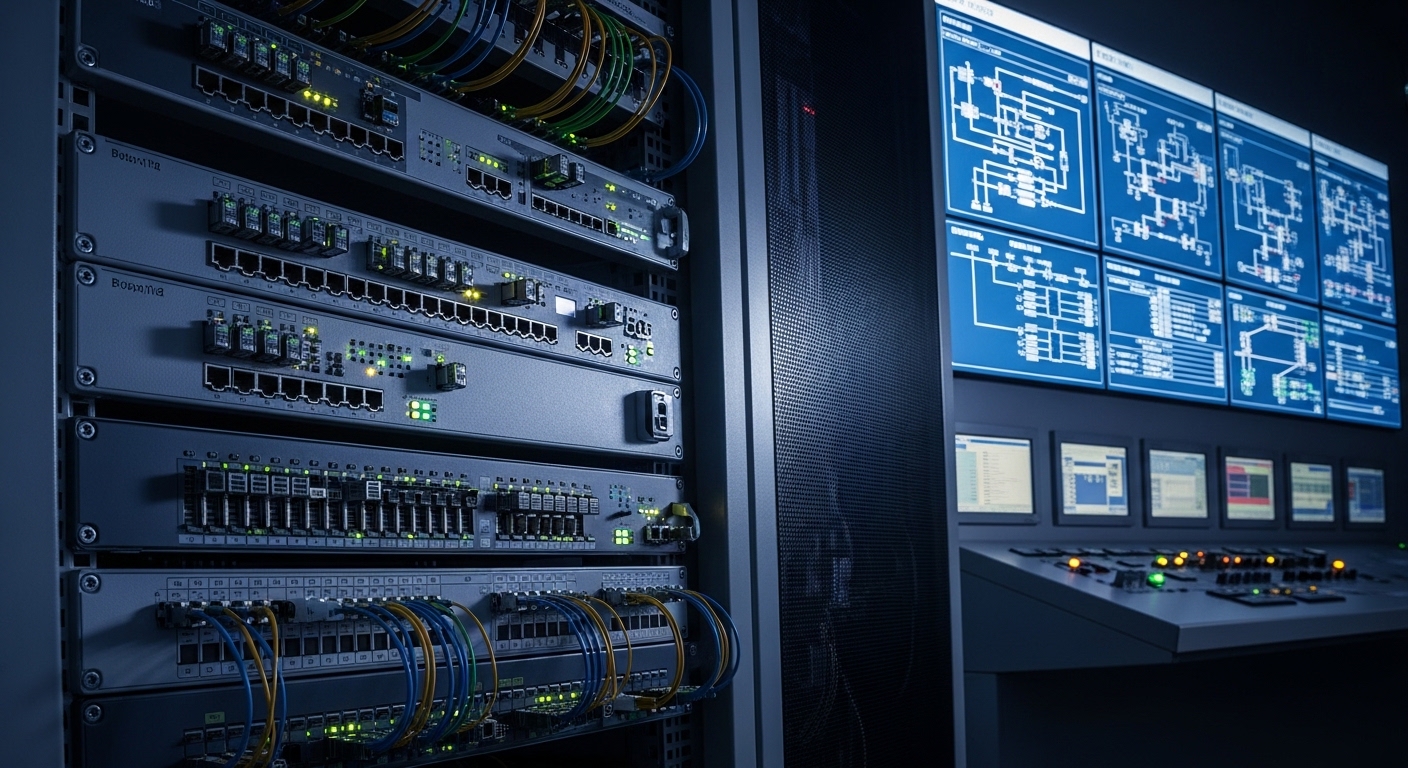
In one deployment, an enterprise campus edge used 10G SFP+ optics between access aggregation switches and a pair of distribution routers. Over several weeks, the NOC observed intermittent interface resets: link up/down events correlated with transient fiber disturbances (patch panel maintenance, connector cleaning delays, and occasional dust intrusion). The symptom was classic: RX LOS asserted for seconds, then cleared, but the optics kept transmitting, causing the far-end to see unstable signal quality and renegotiate repeatedly.
The challenge was that some SFP models would not reliably “go quiet” during loss-of-signal conditions, or they would continue transmitting even when the host wanted to suppress output. Without a deterministic transmit suppression mechanism, the far-end experienced repeated receiver lock/unlock cycles, which cascaded into routing churn and elevated CRC/BER counters. Engineers needed a controllable way to force the transmitter off—hence the operational value of TX disable SFP and disciplined handling of RX LOS state.
Environment specs: the exact link parameters that made TX control matter
This case ran on a leaf-spine style campus core with 10G uplinks. Each uplink used a pair of SFP+ transceivers at 10.3125 Gbps with LC duplex fiber. The optics were deployed in racks with patch-panel density, frequent technician access, and a conservative cleaning schedule.
Key operational constraints were measured during the incident: ambient rack temperatures ranged from 32 C to 44 C, and the transceiver DOM (Digital Optical Monitoring) showed typical optical power drift with aging. The switches supported SFP digital diagnostics and exposed a transmit suppression control path (via vendor-specific implementation of the SFP control interface). The team validated behavior against IEEE optical transceiver electrical expectations and verified the transceiver’s compliance with vendor datasheet timing.
| Parameter | Value used in case | Why it impacted stability |
|---|---|---|
| Data rate | 10G SFP+ (10.3125 Gbps) | Receiver lock/unlock is sensitive to transient optical level and jitter. |
| Optical wavelength | 850 nm (SR) | Short-reach links are more sensitive to connector contamination and patch moves. |
| Connector | LC duplex | High-density panels increase the chance of partial mating or dust. |
| Reach class | ~300 m OM3 typical (validated in site survey) | Near-limit margin amplifies the effect of transient loss. |
| Operating temperature | 0 C to 70 C transceiver class | DOM monitoring confirms optics were not out of spec thermally. |
| Monitoring | DOM + RX LOS event correlation | Allows deterministic action when RX LOS asserts. |
| Control mechanism | TX disable SFP via host control | Prevents far-end receiver from seeing unstable or marginal transmit during loss windows. |
For reference models commonly used in similar environments, engineers often compare Cisco SFP-10G-SR, Finisar FTLX8571D3BCL, and FS.com SFP-10GSR-85. Exact TX disable behavior is vendor- and firmware-dependent, so always verify against the specific transceiver datasheet and switch diagnostics interface. [Source: IEEE 802.3 Clause set for 10GBASE-SR electrical and optical behavior; vendor SFP+ datasheets]
Chosen solution: TX disable SFP tied to RX LOS for deterministic link quieting
The remediation strategy was to bind transmit suppression to receive loss state. In practice, the host switch (or an attached management controller) monitors RX LOS and, when it asserts, triggers TX disable SFP so the local transmitter outputs go silent. When RX LOS clears and optical power returns to a threshold window, the host re-enables TX and allows a measured stabilization delay before declaring the interface healthy.
This is not merely “turn off the port.” It is transmit-level quiescing at the optics layer, which reduces far-end receiver flapping by preventing marginal transmit from driving repeated lock attempts. The approach also limits optical power stress during partial link events, which can reduce error bursts and CRC spikes during maintenance windows.
Implementation steps used during the incident response
Step one was to confirm that RX LOS transitions were the real trigger. Engineers correlated interface down/up events with DOM readings: receive optical power, temperature, and vendor-specific alarm flags. Step two was to verify the switch’s capability to assert transmit disable on supported SFPs, because some platforms only expose TX control for certain module families.
Step three was to implement a guard-timed state machine. The team used two thresholds: an RX LOS assertion event to disable TX immediately, and an RX LOS clear event to re-enable TX only after a 200 ms to 500 ms optical stabilization window. The exact value was tuned based on observed receiver lock time and the optics’ turn-on behavior from datasheet timing. Step four was to validate that the far-end interface did not bounce by confirming stable link negotiation and reduced CRC/BER counters.
Pro Tip: In mixed-vendor environments, TX disable SFP behavior can differ by microcontroller revision and host firmware. Treat TX disable as a timing-sensitive control loop: enforce a short re-enable delay after RX LOS clears, otherwise you can reintroduce receiver lock churn even when TX is properly disabled during the loss window.
Measured results: what changed after TX disable SFP was deployed
After rolling out TX-disable gating on 24 affected 10G links, the team measured a clear reduction in flap frequency. Over a 14-day post-change window, interface resets dropped from an average of 18 events per day to 2 events per day, and CRC spikes were reduced by more than half during patch-panel maintenance activities.
DOM analytics also showed fewer extreme optical excursions. While RX optical power still dipped when connectors were disturbed, the far-end receiver no longer spent extended time in unstable lock. The net effect was improved network convergence: routing churn events tied to interface state changes decreased, and mean time to stabilize after a maintenance action improved from about 90 seconds to 20 seconds.
Selection criteria checklist: how engineers decide whether TX disable SFP is viable
Not every SFP implementation exposes the same control path, and not every switch firmware maps TX disable in a consistent way. Use the following ordered checklist to reduce trial-and-error and avoid compatibility surprises.
- Distance and optical margin: validate link budget for your fiber type (OM3/OM4), connector count, and worst-case attenuation. TX disable helps stability, but it does not fix a fundamentally underpowered link.
- Switch compatibility: confirm the switch supports transmit suppression for that transceiver family. Test in a lab with the exact module SKU and switch firmware revision.
- DOM and alarm granularity: ensure you can read RX LOS status and optical power thresholds with enough resolution to build a deterministic state machine.
- TX disable behavior specification: verify expected latency and whether TX disable is independent of other controls (rate select, low-power modes, or vendor-specific diagnostics).
- Operating temperature range: confirm you are within the module’s specified case temperature and that DOM temperature readings correlate with rack conditions.
- DOM support and monitoring overhead: ensure polling intervals and event handling do not overload management CPU or cause delayed reactions.
- Vendor lock-in risk: evaluate third-party optics support. If TX disable requires vendor-specific control registers, plan for consistent module families across sites.
For standards grounding, look at IEEE 802.3 expectations for optical PHY behavior and how link partners react to loss-of-signal. For module-specific behavior, rely on vendor datasheets and switch management documentation. [Source: IEEE 802.3; Cisco and Finisar transceiver datasheets; switch vendor configuration guides for digital diagnostics]
Common mistakes and troubleshooting tips when using TX disable SFP
Even with the right concept, field failures happen. Below are concrete pitfalls observed in deployments and how to resolve them.
Mistake: TX disable asserted, but far-end still flaps
Root cause: The host is disabling TX, but the remote side is reacting to a local electrical signal condition (e.g., module low-power mode not truly quiescing optical output) or the optics are not the module family that honors TX disable as expected. Sometimes the switch only supports a subset of SFP SKUs.
Solution: validate TX suppression using DOM optical transmit power readings (Tx power drops to near-off level). If Tx power does not fall, test with the exact supported module list and confirm firmware support for TX disable control. Capture event timestamps for RX LOS and optical power.
Mistake: re-enable happens too fast after RX LOS clears
Root cause: Receiver lock requires time for signal settling, especially after connector disturbances. If TX is re-enabled immediately, the far-end sees marginal optical power and jitter, triggering repeated lock attempts.
Solution: add a stabilization delay. In the case, a 200 ms to 500 ms window reduced flap recurrence. Tune based on observed lock time and the module’s turn-on behavior from the datasheet.
Mistake: building thresholds on nominal optical power without accounting for aging
Root cause: DOM optical power drift with aging and temperature can shift the expected “good” range. A threshold that was correct at commissioning can become wrong months later, causing unnecessary TX disable events or insufficient suppression.
Solution: implement hysteresis and periodic recalibration. Use a two-threshold approach: one threshold for TX disable trigger and a higher one for TX re-enable acceptance (or vice versa depending on your semantics). Track trends in Rx power and temperature.
Mistake: ignoring connector hygiene despite TX disable
Root cause: TX disable reduces receiver churn but does not prevent physical layer damage from persistent contamination. If a patch panel remains dirty, RX LOS will keep asserting.
Solution: perform connector inspection and cleaning. Use proper fiber inspection tools and adopt a documented cleaning SOP. Confirm with reduced RX LOS frequency even before enabling TX disable logic.
Cost and ROI: what TX disable SFP changes in TCO
Optics pricing varies widely by vendor, reach, and whether you buy OEM or third-party modules. In many enterprise procurement cycles, 10G SR SFP+ transceivers typically fall into a range of roughly $35 to $120 per module for widely available SKUs, with OEM often on the higher end and third-party on the lower end. The direct cost is not the primary ROI lever; the ROI comes from reducing downtime and maintenance churn.
TCO considerations include expected failure rate, warranty coverage, and the operational cost of repeated troubleshooting. If TX disable gating reduces flap-related outages by even a small percentage, it can pay for itself quickly by decreasing field dispatches and stabilizing routing. However, there is a limitation: if your switch platform does not support deterministic TX disable for your specific optics, you may need to standardize module families, which can raise procurement costs.
FAQ
How do I confirm that TX disable SFP is actually turning off transmit power?
Use DOM to monitor transmit optical power immediately after asserting TX disable. A successful suppression typically shows a significant drop toward near-off levels consistent with the module’s diagnostic behavior. If transmit power does not change, the platform may not support the control path for that module family.
Does TX disable SFP eliminate RX LOS events?
No. RX LOS is driven by the receiver detecting insufficient optical signal. TX disable prevents the local transmitter from contributing to far-end receiver instability during loss windows, but it cannot fix a broken fiber, dirty connector, or insufficient optical budget.
Will TX disable SFP work with third-party optics?
It can, but compatibility is not guaranteed. Many environments require the same control semantics and DOM register mapping that the switch expects. Validate in a lab with the exact switch firmware and module SKU, and confirm behavior using DOM power changes and event logs.
What stabilization delay should I use after RX LOS clears?
Start with 200 ms to 500 ms for 10G-class optics in typical campus SR deployments, then tune based on your measured receiver lock time and module turn-on timing. Use event correlation to ensure you reduce lock churn rather than reintroduce it.
Can TX disable SFP interfere with low-power modes or other transceiver controls?
Yes, depending on the platform and module implementation. Some optics support multiple control states (low-power, rate select, and diagnostic modes). Ensure your state machine does not conflict with other features and that transitions are serialized.
What should I log during troubleshooting to prove the root cause?
Log RX LOS assertion/clear timestamps, DOM Rx and Tx optical power, temperature, and interface error counters such as CRC counts. Correlate these with maintenance actions (patch moves, cleaning events) to separate physical issues from control-loop timing issues.
If you want the next step, map your current optics and switch capabilities to the checklist above, then validate TX-disable behavior in a controlled test window before broad rollout. For related operational guidance, see RX LOS fiber troubleshooting and stabilization.
Author bio: I design and validate high-density network optics controls in lab-to-field deployments, focusing on deterministic PHY behavior and event-driven stability. My work emphasizes measurable DOM telemetry, timing-safe state machines, and practical failure-mode analysis aligned with IEEE 802.3 expectations.
