
Road and tunnel monitoring networks fail in the real world for reasons that look unrelated to optics: connector contamination, DOM mismatches, temperature excursions, and governance gaps across vendors. This article helps IT and infrastructure teams choose the right tunnel fiber SFP modules for sensor backhaul, edge compute, and ruggedized cabinets. You will get a field-oriented checklist, troubleshooting patterns from deployments, and a ranked shortlist based on cost, availability, and operational risk.
Top 7 tunnel fiber SFP modules by fit for monitoring backhaul
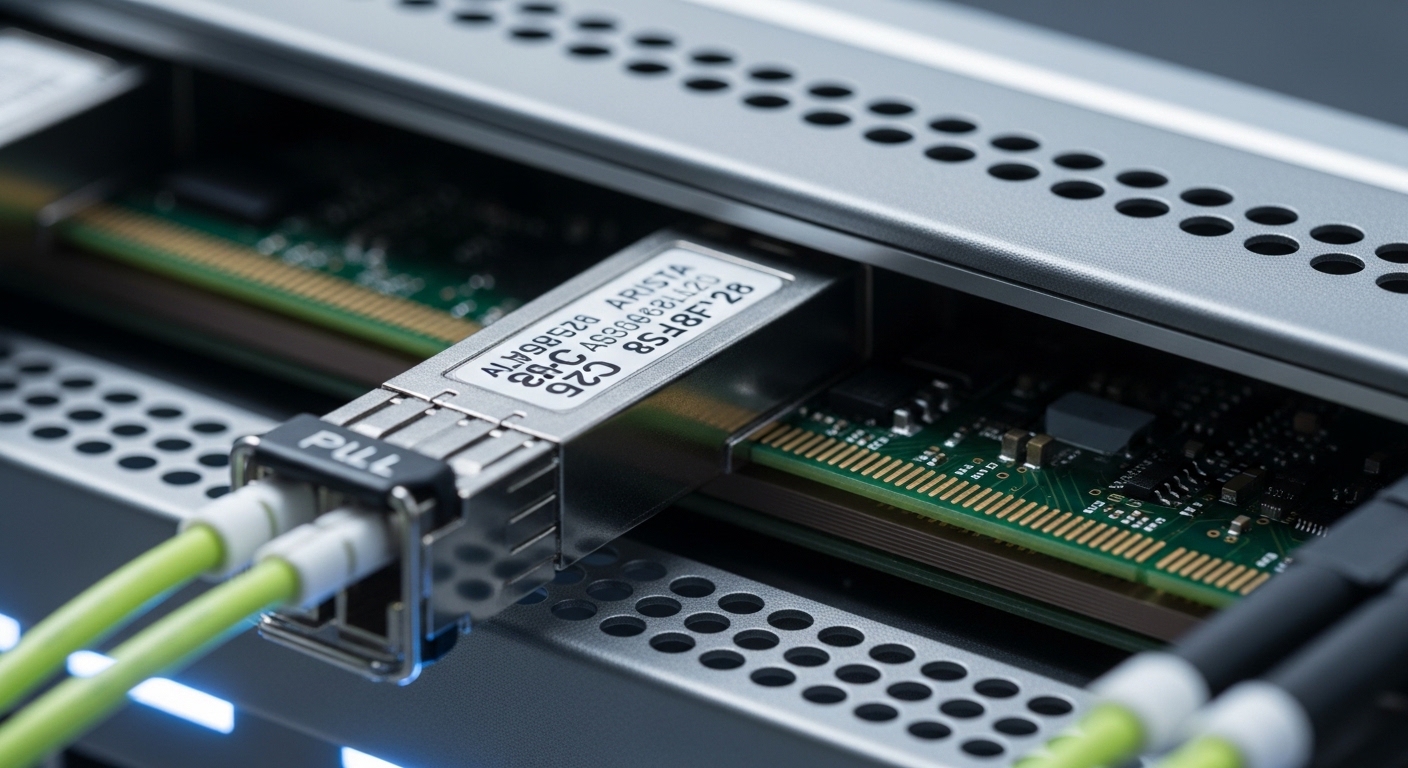
In tunnel and road monitoring, “best” is rarely the fastest lane; it is the module that stays link-stable across temperature swings, supports diagnostics, and matches the switch optics budget. Below are seven module categories that teams commonly standardize, with key specs and where they perform best. For each, I include practical pros and cons so you can align engineering choice with procurement and governance.
10G SR SFP+ for short-reach cabinet interconnects
Key specs/details: Typical examples include Cisco SFP-10G-SR and third-party equivalents like Finisar FTLX8571D3BCL or FS.com SFP-10GSR-85. These are usually 850 nm multimode solutions supporting 10G over OM3/OM4 fiber (reach depends on fiber type and link budget).
Best-fit scenario: Use in a tunnel equipment room where road sensors aggregate to an edge switch, and patch leads are short, such as 30 to 150 m within a cable tray and cabinet.
Pros: Mature ecosystem, lower cost than long-reach optics, abundant spare stock. Cons: Multimode plant discipline is required (OM3 vs OM4 labeling), and dirty MPO/LC ends can cause intermittent alarms.
1G SX for legacy sensor networks and low-power edge lanes
Key specs/details: 1G SFP modules using 850 nm optics (SX class) are common when monitoring systems still run GE interfaces. Many vendors offer DOM support and typical optical power ranges sized for multimode.
Best-fit scenario: When road cameras or environmental sensors use older media converters and you need a safe upgrade path without re-engineering the switching fabric.
Pros: Lower power draw, broad compatibility with older switch families, fast field replacement. Cons: Limited bandwidth growth; if you later add video analytics, you may face an upgrade cascade.
10G LR SFP+ for longer runs between monitoring zones
Key specs/details: 10G LR SFP+ modules operate around 1310 nm over single-mode fiber, with reach commonly up to 10 km depending on optics class and fiber attenuation. Many models also provide DOM (laser bias current, TX power, RX power, temperature).
Best-fit scenario: A road corridor where you backhaul data from roadside cabinets to a central edge node with 2 to 8 km of single-mode fiber.
Pros: Scales distance without multimode discipline; stable in longer plant segments. Cons: Higher module cost; fiber end-face quality and splice loss budgeting matter more.
10G ER SFP+ for high-loss or extra-long single-mode segments
Key specs/details: 10G ER operates at 1550 nm and is designed for longer reach than LR, often 40 km in typical specs. This is useful when you have extra slack, higher attenuation, or route constraints.
Best-fit scenario: A mountainous road route where single-mode segments are longer and splice counts are higher, pushing toward the edge of LR budgets.
Pros: Longer reach reduces active repeaters; supports simplified topology. Cons: More expensive; governance must ensure consistent fiber grade and attenuation assumptions.
25G SFP28 SR for higher-density sensor aggregation
Key specs/details: 25G SFP28 SR uses 850 nm and targets multimode with shorter reach than long-wave options. Typical deployments rely on OM4 and carefully managed patching to meet link budgets.
Best-fit scenario: A future-proofing phase where you consolidate multiple camera feeds and radar telemetry into a smaller number of uplinks.
Pros: Better headroom than 10G; aligns with modern switch silicon. Cons: Requires switch support for SFP28; multimode cabling standards must be enforced.
25G SFP28 LR for single-mode upgrades without changing fiber
Key specs/details: 25G SFP28 LR typically uses 1310 nm for single-mode reach in the multi-kilometer range. This can be a bridge when you already have single-mode backbone and want to raise throughput.
Best-fit scenario: Migrating from 10G to 25G on existing single-mode links while keeping the same fiber route and splice plan.
Pros: Leverages existing fiber; higher throughput with minimal civil work. Cons: Ensure switch firmware supports the optics class and that both ends match speed and encoding expectations.
Ruggedized temperature-rated SFP variants for harsh tunnel cabinets
Key specs/details: Many vendors offer “industrial” temperature ranges (often -40°C to 85°C or similar, depending on the model) and enhanced mechanical tolerances. For tunnel and road cabinets, this matters because passive airflow is limited and sunlight can raise internal temperatures.
Best-fit scenario: Cabinets with restricted ventilation where ambient can exceed spec during summer and drop during winter, especially near entrances and maintenance bays.
Pros: Fewer link flaps due to temperature-induced laser power drift; better long-term stability. Cons: Slightly higher unit cost; you must verify the exact temperature range on the datasheet and align it with your cabinet thermal model.
To keep governance tight, treat these as standardized “approved optics families” rather than one-off purchases. That approach reduces operational variance and makes spares and RMA handling predictable.
Tunnel fiber SFP technical specs that actually affect link stability
For monitoring systems, link stability is a function of wavelength, fiber type, optical budget, connector cleanliness, and temperature behavior. Engineers often focus on reach numbers, but in practice, RX power margin, DOM telemetry accuracy, and end-face condition are what prevent alarm storms.
Reference spec comparison (typical classes)
The table below compares representative classes you will see in road and tunnel deployments. Always confirm exact values against the specific vendor datasheet and your switch compatibility list.
| Module class | Data rate | Wavelength | Fiber type | Typical reach | Connector | DOM | Operating temperature (common) |
|---|---|---|---|---|---|---|---|
| 10G SR SFP+ | 10G | 850 nm | OM3/OM4 multimode | ~300 m (varies) | LC | Yes (vendor dependent) | -5°C to 70°C or industrial variants |
| 10G LR SFP+ | 10G | 1310 nm | Single-mode | ~10 km | LC | Yes | -5°C to 70°C or industrial variants |
| 10G ER SFP+ | 10G | 1550 nm | Single-mode | ~40 km | LC | Yes | -5°C to 70°C or industrial variants |
| 25G SFP28 SR | 25G | 850 nm | OM4 multimode | ~100 m class (varies) | LC | Yes | Industrial variants available |
| 25G SFP28 LR | 25G | 1310 nm | Single-mode | Multi-km | LC | Yes | Industrial variants available |
Governance note: SFP behavior is governed by electrical and optical interfaces defined by standards and vendor interpretations. For Ethernet links, IEEE 802.3 defines optical Ethernet PHY behavior, while transceiver compliance is typically aligned with SFP MSA and optical safety requirements. See IEEE 802.3 overview and industry optical interface guidance for background, then validate against the exact vendor datasheet.
Pro Tip: In field audits, I have seen “wrong wavelength” issues show up as intermittent flaps only after thermal soak. The fix was not a cable swap; it was restoring the RX power margin by cleaning connectors and remeasuring end-to-end attenuation, because heat changed connector micro-contamination and increased insertion loss.
Selection criteria checklist for tunnel and road monitoring environments
Use this ordered checklist during design and procurement. It is written to support both engineering decisions and IT governance approvals.
- Distance and fiber type: confirm OM3 vs OM4 vs single-mode OS2, and measure actual attenuation and splice loss.
- Switch compatibility: verify the switch model and firmware accept the optics class at the target speed (SFP vs SFP+ vs SFP28) using the vendor interoperability list.
- DOM support and telemetry mapping: ensure your NMS can read temperature, laser bias, TX power, and RX power; normalize thresholds per site.
- Operating temperature and airflow reality: compare datasheet temperature range to cabinet thermal model, not only outdoor ambient.
- Optical safety and compliance: confirm class and compliance statements on the datasheet and ensure safe handling procedures for technicians.
- Connector strategy: standardize LC vs MPO usage and enforce cleaning workflow with inspection scopes.
- Vendor lock-in risk: decide whether you will buy OEM-only, or allow third-party with a strict compatibility and quality gate.
- Spare strategy and lead time: budget for hot spares per critical link, plus RMA logistics for tunnel access constraints.
Common pitfalls and troubleshooting tips in the field
Below are recurring failure modes I have seen during monitoring network turn-ups and later maintenance cycles. Each includes a root cause pattern and a practical solution.
Pitfall 1: “It works on the bench” but fails after installation
Root cause: Connector contamination or damaged end faces introduced during patching. Temperature changes can worsen insertion loss and lead to marginal RX power.
Solution: Inspect with a fiber microscope, clean with lint-free wipes and proper cleaning tools, then remeasure optical power levels at both ends. Ensure dust caps are used during any pause in work.
Pitfall 2: DOM alarms that trigger false maintenance tickets
Root cause: Third-party optics with DOM implementation differences or threshold mismatches in your monitoring platform. Some transceivers report values with different scaling or update rates.
Solution: Establish a calibration baseline per module batch and update NMS thresholds based on observed telemetry ranges during a stable week of operation.
Pitfall 3: Link flaps after firmware upgrades
Root cause: Switch firmware changes how it negotiates or validates optics. Even when the physical layer is compatible, the switch may apply stricter checks.
Solution: Before mass rollout, run a pilot with representative optics SKUs and confirm stable link state for at least 24 to 72 hours. Maintain a rollback plan and document approved optics families per firmware version.
Pitfall 4: Mixed OM3 and OM4 leads on SR links
Root cause: Patch cords and spliced segments are not consistently labeled, leading to uneven modal bandwidth and unexpected reach reduction.
Solution: Standardize patch cord types, verify fiber grade at acceptance, and record the fiber plant map in your configuration management database.
Cost and ROI note: balancing OEM, third-party, and total cost of ownership
For tunnel fiber SFP modules, unit price is only part of the ROI. TCO includes downtime risk, spare inventory, truck-roll frequency, and RMA handling. Typical market pricing varies by data rate and reach; as a planning range, many teams see 10G SR SFP+ modules in the tens of dollars to low hundreds per unit, while 10G LR/ER can be higher, and 25G SFP28 typically costs more than 10G for the same reach class.
OEM vs third-party: OEM optics often reduce compatibility surprises due to tighter validation, but they can carry higher lead times and higher replacement cost. Third-party optics can lower procurement spend, yet they require a stronger governance gate: compatibility testing, DOM threshold normalization, and a vendor quality assurance process.
Operational ROI example: If a tunnel link failure causes an average of 4 hours of field labor plus traffic-control logistics, avoiding even a small percentage of repeat failures can justify spending more on industrial temperature-rated optics and stricter connector hygiene training. Measure failure rates by optics family and site type, then adjust your approved list and spare quantities accordingly.
Summary ranking table: recommended tunnel fiber SFP choices by site risk
The ranking below assumes a typical road monitoring architecture with sensor aggregation to edge switches, plus operational governance constraints. Use it as a starting point, then finalize with your measured link budgets and switch compatibility testing.
| Rank | Module class | Best for | Primary risk it mitigates | Procurement posture |
|---|---|---|---|---|
| 1 | Ruggedized temperature-rated SFP variants | Harsh tunnel cabinets | Thermal drift and link flaps | Standardize and stock spares |
| 2 | 10G LR SFP+ (1310 nm) | Single-mode backhaul | Distance scalability | Approved families with tested compatibility |
| 3 | 10G SR SFP+ (850 nm) | Short in-cabinet runs | Lower cost and easy spares | Common standard for local patching |
| 4 | 25G SFP28 LR (1310 nm) | Bandwidth upgrades on existing SM fiber | Future throughput headroom | Pilot first; lock firmware compatibility |
| 5 | 25G SFP28 SR (850 nm) | High-density multimode zones | Capacity growth in controlled cabling | Only where OM4 discipline is proven |
| 6 | 10G ER SFP+ (1550 nm) | Extra-long or loss-heavy SM segments | Reach beyond LR | Use for specific routes with documented budgets |
| 7 | 1G SX SFP | Legacy sensor links | Minimal disruption upgrades | Maintain until migration milestones |
FAQ
What fiber type should a tunnel fiber SFP use for short runs?
For short in-cabinet distances, 10G SR SFP+ at 850 nm is common with OM3 or OM4 multimode. If your patching and splicing are not consistently documented, measure attenuation and verify fiber grade before standardizing SR.
Do tunnel fiber SFP modules need DOM for monitoring?
DOM is strongly recommended because it provides temperature, TX power, and RX power telemetry that your NMS can use for early warning
