
In fast-moving networks, the wrong optic can quietly inflate cost per Mbps through early failures, marginal signal quality, and avoidable downtime. This reference helps engineers benchmark transceiver performance using repeatable tests (BER, link stability, power, thermal behavior) and turn results into a purchase decision. It is built for data center and enterprise teams standardizing SFP, SFP28, QSFP+, QSFP28, and 100G optics.
What to measure in a transceiver performance benchmark
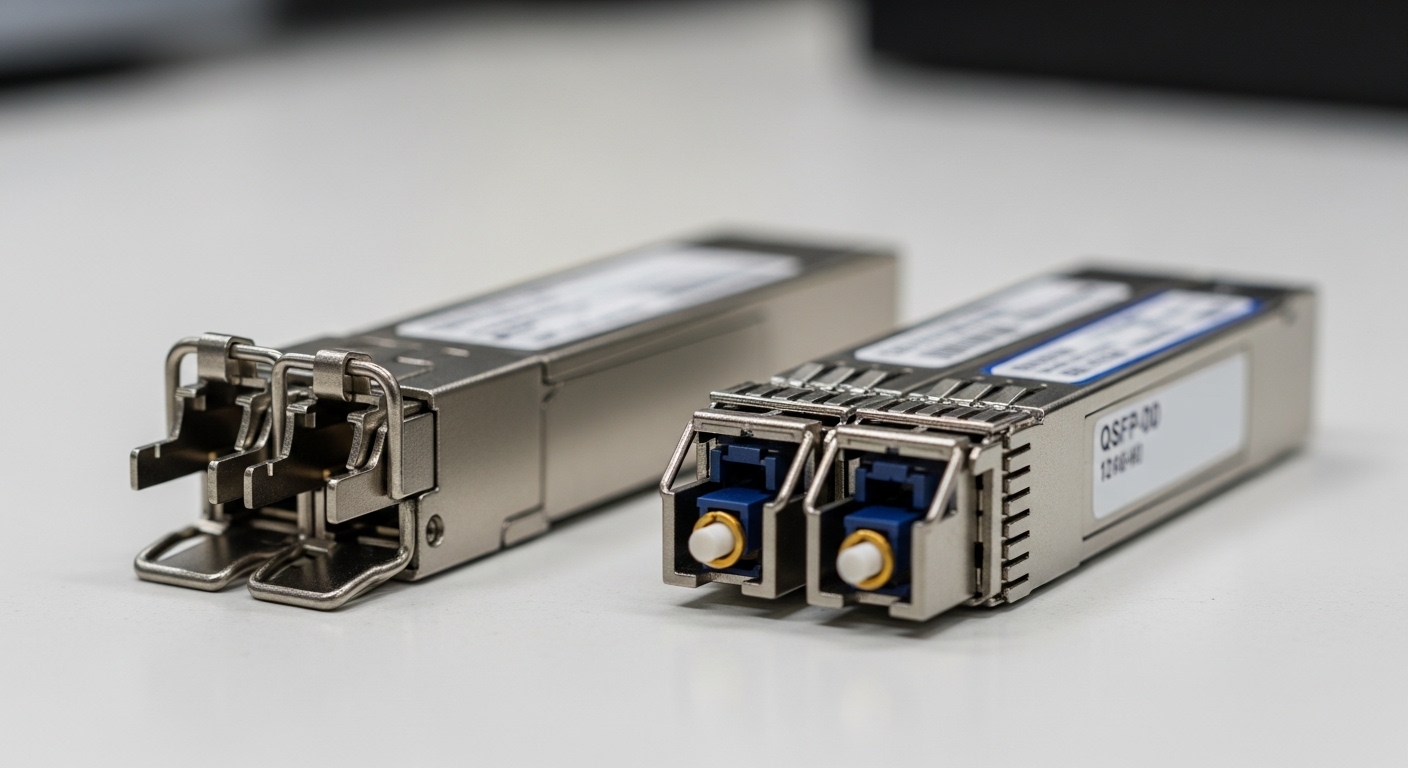
Benchmarks should quantify reliability and operational cost, not just “it links up.” Start with link-layer quality and stability across temperature and time, then capture power and thermal headroom. A practical approach is to run controlled traffic while monitoring optical power, error counters, and module diagnostics.
Core metrics that predict real-world failure
- BER proxy via error counters: Track CRC/FCS errors, symbol errors, and corrected/uncorrected errors (switch dependent).
- Optical power levels: Confirm Tx power and Rx sensitivity margin using the module’s digital diagnostics (DOM) and your vendor’s calibration guidance.
- Link stability under temperature: Run at least 2 to 4 temperature points (room, elevated, and near lower operating limit) and verify no flaps.
- Power draw: Measure average module power under steady traffic; then compare idle vs active.
- Latency impact: For some platforms, optics can correlate with retimer behavior; validate end-to-end latency with your traffic generator.
Standards and why they matter
Use the relevant Ethernet physical layer expectations as your baseline. For 10G/25G/40G/100G Ethernet PHY behavior, reference IEEE 802.3 clauses for optical interfaces and link training behavior. Also align your measurement approach with switch vendor diagnostics documentation; many platforms expose different counters even when the physical layer is “the same.” IEEE 802.3 standard
Pro Tip: In field audits, teams often trust “DOM says Tx and Rx are within spec,” but the hidden risk is margin under your actual aging conditions. Benchmark by running a 24 to 72 hour traffic soak while logging optical power and error counters every few minutes; the performance drift is what reveals the better ROI module.
Test setup and a spec-first comparison table
To compare optics fairly, build a repeatable harness: fixed fiber plant, consistent patch cords, the same switch port type, and a traffic profile representative of your workloads. Include both OEM and third-party modules so you can quantify reliability and power differences rather than assume them.
Example benchmark configuration (10G SR and 25G SR)
- Switch ports: One chassis family to reduce PHY variation (same line card model).
- Traffic: Bidirectional UDP or iperf-style streams at 80% line rate for 30 minutes per run, then 24 to 72 hour soak at 20% to 60% average.
- Logging: DOM telemetry (Tx/Rx power, temperature, supply voltage) and switch error counters.
- Fiber: Use the same OM4 or OM3 patch and trunk set; document insertion loss and cleanliness.
| Parameter | 10G SR (SFP+) | 25G SR (SFP28) | 100G SR4 (QSFP28) |
|---|---|---|---|
| Typical wavelength | 850 nm | 850 nm | 850 nm |
| Nominal reach | Up to 300 m on OM3 / 400 m on OM4 | Up to 100 m on OM4 (common) | Up to 100 m on OM4 (common) |
| Connector | LC | LC | MPO/MTP (4 lanes) |
| Data rate | 10.3125 Gb/s | 25.78125 Gb/s | 103.125 Gb/s |
| Temperature range | Commercial: ~0 to 70 C (varies by model) | Commercial: ~0 to 70 C (varies) | Commercial: ~0 to 70 C (varies) |
| Power behavior | Compare idle vs active draw from datasheet/measurements | Compare idle vs active draw from datasheet/measurements | Compare lane count and module thermal design |
From benchmark results to purchase decisions
Benchmarking only pays off when you convert it into a selection model. Engineers should score optics using both technical outcomes and operational risk, then map the result to budget and spares strategy. Use this checklist in order; it reduces rework and RMA churn.
Decision checklist (ranked)
- Distance and fiber plant: Verify OM grade, link loss, and connector cleanliness; confirm reach margin under worst-case insertion loss.
- Switch compatibility: Validate the exact transceiver family with the target switch firmware and port type (especially for QSFP28 and 100G).
- DOM support and telemetry visibility: Ensure DOM reads temperature and optical power correctly; missing or noisy telemetry complicates troubleshooting.
- Operating temperature: Match module class to ambient airflow in the rack; test at elevated conditions that mirror your worst day.
- Vendor lock-in risk: Prefer modules that behave consistently across firmware updates; keep a documented compatibility matrix.
- Reliability evidence: Use your soak results plus any published MTBF or field reliability statements from vendor datasheets.
Concrete examples you can benchmark
In real deployments, teams benchmark known optics alongside alternatives. Examples include Cisco SFP-10G-SR, Finisar FTLX8571D3BCL, and FS.com SFP-10GSR-85 (model availability varies by region). Always test the exact SKU you plan to buy because revisions and vendor calibration can change DOM readings and optical margin.
Common pitfalls and troubleshooting that protect transceiver performance
Even strong benchmarks can fail if the test process hides real issues. These are the most common mistakes seen during validation and how to fix them.
“Links up once” but errors appear later
- Root cause: Insufficient optical margin that only collapses under temperature drift or connector aging.
- Solution: Run a 24 to 72 hour traffic soak with periodic logging of error counters and DOM power.
DOM telemetry mismatch masks the real signal quality
- Root cause: DOM implementation variance; some third-party modules report values that are accurate only relative to their internal calibration.
- Solution: Correlate DOM readings with switch error counters; do not select purely on DOM “in spec.”
Fiber cleanliness and patch cord mismatch dominate outcomes
- Root cause: Dirty MPO/MTP or LC endfaces, or using different patch cords between runs.
- Solution: Inspect every connector before testing; standardize patch cords and document insertion loss.
Firmware and port mode differences skew results
- Root cause: Switch firmware changes FEC settings, training, or counter behavior; port profiles can differ across line cards.
- Solution: Lock firmware versions during benchmark and record port model numbers; repeat tests after upgrades.
Cost and ROI: how benchmarks reduce total cost of ownership
Transceiver cost is only the first line item. OEM optics often cost more per unit, but third-party modules can win if your benchmarks show comparable BER proxy behavior and stable thermal performance. In typical enterprise and data center procurement, 10G SR optics may land roughly in the $40 to $150 range depending on OEM vs third-party and volume; 25G and 100G SR optics can be higher, with QSFP28 100G SR4 often materially above SFP28.
ROI usually comes from fewer RMAs, fewer link events, and lower power draw at scale. If a module reduces error-induced maintenance by even a small fraction, the operational savings can outweigh the unit price difference. Track TCO across spares inventory, labor hours, and downtime risk, not only purchase price.
