
Open RAN is moving from slide decks to service-impacting reality, and that means procurement teams need more than buzzwords. This article helps telecom buyers and field engineers compare the practical pieces: transport optics, power and temperature constraints, software compatibility, and supply chain risk. You will get a spec comparison table, a real deployment scenario with numbers, and a decision checklist you can actually use during vendor negotiations.
What “practical Open RAN” means for telecom procurement
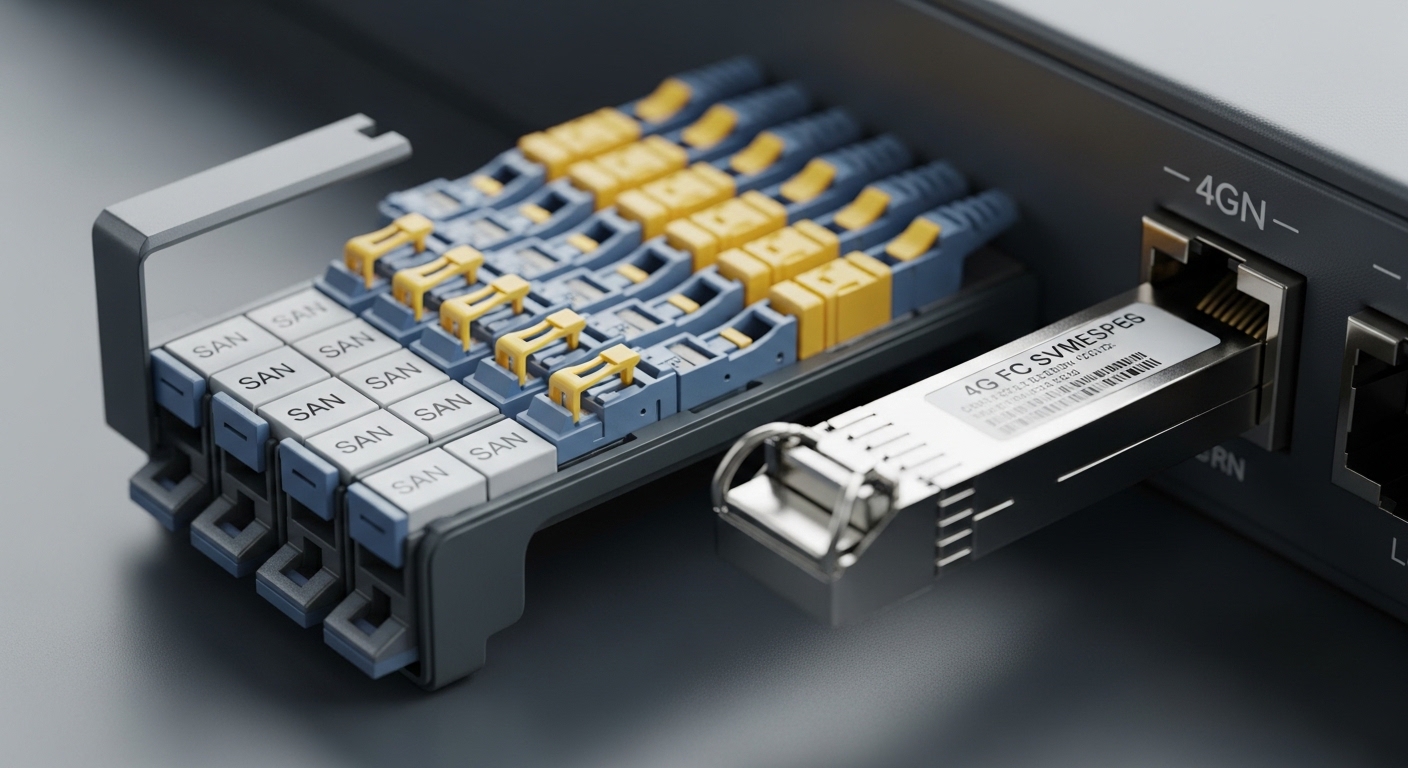
In the telecom world, Open RAN is not just software; it is a chain of interoperating hardware, fronthaul/backhaul transport, and timing behavior. In a real deployment, the “gotchas” show up at the edges: optics reach vs. budget, connector cleanliness, DOM behavior in SFP/QSFP modules, and how vendor-validated software stacks handle mixed components. Procurement success comes from verifying constraints early, especially when integrating radios, DU/CU software, and transport gear from multiple suppliers.
For fronthaul, the choice of optical transceivers is not a cosmetic detail; it directly affects link margin, latency, and operational temperature headroom. IEEE 802.3 and IEC/ANSI fiber practices drive many of the electrical and optical performance expectations, while vendor datasheets define module behavior like DOM support and temperature derating. If you are buying into an Open RAN ecosystem, treat transceiver selection like a mini compliance project, not a line-item afterthought.
Telecom transport layer: optics specs that affect Open RAN stability
Open RAN deployments often rely on high-density server switches and optics that must behave consistently across batches. A common procurement failure mode is selecting “compatible” modules that pass basic link negotiation but fail under thermal stress or DOM policy checks. Below is a comparison of typical 10G and 25G optics used in access and aggregation segments, mapped to fronthaul/backhaul realities.
| Optic type (example models) | Data rate | Wavelength | Reach (typical) | Connector | DOM / diagnostics | Operating temp range | Power (typ.) |
|---|---|---|---|---|---|---|---|
| SFP+ SR (Cisco SFP-10G-SR, Finisar FTLX8571D3BCL) | 10G | 850 nm | 300 m on OM3 / 400 m on OM4 | LC | Usually present; verify DOM compliance policy | 0 to 70 C (varies by vendor) | ~0.7 to 1.0 W |
| SFP28 SR (FS.com SFP-25GSR-85 or equivalent) | 25G | 850 nm | 100 m on OM3 / 150 m on OM4 | LC | Often supported; confirm thresholds and alarm handling | -5 to 70 C (common) | ~1.0 to 1.5 W |
| QSFP28 SR4 (vendor-validated 100G SR4 options) | 100G | 850 nm | 100 m on OM4 (often) | LC (MPO) | DOM varies; confirm support for your switch vendor | -5 to 70 C or 0 to 70 C | ~4 to 5.5 W |
Procurement implication: Open RAN timelines are sensitive to optics lead times, but stability is sensitive to optics behavior. Always request vendor test evidence for your exact switch/DU platform, including firmware compatibility notes and DOM alarm behavior. For standards grounding, reference IEEE 802.3 for physical layer expectations and [Source: IEEE 802.3]. For connector and fiber best practices, include ANSI/TIA fiber handling expectations in your acceptance plan via [Source: ANSI/TIA-568.3].
Pro Tip: In many telecom deployments, DOM “presence” is not enough; what matters is whether your switch and automation tooling accept the module vendor’s diagnostic thresholds and alarm formats. During pilot testing, force a controlled DOM alarm event (for example, by using a test pattern or temporarily adjusting receiver power checks) and confirm your operations platform logs it correctly instead of marking the port as administratively failed.
Selection criteria checklist for telecom Open RAN optics and modules
When procurement is supporting Open RAN rollout, you need an ordered checklist that aligns technical reality with contracting language. Use this sequence so you do not discover incompatibilities at acceptance testing, when everyone is already emotionally attached to the installation date.
- Distance and fiber type: Validate OM3 vs OM4, patch panel loss, and splitter usage. Confirm link budget with vendor-recommended worst-case scenarios.
- Switch and DU platform compatibility: Ask for a vendor interoperability matrix or, at minimum, a list of tested switch models and firmware versions.
- Data rate and lane mapping: Confirm SR4 vs SR2 behavior for 100G optics, and ensure the DU platform expects the same lane configuration.
- DOM and monitoring behavior: Verify DOM support, alarm thresholds, and whether your NMS treats specific warnings as hard failures.
- Operating temperature and airflow: Check module temperature range and derating curves against your rack airflow profile.
- Supply chain risk and lead time: Require an allocation plan, second-source option, and a clear ship date for pilots.
- Vendor lock-in risk: Define acceptable substitutes in the contract, including validation scope and warranty terms.
Procurement teams often win by converting “compatibility” into measurable acceptance criteria. For example: “Link must remain stable for X hours at Y C ambient with DOM alarms correctly captured,” rather than “works in our lab once.”
Real-world telecom Open RAN scenario with measurable constraints
Picture a 3-tier data center topology for a regional Open RAN rollout: 48-port ToR switches at the access layer connect to aggregation leaf switches, which then feed a DU compute cluster. In one pilot, the team planned 25G SR for server-to-aggregation links across 120 m average runs over OM4, with a mix of patch panels and short breakout cords. They also had 10G SR for management and out-of-band services, plus a few 100G SR4 uplinks between aggregation and core.
The first week looked fine—until a summer heat wave pushed ambient rack temperature from 26 C to 38 C. Ports using a low-cost third-party optic started showing intermittent receiver margin warnings, and the NMS auto-disabled a subset of interfaces due to a misinterpreted DOM alarm mapping. The fix was not “better cooling only”; it was swapping optics to a vendor-validated range, confirming DOM threshold handling, and tightening fiber cleanliness procedures during patch changes. That is the real procurement lesson: telecom optics are operational components, not decorative accessories.
Cost, lead time, and ROI: what to expect in telecom buying
In telecom Open RAN programs, optics costs are usually not the largest line item, but failures and rework are. Typical street pricing varies by brand, volume, and certification status; as a practical range, 10G SR SFP+ modules often land around $25 to $80 each, while 25G SR SFP28 can be around $60 to $180 each depending on reach and vendor validation. 100G QSFP28 SR4 modules can be higher, often around $250 to $700 each.
Third-party modules can reduce upfront cost, but TCO depends on your acceptance testing and warranty handling. If you experience a higher failure rate or increased labor during swaps, the ROI math flips quickly. For power and cooling, higher-density optics can add measurable thermal load; even a couple watts per module aggregated across a rack can increase airflow demand and fan energy. Procurement should request warranty terms, RMA turnaround SLAs, and evidence of qualification on your exact switch and DU platform.
Lead time is the other trap. During network buildouts, optics are frequently on allocation, especially for in-demand SR4 and higher-speed variants. Mitigate by ordering pilot quantities early, locking a second-source module family where validation allows, and building contract clauses that define ship dates and replacement timelines.
Common mistakes and troubleshooting tips (the stuff that burns schedules)
Open RAN failures are rarely “mystical.” They usually trace to a handful of repeat offenders. Here are concrete pitfalls with root cause and how to fix them.
Link instability that appears only when racks warm up
Root cause: Optics pushed beyond their effective operating envelope due to airflow differences, plus receiver margin sensitivity at higher temperatures. Some modules also have different derating behavior than the vendor-validated parts.
Solution: Re-check airflow CFD assumptions or at least measure inlet/outlet temperatures. Swap to vendor-validated optics and rerun stability tests at the highest expected ambient, logging DOM receiver power and error counters.
“It links up” but NMS reports ports as failed or flapping
Root cause: DOM alarm threshold mapping mismatch. The switch or NMS may interpret non-critical warnings as critical events, triggering admin actions.
Solution: Confirm DOM alarm event types end-to-end: module DOM output, switch interpretation, and NMS ingestion. Apply vendor-recommended configuration or firmware alignment, and validate with a controlled test during commissioning.
Cleanliness and fiber loss issues disguised as “bad optics”
Root cause: Dirty LC/MPO endfaces or connector contamination after patch panel work. In SR optics, small additional loss can collapse link margin.
Solution: Enforce a cleaning and inspection workflow: fiber inspection scope checks, cleaning kits, and standardized re-termination procedures. Recalculate link budgets including worst-case patch cords and patch panel insertion loss.
Mixed module families leading to lane or speed negotiation surprises
Root cause: Inconsistent optics families across uplinks, especially for 100G SR4 where lane mapping and breakout expectations matter.
Solution: Keep optics consistent per link type and validate lane mapping against the switch and DU configuration. During procurement, request the vendor’s interoperability notes for your specific hardware model numbers.
FAQ
What telecom optics are most commonly used for Open RAN fronthaul vs backhaul?
Fronthaul requirements can vary by architecture, but SR optics are common for short-reach segments in data centers and aggregation. Backhaul often uses similar optics depending on distance and speed targets. Always verify the DU/CU transport design and the switch vendor’s validated optics list.
Can we mix third-party optics with vendor-validated modules in the same Open RAN cluster?
Sometimes, but mixing increases risk unless the interoperability evidence is documented. The safe approach is to keep optics consistent within a link class and validate DOM and alarm behavior. If you must mix, run a pilot with the same firmware versions used in production.
How do we quantify supply chain risk during telecom procurement?
Track lead time variability, allocation risk, and RMA turnaround SLAs. Require second-source options for critical optics families and include ship-date commitments in purchase terms. For pilots, buy small quantities early to expose allocation constraints before mass deployment.
What should we require in acceptance testing for optics in a telecom Open RAN rollout?
Require stability testing under worst-case ambient temperature, DOM monitoring verification, and link error counter checks over a multi-hour window. Include fiber cleanliness verification steps and a documented link budget acceptance threshold. Treat “it comes up” as necessary but not sufficient.
Do standards like IEEE 802.3 guarantee interoperability across vendors?
They define baseline physical behavior, but real-world interoperability depends on implementation details like DOM thresholds, firmware handling, and vendor-specific validation. Use IEEE 802.3 as a floor, not a guarantee of plug-and-play across your entire stack. Pair standards with vendor interoperability evidence.
Where can we find authoritative guidance on fiber handling and link performance?
Use ANSI/TIA fiber cabling practices for connector and installation expectations. For electrical and optical physical layer baseline behavior, rely on IEEE 802.3. Then add vendor datasheet guidance for your exact transceiver model and switch port type.
Open RAN rollout in telecom becomes manageable when procurement treats optics, monitoring, and thermal behavior as first-class deliverables. Next step: share your switch model numbers and expected link distances, then map them to validated optics families using the checklist above via telecom fiber optics procurement.
Author bio: I have deployed and managed telecom transport stacks in real data centers, including optics swaps under temperature events and DOM-driven NMS edge cases. I write procurement-ready guidance so field teams stop chasing ghosts and start closing tickets.
Sources: [Source: IEEE 802.3] [Source: ANSI/TIA-568.3]
