
Telecom cost analysis for 800G: coherent vs direct-detect ROI
Rolling out 800G in a live telecom network is not just a capacity upgrade; it is a telecom cost analysis exercise across optics, switch silicon, fiber plant, power, and operational risk. This article helps network architects and IT directors compare coherent and direct-detect paths using real deployment constraints. You will get a practical decision checklist, a troubleshooting section, and an ROI framing you can reuse in enterprise architecture governance reviews.
800G architecture choices: performance envelope and reach tradeoffs
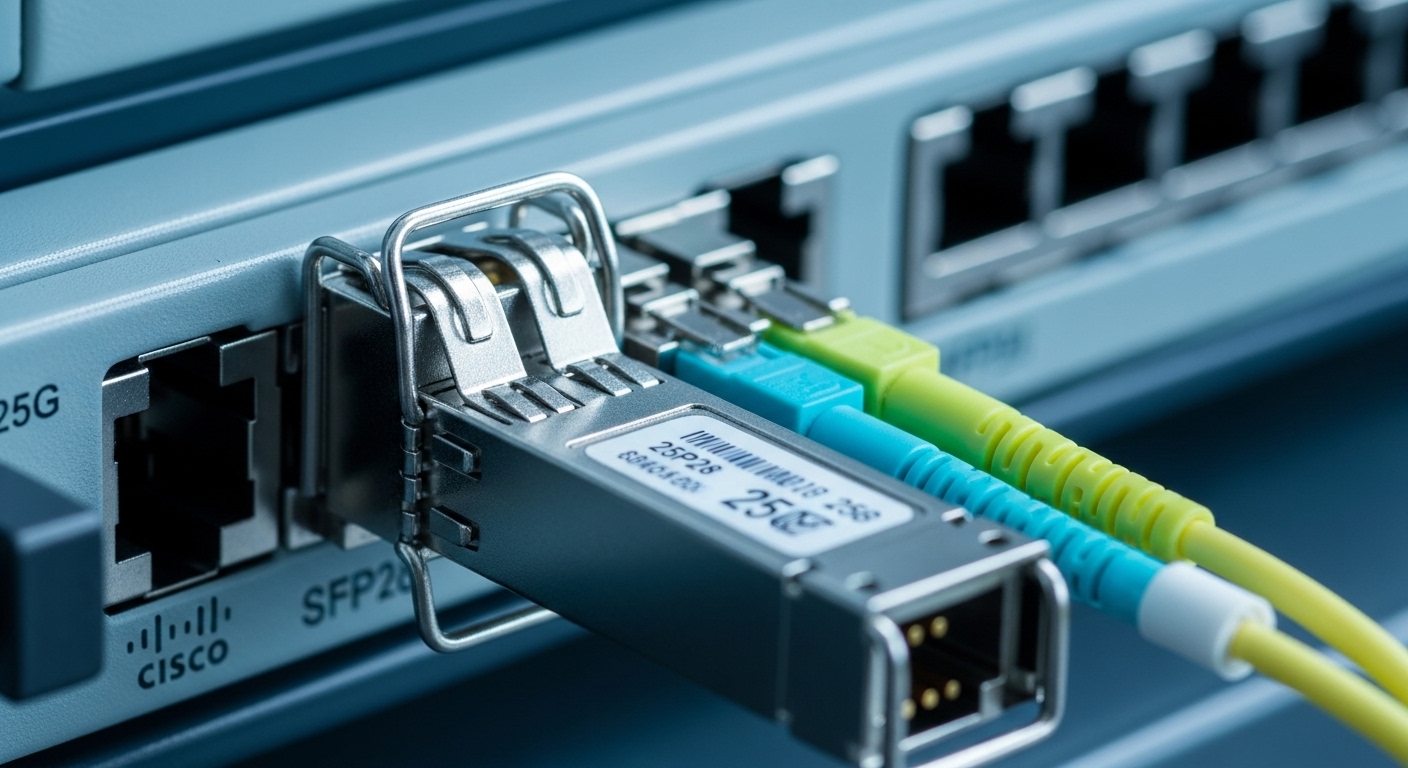
At 800G, the core question is how you move bits across distance and how much of the cost sits in optics versus transport and power. Coherent optics typically support longer reach with spectral efficiency advantages, while direct-detect is often cheaper per port at shorter distances but can become fiber- and transceiver-intensive as you scale.
IEEE 802.3 guidance around Ethernet physical layer behavior is relevant for interoperability testing, but many 800G deployments rely on vendor-specific optics profiles and optics management implementations. In practice, your reach target (for example, 2 km, 10 km, or 80 km) and your fiber type (OM4, OS2) determine whether coherent becomes cost-effective.
Direct-detect reality: density and optics count
Direct-detect 800G is frequently implemented as parallel lanes (for example, multiple 100G-class tributaries) aggregated into an 800G interface. That can increase optics count, optical budgets, and port-side power draw. If your fiber plant is already dense and short-reach (leaf-spine or metro aggregation), direct-detect can win on procurement and operational simplicity.
Coherent reality: higher reach, higher complexity
Coherent systems use local oscillators, advanced DSP, and tighter wavelength control. That complexity can raise optics CAPEX and introduce additional test steps during commissioning. However, for long-haul or metro routes where you must avoid expensive re-cabling, coherent can lower total cost of ownership (TCO) even if the transceiver unit price is higher.
Cost model head-to-head: optics, power, and installation labor
This section compares the telecom cost analysis inputs that matter most at 800G scale: optics BOM, power cost, installation labor, and the probability-weighted cost of downtime. Field experience shows that commissioning labor and transceiver swaps can dominate when compatibility is unclear. To keep governance reviews consistent, model costs per deployed port and per year, then add a risk-adjustment factor for failures and rework.
| Spec / Cost Driver | Direct-detect 800G (typical) | Coherent 800G (typical) |
|---|---|---|
| Primary advantage | Lower unit cost at short reach; simpler optics stack | Long reach with fewer wavelengths and better spectral efficiency |
| Reach (common deployment bands) | Short reach to metro depending on fiber and interface profile | Metro to longer-haul where fiber plant is constrained |
| Optics unit price range | Often hundreds to low-thousands USD per module (vendor-dependent) | Often higher, frequently several-thousand USD per module (vendor-dependent) |
| Power draw (optics + DSP impact) | Moderate; scales with lane count and cooling design | Higher DSP/LO power; may increase rack-level power and cooling needs |
| Commissioning effort | Usually faster at short reach; still requires DOM validation | More complex alignment and parameter verification |
| Operational risk | Fiber mismatch or lane mapping errors can cause link instability | DSP parameter mismatch and optical budget miscalibration can cause degradations |
| Temperature range considerations | Commercial or industrial grades based on vendor and site specs | Often supports extended operating conditions; confirm chassis airflow profile |
Operational governance: include DOM and optics management
Regardless of technology, your telecom cost analysis must include time-to-detect and time-to-repair. Use digital optical monitoring (DOM) telemetry to reduce mean time to repair (MTTR). Many vendors provide DOM thresholds for receive power, bias current, and temperature; governance should require telemetry baselining during acceptance testing.
Pro Tip: In mixed-vendor environments, the biggest hidden cost is not the transceiver price, but the difference in how DOM thresholds and alarm behaviors are implemented. Standardize acceptance tests so “link flaps” are caught as telemetry anomalies before they become service-impacting outages.
Selection criteria checklist for 800G deployment decisions
Use this ordered decision checklist during architecture sign-off and procurement planning. It is designed to produce a defensible telecom cost analysis, not just a lowest unit cost comparison.
- Distance and margin: match reach requirements to fiber type and measured optical loss; include a conservative margin for aging and patch-panel losses.
- Budget and TCO: compare optics CAPEX plus estimated power and cooling deltas over a 3 to 5 year horizon.
- Switch compatibility: verify transceiver interoperability with the exact switch/router model and line card revision; confirm supported optic part numbers.
- DOM and alarms: confirm DOM telemetry availability, alarm thresholds, and whether your NMS ingests the fields you need.
- Operating temperature and airflow: confirm optics grade and that chassis airflow meets vendor guidance; measure inlet temperatures during load.
- Vendor lock-in risk: assess whether coherent optics require a specific vendor DSP profile or wavelength plan; plan for multi-source strategy where possible.
- Commissioning labor and test plan: quantify acceptance test time, rollback steps, and the spare module strategy to reduce outage windows.
Where each option wins: a concrete deployment scenario
Consider a 3-tier telecom metro aggregation environment with 24 access nodes feeding 6 aggregation sites. Each aggregation site hosts a high-density router with 32 active 800G uplinks during phase one, totaling 192 ports. The routes are typically 6 to 12 km on OS2 with frequent patching across meet-me rooms, and the operator must complete work during limited maintenance windows.
If the fiber plant already supports short-to-metro reach with acceptable loss, direct-detect can reduce commissioning time and simplify operational playbooks. However, if patching increases end-to-end loss and re-cabling is delayed due to permitting, coherent can be selected to preserve link margin without additional trenching. In a telecom cost analysis, the coherent optics unit price premium can be offset by lower fiber rework and fewer service-affecting truck rolls.
Common mistakes and troubleshooting tips during 800G rollouts
Even mature teams underestimate how many failure modes show up at 800G density. Below are concrete pitfalls that commonly drive rework cost.
Link flaps caused by fiber mapping or polarity mismatch
Root cause: polarity or lane mapping mismatches in high-density patching can create intermittent receiver saturation or invalid lane alignment. This often appears only under specific traffic patterns.
Solution: verify fiber polarity end-to-end, re-label patch panels, and validate lane mapping using vendor diagnostics. Capture DOM telemetry during a flap window and compare against acceptance baselines.
“Works in lab, fails in production” due to temperature and airflow
Root cause: optics operating margins shrink when inlet temperatures rise or airflow bypass occurs behind dense cabling. At 800G density, small thermal differences matter.
Solution: measure inlet and exhaust temps during sustained load, confirm fans meet vendor airflow assumptions, and enforce a thermally realistic rollout checklist.
Alarm storms due to inconsistent DOM threshold policies
Root cause: NMS thresholds differ from vendor defaults; some optics trigger early warnings that are treated as critical incidents. This inflates operational cost and masks true degradations.
Solution: align NMS policies with vendor-recommended thresholds, then baseline alarms after burn-in. Require telemetry schema validation in acceptance testing.
Underestimated DSP or wavelength plan constraints for coherent
Root cause: coherent deployments can require specific wavelength plans, grid spacing, and configuration alignment between optics and line cards. Misconfiguration can produce marginal performance that looks like noise.
Solution: document the wavelength plan, validate configuration against vendor guidance, and run pre-cutover optical link tests that include BER or equivalent performance counters.
Cost and ROI note: realistic ranges and TCO framing
In many telecom programs, a single 800G port can cost far more than the optics line item once you include installation labor, spares, and the cost of downtime risk. Typical optics pricing varies widely by vendor and reach class, but third-party modules can reduce unit cost while shifting some risk to compatibility and warranty handling. OEM optics often carry higher unit price but can reduce acceptance friction because switch vendor support is tighter.
For ROI, model not only power savings but also reduced truck rolls and faster MTTR. If your team can cut mean time to repair by standardizing DOM monitoring and swap procedures, the telecom cost analysis can justify higher-cost optics when they reduce repeat failures. Use a probability-weighted outage cost for each site phase; even a small reduction in failure likelihood can dominate the ROI math.
Decision matrix: which technology fits your constraints
The table below helps you translate architecture constraints into a telecom cost analysis recommendation. Treat it as a scoring aid, not a substitute for link budget testing.
| Criteria | Direct-detect 800G | Coherent 800G |
|---|---|---|
| Short-to-metro distance with good fiber loss profile | Strong fit | Possible but often unnecessary CAPEX |
| Longer reach or constrained fiber plant | May require costly re-cabling or more optics | Strong fit |
| Procurement simplicity and faster acceptance | Advantage | More steps; stricter configuration checks |
| Power and cooling sensitivity | Often lower | May increase rack-level power and DSP load |
| Multi-vendor optics strategy | Sometimes easier if switch supports multiple profiles | Higher risk of profile and configuration lock-in |
Which option should you choose?
Choose direct-detect 800G when your reach is within the short-to-metro envelope, your fiber plant has stable loss, and you need faster commissioning with fewer configuration variables. Choose coherent 800G when you must preserve link margin over longer routes, avoid expensive fiber rework, or you have a clear operational model for managing coherent configuration and telemetry.
If you are a telecom IT director optimizing for predictable rollout windows, prioritize whichever option reduces acceptance friction and failure probability at your specific sites. If you are optimizing for long-term transport flexibility under fiber constraints, coherent can deliver superior ROI despite higher unit cost.
FAQ
How do I start a telecom cost analysis for 800G without guessing?
Begin with a port-level model: optics price, estimated installation labor, power and cooling delta, and a probability-weighted downtime cost. Then validate with measured optical loss from the actual patch panels and a documented acceptance test plan. This turns “assumptions” into governance-ready inputs.
Will third-party 800G optics reduce cost or increase risk?
Third-party optics can reduce CAPEX, but the real impact depends on switch compatibility, DOM telemetry behavior, and warranty handling. If your acceptance process can quickly certify interoperability and monitor telemetry reliably, risk can be controlled. If not, OEM optics may reduce total cost by avoiding rework and prolonged troubleshooting.
What compatibility checks matter most for enterprise architecture governance?
Verify exact switch model, line card revision, supported optic part numbers, and optics management behavior. Require DOM schema validation and alarm threshold alignment in acceptance. Document whether coherent deployments require a specific wavelength plan or configuration profile.
What measurements should I capture during commissioning for ROI credibility?
Capture inlet and optics temperature during sustained load, DOM telemetry baselines, and link performance counters during controlled traffic. Record commissioning duration and any rollback events. These data points directly improve your next telecom cost analysis cycle.
Where do teams usually lose money during 800G cutovers?
Common losses come from underestimated patching and polarity work, thermal surprises in high-density racks, and inconsistent alarm handling that drives unnecessary incident response. The fix is to standardize fiber labeling, thermal verification, and telemetry baselining.
Are there standards or references I should cite in procurement documents?
Reference IEEE 802.3 for Ethernet physical layer context and cite vendor datasheets for optics specifications and DOM support. For cabling and infrastructure constraints, align with ANSI/TIA cabling guidance where applicable. Use vendor documentation to justify operating temperature, reach class, and supported optics profiles. IEEE 802.3
Author bio: I have led hands-on telecom and data center network migrations, translating optics and switch compatibility into measurable rollout plans and governance artifacts. My approach uses operational telemetry, link budget verification, and TCO modeling to make telecom cost analysis decisions defensible.
