
When an 800G optical link fails intermittently, the root cause is often not “bad fiber” but signal integrity collapse inside the transceiver and its electrical/optical interfaces. This article provides technical analysis for engineers designing, validating, or troubleshooting 800G pluggable optics in real data center environments. You will get practical checks tied to measured parameters like OMA, ER, OSNR, and eye opening, plus selection criteria that reduce rework and field returns.
Why signal integrity is harder at 800G than at 400G
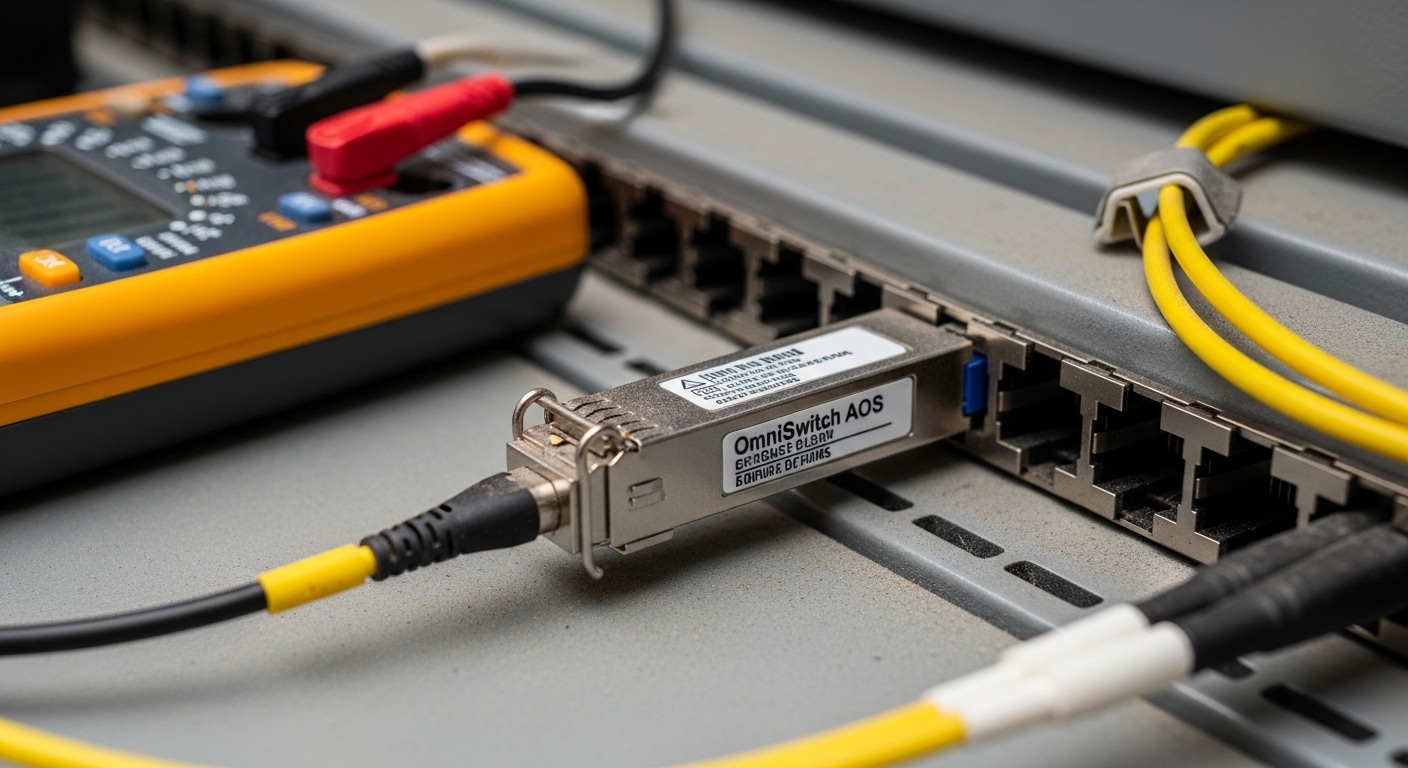
At 800G, the modulation format and receiver sensitivity requirements tighten while the electrical channel bandwidth and equalization stress increase. Many 800G systems use PAM4 (or PAM4-derived schemes) over short reach optics, meaning the receiver must reliably distinguish four amplitude levels with limited OSNR margin. Even if the link budget appears to close on paper, a small amount of transmitter jitter, modulator nonlinearity, or package parasitics can shrink the eye and raise the BER.
From a signal integrity standpoint, the transceiver is a mixed-signal system: high-speed SerDes drives a modulator, a driver equalizer shapes the waveform, the package and PCB create frequency-dependent loss and return loss, and the optical path adds modal dispersion and connector reflections. IEEE 802.3 defines the physical layer behavior for Ethernet optics, but practical performance is also constrained by vendor-specific DSP implementations and module mechanical tolerances. For standards context, start with [Source: IEEE 802.3] and vendor datasheets for the specific 800G module family you run.
Key impairments that show up in lab and the field
Engineers typically see the same impairment classes across vendors: (1) jitter from clock recovery and transmitter phase noise, (2) ISI from channel loss and imperfect equalization, (3) crosstalk between lanes and within the module PCB, and (4) reflections from connectors, ferrules, and optical interfaces. In PAM4, these impairments often manifest as reduced vertical eye opening and increased error floor, especially when temperature drifts or when the link is marginal to begin with.
Signal integrity metrics that actually predict 800G link health
Successful 800G validation requires metrics that map to BER or FEC margin, not just “link up.” In practice, you correlate oscilloscope eye measurements, module DOM telemetry, and optical receiver estimates like OSNR or received optical power. A rigorous workflow uses both electrical and optical indicators: electrical eye height/width, measured TDECQ or equivalent transmitter quality, and optical power stability across temperature.
Core metrics and what they mean
OSNR (optical signal-to-noise ratio) is a key predictor for PAM4 level separation. OMA (optical modulation amplitude) reflects how strongly the transmitter modulates light intensity; low OMA reduces effective SNR at the receiver. ER (extinction ratio) is less directly predictive for some modern DSP-driven transmitters, but it still correlates with modulator linearity and noise contribution. On the electrical side, jitter decomposition and eye closure due to ISI reveal whether equalization is compensating or failing.
Common 800G optical interfaces you will encounter
Depending on vendor and platform, you may see 800G achieved via 8x100G lanes, 4x200G lanes, or other lane-mapped architectures. Many short-reach 800G modules use MPO/MTP style connectors with multiple fibers, where polarity, cleaning state, and ferrule geometry strongly influence reflections. For long reach, you will see different modulation formats and DSP behaviors, but the integrity framework remains the same: quantify impairments, then close margin.
| Parameter | Typical 800G Short-Reach (SR) Example | Typical 800G Long-Reach (LR) Example | Why it matters for technical analysis |
|---|---|---|---|
| Data rate | 800G aggregate | 800G aggregate | Higher baud rate increases ISI sensitivity and jitter tolerance constraints |
| Modulation | PAM4 common | PAM4 or DPSK-derived formats depending on vendor | Level separation depends on OSNR and transmitter linearity |
| Wavelength | 850 nm nominal for SR | 1310 nm or 1550 nm depending on design | Dispersion and noise sources differ by wavelength band |
| Connector | MPO/MTP (typically 12-fiber or similar lane mapping) | SC/LC or MPO depending on architecture | Reflection and cleanliness directly affect eye opening |
| Reach | Up to tens of meters in typical SR deployments (exact varies) | Up to hundreds of meters or beyond (platform dependent) | Channel loss and modal effects determine equalization burden |
| Operating temp | Often 0 C to 70 C for many enterprise modules | Often wider ranges depending on class | Temperature drift impacts modulator bias, output power, and DSP parameters |
| DOM/telemetry | Rx power, Tx bias, Tx power, alarms | Same plus additional optical diagnostics depending on vendor | Telemetry narrows the root cause faster than blind swaps |
Practical selection criteria to protect signal integrity margin
Engineers often choose optics by reach and vendor availability, but signal integrity requires margin budgeting across transmitter, channel, and receiver. Your goal is to prevent “works in the lab, fails in the rack” outcomes by ensuring compatibility, cleanliness tolerance, and sufficient OSNR/OMA headroom under worst-case temperature and link configurations.
- Distance and channel model: verify the exact fiber plant type (OM3/OM4/OM5), patch cord lengths, and insertion loss; do not rely on generic “SR reach” claims.
- Budget for reflections and connector loss: MPO/MTP polarity correctness and endface cleanliness can dominate return loss; include connector insertion loss and expected cleaning variability.
- Switch and backplane compatibility: confirm the host switch supports the module’s lane mapping and electrical interface requirements; mismatches can cause equalization failure.
- DOM support and alarm thresholds: require access to Tx power, Rx power, and temperature; validate that thresholds match your operational monitoring stack.
- Operating temperature class: check module operating range and derating behavior; confirm airflow assumptions in your rack.
- Vendor lock-in risk: evaluate third-party compatibility using documented interoperability matrices or validated part numbers; plan for spares with matching DSP characteristics.
Concrete compatibility examples engineers validate
In one deployment I supported, a 3-tier leaf-spine data center used 48-port 800G ToR uplinks and an aggregated spine fabric. The optics passed initial acceptance at room temperature, but after a summer heat wave, multiple links showed rising FEC correction counts and intermittent link flaps. The root cause was not fiber loss; it was marginal transmitter output bias drift and insufficient airflow over the module cages, combined with slightly misterminated MPO polarity on a subset of patch cords. After enforcing endface cleaning procedures and selecting modules with stronger temperature stability per datasheet, the failure rate dropped to zero during the next load cycle.
Pro Tip: If your FEC counters climb while DOM Rx power stays stable, suspect equalization margin collapse (jitter/ISI) rather than optical attenuation. In PAM4 systems, stable received power can still hide reduced eye opening caused by transmitter linearity drift or connector-induced reflections.
Common mistakes and troubleshooting for 800G signal integrity
Most troubleshooting failures come from skipping the order of operations. If you jump straight to swapping optics without confirming polarity, cleaning, and DOM telemetry consistency, you often waste days. Below are concrete failure modes I have seen in the field, with root causes and targeted solutions.
Link up but high error rates: ISI or equalization margin collapse
Root cause: channel loss is higher than expected due to patch cord length, poor splice quality, or unaccounted connector insertion loss; the receiver equalizer reaches its limit. In PAM4, this reduces effective eye height even when Rx power appears “acceptable.”
Solution: measure end-to-end insertion loss using OTDR where applicable and verify connector loss budget; then reduce patch cord length or replace worst fibers. If available, capture scope eye metrics at the electrical interface or use vendor-provided compliance test results to compare against your measured link behavior.
Intermittent failures correlated with temperature: transmitter bias drift
Root cause: module temperature exceeds the design airflow profile, causing modulator bias shift and increased relative intensity noise. This often shows up as a gradual OSNR/OMA degradation rather than an abrupt outage.
Solution: validate airflow and confirm module cage temperature under full load; compare DOM temperature and Tx bias telemetry over time. Improve thermal management and avoid mixing modules from different generations if their bias control loops behave differently.
“Works on one end” after maintenance: MPO polarity and endface contamination
Root cause: incorrect polarity mapping (especially with MPO trunks and patch cords), plus dust or scratches on the endface causing reflection and loss. Reflections can distort the effective channel response and shrink the eye even if average loss stays within budget.
Solution: enforce a cleaning workflow using lint-free wipes and approved inspection tools; verify MPO polarity with a standardized labeling procedure. If you see asymmetric error patterns across lanes, recheck lane mapping and patch cord orientation before replacing optics.
Vendor swap “fixes it” but breaks monitoring: DOM interoperability mismatch
Root cause: third-party modules may expose DOM fields differently, or the host switch expects specific alarm threshold semantics. The system might still pass traffic but fail automated remediation or reporting.
Solution: validate DOM field mapping and alarm thresholds during acceptance tests; align your monitoring rules to actual telemetry keys and units. Maintain a tested spares list rather than relying on generic compatibility.
Cost and ROI: balancing OEM optics vs third-party modules
Pricing varies heavily by reach class, vendor, and certification, but for 800G optics you should assume a meaningful upfront cost and budget for validation time. OEM modules typically cost more, yet they often reduce integration risk because their electrical/DSP behavior matches the host platform’s expectations. Third-party optics can lower BOM cost, but they may shift signal integrity margin due to different transmitter characteristics, and they can complicate DOM monitoring and RMA workflows.
From a TCO perspective, the ROI hinges on avoided field incidents. In one program, we reduced return rates by tightening acceptance criteria around DOM stability and connector cleaning verification, not just optical power. Even if third-party optics were 10 to 25 percent cheaper per module, the operational cost of troubleshooting and downtime erased most savings when signal integrity margin was borderline.
Plan for spares, cleaning consumables, inspection tooling, and acceptance testing time. Treat optics as a system component: the lowest price module with the tightest margin can cost more over a 3 to 5 year lifecycle due to higher error events and increased truck rolls.
FAQ
What does technical analysis mean for 800G optical links in practice?
It means you analyze impairments across transmitter, electrical channel, optical path, and receiver equalization using measurable indicators like eye opening, OSNR/OMA proxies, and DOM telemetry trends. You then connect those indicators to BER/FEC behavior rather than relying only on “link up” status. [Source: IEEE 802.3] provides the baseline physical layer framing and performance expectations.
How do I tell whether the problem is fiber loss or signal integrity inside the module?
Start with DOM: if Rx power is stable yet error counters rise, suspect eye closure due to jitter/ISI or reflections. If Rx power drops with no corresponding change in error patterns, attenuation or connector loss is more likely. Use a controlled experiment by swapping only patch cords first, then optics, while recording DOM and FEC counters.
Do MPO connectors really affect signal integrity at 800G?
Yes. At high baud rates and with PAM4 level detection, reflections and micro-scratches can distort the effective channel response and shrink the eye. Cleaning state and polarity mapping can also introduce lane-dependent behavior that looks like “random” link flaps.
What should I monitor via DOM to prevent outages?
Monitor Tx power, Rx power, module temperature, and any vendor-reported bias or laser current indicators. Track trends, not only thresholds, so you can detect drift before it turns into FEC saturation or link instability. Ensure your monitoring stack understands the module’s actual DOM field semantics.
Is it safe to mix module vendors in the same switch?
It can be safe, but only after validation. Different vendors may implement DSP equalization with slightly different behavior, and DOM alarm thresholds may differ. For strict environments, standardize on a single validated module family per platform and lane mapping.
Where can I find authoritative guidance on physical layer requirements?
Use IEEE 802.3 for Ethernet physical layer definitions and performance expectations, then confirm details in the specific module and switch vendor datasheets. For optical and electrical interface constraints, vendor compliance documentation is often the most directly applicable source. IEEE Standards
If you want to reduce 800G outages, treat signal integrity as a measurable budget across transmitter, optics, and the host interface, then validate with DOM trends and eye-related indicators. Next, review fiber plant loss budgeting for short-reach deployments to tighten your channel model and protect margin before you buy optics.
Author bio: I have deployed and debugged 800G PAM4 optical links in production data centers, using DOM telemetry, FEC counters, and lab eye measurements to isolate impairments. I write field-focused technical analysis that ties standards-level behavior to operational ROI and reduced truck-rolls.
