
Smart water meter deployments live or die by link stability: if the uplink drops, billing cycles slip and field teams get called out for avoidable faults. This article compares SFP-based smart meter optics options for smart water meter networks, aimed at network engineers, integrators, and field operations leads planning 1G and 2.5G-class fiber links. You will see real selection tradeoffs (reach, connector type, DOM, temperature), common failure modes, and a decision matrix you can use during procurement.
1G and 2.5G smart meter optics: performance and reach tradeoffs
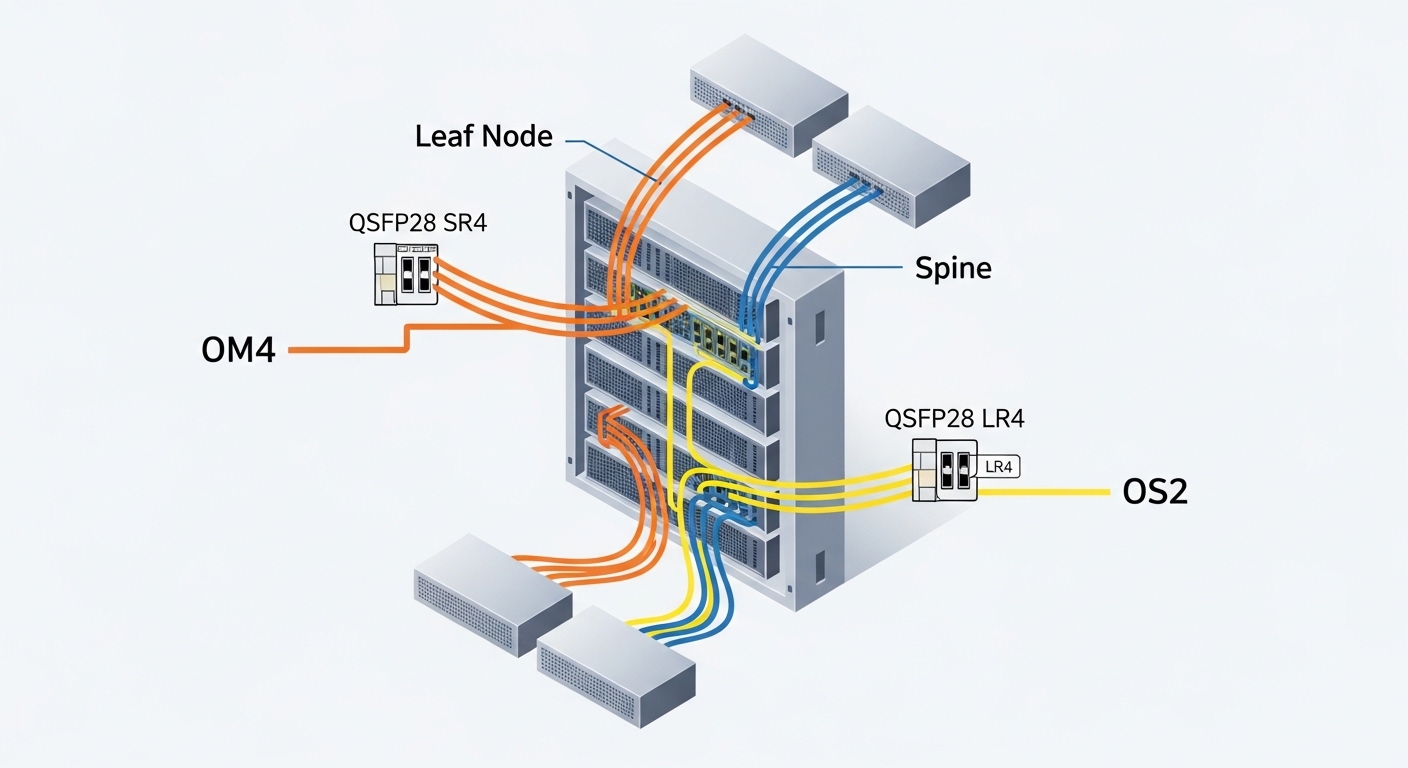
In many smart water meter networks, SFPs are used as the “last reliable hop” between an access switch and an aggregation site. The key performance variables are optical budget, link margin, and receiver sensitivity at the target wavelength. For smart meter optics, most vendors map their SFPs to IEEE 802.3 physical layer requirements (for example, 1000BASE-SX for multimode and 1000BASE-LX for single-mode). In practice, you choose between multimode (MMF) for shorter runs and single-mode (SMF) when you need longer distances, better long-term stability, or higher uptime at minimal maintenance.
Multimode SFPs (MMF): short reach with lower cost
Typical MMF deployments use 850 nm (SX) optics over OM3/OM4 fiber. In the field, MMF is attractive because it is common in buildings and meter cabinets, and the connectorization is usually straightforward. The limitation is that MMF reach depends heavily on fiber grade, patch cord quality, and end-face cleanliness; a “works on the bench” transceiver can fail after repeated truck vibration if the fiber end-face gets contaminated.
Common real-world choices include modules like Cisco SFP-10G-SR (note: 10G SR, but the same operational concepts apply for SX-class optics) or third-party equivalents. For 1G SX, look for SFPs explicitly rated for 1000BASE-SX and supported DOM if your switch uses it for monitoring.
Single-mode SFPs (SMF): longer reach and simpler operations
Single-mode at 1310 nm (LX/EX variants) or 1550 nm (longer reach variants) trades higher component cost for longer reach and better tolerance to aging and microbending. In smart water meter networks, SMF is often selected when meter-to-aggregation distances exceed typical MMF budgets or when you want to reduce field interventions over the equipment lifecycle.
When you select SMF, verify your optical budget (Tx power, Rx sensitivity) and confirm the fiber type and connector losses match your plan. A common operational mistake is to ignore patch cord losses and splice attenuation, then assume the datasheet reach is “guaranteed.”
Technical specifications comparison (typical field-relevant)
The table below compares representative SFP optics classes you will see in smart water meter access rings. Exact values vary by vendor part number, but the engineering decisions remain consistent.
| Optics type (typical) | Wavelength | Target data rate | Typical reach (rated) | Fiber type | Connector | DOM support | Operating temperature |
|---|---|---|---|---|---|---|---|
| SFP SX (MMF) | 850 nm | 1G Ethernet (1000BASE-SX) | ~300 m on OM3 / ~400 m on OM4 (class dependent) | OM3/OM4 | LC | Often yes (check datasheet) | 0 to 70 C or -40 to 85 C (variant dependent) |
| SFP LX (SMF) | 1310 nm | 1G Ethernet (1000BASE-LX) | ~5 km (class dependent) | SMF (9/125) | LC | Often yes | -40 to 85 C common for industrial variants |
| SFP EX (SMF, extended) | 1310 nm | 1G Ethernet (1000BASE-LX/EX class) | ~10 km (class dependent) | SMF (9/125) | LC | Often yes | -40 to 85 C common |
Compatibility and switch interoperability: DOM, vendor checks, and link bring-up
Optics selection is not only about reach; it is about whether your switch actually accepts the module and whether it can monitor it. Many enterprise and industrial switches use vendor-specific transceiver validation, and they may enforce thresholds on DOM readings such as Tx bias current, Tx power, and Rx power. If the DOM format is correct but thresholds differ, you can get “module present” yet unstable link behavior.
DOM and monitoring expectations
DOM is typically implemented via the SFP Multi-Source Agreement (MSA) and provides a standardized digital interface (I2C-based). In practice, your switch may poll temperature and optical power every few seconds. For smart meter optics, you want DOM so operations can correlate optical degradation with field events (for example, after a cabinet door is replaced or after a contractor re-patches fiber).
Before ordering, confirm whether your switch expects the module to support DOM and whether it enforces alarm thresholds. If your switch is known to be strict, prefer OEM or a vendor explicitly validated for your exact model.
Link bring-up behavior you should expect
During commissioning, engineers often observe a transient “link up then down” pattern when the transceiver is marginal or fiber faces are contaminated. Cleanliness matters: use lint-free wipes and approved alcohol, and inspect with a fiber microscope before blaming optics. Also confirm that the transmit and receive fibers are not swapped; LC polarity errors are one of the fastest ways to waste a day on a smart water meter network deployment.
Pro Tip: If you see consistent link flaps only after temperature cycles (for example, day-to-night cabinet swings), check DOM temperature and optical power drift. Marginal optical budget plus slight connector loss changes can push the receiver near sensitivity, creating a “works in the morning, fails at dusk” pattern that looks like firmware trouble.
Cost and ROI: OEM vs third-party SFPs for meter network uptime
Budget matters, but so does total cost of ownership (TCO). OEM optics often cost more upfront, but they tend to have predictable compatibility and predictable DOM behavior. Third-party optics can be cost-effective, but you must manage validation risk and keep spare inventory aligned with what your switches accept.
In procurement cycles for municipal or utility projects, a realistic approach is to price a pilot spares kit (for example, 10 to 20 percent of projected ports) and confirm optical stability over at least one commissioning season. If you operate at scale, even a small failure rate can dominate TCO because each truck roll can cost more than the optics themselves.
What prices look like in the field
As of typical market conditions, 1G SFP optics often fall into broad ranges depending on reach and temperature grade. OEM parts can be priced at a premium; third-party parts can be materially cheaper, but only if your switch interoperability is confirmed. For long-term reliability in outdoor cabinets, prioritize industrial temperature variants (-40 to 85 C) rather than consumer-grade 0 to 70 C optics.
Vendor selection also affects your ability to run optical health dashboards. If DOM is missing or non-standard, you may lose visibility and end up doing “reactive maintenance” instead of predictive monitoring.
ROI example for a smart water meter aggregation ring
Imagine a regional deployment where each aggregation node serves multiple meter concentrators, requiring 24 fiber uplinks. If an OEM SFP costs roughly 1.5x a third-party option, but the third-party option has a slightly higher early failure rate (or triggers compatibility quirks that delay commissioning), the ROI can flip quickly. The math is dominated by labor and downtime: a single delayed cutover or repeated truck roll can exceed the optics cost difference by an order of magnitude.
Common pitfalls and troubleshooting: what breaks in smart meter optics
Below are failure modes I have seen repeatedly in real field commissioning of fiber links for smart water meter networks. Each includes a root cause and a practical fix.
Pitfall 1: Transceiver accepted but link is unstable
Root cause: optical budget marginal due to excessive patch cord loss, dirty connectors, or incorrect fiber grade (for MMF). DOM may show Rx power near the receiver sensitivity threshold. Solution: inspect and clean connectors, verify fiber type (OM3 vs OM4), and measure end-to-end loss with an OTDR or certified light source/power meter. Replace suspect patch cords and re-test link stability under normal temperature conditions.
Pitfall 2: No link because transmit/receive are reversed
Root cause: polarity mismatch at LC connectors. This is extremely common when crews re-terminate jumpers or switch patch panels during cabinet upgrades. Solution: verify polarity on both ends, then swap fibers in the LC pair or reconfigure patch panel cross-connection. Confirm with a known-good transceiver and a deterministic labeling process for jumpers.
Pitfall 3: Switch alarms on DOM thresholds or refuses module
Root cause: DOM compatibility issues, vendor transceiver validation, or optics that do not match the expected MSA behavior. Some switches enforce vendor IDs or check DOM fields. Solution: use modules validated for your switch model, or update your switch software if it improves transceiver compatibility. If you must use third-party optics, pilot with the exact switch SKU and keep a compatibility matrix for future spares.
Pitfall 4: Temperature-grade mismatch in outdoor cabinets
Root cause: ordering a 0 to 70 C optics variant for an environment that swings below freezing or above 70 C. Even if the link “seems fine” during commissioning, long-term drift can cause intermittent failures. Solution: select industrial temperature SFPs rated -40 to 85 C when the cabinet environment is uncertain. Also verify airflow and cabinet sealing; optics failure can be secondary to thermal stress on the entire enclosure.
Decision matrix: picking the right smart meter optics option
Use this checklist to avoid last-minute surprises. It is ordered the way I would run it during an engineering procurement cycle for a smart water meter network.
- Distance and optical budget: estimate end-to-end loss including splices, connectors, and patch cords; do not rely only on datasheet reach.
- Fiber type and plant grade: confirm OM3 vs OM4 for MMF, and verify SMF core/cladding (9/125) for single-mode.
- Switch compatibility: verify transceiver validation behavior and DOM polling expectations for your exact switch model.
- DOM and monitoring needs: confirm alarms, supported fields, and whether your network management system can ingest DOM readings.
- Operating temperature and enclosure conditions: select industrial temperature (-40 to 85 C) for outdoor or harsh cabinets.
- Connectorization and polarity workflow: confirm LC type, cleaning process, and labeling scheme for jumpers.
- Vendor lock-in risk: weigh OEM reliability vs third-party cost; mitigate risk with a compatibility pilot and matched spares.
Head-to-head decision matrix
| Option | Best for | Strengths | Limitations | Operational risk |
|---|---|---|---|---|
| MMF 850 nm SFP SX (OM3/OM4) | Short indoor runs and cabinet-to-building links | Lower cost, abundant fiber in buildings | Reach sensitive to fiber grade and cleanliness | Medium (connector cleanliness and budget) |
| SMF 1310 nm SFP LX/EX | Longer links between meter aggregation points | More tolerant of loss variations, longer reach | Higher optics cost, requires SMF infrastructure | Low to Medium (depends on plant quality) |
| OEM SFP with validated DOM | Critical uptime links with strict switch validation | Predictable compatibility and monitoring | Higher unit cost | Low |
| Third-party SFP (validated via pilot) | Large rollouts with budget constraints | Lower cost | Compatibility and DOM behavior must be verified | Medium (mitigate with pilot and spares) |
Which option should you choose?
If you are deploying smart water meter optics in a dense urban area with mostly indoor cabinet runs under a few hundred meters and your fiber plant is OM4, MMF 850 nm SFP SX is usually the most cost-efficient choice. If you have varying distances, mixed contractor patching, or outdoor cabinet links where optical budget margin is hard to guarantee, prefer SMF 1310 nm SFP LX/EX with industrial temperature ratings for predictable field behavior.
For strict enterprise or industrial switch environments that enforce transceiver validation, choose OEM or a third-party module explicitly validated for that switch SKU. If you are doing a large rollout, run a pilot with your exact switch model, measure DOM optical power stability over at least a few temperature cycles, then scale using the validated option. Next, review your end-to-end fiber practices by reading fiber cleaning and polarity best practices for meter networks.
FAQ
What does “smart meter optics” typically include in an SFP-based design?
In most smart water meter networks, “smart meter optics” refers to the SFP transceiver plus the fiber plant elements it connects: LC patch cords, splices, and the optical budget path to the aggregation switch. Engineers usually plan for DOM visibility, link stability, and environmental temperature margins.
Can I use multimode optics if my fiber is single-mode?
No. MMF optics (commonly 850 nm SX) assume OM fiber cores and will not operate correctly over SMF links. You must match the transceiver wavelength and fiber type to the installed plant.
Do I really need DOM for smart water meter networks?
DOM is strongly recommended when you want operational visibility. DOM enables monitoring of Tx power, Rx power, and temperature, which helps you correlate optical degradation with field events and schedule proactive maintenance.
Why does my link come up during testing but fail weeks later?
The most common causes are connector contamination, damaged patch cords, or a budget that was too tight from the start. Truck vibration and repeated cabinet access can increase insertion loss until the receiver falls below sensitivity.
Are third-party SFPs safe to buy for utility deployments?
They can be, but only after compatibility testing with your exact switch model and confirmation that DOM behavior matches your monitoring needs. Run a pilot and keep a controlled spares strategy to reduce commissioning delays.
What fiber test should I run before final acceptance?
At minimum, certify end-to-end loss with appropriate test equipment for your fiber type and connector scheme. For deeper assurance, use OTDR to identify high-loss events and verify splice health, especially in long runs.
Author bio: I am a senior field-to-core networking engineer with 10+ years deploying fiber, SFP optics, and monitoring for utility and industrial networks, including smart metering backhauls. I focus on measurable link budgets, operational telemetry, and practical commissioning workflows that reduce truck rolls.
