
Smart city deployments live or die by fiber connectivity that survives mixed distances, harsh environments, and evolving capacity. This article helps network engineers and field teams choose transceivers for fronthaul and backhaul segments spanning municipal Wi-Fi, traffic management, and edge compute. You will see practical selection criteria, real troubleshooting patterns from installs, and a specs comparison to avoid wrong optics that fail during acceptance testing.
Why smart cities stress fiber connectivity differently
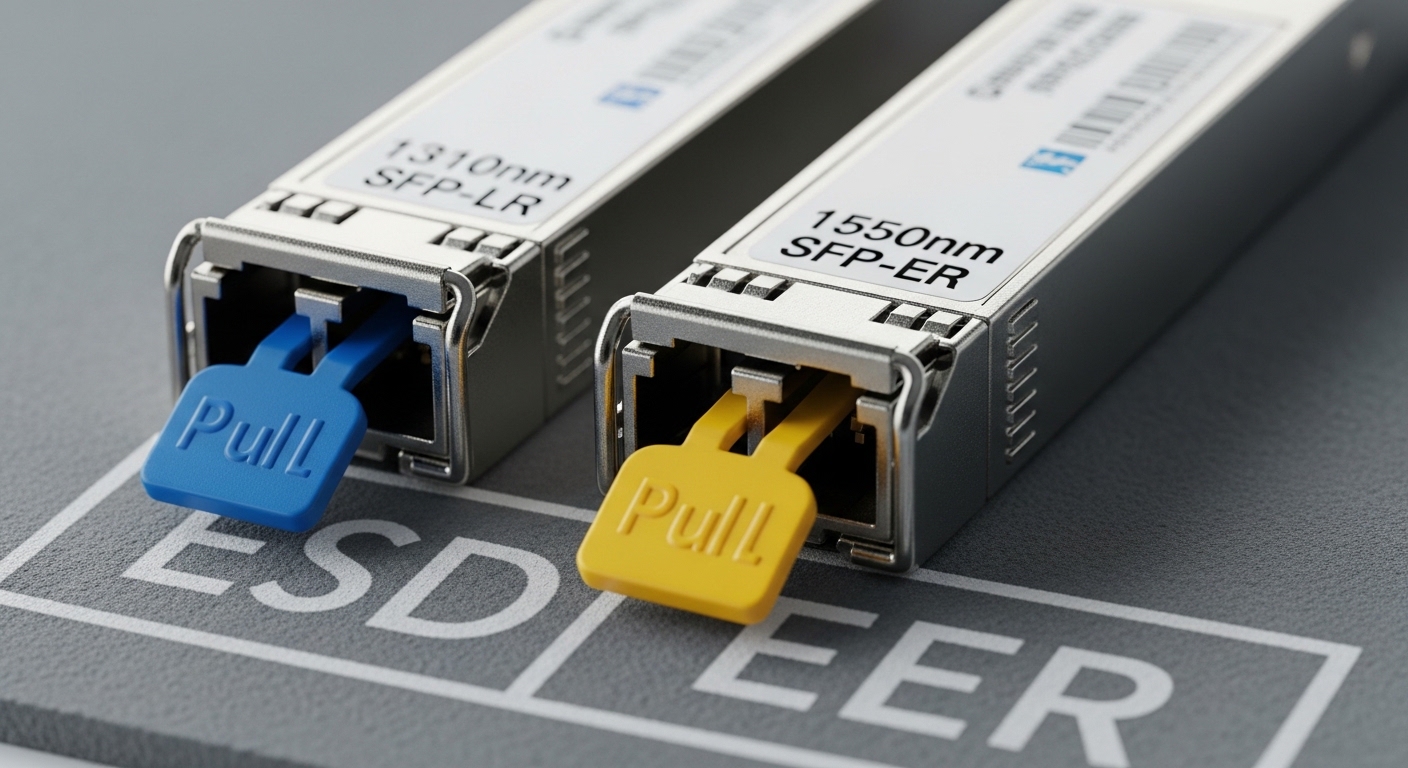
Unlike a greenfield enterprise campus, smart city networks combine roadside cabinets, underground conduits, and tower sites with variable attenuation and temperature swings. In practice, you often inherit existing fiber plants with unknown splice quality and aging connectors, then add new transceiver types to meet capacity targets. That is why transceiver selection must account for both the optical link budget and the operational envelope: power, wavelength stability, and DOM support for monitoring.
At the same time, smart city traffic is bursty and latency-sensitive. For example, video analytics from curbside cameras may require consistent throughput during peak events, while maintenance windows are scheduled around public safety requirements. Field teams typically validate links using optical power readings at the patch panel, then confirm transceiver telemetry via the switch or OLT. If the wrong transceiver family is used, you can pass initial link bring-up and still fail later due to thermal drift or marginal power margin.
Common smart city segments you must map before choosing optics
- Municipal backhaul: aggregation from street cabinets to regional nodes, often 10G to 100G over single-mode fiber.
- Edge compute uplinks: short-reach links inside outdoor huts or micro data centers, where connector cleanliness and temperature dominate.
- Access networks in PON-style architectures: OLT to splitter to ONU, where wavelength and reach classes are strict.
- Fronthaul for small cells: short-to-mid reach, where you may blend optics with strict latency and timing requirements.
Transceiver options for smart city fiber connectivity
Most smart city designs start with Ethernet transceivers, then add specialized layers where needed: DWDM for capacity scaling on existing fiber pairs, or PON optics for access. Engineers choose between SR, LR, ER, and ZR-like classes for Ethernet over single-mode fiber, and between short-reach multimode and long-reach single-mode depending on the trench length and splice count. A key point is that “reach” in datasheets assumes typical link budgets and connector losses; your installed plant can be worse.
In the field, I commonly see mixed-media plants: legacy multimode in conduits replaced by single-mode at later stages, with patch panels that mix connector types. That is why you should verify the fiber type (OM3/OM4 vs OS2), core diameter, and connector geometry before ordering modules. For transceivers, also check whether the switch supports the specific optics vendor ID and whether the module provides DOM (Digital Optical Monitoring) in a way compatible with the platform.
Specification comparison engineers actually use
The table below compares typical transceiver classes used in smart city backhaul and edge aggregation. Exact parameters vary by vendor and part number, so always confirm against the specific datasheet for the chosen module.
| Transceiver class | Typical data rate | Wavelength | Fiber type | Typical reach | Connector | DOM | Operating temperature |
|---|---|---|---|---|---|---|---|
| 10G SR | 10G | 850 nm | OM3/OM4 multimode | ~300 m (OM3) / ~400-450 m (OM4) | LC | Often supported | 0 to 70 C (standard) or extended options |
| 10G LR | 10G | 1310 nm | OS2 single-mode | ~10 km | LC | Commonly supported | 0 to 70 C or extended options |
| 25G LR | 25G | 1310 nm | OS2 single-mode | ~10 km | LC | Commonly supported | 0 to 70 C or extended options |
| 40G/100G LR4 | 40G or 100G (split wavelengths) | ~1310 nm region | OS2 single-mode | ~10 km | LC | Often supported | 0 to 70 C or extended options |
| DWDM optics (tunable or fixed) | 10G-100G per wavelength | ITU grid (e.g., C-band) | OS2 single-mode | Varies by design; can be far beyond Ethernet classes | Depends on mux/demux | Vendor dependent | Wide range; confirm spec |
Standards and compatibility notes you should not ignore
- Ethernet transceivers align with IEEE 802.3 optical PHY specifications for link behavior; however, vendor implementations differ in diagnostics and threshold defaults. [Source: IEEE 802.3]
- PON systems use strict wavelength plans and module classes; verify alignment with your OLT/ONU generation and optics vendor support. [Source: ITU-T G.984 (PON framework)]
- DOM is often implemented via vendor-specific I2C register layouts; network operators frequently standardize on a single transceiver ecosystem to reduce monitoring surprises. [Source: SFF-8472 / SFF-8431 (DOM concepts)]
Pro Tip: In outdoor smart city huts, I have seen “perfect” optical power at commissioning degrade months later due to connector micro-damage from repeated service loops. Build your acceptance test around re-mating cycles: re-clean, re-seat, and re-check receive power and DOM thresholds after the physical work, not just before it.
Deployment scenario: transceiver planning for curbside video and edge uplinks
Consider a smart city rollout where a regional aggregation node connects to 24 roadside cabinet sites. Each cabinet hosts a rugged switch feeding two 4-camera analytics feeds, producing a combined average of 6 Gbps uplink with peak bursts at 9 Gbps. The fiber plant uses OS2 single-mode with an average of 12 splices per route and typical splice loss of 0.1 dB, plus patch panel connector pairs at each end.
Engineers measure installed loss after commissioning by placing an OTDR near the cabinet and then verifying end-to-end receive power at the aggregation rack. The median end-to-end loss comes out around 6.5 dB, with worst-case routes at 9.5 dB due to extra splices and longer conduit runs. For this design, teams often choose 25G LR optics on the longer cabinet uplinks and reserve 10G SR for short inside-hut links where the patch distance is under 300 m. During acceptance testing, the switch reports DOM alarms for low receive power only after thermal soak, so the team also validates temperature range and power margin for the selected module family.
Selection checklist for smart city fiber connectivity
Use this ordered decision checklist when selecting transceivers for smart city projects. It mirrors what I have seen work during field acceptance and what typically triggers rework when skipped.
- Distance and link budget: include splice count, connector loss, patch cords, and expected aging margin. Validate against worst-case OTDR segments.
- Fiber type and connector standard: confirm OS2 vs OM3/OM4 and LC vs other connector geometries. Do not assume “single-mode” labels match actual core specs.
- Data rate and optics form factor: ensure the switch ports support SFP+, SFP28, QSFP28, QSFP+, or vendor-specific equivalents at the required line rate.
- Operating temperature: outdoor cabinets need extended temperature options; standard modules may pass bench tests but fail in summer sun or winter cold.
- DOM and monitoring compatibility: confirm the platform can read DOM values and whether thresholds are adjustable or fixed.
- Vendor lock-in risk: third-party optics can work, but check vendor interoperability guidance and return policies. Plan for maintenance spares that match the same DOM behavior.
- Optical budget headroom: prefer modules with comfortable receive power margins rather than operating at the edge of spec.
Concrete examples of optics families you may encounter
- Enterprise and aggregation switches often use modules like Cisco SFP-10G-SR for short-reach multimode. Confirm DOM and temperature range on the exact SKU.
- For single-mode long reach, common module categories include 10G LR and 25G LR; examples in the market include Finisar and FS-style “LR” single-mode transceivers with LC connectors. Always match the wavelength and reach class to your measured loss.
- Where capacity scaling is required without trenching new fiber, DWDM transceivers may ride on top of mux/demux equipment; this changes the acceptance test from simple Ethernet receive power to per-channel power and OSNR checks. [Source: ITU-T G.694.1]
Common mistakes and troubleshooting patterns
These failure modes show up repeatedly in smart city field work. Each includes the root cause and what typically fixes it.
Link comes up, then drops after thermal cycling
Root cause: standard temperature optics or marginal optical power margin; thermal drift shifts laser output and receiver sensitivity. Outdoor cabinets can swing beyond what bench tests simulate.
Solution: swap to extended temperature modules, then verify DOM receive power and error counters after a controlled thermal soak. Also re-check connector cleanliness and re-seat procedures.
Wrong transceiver reach class for the installed plant
Root cause: relying on datasheet “typical reach” without accounting for your splice and connector losses, plus patch cord aging and additional patch panels.
Solution: compute link budget using measured loss. Target at least 3 to 6 dB operational headroom for planned growth and rework cycles, then confirm with receive power readings at both ends.
DOM alarms or monitoring misreads cause false escalation
Root cause: DOM register differences between vendors, or switch firmware expecting a particular diagnostic mapping. Some third-party optics report thresholds differently.
Solution: confirm compatibility using the switch vendor’s transceiver interoperability list and validate monitoring behavior during commissioning. If possible, align threshold configurations or accept calibrated readings.
Connector contamination after repeated service visits
Root cause: dust on LC endfaces increases insertion loss by several dB, especially in humid outdoor cabinets. OTDR may look fine, but patch panel loss spikes.
Solution: enforce a cleaning workflow: inspection scope, lint-free wipes, and proper connector cleaning tools before every mating. Re-check optical power immediately after cleaning and after the physical cable management step.
Cost and ROI considerations for smart city fiber connectivity
Transceiver pricing varies widely by data rate, reach class, and temperature rating. In many markets, a 10G LR or 25G LR module can range from roughly tens to over a hundred dollars per unit depending on vendor and DOM support; extended temperature variants typically cost more. OEM modules may cost more upfront, but they reduce commissioning time and “mystery failures” tied to compatibility.
Third-party optics can be cost-effective, but you must include TCO items: testing labor, spare management complexity, potential warranty constraints, and higher failure risk if the optics family is not validated for your exact switch. For ROI modeling, treat optics as part of a lifecycle plan: plan spares for each site type, standardize on a small set of validated module families, and measure failure rates from past deployments rather than assuming uniform reliability across vendors.
FAQ
What is the most important factor for fiber connectivity in smart cities?
It is the installed link budget, not the “typical reach” marketing claim. Combine OTDR-based loss estimates with connector and splice loss assumptions, then validate with live receive power and DOM telemetry after thermal conditions stabilize.
Should we use multimode or single-mode for outdoor cabinets?
For outdoor routes with unpredictable lengths and splice counts, single-mode OS2 is usually safer because it tolerates longer distances and varied plant conditions. Multimode can work for short inside-hut runs, but you must ensure OM3/OM4 compatibility and keep connector distances tightly controlled.
How do we reduce risk when mixing OEM and third-party optics?
Use a vendor interoperability list where available, test optics in a representative staging rack, and standardize on one DOM behavior per switch model. Also define an acceptance procedure that includes re-mating and thermal soak rather than relying on initial link-up only.
Do DWDM choices affect fiber connectivity beyond raw reach?
Yes. DWDM introduces per-channel power, OSNR, and wavelength plan constraints, and the mux/demux equipment becomes part of the link performance. Your acceptance tests must shift from basic Ethernet receive power to channel-level metrics.
What troubleshooting step should come first during a sudden outage?
Start with the simplest physical checks: connector cleanliness, patch cord reseating, and verifying the transceiver is fully latched. Then compare DOM-reported receive power and error counters against baseline values from commissioning.
Where can we verify standards for Ethernet optics behavior?
IEEE 802.3 defines optical PHY behavior for Ethernet, but the operational details depend on transceiver implementation and switch firmware. For diagnostics and DOM concepts, also consult SFF documentation and your switch vendor’s optical module guidance. [Source: IEEE 802.3]
If you want predictable smart city fiber connectivity, treat transceivers as engineered components: validate link budgets with measured loss, standardize optics families, and test under realistic thermal and service conditions. Next, review fiber optic link budget basics to build a repeatable calculation workflow for every cabinet and edge node.
Author bio: Telecom engineer with hands-on experience deploying 5G fronthaul/backhaul optics, DWDM aggregation, and PON access networks across outdoor cabinet environments. I focus on field acceptance testing, DOM telemetry validation, and operational reliability under temperature and connector contamination constraints.
