
Smart cities live or die on connectivity: traffic signals, adaptive lighting, public Wi-Fi, and municipal CCTV all converge on fiber backhaul. This article helps network engineers and city IT teams pick the right optical modules—SFP, SFP+, QSFP, and QSFP-DD—so the network stays stable under real field conditions. You will get a specs-based comparison, a concrete deployment scenario, and troubleshooting guidance tied to how transceivers actually fail in production.
How smart cities use optical modules in field-ready backhaul
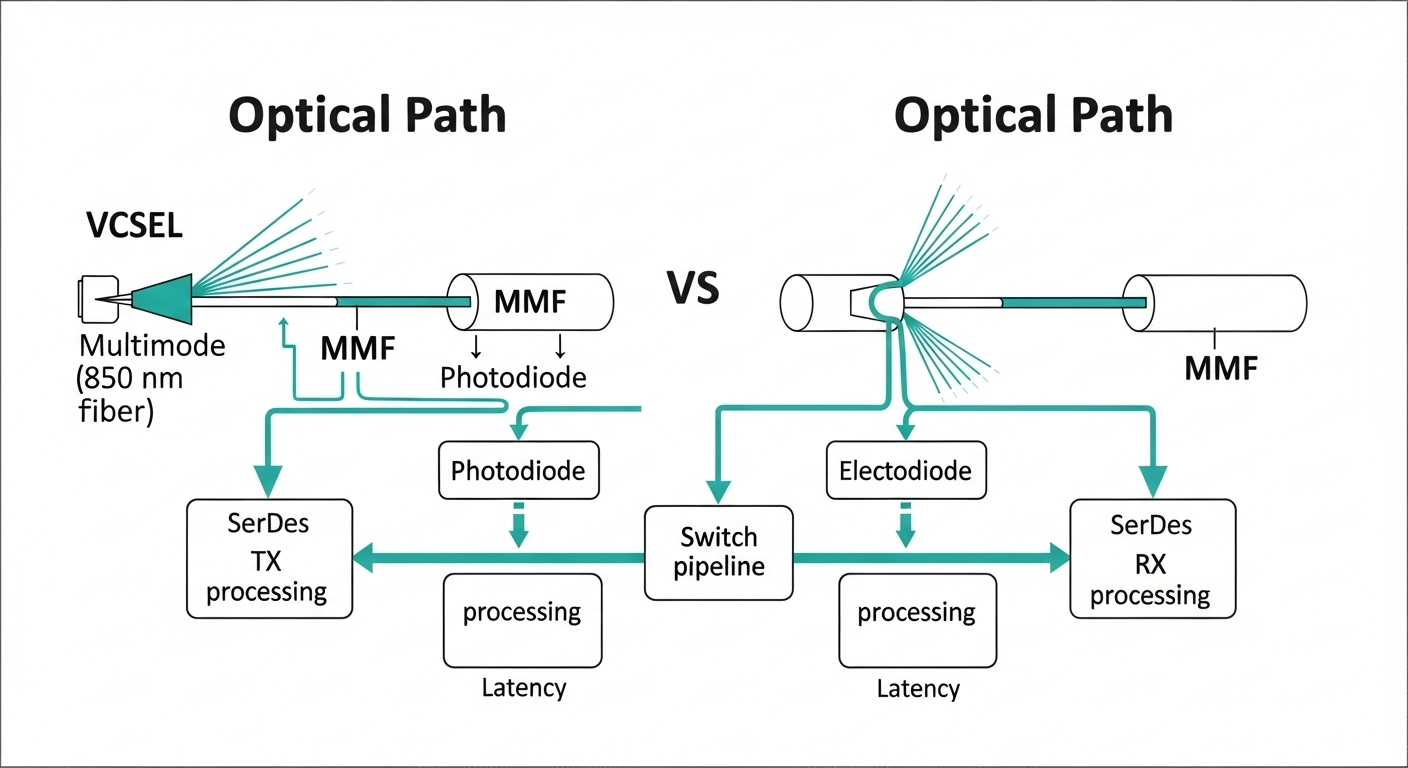
In a typical smart cities rollout, you are not buying optics in a vacuum; you are matching transceivers to fiber plant, switch silicon, and the operational profile of outdoor cabinets. For example, a traffic management center may aggregate 10G uplinks from roadside switches, while camera clusters demand low-latency, high-availability links. Optical modules are the interface that must remain consistent across vendor refresh cycles, temperature swings, and patch-panel changes.
From an engineering standpoint, you are selecting by data rate, wavelength, reach, and optical power budget, not just “SR vs LR.” IEEE 802.3 governs Ethernet PHY behavior, while vendor datasheets define DOM support, thermal limits, and link margin requirements. For authoritative transceiver baseline behavior, see Source: IEEE 802.3.
Key transceiver specs that decide link success
The “right” module is the one that fits your switch, your fiber type, and your link budget with margin for aging. In practice, multimode SR links are common inside municipal buildings and underground corridors, while single-mode LR/ER dominates longer runs between cabinets and the core.
| Module type | Typical data rate | Wavelength | Reach (typical) | Connector | DOM | Temp range (typical) |
|---|---|---|---|---|---|---|
| SFP-10G-SR class | 10G | 850 nm | ~300 m (OM3) | LC | Often supported | 0 to 70 C (industrial varies) |
| SFP+/QSFP-10G-LR class | 10G | 1310 nm | ~10 km | LC | Often supported | -5 to 70 C (varies) |
| QSFP-40G-SR class | 40G | 850 nm | ~100 m (OM4) | LC | Often supported | 0 to 70 C (varies) |
DOM matters in smart cities because you will monitor optics health for early warnings: laser bias current, received power, and temperature drift. If your switches do not read DOM consistently, you lose visibility and extend mean time to repair.
Pro Tip: In municipal deployments, the biggest “mystery” outages often trace back to dirty LC connectors and marginal link budgets, not bad firmware. If you standardize connector cleaning and enforce a minimum received power threshold from day one, you reduce intermittent flap events that otherwise look like switch instability.
Decision checklist for smart cities transceiver selection
Use this ordered checklist during design and procurement. It prevents the classic scenario where optics “work on the bench” but fail after field patching.
- Distance and fiber type: confirm OM3/OM4 vs OS2, and measure actual patch-panel losses.
- Switch compatibility: verify the exact model of transceiver is supported by the switch vendor’s compatibility matrix, especially for QSFP-DD and 25G optics.
- DOM support and monitoring: confirm what telemetry fields your switch OS exposes and how alerts map to events.
- Optical power budget: include connector loss, splice loss, and aging margin; do not plan “barely within spec.”
- Operating temperature: outdoor cabinets can exceed rated ranges; select industrial or extended temperature optics when needed.
- Vendor lock-in risk: OEM optics may be pricier; third-party can be fine if compatibility is proven, but keep a validated spare strategy.
Real-world deployment scenario: roadside aggregation
In a 3-tier municipal design, a city runs 48-port 10G ToR switches at roadside aggregation points, uplinking to a regional aggregation pair with redundant links. Assume each cabinet is 6 to 8 km from the aggregation site through OS2 fiber. Engineers typically choose 10G LR (1310 nm) optics with LC connectors for the uplinks, and 10G SR (850 nm) inside the cabinet for short patch runs. At peak events, the system carries CCTV bursts and traffic telemetry; the operational goal is stable link operation through temperature swings and frequent maintenance visits.
For optics identification, some teams standardize on known part families such as Cisco SFP-10G-SR and Cisco SFP-10G-LR, and third-party equivalents like Finisar FTLX8571D3BCL (10G SR) or FS.com SFP-10GSR-85 (10G SR). Always cross-check vendor compatibility with your switch model before ordering in volume.
Common mistakes and troubleshooting tips in the field
Smart cities networks are operationally noisy: contractors change patch cords, cabinets get hot, and optics get handled. Here are concrete failure modes and how to fix them.
- Symptom: link flaps every few minutes after patching. Root cause: dirty LC connectors or damaged ferrules causing intermittent reflections. Solution: clean with approved fiber cleaning tools, re-terminate if needed, and verify received power via DOM.
- Symptom: “unsupported transceiver” alarms and no link. Root cause: switch model not accepting the module’s EEPROM/ID profile or DOM behavior. Solution: use the switch vendor’s validated optics list and test one module from the exact SKU before scaling.
- Symptom: high CRC errors and slow throughput despite “link up.” Root cause: insufficient optical margin (wrong fiber type, underestimated patch loss, or too-long reach). Solution: re-measure end-to-end loss, confirm the correct wavelength type (SR vs LR), and replace with a longer-reach or higher-budget variant.
- Symptom: failures only during summer heat. Root cause: transceiver temperature exceeding spec in outdoor cabinets. Solution: enforce airflow/ventilation, add thermal-rated optics (industrial/extended temperature), and validate operation across worst-case cabinet temperatures.
Cost and ROI: OEM vs third-party optics for smart cities
Optics pricing swings based on speed and reach, but budgeting patterns are consistent. OEM modules for mainstream 10G/25G can run roughly $80 to $250 per unit, while compatible third-party optics may land around $35 to $150, depending on SKU and testing. TCO also includes power draw (usually small but measurable at scale), spares strategy, and truck-rolls caused by avoidable incompatibility or connector-related failures.
ROI improves when you standardize on a small set of transceiver types aligned to fiber plant design, enforce cleaning SOPs, and keep validated spares at each aggregation tier. The cheapest module is not the one with the lowest unit price; it is the one that produces the lowest failure rate and fastest recovery.
FAQ
What optics are most common for smart cities traffic and CCTV backhaul?
Most deployments use 10G SR for short intra-building or cabinet links and 10G LR for multi-kilometer runs on OS2 fiber. If you aggregate higher camera densities, you may move to 25G or 40G optics, but compatibility and thermal ratings become more critical.
Do I need DOM for smart cities networks?
DOM is strongly recommended because it enables proactive monitoring of temperature and received power, which helps you catch degradation before outages. Ensure your switch OS actually surfaces the telemetry you plan to alert on.
Can third-party transceivers work with OEM switches?
Yes, but only when the exact SKU is verified for your switch model and software version. Test at least one module end-to-end in your lab or staging environment before purchasing spares for field use.
How do I calculate reach for SR vs LR in real projects?
Use datasheet reach as a baseline, then subtract measured fiber attenuation plus connector and splice losses from your link budget. Add an aging margin; do not design for “just within spec,” especially in outdoor cabinets with frequent maintenance.
What is the fastest way to troubleshoot a link that stays up but has errors?
First check DOM received power and temperature. Then clean connectors, verify fiber type and wavelength pairing, and confirm you are not exceeding the effective link budget with extra patch cords.
Where should spares be stored in a municipal topology?
Keep spares at each aggregation tier: one spare per critical uplink group and additional spares in the regional NOC. This reduces downtime because you replace optics quickly without waiting for shipping.
If you want smart cities connectivity that survives field realities, select optics by link budget, switch compatibility, and thermal behavior—not by marketing labels. Next, review fiber-optic-link-budget-basics to standardize your design calculations and prevent intermittent failures.
Author bio: I have spent two decades designing and troubleshooting fiber Ethernet for enterprise and municipal networks, including leaf-spine and aggregation fabrics. I routinely validate optical modules with DOM telemetry and real link budgets before cutover.
.wpacs-related{margin:2.5em 0 1em;padding:0;border-top:2px solid #e5e7eb} .wpacs-related h3{margin:.8em 0 .6em;font-size:1em;font-weight:700;color:#374151;text-transform:uppercase;letter-spacing:.06em} .wpacs-related-grid{display:grid;grid-template-columns:repeat(auto-fill,minmax(200px,1fr));gap:1rem;margin:0} .wpacs-related-card{display:flex;flex-direction:column;background:#f9fafb;border:1px solid #e5e7eb;border-radius:6px;overflow:hidden;text-decoration:none;color:inherit;transition:box-shadow .15s} .wpacs-related-card:hover{box-shadow:0 2px 12px rgba(0,0,0,.1);text-decoration:none} .wpacs-related-card-img{width:100%;height:110px;object-fit:cover;background:#e5e7eb} .wpacs-related-card-img-placeholder{width:100%;height:110px;background:linear-gradient(135deg,#e5e7eb 0%,#d1d5db 100%);display:flex;align-items:center;justify-content:center;color:#9ca3af;font-size:2em} .wpacs-related-card-title{padding:.6em .75em .75em;font-size:.82em;font-weight:600;line-height:1.35;color:#1f2937} @media(max-width:480px){.wpacs-related-grid{grid-template-columns:1fr 1fr}}