
When optical transceiver supply tightens, the real risk in enterprise IT is not just downtime, but cascading failures from mismatched optics, budget overruns, or unsupported vendor features. This article helps network and data-center engineers design resilient fiber links even during shortages by comparing common module types and the operational checks that prevent surprises. You will get practical selection criteria, troubleshooting patterns from the field, and a ranked shortlist to speed procurement decisions.
Top 8 optical resilience picks for enterprise IT during shortages
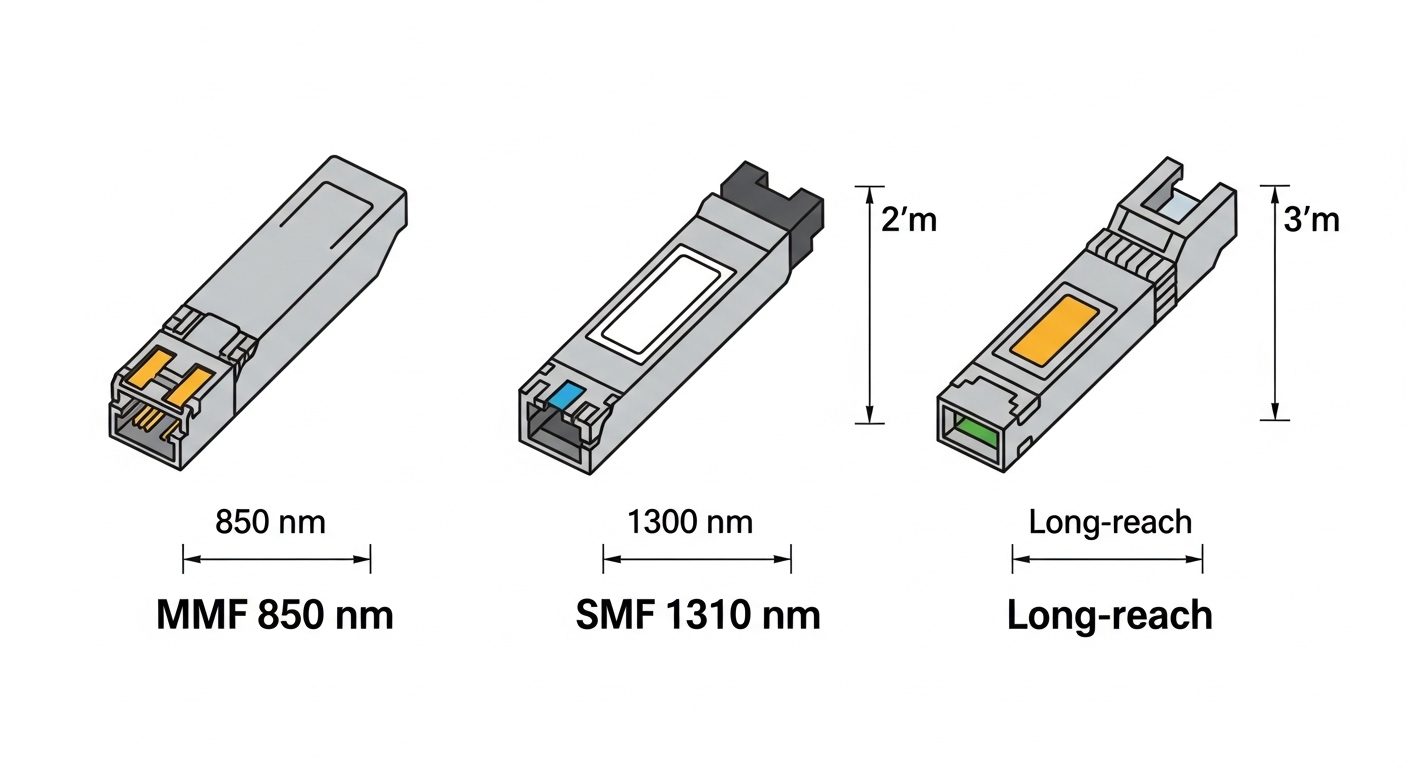
In shortage conditions, resilience comes from choosing optics that match IEEE expectations, your switch vendor compatibility, and your fiber plant realities (loss, cleanliness, and polarity). I have deployed mixed-vendor optics in leaf-spine fabrics, and the teams that survived tight lead times did it by standardizing reach, wavelength, and diagnostics support (DOM) while planning for graceful replacement. The goal is to keep link availability high even when you cannot get “perfect” identical spares on the first order.
10G SR (850 nm) multimode optics with DOM
10G SR modules (commonly 850 nm over OM3 or OM4) are often the first resilience pick because multimode fiber is already widely installed in enterprise IT data centers. Look for modules such as Cisco SFP-10G-SR or third-party equivalents like Finisar FTLX8571D3BCL (exact ordering details vary by OEM). DOM support matters: you can detect aging or abnormal receive power before hard failures.
- Key specs to target: 10.3125 Gb/s, 850 nm, typical reach 300 m (OM3) or 400 m (OM4)
- Best-fit scenario: ToR-to-aggregation links inside buildings where multimode was standardized
- Pros: High availability of compatible parts; easier replacement during shortages
- Cons: Performance depends on OM grade, connector cleanliness, and patch-cord quality
Operational note: In a typical 10G SR deployment, I budget around 1.5 to 2.0 dB for patch cords and conservative margins over end-to-end loss, then verify with an OTDR or light source plus power meter.
25G SR (850 nm) for higher density without moving to singlemode
When you need more throughput per rack but want to preserve multimode fiber investments, 25G SR optics are a strong resilience move. This is useful for enterprise IT modernization where the cabling plant is already OM4, but the switching layer is being upgraded during shortages. Select SFP28 or compatible variants with DOM and validated switch support.
- Key specs to target: 25.78125 Gb/s, 850 nm, typical reach 100 m on OM3 and 150 m on OM4 (vendor-specific)
- Best-fit scenario: Server-to-ToR and short ToR uplinks in dense racks
- Pros: More bandwidth per port; leverages existing multimode
- Cons: Reach is shorter than 10G SR; poor patching can cause intermittent errors
100G SR4 (850 nm) to reduce port count and spare complexity
100G SR4 uses four lanes over multimode, often reducing the number of uplink ports needed. During shortages, fewer higher-rate links can simplify spares strategy because you stock fewer optics types for the same capacity. Ensure your switch supports SR4 lane mapping and that you match connector style (usually MPO/MTP).
- Key specs to target: 4x 25G lanes, 850 nm, typical reach 100 m on OM4 (varies by module)
- Best-fit scenario: Leaf-spine uplinks in multi-tenant data centers with strong multimode discipline
- Pros: Lower port density overhead; fewer optics per Tb/s
- Cons: MPO polarity and fiber cleaning discipline are non-negotiable
40G SR4 for legacy fabrics needing resilience now
Some enterprise IT fabrics still rely on 40G SR4 (for example, older spine layers). If you are addressing shortages without a full refresh, resilient replacement means selecting modules that match the switch’s optics profile and lane behavior. Consider parts that provide DOM and have documented compatibility with your platform.
- Key specs to target: 4x 10G lanes, 850 nm, typical reach up to 150 m on OM3/OM4 depending on vendor
- Best-fit scenario: Aging aggregation layers where migration is staged
- Pros: Keeps legacy gear running while procurement stabilizes
- Cons: Higher per-port cost; eventual upgrade path still required
10G LR (1310 nm) on singlemode for distance and plant flexibility
Singlemode LR optics (around 1310 nm) are a resilience asset when you have longer runs, campus cross-building links, or you want to reduce sensitivity to multimode patching issues. In enterprise IT, I have seen teams use LR for “last-mile” uplinks where OM cabling quality was inconsistent, especially during expansions.
- Key specs to target: SFP+ LR at 1310 nm, typical reach 10 km on OS2
- Best-fit scenario: Campus distribution, IDF-to-MDF, or inter-building links
- Pros: Better tolerance for distance; OS2 is more stable over time
- Cons: Singlemode optics are often more expensive; verify fiber type and link budget
25G LR on OS2 to modernize without changing the fiber core
If you are moving from 10G to 25G but want to keep existing OS2 infrastructure, 25G LR is often the practical bridge. Choose modules with DOM and confirm that your switch supports the exact optics type (SFP28 form factor, wavelength class, and standard compliance).
- Key specs to target: SFP28 LR at 1310 nm, typical reach 10 km (vendor-defined)
- Best-fit scenario: Upgrading uplinks while keeping OS2 cabling
- Pros: Higher throughput with limited civil work
- Cons: Some platforms are strict about optics vendor profiles
Active optical cables (AOC) for controlled short reaches and fast swaps
Active optical cables can be a procurement-friendly option for short distances inside racks and between adjacent devices, especially when transceiver lead times are unpredictable. In enterprise IT, AOCs can reduce the number of discrete optics you manage, but you must ensure the switch supports the AOC electrical interface and that you do not exceed bend and installation constraints.
- Key specs to target: 10G/25G/100G variants, reach typically 1 to 100 m (model-specific), active electronics in-cable
- Best-fit scenario: Short interconnects in high-density aisles
- Pros: Quick replacement; fewer optics SKUs
- Cons: Not always interchangeable across platforms; cable handling matters
“Known-good” spare strategy: standardized optics + DOM monitoring
Resilience is not only about the optic type; it is also about how you stock and validate spares. During shortages, I recommend standardizing your transceiver portfolio to the smallest set of reach/wavelength combinations that your switches support, then monitoring DOM thresholds to catch marginal optics early.
- Key specs to target: DOM availability (vendor specific), temperature range (commercial vs extended), and compliance to IEEE 802.3 where applicable
- Best-fit scenario: Multi-site enterprise IT where you need consistent operational behavior
- Pros: Predictable troubleshooting; faster RMA decisions
- Cons: Requires disciplined change control and inventory governance
Specs that matter: SR vs LR vs SR4 for enterprise IT resilience
Before ordering during shortages, confirm both the physical layer and the optical budget. The most common failures I see are not “bad optics,” but reach mismatches caused by excessive patch loss or polarity errors on MPO links. The table below summarizes practical targets you can use to shortlist compatible modules.
| Module type (common form) | Wavelength | Typical reach | Fiber / connector | Data rate | Temperature range | Connector notes |
|---|---|---|---|---|---|---|
| 10G SR (SFP+) | 850 nm | 300 m (OM3) / 400 m (OM4) | OM3/OM4 multimode, LC | 10.3125 Gb/s | 0 to 70 C typical (check datasheet) | Clean LC ends; verify patch loss |
| 25G SR (SFP28) | 850 nm | 100 m (OM3) / 150 m (OM4) | OM3/OM4 multimode, LC | 25.78125 Gb/s | 0 to 70 C typical (check datasheet) | More sensitive to loss than 10G SR |
| 100G SR4 (QSFP28) | 850 nm | ~100 m on OM4 (vendor-dependent) | OM4 multimode, MPO/MTP | 4x 25G | 0 to 70 C typical (check datasheet) | MPO polarity and lane alignment critical |
| 10G LR (SFP+) | 1310 nm | 10 km on OS2 | OS2 singlemode, LC | 10.3125 Gb/s | 0 to 70 C typical (check datasheet) | Verify fiber type and end-to-end budget |
| 25G LR (SFP28) | 1310 nm | 10 km on OS2 (model-defined) | OS2 singlemode, LC | 25.78125 Gb/s | 0 to 70 C typical (check datasheet) | Confirm switch optics profile support |
Standards context: Ethernet optical PHY behavior aligns with IEEE 802.3 specifications for the relevant speeds and media types. For optical class details and compliance expectations, start with [Source: IEEE 802.3]. For module form factors and electrical interfaces, vendor datasheets and switch transceiver support matrices are the deciding references.
Pro Tip: In shortage-driven swaps, do not rely on “it links up.” Instead, read DOM values (receive power, temperature, and bias current) immediately after installation and compare to your historical baseline. A module can establish link yet run near its optical margin, then fail during peak utilization or after a patch-cord disturbance.
Selection criteria checklist for resilient optics in enterprise IT
When procurement lead times are uncertain, your engineering process needs to be faster than your vendor’s response time. Use this ordered checklist so you can authorize replacements without violating compatibility or violating your own operational thresholds.
- Distance and fiber type: Confirm OM3/OM4 vs OS2, then match reach for the specific patch loss in your building records.
- Data rate and interface: Ensure the module form factor and electrical interface match your switch port (SFP, SFP+, SFP28, QSFP28, or AOC).
- Switch compatibility: Check the platform’s validated optics list and transceiver support matrix.
- DOM and monitoring: Prefer modules with DOM so you can automate alerting and catch marginal optics early.
- Operating temperature: Use the vendor’s rated temperature range for your rack environment; avoid commercial-only parts in hot aisles.
- Optical connector and polarity: LC vs MPO/MTP must match your patching method and polarity labeling process.
- Vendor lock-in risk: Balance OEM and third-party options; require documentation of compatibility and a clear RMA path.
- Spare strategy: Standardize reach/wavelength within a site so spares can be shared across switches when one brand is delayed.
Common mistakes and troubleshooting tips during optical shortages
Shortages tempt teams to “make it work” quickly. The problem is that optical links fail in ways that can look random, especially when patching quality or polarity conventions were inconsistent.
-
Mistake: Installing an SR module on a link that exceeds reach due to patch cords or dirty connectors.
Root cause: Excess insertion loss or contamination increases receive power below the receiver sensitivity threshold.
Fix: Clean with proper fiber tools, verify polarity, then measure with an optical power meter or OTDR; keep a margin plan for at least 2 to 3 dB where feasible. -
Mistake: Mis-polarity on MPO/MTP SR4 or 100G SR4 links.
Root cause: Lane mapping mismatch causes intermittent or no link even when optical power seems normal.
Fix: Use polarity adapters, confirm ribbon orientation, and validate with a known-good reference patch cord before blaming the transceiver. -
Mistake: Assuming “any compatible brand” will work across the same speed.
Root cause: Some switches enforce optics vendor profiles, DOM behavior, or
