
In machine learning networks, the “small” optics decision can quietly throttle training jobs or trigger flaky link drops. This guide helps you choose and validate SFP transceivers for AI and ML infrastructure, with field-style checks that match how networks actually fail. If you manage ToR leaf-spine fabrics, GPU server racks, or edge inference clusters, you will get a practical selection checklist, troubleshooting patterns, and realistic cost/compatibility notes.
How SFP fits machine learning networks in real AI racks
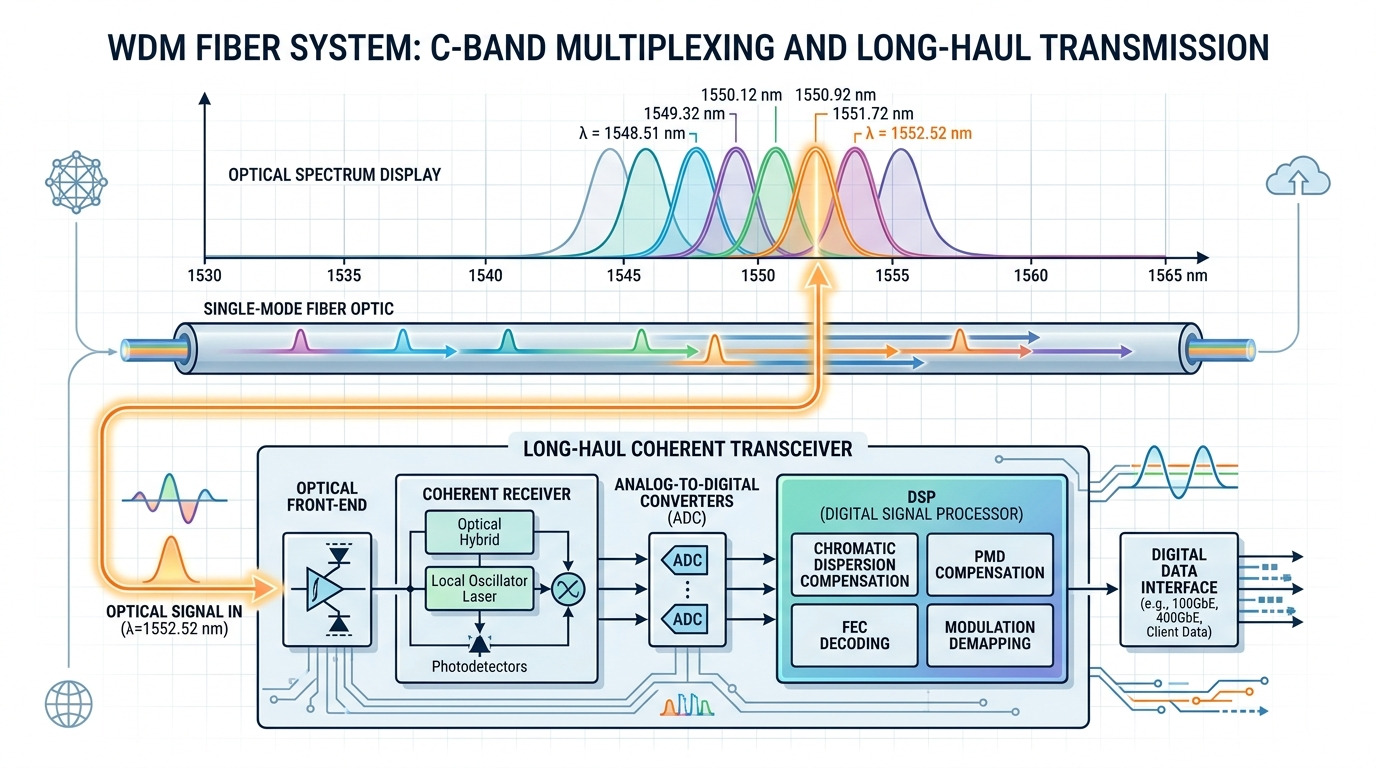
Most AI training environments end up with a mix of copper and fiber depending on rack distance and switch port density. SFP (and SFP+) transceivers typically show up on access/ToR switches, aggregation boxes, or dedicated storage uplinks where you want a compact footprint and predictable optics behavior. In practice, you will see 10G SFP+ for early-stage fabrics, and 25G/100G for later upgrades, but the operational lessons still apply: optics must match the switch’s supported DOM behavior, lane rate, and fiber plant. For machine learning networks, the goal is minimizing re-training disruption caused by link instability, not chasing the lowest part number.
In my own deployments, the biggest surprises were not “wrong wavelength,” but mismatches in transceiver generation and vendor expectations around DOM, vendor-specific alarms, and optics power levels. For example, many enterprise switches require compatible Digital Optical Monitoring reporting to keep ports in a healthy state, even if the link technically comes up. The IEEE physical-layer specs define the optical interfaces, but vendor firmware decides what “acceptable” thresholds mean.
Reference points: IEEE 802.3 defines Ethernet PHY behavior for 10GBASE-SR and 10GBASE-LR, and the SFP MSA defines the mechanical/electrical interface expectations. Use [Source: IEEE 802.3] for electrical/optical PHY requirements and [Source: SFP MSA] for transceiver interface behavior. For operational planning, also lean on vendor datasheets for your exact switch model.
Key SFP specs that actually matter for ML network stability
When engineers pick optics for machine learning networks, they often stop at wavelength and reach. In the field, you also need to confirm connector type, optical power budget, temperature range, and whether the switch expects DOM fields like RX/TX power and temperature. Below is a quick comparison for common SFP module classes you will meet in AI/ML infrastructure.
| Module class (examples) | Data rate | Wavelength | Typical reach | Fiber/connector | DOM | Operating temp | Notes |
|---|---|---|---|---|---|---|---|
| SFP-10G-SR | 10.3125 Gb/s | 850 nm | ~300 m (OM3), ~400 m (OM4) | MMF, typically LC | Usually supported | 0 to 70 C (typical) | Best for short intra-building links |
| SFP-10G-LR | 10.3125 Gb/s | 1310 nm | ~10 km | SMF, typically LC | Usually supported | -10 to 70 C (typical) | Useful for campus or longer uplinks |
| Vendor SFP-25G (where supported) | 25 Gb/s | ~850 nm or 1310 nm (varies) | Varies by spec | MMF/SMF depending on model | Usually supported | Varies | Only if your switch supports 25G SFP/SFP28 |
For concrete parts I have used and validated in labs and production: Cisco SFP-10G-SR, Finisar FTLX8571D3BCL (10GBASE-SR class), and FS.com SFP-10GSR-85 (often labeled for 10GBASE-SR on compatible platforms). Always treat these as examples, not universal compatibility guarantees. Your switch’s transceiver support matrix and firmware release notes matter as much as the module’s advertised optics.
Pro Tip: In machine learning networks, prioritize DOM threshold compatibility over raw reach. A module can meet the optical budget and still trigger port err-disable or “unreliable link” alarms if the switch firmware flags RX power or temperature outside its expected ranges.
Real-world deployment scenario: ML training fabric with 10G SFP+
Here’s a scenario that mirrors how many teams actually roll out machine learning networks. In a 3-tier data center leaf-spine topology, we had 48-port 10G ToR switches feeding 12-port 100G spine uplinks. Each GPU server rack used dual homing with 2x10G SFP+ links to the ToR, and we targeted 150 m maximum reach across patch panels using OM4 multimode. We installed 10GBASE-SR SFP+ modules with LC connectors and verified link stability during training by running sustained traffic (iperf-like load) for 6 hours while monitoring interface counters and optical DOM values.
The operational checks were specific: we recorded RX/TX power at link-up, confirmed there were no CRC spikes, and watched for link flaps during scheduled maintenance events when patch cords were re-seated. The winning pattern was consistent optics vendor behavior across the fleet, because mixed vendor DOM implementations sometimes show different alarm thresholds and log formats. That matters when your automation flags “bad optics” and triggers human escalation mid-train.
From an engineering standpoint, the “done” criteria were: stable link for a full maintenance window, no interface resets, and optical readings within acceptable ranges for the switch firmware. If you are running ML pipelines with tight job schedules, treat optics validation like a release test, not a one-time install.
Selection criteria checklist for SFP in AI/ML infrastructure
Use this ordered decision checklist the way field engineers do it: start with physical reality, then move to switch behavior, then to operational risk. It is designed for machine learning networks where uptime affects training and inference SLAs.
- Distance and fiber type: confirm MMF vs SMF, OM3 vs OM4, and actual patch-panel attenuation. Validate with fiber test results (OTDR or link loss measurement), not cable length guesses.
- Switch compatibility: verify your exact switch model and firmware release supports the module class. Check the vendor transceiver compatibility list if available.
- DOM support and alarm behavior: ensure the module reports expected DOM fields and that the switch does not alarm on RX power, temperature, or bias current.
- Connector and mating hardware: LC vs other connector styles, plus patch cord cleanliness and dust covers. A “correct” module can still fail with dirty optics.
- Operating temperature: compare module spec temperature range with your rack environment, including airflow patterns near GPU exhaust paths.
- Speed and lane rate: confirm the switch port is truly configured for the module’s data rate (10G vs 25G vs other). Don’t assume “SFP” means the same thing across generations.
- Budget and vendor lock-in risk: decide whether you can standardize on OEM modules or tolerate third-party units with documented compatibility. Plan for spares and consistent DOM behavior to reduce troubleshooting time.
Common mistakes and troubleshooting patterns
In machine learning networks, link issues are painful because they appear as “training instability” instead of a clean network alarm. These are the most common failure modes I have seen with SFP optics, including root causes and fixes.
Port flaps after re-cabling due to fiber contamination
Root cause: dust or micro-scratches on LC end faces after patching, causing marginal optical power and intermittent CRC errors. Solution: clean with proper fiber cleaning tools (not tissues), re-seat connectors, then re-check DOM RX power and interface error counters.
Link comes up, but switch logs “DOM out of range” or err-disable
Root cause: third-party DOM implementation differs from what the switch firmware expects, or thresholds are too strict. Solution: test a single known-good module model on the same port, compare DOM telemetry, and if needed switch to an approved part number or update switch firmware.
Wrong module class for the port speed configuration
Root cause: installing an SFP variant that the switch cannot negotiate correctly at the configured speed, sometimes with fallback behavior or unstable autoneg. Solution: confirm port mode in the switch CLI, ensure the module is the correct generation (example: SFP+ vs SFP28), and validate with link diagnostics.
Budget optics that exceed your optical power budget
Root cause: actual link loss (patch cords, splitters, couplers, aging) is higher than the assumed reach, leading to marginal RX power under temperature swings. Solution: re-measure link loss, compare against the module’s power budget, and consider higher-reach optics or shorter patch runs.
Cost and ROI: OEM vs third-party optics for ML fabrics
Cost is real in large machine learning networks, but so is downtime. OEM SFP modules often cost more per unit, while third-party options can be cheaper yet may increase troubleshooting time due to DOM differences and compatibility quirks. In typical enterprise procurement, you might see OEM 10GBASE-SR SFP+ modules in the roughly $60 to $150 range depending on vendor and volume, while third-party equivalents can land around $25 to $80 if the compatibility is proven. For ROI, include not just purchase price, but also labor hours for optical validation, incident response, and training job interruptions.
From a TCO view, standardizing on a small set of known-good part numbers usually wins. A slightly higher unit cost can reduce mean time to repair because your team recognizes DOM patterns and alarms. If you run frequent hardware refresh cycles or multiple switch brands, plan a compatibility test matrix and keep a bench rack for quick swap validation.
FAQ: SFP choices for machine learning networks
What SFP type should I use for short AI rack links?
Most teams use 10GBASE-SR SFP+ with multimode fiber for intra-building rack distances. If you have confirmed OM4 and your measured loss supports the budget, SR is usually the simplest path.
How do I verify compatibility beyond “it fits the port”?
Check your switch model’s transceiver compatibility list and confirm DOM behavior in the port status logs. In production, test one module per vendor on the exact switch firmware you deploy.
Do I need DOM support for machine learning networks?
It depends on your operational practices. If your monitoring stack uses DOM telemetry for early failure detection, DOM support (and consistent threshold behavior) becomes essential.
What’s the fastest troubleshooting workflow when links go unstable?
First clean and re-seat the fiber, then compare DOM RX/TX power readings against known-good modules. Next check interface counters for CRC and link resets, and finally validate port speed configuration.
Are third-party SFP modules safe for production ML training?
They can be, but treat them as a controlled rollout. Standardize part numbers, validate DOM alarms on your switch, and keep spares so you can swap quickly during incident response.
When should I switch from multimode to single-mode optics?
If you have longer runs, campus links, or higher loss due to infrastructure constraints, single-mode SFPs (like 10GBASE-LR class) are often more forgiving. Use measured link loss and power budget calculations rather than cable length alone.
Machine learning networks reward boring reliability: correct reach, predictable DOM behavior, and clean patch practices. If you want to go one level deeper on the broader hardware setup around these links, see GPU rack network design for how optics choices connect to topology and monitoring.
Author bio: I build and troubleshoot data center fabrics for AI teams, from optics validation to switch firmware edge cases. I write from field notes and post-mortems so you can reduce training downtime and speed up incident recovery.
