
You are planning a multi-cloud migration and the optical network is the bottleneck: links saturate, latency creeps up, and troubleshooting time becomes an unpriced tax. This article helps IT directors and network engineers quantify ROI for optical upgrades using real deployment constraints, measurable performance outcomes, and governance guardrails. You will also see where vendor optics assumptions break in practice, and how to avoid paying twice for the same capacity.
Why optical upgrades decide multi-cloud economics
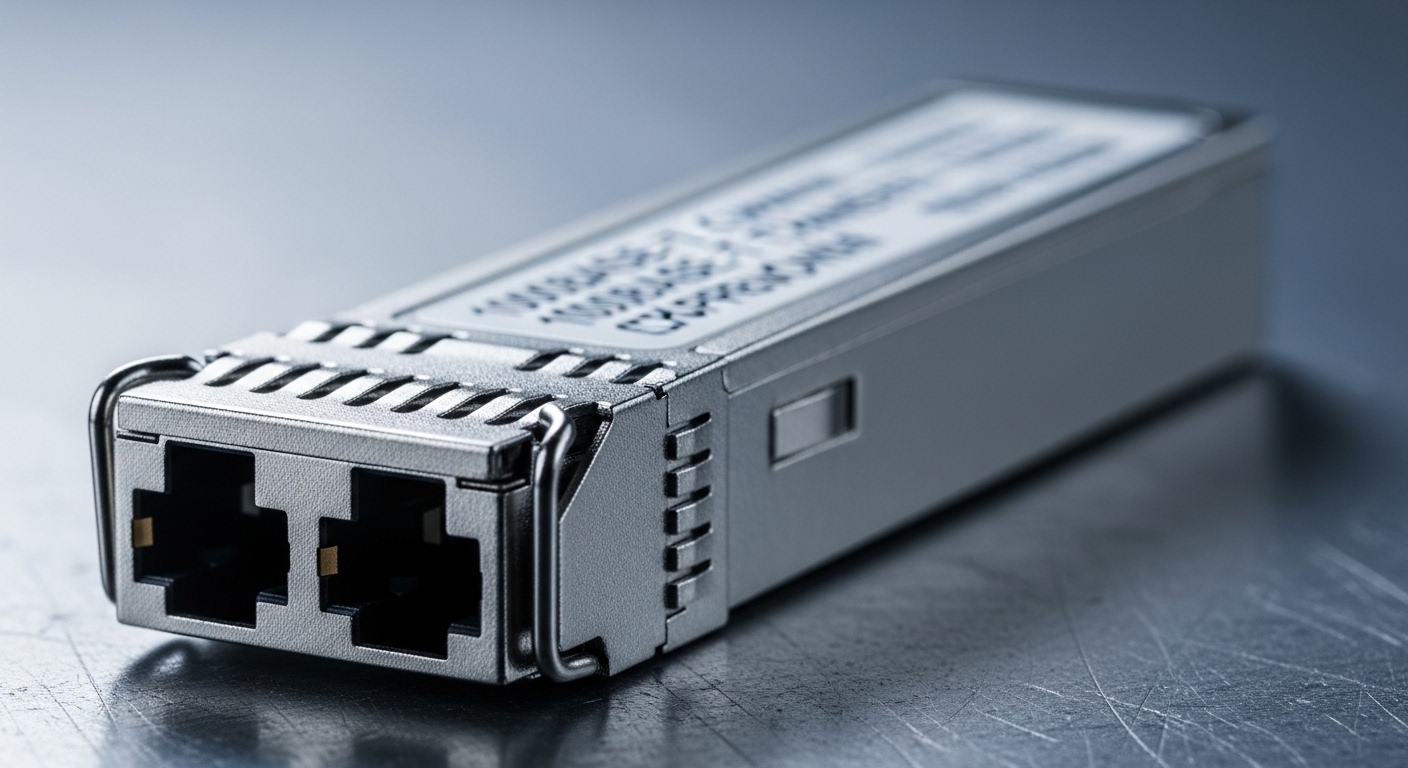
In multi-cloud architectures, traffic patterns change faster than your procurement cycles. A common failure mode is assuming compute and routing upgrades alone will deliver the expected business outcomes, while the optical layer quietly caps throughput at the leaf-spine or aggregation boundary. When a 25G or 100G uplink is oversubscribed, congestion amplifies retransmissions, and the operational load shifts from planned change windows to reactive firefighting.
ROI becomes legible when you treat optics as part of an end-to-end cost model: capital expenditure for optics and patching, engineering labor for validation, and ongoing operational expenditure for power, cooling impact, and support. Vendor datasheets often quote power per transceiver, but field reality adds patch panel density, transceiver replacement rates, and the time to confirm optical levels with meters. The result is a governance question as much as a technical one: can you standardize optics across vendors and sites without violating compatibility rules?
To anchor the discussion in standards, optical Ethernet links follow IEEE 802.3 PHY behavior and coding expectations, while transceivers must meet electrical and optical interface requirements defined by their form factors and classes. For example, 10GBASE-SR and 10GBASE-LR are defined in IEEE 802.3, and the physical layer characteristics inform how you interpret reach and link budget. [Source: IEEE 802.3]. For governance, your internal acceptance criteria should map to vendor DOM (Digital Optical Monitoring) capabilities and documented thresholds.
Model the ROI: from link budget to operational time
Start with the simplest ROI equation that actually survives audits: savings from reduced downtime and avoided capacity bottlenecks minus all lifecycle costs. In multi-cloud upgrades, the “savings” often comes from two measurable outcomes: fewer performance incidents and less time spent on incident isolation. A practical approach is to quantify baseline pain: average number of network-impacting incidents per quarter, mean time to restore (MTTR), and average hours spent by engineers per incident.
Then connect optics choices to those metrics. For instance, moving from 10G to 25G or 100G can reduce congestion events by increasing uplink headroom, but it can also increase optical power draw and airflow pressure in dense racks. Use a structured link budget that includes fiber attenuation, connector losses, patch cord quality, and safety margins. If you are using OM4 multimode fiber for short reach, verify that your selected transceiver wavelength and launch power fall within both the vendor spec and your site’s measured fiber characteristics.
Finally, incorporate power and cooling. Many modern SR optics in QSFP28 or SFP+ families have lower energy per bit than older generations, but density can negate savings if you do not model airflow constraints. For ROI, power cost is rarely the dominant driver, but it can swing the decision when you deploy hundreds or thousands of optics across regions.
Specs that matter: SR, LR, and compatibility in real fabrics
Optical ROI fails when the chosen transceiver cannot reliably operate with your switch model, transceiver cage revision, and fiber plant. The “right” module is the one that meets electrical compliance, optical power and sensitivity requirements, and management visibility through DOM. Start by confirming the switch vendor’s optics compatibility list and transceiver form factor expectations, then validate DOM support and thresholds for your monitoring stack.
For multi-cloud fabrics, you will likely mix short-reach and long-reach optics. Typical choices include 10GBASE-SR using SFP+ and OM3/OM4 multimode, and 100GBASE-SR4 using QSFP28 with multimode. For longer distances, you may use LR4 style optics on single-mode fiber, often with wavelengths around the 1310 nm band depending on the standard. These distinctions affect reach, fiber type, connector loss budget, and how you schedule splicing versus patching.
The following table compares representative module families and shows how specs map to decision points. Use it as a starting lens, then verify the exact part numbers against your switch compatibility matrix and your measured fiber plant. [Source: vendor datasheets for each listed model].
| Module example | Form factor | Data rate | Wavelength | Target reach | Connector | DOM | Operating temp | Typical power (indicative) |
|---|---|---|---|---|---|---|---|---|
| Cisco SFP-10G-SR | SFP+ | 10G | 850 nm | ~300 m on OM3 / ~400 m on OM4 | LC | Supported (per platform) | Commercial to industrial variants (check exact SKU) | ~0.5 W class (datasheet dependent) |
| Finisar FTLX8571D3BCL | QSFP28 | 100G | ~850 nm | ~100 m on OM4 class (varies by spec) | LC | Supported | Commercial (check datasheet) | ~3–4 W class (datasheet dependent) |
| FS.com SFP-10GSR-85 | SFP+ | 10G | 850 nm | ~300 m on OM3 / ~400 m on OM4 (varies) | LC | Often supported (verify) | 0 to 70 C class (verify) | ~0.5 W class (datasheet dependent) |
| Common 100G LR4 class (example: QSFP28 LR4) | QSFP28 | 100G | ~1310 nm band (LR4) | ~10 km class on SMF | LC | Supported | Commercial to industrial variants | ~4–6 W class (datasheet dependent) |
Important governance caveat: third-party optics can be technically correct yet operationally incompatible due to switch firmware expectations, DOM threshold interpretation, or cage power sequencing. That is why ROI must include validation labor and a compatibility test plan, not just the purchase price.
Pro Tip: In dense multi-cloud fabrics, the highest ROI win is often not “longer reach,” but more predictable optics behavior. When DOM readings are consistent, your monitoring can detect marginal links early, shrinking MTTR from hours to minutes. The savings show up in incident tickets long before they show up in fiber rebuilds.
Selection criteria checklist for network and finance
Engineers weigh technical fit, while finance demands measurable returns. Your bridge between them is a decision checklist that is repeatable across sites, clouds, and procurement cycles. Use the ordered factors below as a standard gate before any optics upgrade purchase.
- Distance and fiber type: Confirm OM3 vs OM4 vs SMF, measured attenuation, and patch loss. Validate that your link budget includes connector and patch cord losses, not only the vendor headline reach.
- Switch compatibility: Verify the exact switch model and software release support for the transceiver. Check vendor compatibility lists and field notes about cage revisions.
- Data rate and oversubscription impact: Ensure the optical upgrade aligns with actual oversubscription ratios at the leaf-spine or aggregation tier. If you upgrade optics but keep oversubscription, ROI may disappoint.
- DOM support and monitoring thresholds: Confirm DOM availability and whether your NMS can parse vendor-specific alarms. Require documented alarm thresholds or test with your monitoring stack.
- Operating temperature and airflow: Dense racks can push modules beyond spec if airflow is misbalanced. Use thermals measurements at the cage face, not only room temperature.
- Vendor lock-in risk: OEM optics may reduce compatibility variance but can inflate unit cost. Third-party options can improve unit economics, but include a validation and warranty policy in your ROI model.
- Lifecycle and spares strategy: Plan spares for each optics type, including DOM-capable replacements. ROI improves when you can restore service without waiting for cross-border shipments.
Common pitfalls and troubleshooting patterns
Optical upgrades are deceptively simple: “swap the module, traffic returns.” In the field, failure modes are more nuanced. Below are concrete pitfalls with root causes and corrective actions that I have seen during migrations and audits.
Link comes up but performance is erratic
Root cause: The transceiver is compatible at a basic level, but DOM thresholds or optics power levels are marginal for the actual fiber plant. Connector contamination or slightly higher-than-expected attenuation can turn a stable link into a flapping link under load.
Solution: Clean connectors using appropriate inspection and cleaning tools, then verify optical receive power with a calibrated meter or validated switch diagnostics. If your monitoring stack flags rising error counters, treat it as a link health issue, not a traffic engineering issue.
DOM alarms flood the monitoring system
Root cause: Third-party optics may report DOM values within spec but use alarm semantics that differ from OEM expectations. Your NMS might interpret those values as critical, creating noise that hides real faults.
Solution: Baseline DOM telemetry for a known-good set of modules, then tune thresholds and alarm mappings. Require a pre-deployment pilot where you collect telemetry for at least one maintenance cycle.
Intermittent link drops after a rack airflow change
Root cause: Temperature rise near the cage exceeds module operating limits during peak loads. Some cages have uneven airflow due to cable routing, blanking panel gaps, or blocked vents.
Solution: Measure temperatures at the module cage face during peak traffic, then correct airflow: add blanking plates, re-route patch cords, and ensure front-to-back pressure balance. Confirm with vendor specified operating temperature for the exact module SKU.
Budget ROI collapses due to validation scope creep
Root cause: The organization buys optics based on price without a compatibility and burn-in plan. When a subset fails, engineers spend days isolating whether the issue is optics, firmware, or fiber.
Solution: Include validation labor in the ROI model: staged rollouts, test scripts, and a defined rollback plan. Treat optics acceptance as a governance workflow, not a procurement afterthought.
Cost and ROI: pricing reality, TCO, and failure rates
Unit price is only the opening line of the ROI story. OEM optics may cost more per module, but they often reduce compatibility variance and shorten troubleshooting cycles. Third-party optics can reduce capex, yet ROI depends on warranty terms, return logistics, and the operational effort to validate that modules behave consistently across your switch fleet and software versions.
In practice, for 10G SR class SFP+ optics, you might see OEM pricing in the range of tens of dollars per module, while third-party options can be lower. For 25G or 100G class optics (QSFP28), pricing moves upward quickly; the difference between OEM and third-party may be meaningful but not decisive if your validation and spares strategy is weak. TCO also includes power and cooling: if the upgrade increases module density, you may need airflow upgrades that dwarf optics savings.
Failure rates are the hidden driver of ROI. A small percentage of optics that fail early can create repeated dispatches and extended MTTR if you lack local spares. The ROI model should include expected replacement events, average return time, and the engineering hours required for isolation. If you can standardize on a module family with consistent DOM behavior, you reduce both failure impact and detection latency.
FAQ
How do I calculate ROI for optics without guessing traffic growth?
Use baseline telemetry: link utilization percentiles, retransmission or error counters, and incident MTTR. Convert optical upgrades into expected reduction of congestion events and faster isolation, then monetize engineer hours and downtime impact. This approach keeps ROI grounded in evidence rather than forecasts.
What matters more for ROI: reach or monitoring visibility?
For most multi-cloud fabric upgrades, monitoring visibility often yields faster operational wins. Reach matters for feasibility, but DOM-driven early fault detection reduces time-to-repair and prevents cascading issues across dependent services.
Are third-party optics always worse for ROI?
No. Third-party optics can improve ROI when compatibility is validated and warranty and spares are planned. The risk is operational: mismatched DOM semantics, firmware quirks, or uneven optical performance across lots.
Which standards should I reference in governance documents?
At minimum, map link behavior to IEEE 802.3 PHY expectations and document your acceptance criteria for DOM and optical power ranges. For internal governance, tie approvals to switch model and software release, and require evidence from a pilot test before broad rollout. [Source: IEEE 802.3].
How can I avoid buying optics that later fail compliance audits?
Create an optics bill of materials with part numbers, DOM support evidence, and compatibility references. Require a pilot deployment that collects receive power and error counters for a defined interval, then store results for audit trails.
What is the smallest upgrade that delivers measurable ROI?
Often it is an uplink capacity correction aligned with actual oversubscription. For example, upgrading selected leaf uplinks to a higher data rate can reduce congestion without a full fabric redesign. Pair it with monitoring tuning so you can prove reduced incidents.
If you want the next step, start by building an optics ROI model tied to your incident telemetry and fiber measurements, then validate compatibility in a pilot before scaling. For related planning, see optical monitoring DOM strategy to align governance, telemetry, and operational readiness.
Author bio: I have led optical and switching migrations in multi-site data centers, measuring link health with DOM telemetry and optical power checks during cutovers. I write governance-ready plans that translate field observability into ROI models and procurement decisions.
