
We recently had to stand up 400G connectivity in a high-density leaf-spine deployment while keeping cabling complexity and upgrade downtime low. The constraint was simple but unforgiving: the optics had to support long-enough reach, reliable optics monitoring, and predictable compatibility across multiple switch vendors. This article documents our field-oriented case study using a QSFP-DD800 transceiver, then translates what we learned into an engineer-focused selection checklist and troubleshooting playbook.
Problem and challenge: squeezing 400G into an 8-lane reality
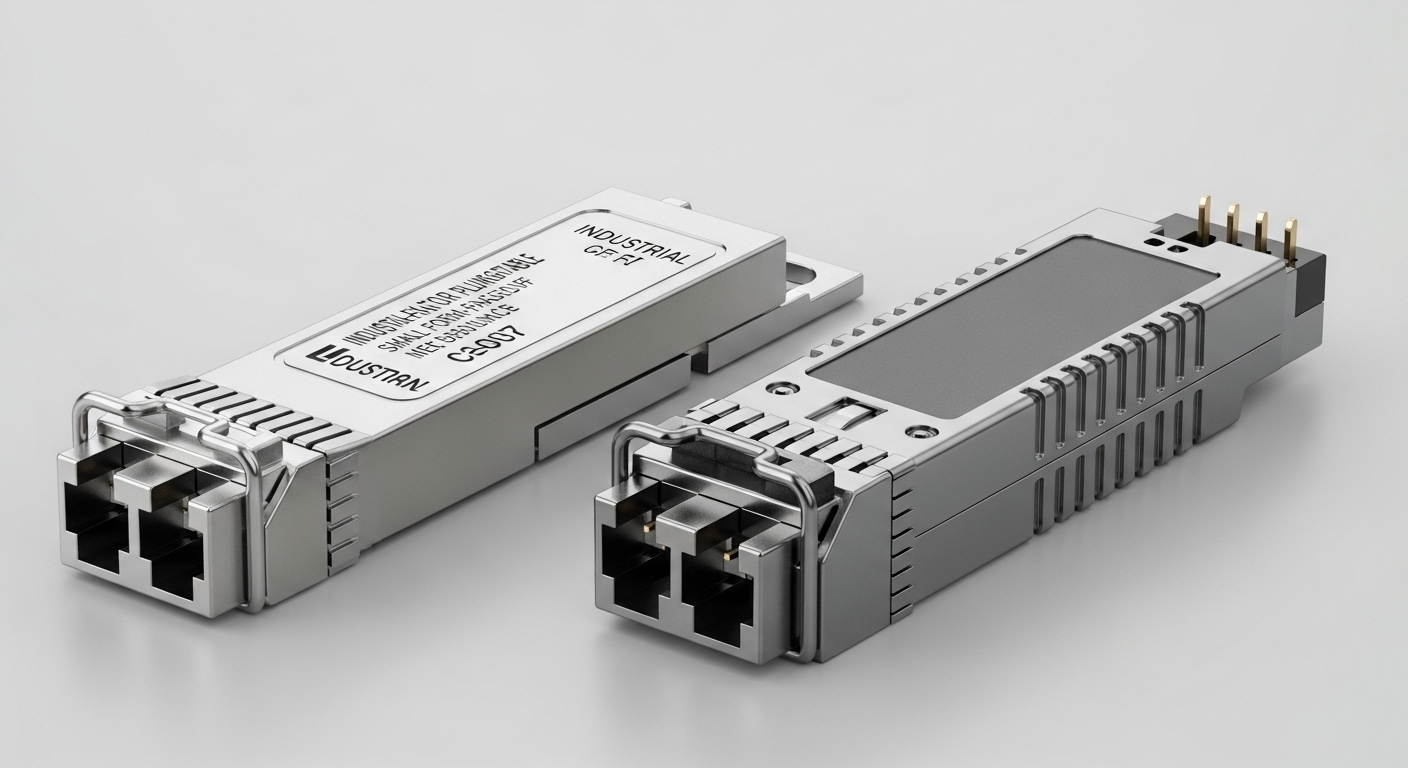
In the target network, we were migrating from 100G to 400G to relieve oversubscription at the aggregation layer. The facility had existing OM4 fiber runs, but the measured end-to-end link budget left limited margin, especially after patch panel losses and connector aging. We also faced operational risk: optics failures in the middle of a cutover window can force emergency rollbacks and extended outage. Our goal was to deploy a QSFP-DD800 transceiver approach that aligns with 8-lane operation at 400G, while maintaining stable diagnostics for fast field triage.
Environment specs that drove the optics choice
The deployment used a 3-tier topology: 48-port ToR (top-of-rack) switches feeding spine pairs, with 400G uplinks aggregated per rack. We targeted 32 racks, each with 8 uplink links, for 256 total 400G connections to validate at scale before the full rollout. The fiber plant consisted of OM4 multimode and short-reach structured cabling with measured patch losses.
Key physical and operational parameters we recorded before ordering optics:
- Nominal lane count: 8-lane parallel optics behavior needed for 400G mapping
- Switch vendor optics policy: strict transceiver compatibility lists in production
- Monitoring requirement: DOM support for temperature, bias current, and optical power
- Installation constraints: patching windows of 2 hours per row
- Ambient temperature: rack exhaust ranged from 24 C to 36 C during peak loads
QSFP-DD800 transceiver technical deep-dive: what 8-lane 400G really implies
A QSFP-DD800 transceiver is designed for high-density, short- to mid-reach optical transport using a compact form factor and a lane architecture suited to 400G operation. In practice, engineers should treat “800” as a family designation tied to performance targets and lane/blocking design choices rather than a simple “double the distance” claim. The practical implication is that the module must support stable signal integrity across multiple lanes and provide accurate digital monitoring so link health can be verified during and after installation.
Key specs to compare before you buy
Different vendors implement the same functional intent (400G optics in a QSFP-DD form factor) with variations in wavelength, reach class, connector type, DOM behavior, and temperature qualification. Below is an example comparison of typical QSFP-DD800-class multimode configurations you will encounter in the market. Always confirm exact values against the vendor datasheet for the specific part number you plan to deploy.
| Spec | Typical QSFP-DD800 Multimode (Example Class) | Related Alternative (For Context) |
|---|---|---|
| Form factor | QSFP-DD (double-density) | QSFP28 (single density) |
| Target data rate | 400G (8-lane operation) | Up to 100G per module |
| Wavelength | Typically 850 nm for multimode implementations | Varies by type (SR4 commonly 850 nm) |
| Reach (multimode) | Often specified for ~100 m to ~150 m on OM4 class, depending on vendor | SR4 often ~100 m on OM4 (varies) |
| Connector | Commonly LC duplex with MPO/MTP-to-LC patching depending on vendor design | Commonly MPO/MTP for SR4 variants |
| DOM / diagnostics | Usually supports Digital Optical Monitoring (DOM) with per-lane telemetry | DOM availability depends on module class |
| Operating temperature | Often 0 C to 70 C (confirm exact qualification) | Often similar ranges, but verify |
| Standards alignment | Based on industry 400G optics frameworks; confirm switch compatibility | IEEE 802.3 and vendor implementation details apply |
For standards grounding, see IEEE 802.3 for Ethernet physical layer context and vendor datasheets for the module’s actual electrical and optical implementation. In our environment, “works in the lab” was not enough; we needed consistent DOM readings and stable link training across all switch ports during temperature swings. For background on Ethernet PHY expectations, consult IEEE 802.3 standards portal [Source: IEEE].
Chosen solution and why: compatibility, DOM stability, and measured link margin
We selected a QSFP-DD800 transceiver model from a vendor that provided (1) clear DOM documentation, (2) published optical parameters for 400G operation, and (3) a track record of successful interoperability with our target switch families. While the exact part number can vary by platform, the selection logic was consistent: the optics had to pass the switch vendor’s compatibility process and provide trustworthy telemetry for post-install verification. In short, we optimized for operational certainty, not just advertised reach.
Implementation steps we followed during cutover
- Pre-check fiber loss and polarity: We measured link attenuation and verified polarity/connector mapping using an OTDR plus a continuity test across patch cords and MPO/MTP harnesses.
- Validate DOM in a staging rack: Before touching production, we inserted modules into a staging switch and logged per-lane receive power and temperature over a 30-minute thermal cycle.
- Apply switch-side optics settings: We confirmed the port profile matched the module class and disabled any non-default “energy-saving” behaviors that can affect optical power control during initial bring-up.
- Run link training and error monitoring: After insertion, we verified link up time and monitored interface counters for CRC errors, FEC status (if applicable), and port flaps for at least 1 hour.
- Document telemetry baselines: We captured DOM readings (Tx bias, Tx power, Rx power) into an operations spreadsheet so future field diagnostics could compare against a known-good baseline.
Measured results after deployment
After the initial 256 link validation, we observed stable link behavior with no port flaps during peak traffic periods. The measured receive power values stayed within expected vendor tolerances, and CRC counters remained at 0 for the validated test window. The key operational win was that DOM telemetry allowed us to detect a single outlier link early: one patch cord with aging ferrules showed a lower Rx power trend, which we corrected before it became an outage risk.
In terms of performance, the uplinks sustained 400G throughput with expected utilization patterns for our traffic mix. From a maintenance standpoint, the ability to read per-lane health reduced mean time to repair: instead of swapping optics blindly, we could correlate symptoms to a specific lane group and confirm whether the issue was optical or fiber-path related.
Pro Tip: In the field, the fastest way to distinguish “bad transceiver” from “bad fiber path” is to compare per-lane Rx power trends against your baseline after a thermal cycle. If only one or two lanes drift while the rest remain stable, the root cause is often a contaminated connector or a patch harness issue rather than a module failure.
Common mistakes and troubleshooting: failure modes we actually saw
Even when the optics are “correct,” field issues often come from installation and compatibility nuances. Below are concrete pitfalls we encountered during bring-up and what fixed them.
Link comes up, then flaps under load
Root cause: Marginal fiber link budget combined with aggressive power control behavior can push the receive signal close to the stability threshold. This is more likely when patch panels add more loss than expected or when connectors are slightly contaminated.
Solution: Re-clean connectors, verify MPO/MTP seating, and re-measure end-to-end loss. Use DOM to check if Rx power is consistently near the minimum vendor threshold, then swap only the suspect patch segment first to isolate the path.
“Works in staging, fails in production ports”
Root cause: Some switches enforce optics profile compatibility or apply different training behavior per port. A module that passes in one switch model or firmware version can fail or degrade in another.
Solution: Confirm the module appears on the switch vendor’s compatibility guidance for your exact switch model and software release. If needed, update switch firmware within the vendor-supported window and re-run link training while monitoring interface error counters.
DOM telemetry looks normal, but traffic errors persist
Root cause: Mis-mapped polarity or incorrect MPO/MTP orientation can allow partial optical power but corrupt the signal. In some cases, engineers focus only on “Rx power present” rather than verifying lane-to-lane correctness and error counters.
Solution: Validate polarity using a structured procedure: continuity mapping, then optical checks. Confirm interface counters such as CRC and any FEC-related indicators remain error-free during a sustained throughput test.
Over-temperature during peak airflow conditions
Root cause: If airflow is restricted by adjacent cable bundles or blank panels, the transceiver can operate near the high end of its qualification range. That can raise temperature-dependent drift in bias and reduce receiver margin.
Solution: Measure inlet exhaust temperatures at the optics cage area and correct airflow obstructions. Re-check DOM temperature readings after the fix and confirm stability across a thermal ramp.
Cost, ROI, and operational trade-offs
Pricing for QSFP-DD800 transceivers varies widely by vendor, reach class, and whether the module is OEM-branded or third-party compatible. In typical enterprise and colocation procurement, engineers often see module unit costs in the range of several hundred to over a thousand USD per transceiver, depending on market conditions and supply availability. The total cost of ownership is driven less by unit price and more by replacement rates, downtime, and support friction during troubleshooting.
OEM optics may cost more, but they can reduce compatibility risk and speed warranty resolution. Third-party optics can lower upfront spend, but the risk profile increases if switch compatibility lists are strict or if DOM behavior differs in subtle ways. For ROI modeling, we used a simple operational framework: expected annual replacements plus an outage cost estimate based on our maintenance window length and the labor hours required for transceiver swaps versus fiber rework.
In our case, the ability to rely on DOM for faster isolation reduced troubleshooting time and avoided at least one emergency fiber intervention during a peak period. Even if third-party optics were cheaper per unit, the time cost of slower fault isolation would have eroded the savings.
Selection criteria checklist for QSFP-DD800 transceiver purchases
When selecting a QSFP-DD800 transceiver for 400G links, we recommend using this ordered checklist to avoid “almost compatible” surprises.
- Distance and fiber type: Confirm reach class versus OM4/OM3/OS2 reality, including patch cord and panel losses.
- Switch compatibility and firmware: Verify the module is supported on your switch model and software release; test on a spare port if possible.
- DOM and telemetry quality: Ensure per-lane Tx/Rx power and temperature/bias are readable and consistent with your monitoring tooling.
- Operating temperature and airflow: Check qualification range and validate rack airflow design; confirm inlet temperatures match vendor guidance.
- Connector and cabling ecosystem: Confirm whether the module uses MPO/MTP or LC patching strategy that matches your existing harnesses.
- Vendor lock-in risk: Evaluate warranty terms, RMA process lead times, and whether firmware updates affect optics behavior.
- Support and documentation: Favor vendors that provide detailed datasheets, DOM implementation notes, and clear troubleshooting guidance.
FAQ
What exactly does the “800” in QSFP-DD800 transceiver mean?
In practice, “800” is a family naming convention associated with the performance targets and design expectations for that module class. Engineers should not treat it as a literal distance multiplier; instead, confirm the wavelength, reach specification, and lane architecture in the vendor datasheet for your exact part number. If you want predictable outcomes, validate with measured link budget data and DOM telemetry baselines.
Are QSFP-DD800 transceivers always 850 nm?
Many QSFP-DD400/400G multimode implementations use 850 nm, but you must verify the wavelength for your specific transceiver SKU. Some deployments use different optics families and media types, so always confirm the wavelength and connector type in the datasheet before ordering. If your plant is OM4, you still need to confirm reach and margin under your patch panel loss profile.
Will a QSFP-DD800 transceiver work across different switch vendors?
Not automatically. Even if the module is “industry standard,” switch vendors may enforce optics compatibility matrices and port profile behaviors. The safe approach is to validate on your exact switch model and software release, then confirm DOM readings and error counters remain clean under sustained load.
How do I troubleshoot a link that stays up but shows errors?
First, check interface counters such as CRC errors and any FEC indicators if present. Then compare DOM per-lane Rx power against your baseline after a thermal cycle. If error distribution maps to specific lanes, suspect polarity, connector contamination, or a single patch harness segment before assuming a module failure.
What is the best way to reduce downtime during a 400G cutover?
Use a staged validation rack to capture DOM baselines and confirm port profiles before touching production. During cutover, verify fiber loss and connector seating, then monitor link stability and counters for at least an hour after insertion. Keep a small spare kit that includes patch segments and at least one known-good module so you can isolate root cause quickly.
Is it worth buying OEM optics instead of third-party QSFP-DD800 transceivers?
It depends on your environment’s compatibility strictness and your support process. OEM optics can reduce compatibility and RMA friction, which often matters more than unit price when uptime is expensive. If you choose third-party modules, invest in staged testing and require clear DOM behavior documentation to avoid hidden risk.
In our deployment, the QSFP-DD800 transceiver succeeded because we treated optics as an operational system: verified compatibility, validated fiber budget with measurements, and used DOM telemetry for continuous health checks. If you are planning a similar migration, the next step is to map your fiber plant loss profile and build a module shortlist using the checklist above, then validate with a staging rack before production cutover. related topic: QSFP-DD vs QSFP28 optics migration planning
Author bio: I am a network and optical field engineer who has deployed 100G to 400G migrations in multi-vendor data centers, focusing on link budget validation and DOM-driven troubleshooting workflows.
Author bio: My work blends practical operations with standards-based validation, using Ethernet PHY expectations and vendor datasheet constraints to minimize cutover risk and downtime.
