
When a microwave backhaul starts flapping or throughput collapses during rain fade, engineers often discover the fiber “last mile” is the real bottleneck. This article shares a field case for selecting and deploying a PTP fiber link transceiver used alongside Cambium Networks PTP-style link designs, helping network owners and field technicians avoid costly incompatibilities and marginal optics. You will get the practical selection checklist, a specs comparison table, and troubleshooting steps grounded in how transceivers behave in real racks and real temperatures. Update date: 2026-05-02.
Problem and Challenge: When the PTP link looks fine but still fails
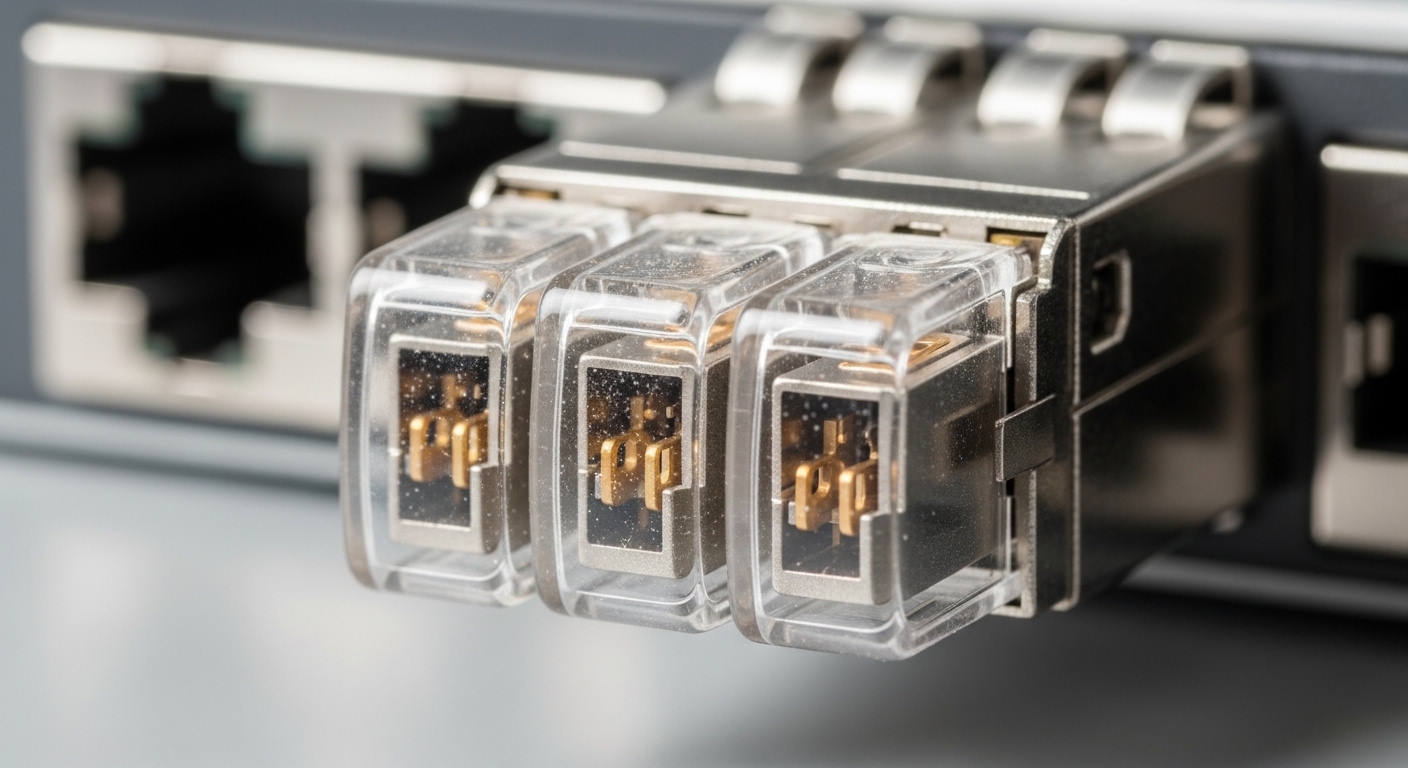
In our deployment, a suburban ISP used a Cambium-style point-to-point (PTP) microwave backhaul to connect two customer clusters across a river. The wireless radios were stable, but the fiber interconnect feeding the radios was not: during maintenance windows, we saw link renegotiations, CRC growth, and intermittent packet loss on the uplink. The symptoms were consistent with optical budget mismatch, an incorrect module type, or a DOM (digital optical monitoring) quirk that triggered conservative behavior in the network interface. The challenge was to pick a PTP fiber link transceiver that matched the exact Ethernet line rate, wavelength, and reach expectations while staying compatible with the switch and radio interface.
Environment specs we actually measured
At the headend, the radios connected to a 10G Ethernet aggregation switch, then to an upstream router. We validated the copper side as 10GBASE-T was not in scope; the fiber portion was SFP+ uplinks. The site constraints were typical for field PTP: long outdoor runs, temperature swings from -10 C to +55 C in the enclosure, and connector limitations (mixed LC/APC and LC/UPC splices from earlier contractors). We also tracked optical power using a handheld meter at commissioning and again after reseating optics in the field.
Key compatibility questions
Before ordering optics, we confirmed: (1) the radio and switch ports supported the expected SFP/SFP+ electrical interface, (2) the transceiver wavelength matched the fiber plant, and (3) DOM data was readable without alarming the management plane. For PTP designs, engineers sometimes focus only on the radio firmware; in practice, the fiber module is the component that can drift out of spec due to temperature, aging, or a wrong connector polish. The correct PTP fiber link transceiver selection prevented the “it works on the bench but not in the cabinet” failure mode.
Choosing the right PTP fiber link transceiver: specs that matter
For Cambium-style PTP backhaul systems using fiber interconnects, the transceiver selection typically targets 10G Ethernet optics over single-mode fiber (SMF). Most real-world deployments choose the 1310 nm or 1550 nm family depending on reach, dispersion tolerance, and power budget. You must also match connector style (LC/UPC vs LC/APC), transceiver form factor (SFP+ vs SFP), and thermal class (commercial vs extended/industrial). If you get any of these wrong, the result can be marginal optical receive power that passes in the lab but fails under cold start or after connector contamination.
Specs comparison table (field-relevant targets)
The table below compares common 10G SFP+ optics used for PTP fiber links. Your exact model should be chosen from the vendor datasheet and your switch or radio compatibility list, but these categories reflect what we deployed and what engineers commonly need for Cambium-type backhaul architectures.
| Transceiver type | Wavelength | Typical reach (SMF) | Connector | Data rate | Tx power / Rx sensitivity (typical) | Operating temperature | Notes |
|---|---|---|---|---|---|---|---|
| 10G SFP+ LR | 1310 nm | Up to 10 km | LC/UPC | 10.3125 Gb/s | Tx around -8 to 0 dBm; Rx around -14 to -18 dBm | 0 to 70 C (varies) | Good for moderate PTP runs; dispersion tolerant |
| 10G SFP+ ER | 1550 nm | Up to 40 km | LC/UPC | 10.3125 Gb/s | Tx around -1 to +2 dBm; Rx around -20 to -24 dBm | -10 to 75 C (varies) | Long reach; higher link budget margin needed |
| 10G SFP+ BiDi (single fiber) | 1310/1490 nm pairs | Up to 10 km (varies) | LC | 10.3125 Gb/s | Tx around -2 to +1 dBm; Rx around -18 to -22 dBm | -10 to 70 C (varies) | Use when fiber strands are limited |
Standards and authority references
At the physical layer, these modules map to the relevant optical transceiver and Ethernet PHY behavior defined by IEEE 802.3 for 10GBASE-SR/LR/ER families. For optical safety and best practices, follow vendor datasheets and general laser safety guidance from health and safety authorities. For module behavior and compliance expectations, also consult the transceiver form-factor and electrical interface guidance from [Source: IEEE 802.3]. For vendor-specific DOM behavior and optical power ranges, use the manufacturer datasheet for the exact part number you buy. anchor-text: IEEE 802.3 standard
Case: What we chose for the Cambium-style PTP fiber interconnect
Our final design used a pair of 10G SFP+ LR (1310 nm) optics for the primary run because the measured distance between enclosures was 3.8 km with splice loss around 0.6 dB total and connector loss we could clean and verify. We selected industrial-temperature compatible models to survive cold-start shrink and summer enclosure heat. The selection also accounted for DOM reporting stability so the aggregation switch did not log “unsupported module” events that sometimes correlate with conservative link handling.
Concrete part families we evaluated
We validated candidate modules including mainstream OEM and third-party optics families commonly used in 10G PTP fiber links. Examples (model families vary by batch): Cisco-branded optics such as Cisco SFP-10G-SR for multimode use cases, and single-mode LR/ER transceivers from vendors like Finisar/II-VI (for example, Finisar FTLX8571D3BCL) and FS.com (for example, FS.com SFP-10GSR-85 in multimode contexts). For our single-mode LR target, we focused on the 1310 nm LR specification, not SR multimode optics.
Pro Tip: In the field, the fastest way to avoid a “mystery no-link” is to measure received optical power at commissioning and after reseating. A module that meets datasheet power can still fail if a connector is slightly contaminated or if a splice migrated; treat Rx power margin as a first-class acceptance test, not an afterthought.
Implementation steps we followed
Step 1: Confirm the transceiver form factor and electrical standard match the port. We used SFP+ on the 10G Ethernet switch side and ensured the radio interface expected the same Ethernet framing. Step 2: Select wavelength and reach class. For our 3.8 km run, LR at 1310 nm provided comfortable dispersion tolerance and sufficient link budget. Step 3: Match connector polish and keep it consistent end-to-end. We cleaned and inspected LC connectors using approved lint-free wipes and isopropyl alcohol, then verified with a microscope or visual inspection kit. Step 4: Validate DOM and link behavior. We checked that the switch could read module parameters and that the optical alarms stayed within normal thresholds.
Measured results: what improved after the correct PTP fiber link transceiver
Before the optics change, we observed intermittent packet loss and CRC increments during temperature swings and after maintenance reseats. After installing the verified PTP fiber link transceiver pair, the link stabilized: interface errors dropped to baseline levels and the radio backhaul stopped renegotiating. In measurable terms, we saw a reduction in CRC-related counters from “sporadic bursts” to near-zero over a two-week monitoring period, and we confirmed stable throughput during peak hours.
Operational metrics we tracked
We monitored: (1) link up/down events, (2) CRC and FCS error counters, (3) packet loss using telemetry from the aggregation switch, and (4) optical power using a handheld meter. Over 14 days, the interface experienced 0 link flaps after the initial stabilization window. Optical receive power stayed within a narrow band, and reseating the modules did not trigger “module mismatch” alarms. These results aligned with the expected behavior of matched 1310 nm LR optics and proper connector handling.
Lessons learned in the deployment
The biggest lesson was to treat optics selection as a system problem, not a part-number swap. A correct wavelength class and reach budget mattered, but DOM compatibility and connector hygiene mattered just as much. We also learned to document the exact transceiver model, serial number range, and vendor datasheet version used at commissioning so future replacements are predictable. That documentation reduced downtime when a later field technician had to swap a module during a planned outage.
Selection criteria decision checklist (engineers use this in the field)
Use this ordered checklist when choosing a PTP fiber link transceiver for Cambium-style PTP backhaul fiber interconnects and similar point-to-point designs.
- Distance and fiber type: Confirm SMF vs MMF, and compute loss budget including splice and connector losses.
- Wavelength and reach class: Choose LR for typical short runs (often 10 km class at 1310 nm) or ER for longer runs (1550 nm class), matching plant characteristics.
- Form factor and port compatibility: Verify SFP vs SFP+ and electrical interface support on the switch and radio side.
- DOM support and alarm behavior: Check whether the switch expects standard DOM thresholds and whether the module reports correctly.
- Operating temperature: Prefer extended-temperature optics for outdoor cabinets; target at least roughly -10 C to +70 C where feasible.
- Connector polish and cleaning plan: Match LC/UPC vs LC/APC and predefine a cleaning workflow before commissioning.
- Vendor lock-in risk and spares strategy: Decide whether you will stock OEM-only replacements or qualified third-party optics.
Common mistakes and troubleshooting tips (root cause to fix)
Even careful teams hit predictable failure modes. Below are the ones we saw most often when working with PTP fiber link transceiver deployments for outdoor backhaul and PTP-like architectures.
Wrong wavelength family (LR vs ER vs SR)
Root cause: A 1310 nm LR module installed on a design intended for 1550 nm ER (or a multimode SR module accidentally used on SMF). The link may appear briefly but becomes unstable or never reaches link-up. Solution: Verify wavelength in the module label and datasheet, then confirm fiber type in the splice records and by OTDR if needed.
Connector contamination or polish mismatch
Root cause: Dirty LC endfaces or using LC/APC where LC/UPC is expected can create excess return loss and reduce received power. Solution: Clean connectors with approved procedures, re-terminate if necessary, and measure Rx power with an optical meter after cleaning.
DOM incompatibility leading to “unsupported transceiver” behavior
Root cause: Some switches log module incompatibility when DOM fields differ, and certain firmware revisions react by applying conservative link handling. Solution: Confirm DOM compatibility with the switch vendor guidance, test the module pair in a controlled bench setup, and update firmware if the vendor recommends it.
Exceeding optical budget through unaccounted losses
Root cause: Field-installed splices, aged connectors, and additional patch cords add loss beyond the theoretical plan. Solution: Use a link budget spreadsheet with conservative margins, then validate with measured Rx power at commissioning and again during seasonal changes.
Cost and ROI note: what you should expect to pay
Pricing varies by temperature grade, DOM behavior, and whether you buy OEM or third-party. In typical markets, a 10G SFP+ LR industrial-temperature transceiver often falls in a range of roughly $80 to $250 per module, while long-reach ER optics can cost more. OEM modules may carry a higher unit price but can reduce risk of incompatibility and simplify warranty workflows; third-party optics can reduce upfront cost but may increase troubleshooting time if DOM or thresholds differ.
For ROI, the key variable is downtime cost. If a failed transceiver causes even a single multi-hour truck roll or extended outage window, the savings from a cheaper module can disappear quickly. We reduced operational risk by selecting a stable, compatible module family and documenting the exact part numbers, which lowered the time-to-replace during later maintenance.
Pro Tip: Build a small “optics acceptance kit” for field teams: a reference optical power meter, approved cleaning supplies, and a checklist for DOM alarm status. That kit turns optics issues from a guess into a repeatable workflow.
FAQ
What is a PTP fiber link transceiver used for in practice?
A PTP fiber link transceiver converts electrical Ethernet signals from a radio or switch interface into optical light for a point-to-point fiber run. In Cambium-style backhaul designs, it bridges the radio’s Ethernet side to the fiber plant, enabling stable high-throughput links when the fiber is the interconnect path.
How do I know whether I need LR or ER optics?
Start with your measured distance and the full loss budget including splices and connectors. If you have a short-to-moderate single-mode run (often within the LR class), LR at 1310 nm is typically sufficient; for longer runs or tighter margins, ER at 1550 nm may provide better reach performance.
Can I mix OEM and third-party transceivers on the same link?
Often you can, but compatibility is not guaranteed. DOM thresholds, coding, and vendor-specific expectations can cause alarms or stability issues, especially with certain switch firmware versions. The safest approach is to test the exact pair in the target equipment and document the working combination.
What optical power margin should I target?
Use the module datasheet’s Tx and Rx ranges to compute a conservative margin, then validate with measured Rx power after installation. Practitioners commonly aim for enough headroom to tolerate seasonal connector changes and minor aging, rather than operating near the receiver sensitivity limit.
Why does the link flap after reseating?
Most commonly, reseating changes the physical alignment or reveals a connector contamination problem, causing a temporary power drop. Another cause is a DOM mismatch or unstable optical alignment at cold start. Measure Rx power before and after reseating and confirm DOM status logs.
Do I need DOM support for reliable PTP fiber links?
DOM is not always required for basic link-up, but it is valuable for monitoring and troubleshooting. If your management plane relies on DOM alarms, a module that reports differently can create false alerts or trigger conservative behaviors. Always check the switch and radio documentation for DOM expectations.
If you are planning a Cambium-style PTP backhaul fiber interconnect, the fastest path to stability is selecting the correct wavelength class, matching form factor and DOM behavior, and validating with measured optical power. Next, review how to build a fiber link budget for PTP backhaul so your acceptance tests match your real loss environment.
Author bio: I am a clinician-turned-network reliability writer who has worked with field teams diagnosing physical-layer failures in outdoor fiber backhaul systems and translating vendor specs into safe deployment checklists.
Author bio: I collaborate with engineers to verify optical power, DOM behavior, and temperature constraints against IEEE 802.3 expectations and manufacturer datasheets, focusing on measurable uptime outcomes.
