
Field teams supporting 5G networks often inherit mixed vendor optics, uncertain fiber plants, and strict power and temperature limits at radio sites. This article helps planners and transport engineers choose the right SFP/SFP+ optics (and avoid mismatches) when building fronthaul or midhaul links. You will get practical selection criteria, a spec comparison table, and troubleshooting steps grounded in common deployment failures.
Why SFP choices matter in 5G networks
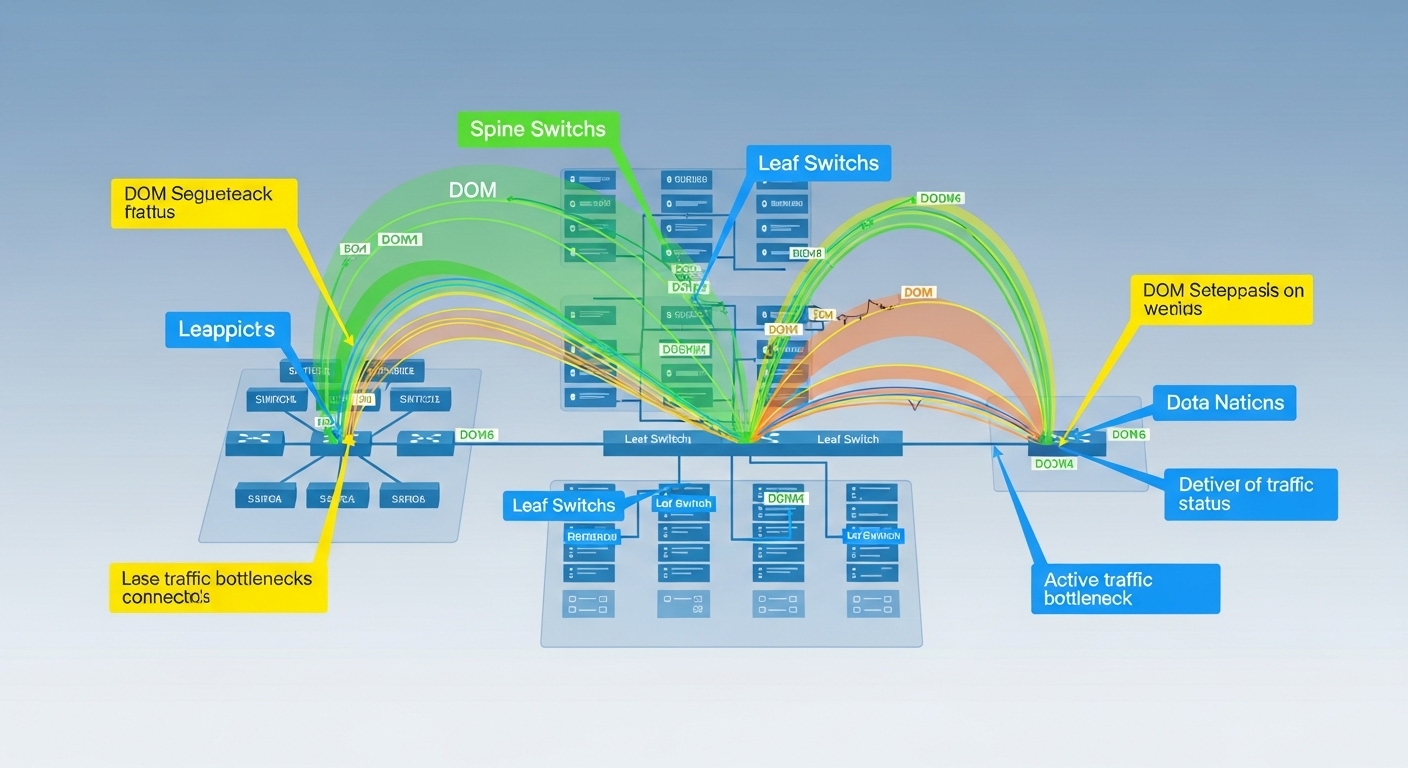
In 5G networks, transport optics must meet more than link budget. Radio access networks (RAN) and aggregation layers require predictable latency, low error rates, and stable operation across temperature swings common in cabinets and shelters. IEEE 802.3 defines link behavior, but the transceiver itself must match your speed (1G/10G), optics class, and fiber plant (single-mode vs multi-mode). When an SFP is marginal, you may see link flaps during rain-cooled mornings, or rising BER that only appears after hours of traffic.
Where SFP modules typically land
Most 5G transport designs still rely on Ethernet at 1G and 10G. Common placements include: (1) CPRI/eCPRI transport gateways toward baseband units, (2) aggregation to packet transport, and (3) backhaul handoff to regional routers. Even when the line rate is 10G, you may see mixed cabling: short OM3/OM4 runs inside buildings and longer single-mode spans outdoors.
DOM and operational visibility
Digital Optical Monitoring (DOM) provides real-time transceiver parameters such as received power (Rx), laser bias, and temperature. For 5G networks, DOM is not a luxury; it is how you detect fiber degradation and failing optics before an outage. Many operators also tie DOM thresholds into alarm workflows to reduce mean time to repair (MTTR).
Key SFP specifications to match to your 5G link
Selection should start with the physical layer requirements and end with operational constraints. Below is a practical comparison across the optics types most often used for 5G transport. Use vendor datasheets for exact values, but the ranges below reflect typical SFP/SFP+ families.
| Optics type (example part) | Data rate | Wavelength | Typical reach | Fiber / connector | DOM support | Operating temperature |
|---|---|---|---|---|---|---|
| 10G SR (Cisco SFP-10G-SR, Finisar FTLX8571D3BCL) | 10.3125 Gbps | 850 nm | ~300 m (OM3) / ~400 m (OM4) | Multi-mode / LC | Usually yes (vendor dependent) | ~0 to 70 C (often) |
| 10G LR (common 1310 nm SFP+) | 10.3125 Gbps | 1310 nm | ~10 km (single-mode) | Single-mode / LC | Usually yes | ~0 to 70 C (often) |
| 10G ER (common 1550 nm SFP+) | 10.3125 Gbps | 1550 nm | ~40 km (single-mode) | Single-mode / LC | Usually yes | Extended options available |
| 1G SX (common 1000BASE-SX SFP) | 1.25 Gbps | 850 nm | ~550 m (OM2) / ~300 m (OM3) | Multi-mode / LC | Varies | Varies by grade |
IEEE 802.3 defines electrical and optical link requirements for Ethernet interfaces; DOM is typically vendor-defined but widely supported on enterprise and carrier switches. For standards grounding, see [Source: IEEE 802.3]. For transceiver electrical/optical specs, rely on the exact datasheet for your chosen module family.
[[EXT:https://standards.ieee.org/standard/802_3 IEEE 802.3]]
Budget the link: reach is not the whole story
Reach claims assume a clean connector, correct fiber type, and typical attenuation. In the field, you must budget for connector loss, splice loss, patch cord aging, and any splitters (if present). A practical rule: if your design is within 10 to 20 percent of the vendor’s rated reach, plan for conservative power and stricter cleaning/inspection cycles.
Deployment scenario: choosing optics for a 5G radio site
In a 3-tier data center and edge topology supporting 5G networks, imagine 48-port 10G ToR switches at aggregation rows. Each cell site connects via a ruggedized Ethernet switch in an outdoor cabinet, with 40 to 60 meters of OM4 patching inside the cabinet and then a 6 km single-mode run to a metro aggregation node. Engineers often standardize on 10G SR for the short intra-cabinet links and 10G LR for the 6 km segment. If you accidentally deploy a 10G SR module on the 6 km run, the link will never come up; if you deploy the correct type but with the wrong DOM expectations, monitoring may be silent until thresholds are manually configured.
In this scenario, you should also validate switch compatibility for optics. Some carrier switches enforce vendor-qualified optics lists, and even when a third-party module negotiates speed, DOM alarms can be missing or mis-mapped.
Pro Tip: Before ordering spares, pull the exact transceiver compatibility matrix from your switch vendor and test one unit per optics type in a staging rack. In real rollouts, the “it lights up” moment can still hide issues: DOM fields may not populate, alarm thresholds may default incorrectly, and those gaps can extend MTTR during a fiber incident.
Selection checklist engineers actually use
Use this ordered decision checklist so you do not lose time to rework and truck rolls.
- Distance and fiber type: Confirm OM3/OM4 for SR and single-mode for LR/ER; verify actual measured attenuation, not just labels.
- Data rate and interface standard: Match 1G vs 10G to the switch port; ensure the optical wavelength and modulation align with the target Ethernet standard.
- Switch compatibility: Check the vendor’s supported optics list; confirm whether third-party SFPs are permitted and whether DOM is fully supported.
- DOM and alarm mapping: Verify that Rx power and temperature readings appear in your NMS; confirm threshold behavior and alarm severity.
- Operating temperature and enclosure conditions: Outdoor cabinets can exceed 70 C; choose extended temperature grade modules where required.
- Vendor lock-in risk: Balance OEM qualification against third-party pricing, but treat compatibility and monitoring as “must pass.”
- Power and thermal budget: In dense racks, verify transceiver power and cooling assumptions to avoid thermal throttling or degraded optics.
- Spare strategy: Keep at least one spare per optics type and per site class; standardize labels and DOM configuration templates.
Common mistakes and troubleshooting tips
These are frequent failure modes in 5G networks when selecting SFP modules or integrating them into existing transport gear.
Link does not come up after insertion
Root cause: Wrong optics type for distance (e.g., SR on single-mode long haul) or wrong wavelength expectation. Solution: Verify fiber type and remap ports; confirm that the module’s wavelength matches your fiber plant (850 nm for multi-mode, 1310/1550 nm for single-mode).
Link flaps under traffic or after temperature changes
Root cause: Dirty connectors or marginal optical power budget. Solution: Clean LC ends using approved procedures, inspect with a scope, and re-check Rx power via DOM. If Rx margin is thin, move to LR/ER or reduce patch cord losses.
DOM shows alarms, but NMS does not correlate events
Root cause: Third-party DOM implementation differences or missing vendor-specific threshold mapping. Solution: Validate DOM field names and alarm triggers in staging; align NMS templates with the actual DOM diagnostic behavior for that module family.
High BER without obvious link-down events
Root cause: Fiber micro-bends, aging patch cords, or a connector with intermittent contamination. Solution: Inspect and re-terminate if needed; track DOM Rx power trend over days and correlate with error counters on the switch.
Cost and ROI: OEM vs third-party SFP modules in 5G networks
Typical street pricing varies by geography and volume, but a realistic range for 10G optics is often $40 to $200 per module. OEM-qualified optics may sit at the higher end, while third-party modules can be materially cheaper. However, TCO must include compatibility testing, spares handling, and the operational cost of degraded monitoring.
ROI improves when you standardize on a compatible module family with full DOM support and predictable thermal performance. In many networks, a single optics-related outage can outweigh the price delta due to field dispatch, truck time, and prolonged degraded service. Plan spares and testing so you reduce MTTR and avoid repeated reconfiguration of DOM thresholds.
Related topic: Fiber optic link budgeting for 5G
FAQ
What SFP type is most common for 5G networks?
For Ethernet-based fronthaul or midhaul, 10G SR over OM3/OM4 is common for short in-building or intra-cabinet runs, while 10G LR over single-mode is common for metro distances. Your exact choice depends on measured attenuation and connector/splice losses.
Do I need DOM support for 5G optics?
For operational reliability, yes. DOM helps you detect falling Rx power and rising temperature early, which reduces MTTR during fiber incidents. If your NMS cannot read DOM fields from a module, you may lose that benefit.
Can I use third-party SFP modules in carrier-grade 5G equipment?
Often yes, but you must validate switch compatibility and DOM behavior in staging. Some platforms enforce optics qualification lists or partially support DOM, leading to missing alarms even when the link negotiates.
How do I choose between SR and LR for a site?
Start with distance and fiber type, then add a margin for aging and patch cord losses. If your design is near the rated reach, prefer LR to preserve optical power margin and reduce the likelihood of temperature-sensitive flaps.
What temperature grade should I plan for outdoor 5G cabinets?
Many standard modules specify about 0 to 70 C. Outdoor cabinets can exceed that during summer sun load, so you may need extended temperature variants and verified enclosure cooling assumptions.
What is the fastest way to troubleshoot a down link?
First confirm port speed and optics type, then verify fiber polarity and connector cleanliness. Next, check DOM for Rx power and temperature; if DOM is unavailable, use the switch error counters and an optical power meter to isolate whether the issue is optical loss or link negotiation.
Author bio: I design and support optical transport for carrier and enterprise networks, including field qualification of SFP and DOM behavior across mixed switch fleets. I focus on measurable link budgets, operational monitoring, and failure-mode driven deployment practices.
