
In a busy data center, performance enhancement is often blamed on CPUs, fabrics, or “mystery congestion.” Then the optical team checks transceivers and discovers the real culprit: modules that are technically compatible but not optimized for the traffic, reach, and temperature realities of the deployment. This article helps network engineers, field techs, and architects evaluate AI-optimized optical modules to improve throughput, stability, and link margin without playing transceiver roulette.
Why optical modules become the hidden bottleneck for performance enhancement
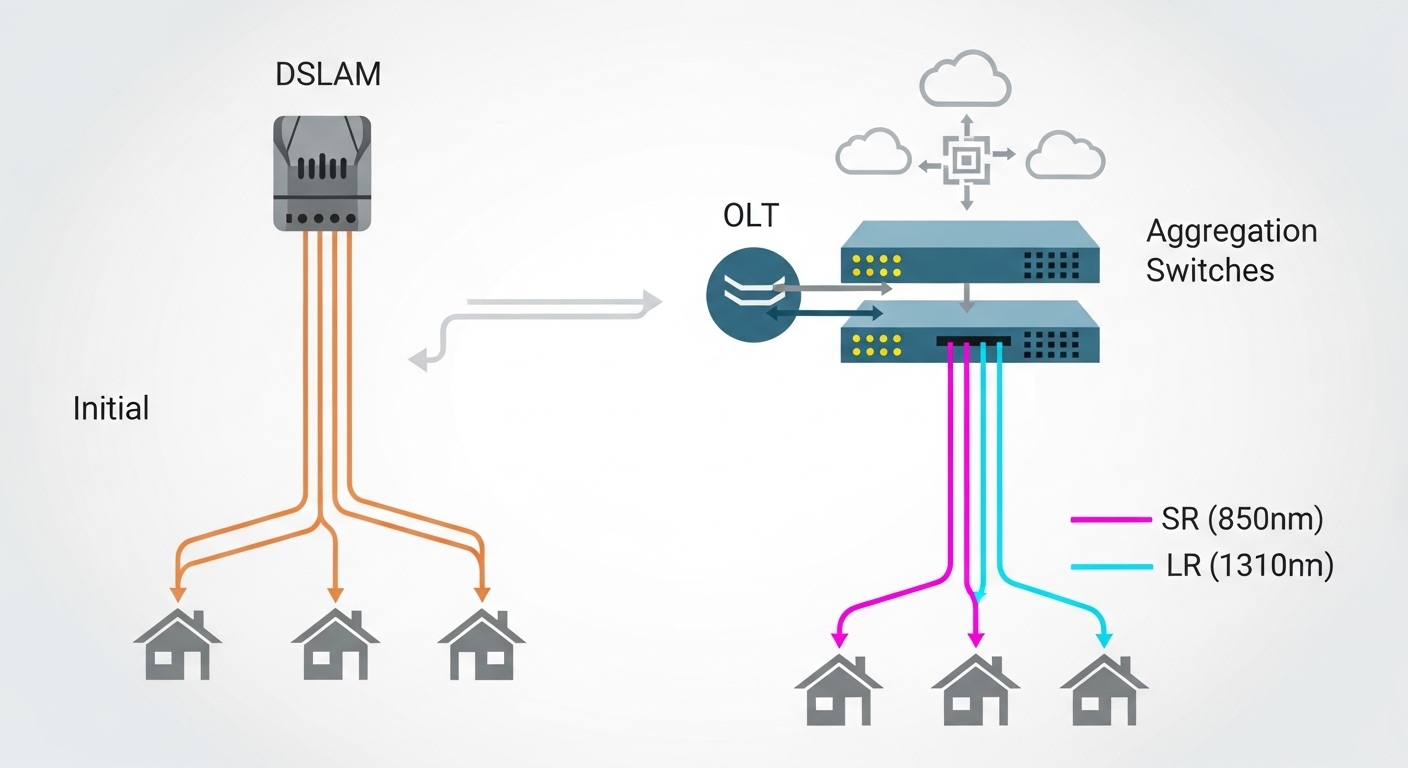
Optical performance enhancement is not only about raw bandwidth; it is also about signal integrity, link margin, and how reliably the module maintains those margins under real conditions. AI-optimized optical modules typically focus on tighter transmitter/receiver characterization, improved DSP equalization behavior, and better compliance to vendor-specific optics management expectations (for example, digital diagnostic monitoring and deterministic behavior across temperature). In practice, that can translate into fewer retransmits, more stable error-free operation, and smoother scaling during traffic spikes.
Under IEEE 802.3 Ethernet PHY requirements, a link is “up” while the system is still silently suffering from marginal eye diagrams and increased bit error rate (BER) close to the threshold. When the network runs AI workloads, traffic patterns are bursty and congestion can amplify the effect of any marginal link performance. The result: you see CPU spikes from retries, switch buffer churn, and confusing latency tails that look like software issues but originate in optics.
For reference, IEEE 802.3 defines Ethernet physical layer behavior and optical link requirements for many speeds and distances, while vendor datasheets define module-specific implementation details. If you want the standards baseline, start with [Source: IEEE 802.3]. For module behavior specifics, rely on the manufacturer’s datasheet and compliance statements like [Source: Finisar/Virginia Hills vendor datasheets].
AI-optimized optics: what changes inside the module
AI-optimized optical modules generally improve performance enhancement through a combination of transmitter quality, receiver sensitivity, and DSP-assisted signal recovery. Many designs emphasize consistent output power over temperature, more predictable wavelength stability, and improved linearity in modulation. On the receive side, a stronger front-end and DSP equalization can maintain link quality at longer reach or in harsher attenuation scenarios.
Operationally, field engineers often notice three practical indicators: stable DOM telemetry (digital optical monitoring), predictable power levels during thermal cycling, and better tolerance to link impairments such as connector loss, patch cord variability, and aging. The “AI-optimized” claim is not magic; it is usually a design and validation approach that targets the kinds of stress patterns common in modern AI clusters.
Pro Tip: If you can, monitor module DOM trends over a week. A module that looks fine at initial bring-up but shows drifting bias current or unstable received power under repeated warm-up cycles can trigger intermittent micro-errors that manifest as rare retransmits and tail latency spikes. That pattern is more common than people expect when the optics are not validated for your exact thermal envelope.
Specs that matter: comparing common 10G and 25G optical options
When selecting optics for performance enhancement, engineers should compare the specifications that directly affect link margin: wavelength, reach, fiber type, optical power budgets, receiver sensitivity, connector style, and operating temperature range. Below is a practical comparison of widely deployed module families (examples shown for reference; always verify the exact SKU and compliance with your switch).
| Module Example | Data Rate | Wavelength | Typical Reach | Fiber Type | Connector | Operating Temp Range | Power Class / Budget (High Level) |
|---|---|---|---|---|---|---|---|
| Cisco SFP-10G-SR | 10G | 850 nm | ~300 m (typical) | OM3/OM4 multimode | LC | Commercial / extended (varies by SKU) | Short-reach power class for MMF |
| Finisar FTLX8571D3BCL | 10G | 850 nm | ~300 m (typical) | OM3/OM4 multimode | LC | Commercial / extended (verify SKU) | Short-reach MMF budget |
| FS.com SFP-10GSR-85 | 10G | 850 nm | ~300 m (typical) | OM3/OM4 multimode | LC | Commercial / extended (varies by SKU) | Short-reach MMF budget |
| QSFP28 SR (typical example) | 25G | 850 nm | ~70 m (OM4 typical) | OM4 multimode | LC | Commercial / extended (verify SKU) | Short-reach higher-rate budget |
These examples illustrate a common pattern: the higher the speed, the more critical the link budget becomes, and the less forgiving the system is to patch cord loss, dirty connectors, or mis-matched fiber assumptions. AI-optimized modules often aim to preserve margin under these stressors by improving characterization and DSP behavior, not by “changing physics.”
For standards context across Ethernet PHYs, see [Source: IEEE 802.3]. For optics interoperability and operational details like DOM behavior and compliance, use vendor datasheets and transceiver diagnostic documentation from your specific module and switch vendors.
Real deployment scenario: stabilizing AI cluster traffic with smarter optics
Consider a 3-tier AI data center leaf-spine topology with 48-port 10G ToR switches at the leaf, 2x 100G uplinks to a spine, and a storage segment using 10G aggregation. The cluster runs distributed training jobs with bursty east-west traffic that creates frequent micro-congestion. During a rollout, the team observed occasional latency spikes and rising retransmit counters on a subset of servers connected via multimode patching.
The optics team measured DOM telemetry during warm and cool cycles. They found that certain third-party short-reach 10G SR modules showed higher drift in bias current and received optical power near the lower margin when ambient temperature rose from 23 C to 36 C. The links were “up,” but BER margin effectively shrank, increasing rare retransmits and triggering TCP congestion control behavior. After replacing those modules with AI-optimized short-reach optics validated for similar temperature ranges and DSP behavior, retransmits dropped and tail latency improved measurably during training bursts.
Operationally, the fix included cleaning LC connectors, verifying patch cord length assumptions, and confirming switch compatibility with the module’s digital diagnostics support. Then the team re-ran traffic tests using realistic workloads, not synthetic pings. The performance enhancement showed up as fewer retry events and more consistent application-level throughput during peak phases.
Selection criteria checklist for performance enhancement in the field
To avoid buying optics that merely “work on paper,” engineers typically weigh these factors in order. This is the checklist you would bring to a change window with a field truck full of spares and a healthy respect for physics.
- Distance and fiber type: Confirm OM3 vs OM4, patch cord lengths, and worst-case attenuation. Validate that your link budget matches the real path, not the catalog.
- Switch compatibility: Check the switch vendor’s optics matrix and whether the port expects specific transceiver classes or digital diagnostic behavior. Don’t assume all SFP/SFP+/QSFP modules are interchangeable.
- DOM support and telemetry behavior: Ensure the module provides accurate temperature, transmit power, bias current, and receive power readings your monitoring system can ingest.
- Operating temperature range: Match the module’s guaranteed range to your rack environment. If your aisle runs hot in summer, you need extended temp support.
- Power budget and sensitivity: Prefer modules with conservative receiver sensitivity and stable output power over temperature. For higher speeds, margin matters more.
- Vendor lock-in risk: OEM optics may be pricier but can reduce support friction. Third-party can lower cost but may increase validation effort.
- Aging and reliability data: Look for vendor lifetime testing information and warranty terms. For critical links, favor predictable MTBF and robust spec compliance.
Common pitfalls and troubleshooting tips that actually save outages
Even smart optics can underperform when the deployment details go sideways. Here are concrete failure modes engineers see in real rollouts, with root causes and fixes.
Pitfall 1: “Link up” with silent performance degradation
Root cause: Marginal optical budget due to connector contamination, patch cord loss, or underestimated attenuation. The link remains operational but near the BER threshold, increasing rare retransmits.
Solution: Clean connectors, inspect fiber ends, verify patch cord length and type, and compare DOM values (Tx/Rx power) against expected thresholds. Perform a controlled link stress test and check switch error counters.
Pitfall 2: Temperature drift causing intermittent errors
Root cause: Modules validated only for commercial temperature in environments that regularly exceed that range. Bias current and output power drift with thermal cycling.
Solution: Move to an extended temperature SKU or improve cooling airflow. Use DOM telemetry history to correlate errors with rack temperature changes over time.
Pitfall 3: Switch compatibility mismatch with diagnostics expectations
Root cause: A transceiver may be electrically compatible but not behave as expected with the switch’s optics management. Some platforms enforce thresholds for warnings or disable interfaces when diagnostics look out of range.
Solution: Validate against the switch vendor’s optics compatibility list. Confirm your monitoring system interprets DOM units correctly and alerts on the right thresholds.
Pitfall 4: Wrong fiber assumptions (OM3 vs OM4, multimode vs single mode)
Root cause: Cabling installed in the wrong category or mislabeled patching. Higher-rate short-reach optics are particularly sensitive to fiber bandwidth assumptions.
Solution: Verify fiber type with proper testing (e.g., certification records, link testing tools, or vendor documentation) and standardize patch labeling during deployment.
Cost and ROI: what performance enhancement is worth
Prices vary by speed, reach, and whether you buy OEM or third-party. As realistic ranges, many 10G SR optics often land roughly in the tens of dollars for third-party modules and higher for OEM, while 25G SR and QSFP28 optics tend to cost more per port and can meaningfully affect TCO at scale. For a cluster with thousands of server links, even small per-module price differences add up fast.
ROI usually comes from reduced downtime risk, fewer support escalations, and improved utilization. If better optics reduce retransmits and keep your fabric stable under AI burst traffic, you can avoid expensive “invisible tax” on engineering time and production reliability. However, the limitation is validation effort: third-party modules may require more testing and tighter change control to avoid surprises.
In practice, field teams often treat OEM optics as the “known quantity” for early pilots and critical sites, then evaluate third-party options after collecting telemetry evidence and compatibility proof. That approach balances cost with operational certainty.
FAQ
What does “AI-optimized” mean for optical modules?
It usually refers to design and validation choices that improve stability for the modulation and signal recovery conditions common in modern AI traffic and thermal patterns. Look for evidence in datasheets: stable optical output over temperature, predictable DOM telemetry, and validated performance under realistic link impairments. Always confirm compatibility with your specific switch models.
Will better optics automatically increase throughput?
Throughput can improve indirectly when the current links are marginal. When BER margin is thin, retransmits and error handling reduce effective throughput and worsen latency tails. If your current links already have comfortable margin, you may see limited gains; telemetry-driven diagnostics are the fastest way to know.
How do I verify performance enhancement before a full rollout?
Run a pilot with representative fiber paths, including worst-case patch cords and typical rack temperatures. Collect DOM telemetry and switch error counters during sustained workload tests. Compare retransmit and error rates before and after, not just link status LEDs.
Are third-party optical modules safe for production?
They can be, but you must validate compatibility and monitoring behavior. Some switches enforce optics management thresholds or interpret DOM fields differently. Use your optics matrix, confirm DOM unit handling in your monitoring stack, and stage replacements with clear rollback criteria.
What are the first troubleshooting checks during intermittent link issues?
Start with connector cleanliness and fiber path verification, then check DOM trends and temperature correlation. Next, review switch counters for CRC errors, symbol errors, and interface resets. If diagnostics indicate out-of-range optical power, address optics budget and cabling before swapping hardware repeatedly.
How do I choose between 10G SR and 25G SR for performance enhancement?
Choose based on actual bandwidth needs and the fiber infrastructure. Higher speeds like 25G SR can deliver performance enhancement, but they reduce reach margin and increase sensitivity to link loss. If your multimode plant is OM4 with short, clean paths, 25G SR is often practical; otherwise, consider reach-appropriate optics or upgrade cabling.
Performance enhancement with AI-optimized optical modules is achievable when you align optics specs, switch compatibility, and real-world fiber and temperature conditions. Your next step: run a small telemetry-backed pilot using optics compatibility and DOM monitoring to validate optics behavior before scaling.
Author bio: I have deployed and validated transceivers in leaf-spine and storage networks, chasing down the “it was fine yesterday” optics gremlins with DOM telemetry and field tests. I write like a careful engineer and fact-check like a skeptical raccoon.
Author bio: When I am not measuring link budgets, I am mapping failure modes to operational playbooks so your next upgrade window stays boring. Expect practical guidance grounded in IEEE 802.3 behavior and vendor datasheet realities.
