
In IoT deployments, the hardest part is rarely “getting link up” during a lab test; it is keeping links stable after months of temperature swings, vibration, and mixed fiber plants. This article helps network and field engineers choose optical transceivers that survive real IoT conditions, including VLAN segmentation, remote PoE aggregation, and intermittent maintenance windows. You will also get a troubleshooting mindset for the most common optical and switch-side failure modes.
Top 8 optical transceivers that map well to IoT distance and fiber types
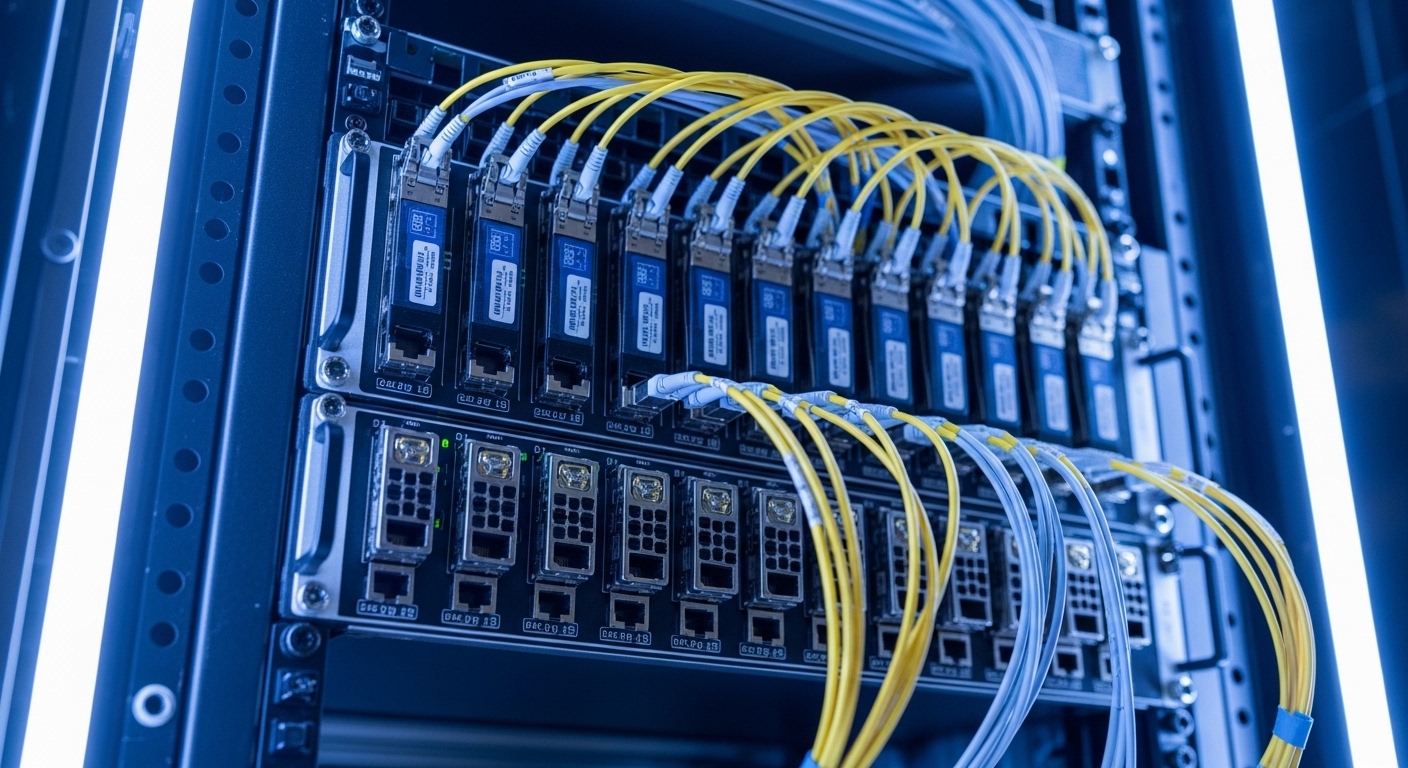
IoT networks tend to be a patchwork: short runs between cabinets, medium runs to remote aggregation, and occasional long backhauls to a data center or edge compute node. The right optical transceivers depend on fiber type (single-mode vs multimode), reach budget, and the switching equipment that will host them. Below are eight practical picks engineers use when designing for predictable uptime.
10G SFP+ SR (850 nm, multimode) for cabinet-to-edge runs
Typical specs: 10G Ethernet over multimode fiber (MMF) at 850 nm, often 300 m reach on OM3 and 400 m on OM4 (vendor-dependent). These are common when you have patch panels and short horizontal cabling inside industrial facilities. In IoT, they pair well with edge switches that aggregate sensor gateways, cameras, and environmental controllers.
Best-fit scenario: A manufacturing site with multiple machine cells each feeding an access switch in the same building wing. You run MMF from machine-cell racks to a nearby edge aggregation closet at under 200–350 m, then uplink to 10G or 25G core.
- Pros: Low cost per port, abundant MMF infrastructure, easy to swap during service calls.
- Cons: Limited reach versus single-mode; performance depends on fiber quality and patch cord cleanliness.
10G SFP+ LR (1310 nm, single-mode) for remote aggregation backhauls
Typical specs: 10G Ethernet at 1310 nm over single-mode fiber (SMF), usually 10 km (1x10G-LR class). IoT sites often include remote substations, warehouses, or street-level cabinets where trenching costs push you toward SMF.
Best-fit scenario: A utility or logistics operator backhauls data from 8–12 km away using SMF from a roadside cabinet to a central edge router. The uplink also carries VLAN-tagged telemetry plus a separate VLAN for management.
- Pros: Longer reach, better tolerance when fiber spans are unpredictable.
- Cons: Higher module cost than SR; requires SMF and careful connector inspection.
25G SFP28 SR (850 nm) for higher density IoT edge aggregation
Typical specs: 25G Ethernet over MMF at 850 nm, with reach often 70–100 m on OM3 and 100–150 m on OM4 (exact numbers depend on vendor and fiber grade). When you start adding more cameras or firmware telemetry, 10G uplinks can become bottlenecks at the edge.
Best-fit scenario: An edge compute rack that collects video analytics and high-rate device metrics from multiple IoT access switches. You upgrade uplinks to 25G while keeping MMF in the building.
- Pros: Better throughput per cable; supports modern leaf-spine or edge-to-core designs.
- Cons: Reach is shorter than LR; MMF budget must be engineered with patch cords and connectors.
25G SFP28 LR for mid-to-long SMF IoT rings
Typical specs: 25G over SMF at 1310 nm, commonly 10 km class (again vendor-specific). In IoT, SMF rings are popular because you can plan for redundancy when a field technician cannot reach the site quickly.
Best-fit scenario: A city-wide IoT network where street cabinets connect in a ring topology to improve resilience. You transport management and telemetry VLANs over the same fiber but rely on switch ACLs and VLAN tagging.
- Pros: Strong balance of reach and cost; supports redundancy planning.
- Cons: Must validate ring protection behavior and avoid asymmetric link failures.
40G QSFP+ SR for aggregation when you need fewer uplink fibers
Typical specs: 40G QSFP+ SR at 850 nm, often 100–150 m on OM4 class fiber. This is used when you want fewer uplink fibers from many access switches into an aggregation point.
Best-fit scenario: A warehouse IoT overlay where you aggregate hundreds of BLE gateways and barcode scanners into fewer uplinks. You also reserve specific VLANs for OT protocols.
- Pros: Reduces fiber count and uplink port sprawl.
- Cons: Requires compatible QSFP+ ports and careful optics matching.
100G QSFP28 SR4 for high-capacity edge backbones
Typical specs: 100G over MMF at 850 nm using SR4 optics, often 100–150 m on OM4. If your IoT includes dense video feeds or high-frequency telemetry, 100G can be the practical choice at edge compute sites.
Best-fit scenario: A retail chain edge location that ingests camera streams and device logs into a local analytics node. Uplinks to the regional data center use 100G, while the access layer uses 10G or 25G.
- Pros: High bandwidth without massive fiber expansion.
- Cons: MMF reach can be tight; troubleshooting requires optics and fiber diagnostics discipline.
100G QSFP28 LR4 for long SMF IoT transport
Typical specs: 100G at 1310 nm using LR4, commonly 10 km. This class is often selected when you have a long haul from a remote edge site to a regional hub and you want to keep fiber pair usage efficient.
Best-fit scenario: A remote energy facility where you must transport telemetry, SCADA-adjacent monitoring data, and secure management traffic to a regional operations center.
- Pros: Long reach with efficient fiber usage.
- Cons: Higher module cost; you must validate switch support and DOM/EEPROM compatibility.
10/25G SFP28 or SFP56 compatible optics with DOM support for remote monitoring
Typical specs: Any of the above can be chosen with Digital Optical Monitoring (DOM) so you can track transmit power, receive power, and temperature. In IoT, that means you can alert on failing optics before the link drops.
Best-fit scenario: A fleet of remote sites where you cannot dispatch staff quickly. You use monitoring to spot a gradual receive-power decline and schedule a planned replacement.
- Pros: Predictive maintenance reduces unplanned downtime.
- Cons: Requires switch support for DOM thresholds and a monitoring pipeline.
IoT-specific design: VLAN segmentation, power cycles, and link budgeting
In IoT environments, optical transceivers are not just physical-layer components; they are part of your segmentation and operational reliability model. You typically carry multiple VLANs: telemetry, device management, OT/industrial protocols, and sometimes a dedicated VLAN for out-of-band escalation. Your optics choice must support stable link behavior when field equipment power cycles, especially if you use ring topologies or redundant uplinks.
Distance and link budget checklist (what engineers actually calculate)
Before ordering optics, calculate your optical budget using vendor link power specs plus estimated connector and splice loss. Typical connector loss is ~0.2 dB for good LC/SC terminations, but field rework and dust can be far worse. Add patch cord attenuation and any splitters (if you use them), then verify that the receiver sensitivity covers your worst-case scenario.
Reference: IEEE Ethernet PHY behavior is standardized at the MAC/PHY interfaces, while reach and power budgets are validated per optics vendor datasheets. For VLAN behavior, IEEE 802.1Q defines tagging semantics used by your switches. [Source: IEEE 802.1Q-2011].
DOM and operational visibility in remote IoT sites
DOM helps you correlate environmental stress with optical degradation. If transmit power drifts low or receive power drifts out of threshold, you can schedule a swap. In practice, you want thresholds that account for aging and temperature, not just a single “link down” event.
Pro Tip: In field cases, the optics usually fail “slowly” as dust on connectors and micro-bending increase, but the first alert often comes from a DOM receive-power trend rather than link state. If your monitoring system only triggers on link-flap, you will miss the early window to clean connectors or replace a marginal transceiver before downtime.
Specs that matter: wavelength, reach, DOM thresholds, and connector reality
When you compare optical transceivers, do not focus only on wavelength and reach. Engineers get burned by connector mismatches, temperature ratings, and DOM support differences across switch models. Below is a practical comparison table for common IoT-facing module classes.
| Optics class | Data rate | Wavelength | Typical reach | Fiber type | Connector | DOM | Temp range (typical) |
|---|---|---|---|---|---|---|---|
| SFP+ SR | 10G | 850 nm | 300 m (OM3) / 400 m (OM4) | MMF | LC | Often supported | 0 to 70 C (vendor dependent) |
| SFP+ LR | 10G | 1310 nm | 10 km | SMF | LC | Often supported | -5 to 70 C (vendor dependent) |
| SFP28 SR | 25G | 850 nm | 70–150 m (OM3/OM4) | MMF | LC | Often supported | 0 to 70 C (vendor dependent) |
| SFP28 LR | 25G | 1310 nm | 10 km | SMF | LC | Often supported | -5 to 70 C (vendor dependent) |
| QSFP28 SR4 | 100G | 850 nm | 100–150 m (OM4 class) | MMF | LC | Often supported | 0 to 70 C (vendor dependent) |
| QSFP28 LR4 | 100G | 1310 nm | 10 km | SMF | LC | Often supported | -5 to 70 C (vendor dependent) |
Connector reality check: In IoT cabinets, you will see both LC and SC terminations depending on the site standard. Most modern SFP and QSFP optics use LC, so you may need LC patch cords or a conversion strategy at the patch panel. Validate connector types before you commit to any optical transceiver order.
Selection criteria checklist for IoT optical transceivers (order matters)
In the field, selection errors usually happen in the ordering of decisions: people pick a “reach” number before validating switch compatibility, then discover DOM and temperature issues later. Use this ordered checklist so you reduce rework and truck rolls.
- Distance and fiber type: Confirm MMF vs SMF, and measure end-to-end loss if possible. Use OTDR when you can.
- Switch port compatibility: Match SFP+/SFP28/QSFP28 type and ensure the switch supports that optics class at the intended speed.
- Connector and patching: Verify LC/SC and polarity. Many failures are “works on one side of the patch panel” issues.
- Wavelength and standard class: Pick SR vs LR vs LR4 based on fiber type and reach budget, not just convenience.
- DOM support and monitoring plan: Confirm that the switch reads DOM and that you have thresholds for alerts (especially for remote IoT).
- Operating temperature and enclosure conditions: Many IoT sites exceed 0–70 C assumptions. Choose industrial temperature-rated optics when needed.
- Vendor lock-in and interoperability risk: Validate with the switch vendor’s transceiver compatibility list; test third-party optics in a staging rack.
- Spare strategy and failure rate: Keep at least one spare per optics class per site type, and track replacements by DOM trends.
Compatibility references: IEEE Ethernet PHY specs govern signaling, while transceiver electrical and optical behaviors vary by vendor implementation details and compliance to module standards. For example, SFP and QSFP form factors are standardized in industry module specifications. [Source: IEEE 802.3 Ethernet PHY family overview via IEEE publications], [Source: Cisco and vendor transceiver compatibility documentation].
Common mistakes and troubleshooting tips in IoT optical links
IoT links fail in patterns: connector contamination, wrong polarity, marginal power budgets, and switch optics policy. Below are concrete pitfalls I have seen during deployments, along with root cause and fixes.
“Link down” after a field visit: dirty connectors or dust
Root cause: LC connectors get contaminated during patching, especially in dusty cabinets near industrial airflow. Transmitters can appear “fine” but receive power collapses.
Solution: Clean with approved connector cleaning tools, inspect with a microscope, and re-terminate only if inspection shows damage. Re-check DOM receive power after cleaning.
Wrong fiber polarity: transmitter and receiver swapped
Root cause: In patch panels, polarity flips are common. This can produce intermittent link or total link failure depending on optics type and system behavior.
Solution: Verify polarity mapping at the patch panel and confirm Tx-to-Rx alignment. Use polarity labels on both patch cords and panel ports.
Budget miscalculation: patch cords and splices exceed assumed loss
Root cause: Engineers often assume “short cable equals negligible loss.” In reality, each connector, patch cord, and splice adds loss, and some field terminations exceed typical 0.2 dB expectations.
Solution: Rebuild the link budget with measured loss values, and use OTDR results if available. If you are near the edge of the spec, drop to a longer-reach class or shorten the run by re-patching.
Switch optics policy: third-party transceiver not fully accepted
Root cause: Some switches enforce strict compatibility checks on EEPROM identifiers or vendor-specific DOM behavior. The result is a port that stays down or flaps after reload.
Solution: Use the vendor compatibility list, test third-party optics in staging, and standardize on one optics vendor per switch model family when possible.
Temperature stress: marginal optics in hot or cold cabinets
Root cause: IoT enclosures can exceed nominal temperature bands, causing laser bias changes and receiver sensitivity shifts.
Solution: Choose industrial temperature-rated optics, improve ventilation, and monitor DOM temperature and power drift.
External authority: For practical optics handling, see IEEE 802 series resources and vendor connector cleaning guidance; for module standards and interoperability testing, consult the optics vendor datasheets and switch compatibility matrices. [Source: IEEE 802.3], [Source: SFP/QSFP transceiver vendor datasheets].
Cost and ROI: OEM vs third-party optics for IoT uptime
Cost decisions in IoT are about TCO, not just per-module price. OEM optics often cost more but reduce compatibility surprises and speed up RMA handling. Third-party optics can work well, but you must budget for validation testing and potential returns if a switch rejects a module.
Realistic price ranges (typical market observations): 10G SFP+ SR modules often fall in a mid-range per port; 10G LR SFP+ modules typically cost more due to higher-performance optics. 25G SFP28 modules and 100G QSFP28 optics usually command higher unit prices, and QSFP28 LR4 is among the priciest due to advanced multi-lane design. Actual pricing varies by vendor, temperature grade, and DOM configuration.
ROI model engineers use: If a remote IoT site costs a full day of technician travel and downtime penalties, a higher-cost “known compatible” optics set can be cheaper than downtime plus truck roll. If you have strong staging validation and automated DOM monitoring, third-party optics can be a reasonable cost optimizer.
Pro Tip: Tie your optics spend to your maintenance workflow. If your team can inspect and clean connectors routinely and you have DOM alerts, you can safely run a mixed optics strategy. If you cannot, standardize on one OEM optics family per switch model and keep spares on site to minimize variability.
Summary ranking table: fastest choices for common IoT patterns
Use this quick ranking as a starting point. Final selection should still follow the checklist and your link budget.
| IoT pattern | Recommended optics class | Why it fits | Main risk |
|---|---|---|---|
| In-building MMF, short runs | 10G SFP+ SR or 25G SFP28 SR | Lowest cost and good density | MMF budget and connector cleanliness |
| Remote backhaul over SMF | 10G SFP+ LR or 25G SFP28 LR | High reach with predictable behavior | Connector polarity and budget drift |
| High uplink density at edge | 100G QSFP28 SR4 | High bandwidth per fiber count | Tight MMF reach assumptions |
| Long-haul edge to hub | 100G QSFP28 LR4 | Efficient use of SMF for distance | Compatibility and higher module cost |
| Remote sites with limited service | Any class with strong DOM and monitoring | Predictive maintenance reduces outages | Missing monitoring thresholds |
FAQ
Which optical transceivers are best for IoT when fiber type is unknown?
Do not guess. Confirm whether the plant is MMF or SMF by checking cable labels, patch panel documentation, and ideally an OTDR test. If you must standardize temporarily, deploy a methodical discovery plan and only then choose SR or LR optics.
Do optical transceivers with DOM matter in IoT?
Yes, especially when you manage remote sites. DOM enables trending of transmit power, receive power, and temperature, which supports preventive replacement before link failures. Ensure your switch and monitoring stack actually read and alert on those values.
Can I mix optical transceivers from different vendors on the same switch?
You can sometimes, but it depends on switch optics policy and DOM behavior. Many switches accept standards-compliant optics, while others enforce stricter EEPROM compatibility. Test in staging with the exact switch model and firmware level before scaling.
What causes intermittent links in IoT optical links even when reach is correct?
Common causes include connector contamination, polarity mistakes, micro-bending, and budget drift due to higher-than-expected connector/splice loss. DOM trending plus fiber inspection often reveals the culprit earlier than link-state logs alone.
How should I plan VLAN tagging for IoT traffic over optical links?
Use IEEE 802.1Q VLAN tagging end-to-end for the VLANs you transport, and separate telemetry, management, and OT protocols into distinct VLANs. Then apply switch ACLs and storm control where needed, because optical links carry frames regardless of application intent.
When is it worth upgrading from 10G to 25G or 100G in IoT?
Upgrade when
