
In IoT deployments, a single flaky link can stall device provisioning, telemetry, and even alarm pipelines. This article shows how to design an edge-to-cloud fiber path using optical transceivers, focusing on practical selection criteria, interoperability, and failure modes you will see in the field. It helps network and OT engineers, as well as system integrators, who need reliable connectivity across long runs, noisy industrial cabinets, and mixed vendor hardware.
Prerequisites: what you need before choosing optical transceivers
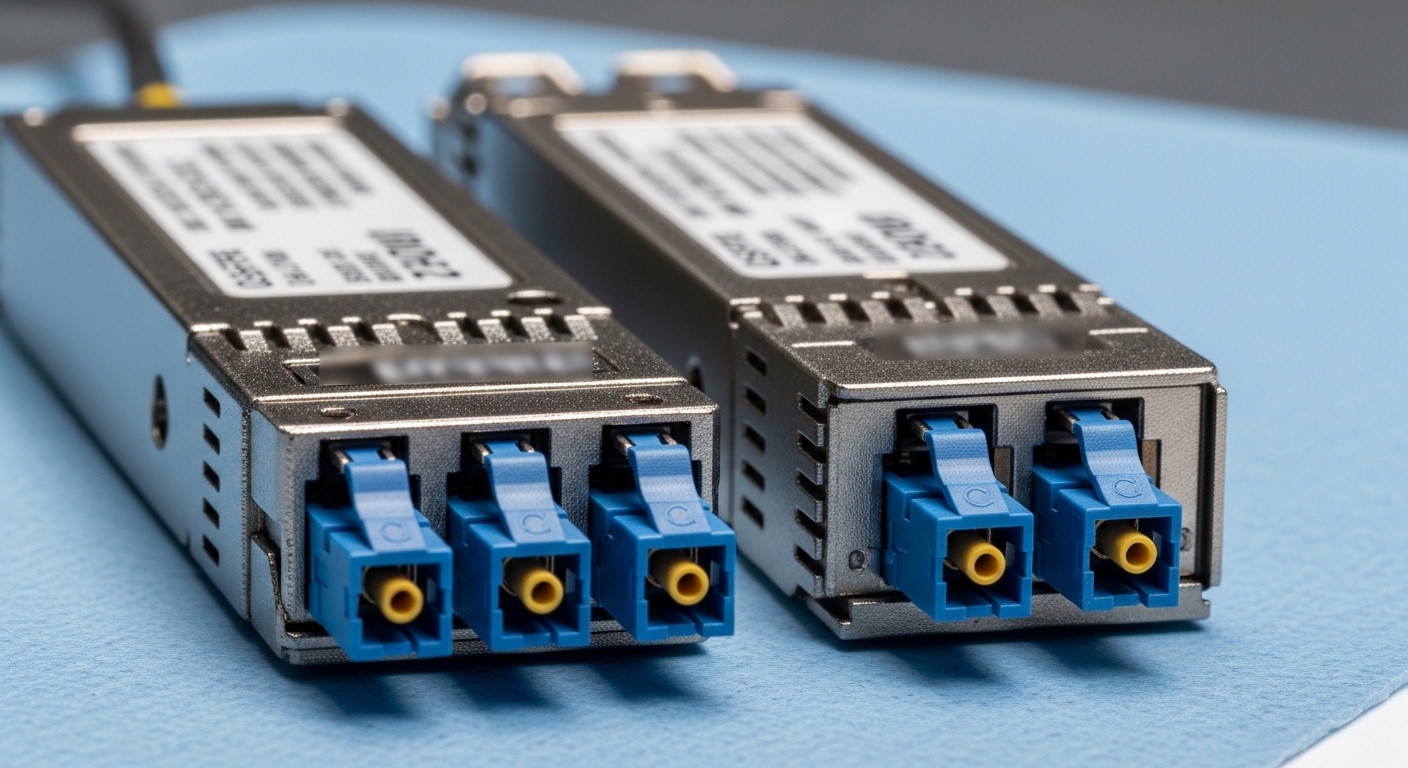
Before you buy modules, confirm the physical layer requirements and the operational envelope. IoT networks often mix constrained edge switches, industrial media converters, and cloud uplinks, so compatibility errors are common if you skip the basics. You will also want a plan for monitoring so you can correlate link degradation with temperature, fiber contamination, or power supply drift.
Inventory your IoT connectivity points and distances
Expected outcome: a list of every hop, port type, and required reach. Start by mapping where sensors connect (typically Ethernet), where aggregation happens (industrial PoE switches or rugged switches), and where uplinks go (leaf switches, routers, or gateways). For each hop, measure or verify fiber distance including patch panel slack, using labeled fiber routes and as-built drawings. Then note whether you are using multimode (MMF) or single-mode (SMF) infrastructure.
Identify the electrical interface and optics form factor
Expected outcome: confirmed port standards and transceiver cages. Most IoT aggregation uses SFP/SFP+ for 1G/10G, SFP28 for 25G, or QSFP/QSFP28 for higher density. Verify the switch or router model and the exact transceiver type supported (for example, Cisco IOS platform support lists specific optics). If your environment uses industrial switches with SFP slots, confirm whether they require specific vendor compatibility or accept third-party modules with DOM.
Define link budgets and safety margins
Expected outcome: a reach decision you can defend during commissioning. For MMF, typical 10G SR targets are short reach (tens to a few hundred meters depending on OM grade and link losses). For SMF, 10G LR and ER are longer reach classes. Use vendor datasheets for optical power and receiver sensitivity, then include losses from connectors, splices, patch cords, and aging margin. The IEEE 802.3 family defines Ethernet PHY behavior, but it is the vendor optical budget that determines whether the link stays stable after field dust and connector wear. [Source: IEEE 802.3](https://standards.ieee.org/)
Step-by-step selection workflow for optical transceivers in IoT
Expected outcome: a shortlist of optics models that match your fiber type, distance, and temperature constraints. IoT edge cabinets are often warm, dusty, and vibration-prone, so temperature range and DOM behavior matter as much as wavelength and reach. Use the checklist below before you finalize purchase orders.
Choose the right wavelength and fiber type for each hop
Expected outcome: correct optics class (SR vs LR vs ER) and correct fiber core type. In practice, you will most often see 850 nm for multimode short reach and 1310 nm or 1550 nm for single-mode longer reach. For example, a 10G SR optical transceiver at 850 nm typically uses LC connectors and targets short distances over MMF. A 10G LR transceiver at 1310 nm targets longer reach over SMF.
Validate data rate alignment with device uplinks
Expected outcome: no PHY mismatch surprises. If the IoT edge switch uses 10G uplinks, do not accidentally choose a 1G optic. Conversely, choosing a 10G optic where the switch negotiates down can hide oversubscription issues. Confirm the port speed setting is auto-negotiation capable for your platform and that the remote side supports the same optics class. IEEE 802.3 defines link behavior, but vendor implementations still vary for optics compatibility.
Confirm DOM, monitoring, and alarm behavior
Expected outcome: you can detect early failure rather than waiting for total outage. Digital Optical Monitoring (DOM) provides real-time transceiver parameters such as transmit power, receive power, laser bias current, and temperature. Many IoT operations teams use SNMP or telemetry to alert when receive power drops or temperature rises. When DOM is missing or incompatible, you lose visibility; that increases mean time to repair (MTTR).
Check operating temperature and mechanical robustness
Expected outcome: optics that survive the cabinet environment. Many standard enterprise optics are rated for commercial temperature ranges, while industrial IoT edges may require wider ranges. Verify the transceiver operating temperature and whether it meets your enclosure profile (for example, typical industrial cabinets can exceed 50 C during peak loads). Also confirm the connector type (LC vs MPO), latch style, and whether the transceiver is rated for repeated insertions.
Run compatibility checks and plan for vendor lock-in risk
Expected outcome: a procurement strategy that avoids surprises at install time. Some switches maintain an optics compatibility list; others accept third-party optics but may limit monitoring features. If you use third-party optics, purchase from a vendor with documented compatibility and consistent DOM support. Track part numbers by platform so field techs can quickly swap optics without guessing.
Pro Tip: In IoT edge deployments, the most common “mystery outage” is not a bad transceiver—it is a gradual receive power drop from dirty LC connectors. Build a connector cleaning and inspection routine into commissioning, and treat DOM receive power trending as an early warning system rather than a last-minute troubleshooting tool.
Key specs comparison: common optical transceivers for IoT edge links
This table compares typical optics classes engineers select for IoT environments that connect sensors and controllers to gateways and cloud uplinks. Exact maximum reach depends on fiber type, link budget, and vendor implementation, so use this as a starting point and verify against datasheets for your specific module. [Source: vendor datasheets for Cisco, Finisar, and FS.com SFP series](https://www.cisco.com/), [Source: Finisar module documentation](https://www.lumentum.com/), [Source: FS.com optics datasheets](https://www.fs.com/)
| Optics class | Typical wavelength | Typical reach target | Connector | Data rate | DOM | Operating temperature (typ.) |
|---|---|---|---|---|---|---|
| 10G SR (SFP+) | 850 nm | Up to 300 m over OM3 (varies by vendor) | LC | 10G Ethernet | Often supported | 0 to 70 C (check industrial variants) |
| 10G LR (SFP+) | 1310 nm | Up to 10 km over SMF | LC | 10G Ethernet | Often supported | -40 to 85 C (varies) |
| 25G SR (SFP28) | 850 nm | Up to 100 m over OM4 (varies) | LC | 25G Ethernet | Common | -5 to 70 C or wider |
| 10G ER (SFP+) | 1550 nm | Up to 40 km over SMF | LC | 10G Ethernet | Common | -40 to 85 C (varies) |
Example part numbers you may encounter in real networks include Cisco SFP-10G-SR and third-party equivalents such as FS.com SFP-10GSR-85, plus Finisar-style 10G optics like FTLX8571D3BCL (exact compatibility depends on your switch model). Always confirm the vendor datasheet for transmit power, receiver sensitivity, and DOM implementation before rollout.
Deployment scenario: edge-to-cloud IoT with predictable performance
Expected outcome: you can translate the specs into an architecture that survives real conditions. Consider a manufacturing site with a three-tier topology: sensor VLANs at the cell level, aggregation at the floor level, and uplinks to a regional gateway. In a 3-tier design, a floor aggregation switch uses 48x 1G access for PLC and vision systems, then uplinks with 4x 10G SFP+ to a core switch. Distances are 120 m from cell cabinets to floor aggregation (MMF OM3), and 6 km from the core to a regional gateway (SMF).
In this scenario, engineers typically deploy 10G SR optics at 850 nm for the 120 m MMF runs, then 10G LR optics at 1310 nm for the 6 km SMF uplinks. They also enable switch telemetry for DOM fields so the operations team can alert when receive power drops by a defined threshold, such as 1 to 2 dB from baseline after maintenance. This reduces downtime during scheduled cleaning cycles and helps isolate faults between transceiver performance and fiber contamination. For monitoring and management, teams often integrate alarms into existing NOC workflows using SNMP or controller telemetry, aligning with operational practices described in vendor management guides. [Source: Cisco transceiver monitoring and DOM behavior](https://www.cisco.com/)
Selection criteria checklist for optical transceivers in IoT
Use this ordered checklist during design review and pre-commissioning. It is written for engineers who need repeatable outcomes across multiple sites and vendors.
- Distance and fiber type: confirm MMF grade (OM3/OM4) or SMF single-mode, and verify connector/splice losses.
- Data rate and PHY: ensure the optics match the switch port speed (SFP vs SFP+ vs SFP28 vs QSFP) and negotiation behavior.
- Switch compatibility: check whether the platform has an optics compatibility list or requires specific vendor EEPROM behavior.
- DOM support: confirm the switch can read DOM fields; validate alarm thresholds and telemetry mapping.
- Operating temperature: select industrial-rated optics if the cabinet can exceed commercial ranges; validate worst-case enclosure temperature.
- Connector and polarity: verify LC vs MPO, fiber polarity rules, and labeling conventions to avoid swapped fibers.
- Vendor lock-in risk: plan spares and define acceptable third-party sources with documented compatibility.
- Regulatory and safety constraints: ensure optics meet your site standards, especially around laser safety classes and handling procedures.
Common mistakes and troubleshooting tips for optical transceivers
Expected outcome: faster root-cause isolation when links flap, go down, or show low receive power. These pitfalls come from field patterns in industrial and edge networks where environmental stress and connector hygiene are major variables.
Failure mode 1: Link comes up intermittently or never negotiates
Root cause: connector contamination, damaged fiber ends, or incorrect polarity on fiber pairs. Dirty LC connectors can cause receive power to hover near the threshold, leading to frequent link resets.
Solution: clean connectors with approved fiber cleaning tools and re-terminate if necessary. Inspect with a fiber microscope and verify polarity. Then compare DOM receive power to baseline and confirm it stays above the vendor minimum sensitivity by your link budget margin. [Source: IEC and fiber cleaning best practices referenced in vendor field guides]
Failure mode 2: DOM alarms show high temperature or low transmit power
Root cause: insufficient airflow in the cabinet, blocked cages, or optics rated for narrower temperature ranges than the enclosure experiences. Some optics also show reduced performance after repeated thermal cycling.
Solution: measure cabinet ambient and transceiver cage temperature during peak load. Improve airflow, verify cage seating, and replace with industrial-rated optics specified for your temperature envelope (confirm datasheet operating range). Use DOM to correlate temperature spikes with link events.
Failure mode 3: Works on one vendor switch but fails on another
Root cause: optics EEPROM/DOM interpretation differences, unsupported transceiver profiles, or platform-specific compatibility requirements. Some platforms accept optics but disable monitoring or require specific module identification fields.
Solution: validate optics on a representative port model during a pilot. If third-party modules are required, buy from a supplier that provides compatibility documentation and consistent DOM. Keep a small pool of known-good spares for each switch model to avoid extended downtime during site rollout.
Cost and ROI note: what optical transceivers change in TCO
Expected outcome: realistic budgeting and fewer surprises in lifecycle cost. Typical street pricing varies widely by speed and distance, but many teams see OEM optics costing roughly 1.5x to 3x compared to reputable third-party modules for the same class. The decision is not only purchase price: OEM optics may reduce compatibility risk and simplify support escalations, while third-party optics can lower initial capex if your platform reliably accepts them.
For ROI, consider TCO drivers: labor time for swaps, downtime cost per outage, spares inventory, and failure rates under thermal cycling. For example, if a site experiences even 2 hours of downtime per year due to optics-related issues, and labor and lost production are significant, a small capex reduction can be outweighed quickly by increased MTTR. Using DOM monitoring and a connector hygiene process often pays back by preventing repeat failures and enabling targeted replacements instead of trial-and-error. [Source: general optics lifecycle and monitoring discussions in reputable network engineering publications]
Implementation guide: numbered deployment steps for IoT optical transceivers
This section turns the selection and troubleshooting knowledge into an install-ready plan. Follow it site-by-site to standardize outcomes.
Pre-stage optics and label fiber paths
Expected outcome: fewer onsite mistakes. Pre-stage the exact transceiver models for each hop and label them by site and port (for example, “SiteA-Core-Uplink1”). Label fiber patch cords by wavelength direction and polarity where applicable. Confirm LC connectors are capped until installation to reduce contamination.
Verify switch port settings and transceiver type
Expected outcome: immediate link bring-up. On the switch, confirm the intended port speed (SFP/SFP+ should match the platform defaults). If the switch supports it, verify diagnostics are enabled for DOM and that alarms are routed to your monitoring system.
Clean, seat, and validate with link metrics
Expected outcome: stable link with measurable margins. Clean both ends of the connector before insertion, seat the transceiver until the latch clicks, and watch link status. Then record DOM transmit power, receive power, and temperature at commissioning so you have a baseline for future comparison.
Implement monitoring thresholds for IoT operations
Expected outcome: early detection before outages. Set alerts for receive power downward trends and for temperature excursions. In many field practices, teams set thresholds based on vendor minimum sensitivity plus link budget margin, then adjust after observing stable commissioning values.
Run a controlled test during peak and after warm-up
Expected outcome: confidence under real stress. Test during peak industrial load when cabinets run warm, and again after the system reaches steady state. Confirm telemetry remains stable and packet loss stays within acceptable limits for your IoT protocols (for example, time-series telemetry should not show bursts aligned with transceiver temperature spikes).
Document and standardize spares
Expected outcome: faster MTTR during future swaps. Maintain a per-site spares kit including at least one spare optics per unique class (SR vs LR) and one spare patch cord type. Document which optics model and vendor EEPROM behavior worked best for each switch model to reduce future compatibility uncertainty.
FAQ
How do I know whether I should use SR or LR optical transceivers?
Start with your distance and fiber type. If you have multimode fiber and short runs, SR at 850 nm is often the practical choice. If the run is longer or you are using single-mode fiber, LR at 1310 nm is typically used. Always verify the link budget with transmit power and receiver sensitivity from the module datasheet.
Do optical transceivers need DOM support for IoT monitoring?
DOM is not strictly required for link operation, but it is valuable for reliability. With DOM, you can alert on low receive power, rising temperature, or abnormal laser bias before the link fully fails. Many IoT operations teams rely on these signals to reduce downtime and improve maintenance planning.
Can I use third-party optical transceivers in industrial IoT networks?
Often yes, but compatibility varies by switch vendor and platform. Confirm the platform can read the transceiver EEPROM fields and that monitoring works as expected. During a pilot, validate link stability and DOM telemetry rather than assuming it will match OEM behavior.
What is the most common cause of optical link flaps?
Dirty connectors and fiber contamination are among the most common causes, especially for LC and patch panel connections. Intermittent receive power can push the link near sensitivity limits, causing repeated renegotiations. Cleaning, inspection with a fiber microscope, and DOM trending usually pinpoint the issue quickly.
What temperature rating should I target for optical transceivers at the edge?
Match the optics operating range to your measured worst-case cabinet temperature. Many standard optics are rated for commercial ranges, while industrial deployments often require wider ranges such as -40 to 85 C depending on the specific module. If you do not have temperature measurements, plan a pilot with telemetry and then select industrial-rated optics.
How do optical transceivers affect total cost of ownership in IoT?
The purchase price matters, but TCO is dominated by downtime, maintenance labor, spares management, and failure rates under real environmental stress. DOM-based monitoring and connector hygiene routines can reduce repeat failures and shorten MTTR. If OEM optics cost more but reduce incompatibility issues, the ROI can still be positive in high-availability IoT sites.
As field experience shows, the best optical transceivers are the ones that match your fiber, temperature, and monitoring needs from day one. If you want to deepen your fiber-side reliability practices, see fiber optic connector cleaning best practices for a commissioning workflow you can standardize across sites.
Author bio: I have deployed Ethernet over fiber links in industrial IoT and data center edge environments, focusing on DOM telemetry, link budget validation, and fast fault isolation. I write from hands-on commissioning experience with SFP/SFP+ and SFP28 optics across mixed vendor switch fleets.
