
Telecom teams are under pressure to grow capacity without exploding power, floor space, and maintenance cost. This article helps network engineers and procurement owners evaluate optical transceiver value when moving from 400G or 200G optics to 800G transceivers. You will get an ROI-focused framework, real deployment math, and a failure-mode checklist grounded in IEEE Ethernet optics behavior and vendor DOM realities.
Why 800G optics swing the ROI the most
On paper, 800G looks like “double the bandwidth,” but the optical transceiver value is determined by how the upgrade changes your total system cost: transceiver unit price, switch port economics, optical power budgets, and operational overhead. In real telecom aggregation and core deployments, the biggest ROI drivers are (1) fewer ports and fewer optics per Tbps, (2) power per delivered bit, and (3) reduced truck rolls from higher reliability optics with consistent DOM telemetry. Standards like IEEE 802.3 Ethernet and the common 800G optical footprints define behavior, but the operational outcome comes from link margin, laser safety, and telemetry integrity.
ROI equation engineers actually use
Most teams end up with a simplified model:
- CapEx: cost of 800G transceivers plus any switch line card or backplane changes.
- OpEx: annual power cost, spares inventory holding cost, and maintenance labor (including optical troubleshooting time).
- Risk cost: probability of early failures, compatibility issues, and vendor lead-time shocks.
Then they compare against the “do nothing” baseline: running more 400G ports, more optics, and more power for the same delivered throughput.
Pro Tip: In trials, teams often compute ROI from transceiver watts only. In the field, link bring-up time and repeat failures from marginal optics can dominate the first-year OpEx. Track “mean time to first stable link” and DOM alarm frequency during the first 30 days, not just steady-state power.
800G transceiver realities: distances, optics types, and power
800G typically maps to multiple optical modes depending on fiber plant and switch support. For telecom, you will commonly see short-reach multi-fiber optics for data center-like environments, and long-reach coherent optics for metro and regional spans. The “value” comes from matching the optics type to the installed fiber and the required reach while staying inside the switch’s supported optical interface profile.
Key specs you must compare before any ROI math
- Wavelength (e.g., 850 nm for SR, 1310/1550 nm for other families, coherent bands for long reach).
- Reach under realistic link budgets, including connector and splice losses.
- Data rate and modulation format (direct detect vs coherent influences power and DSP load).
- Connector (e.g., MPO/MTP for multi-fiber SR).
- Power consumption per transceiver and any switch-level overhead.
- DOM support (Digital Optical Monitoring availability and telemetry accuracy).
- Operating temperature and qualification for outdoor/telecom rooms.
Below is a practical comparison table you can use to sanity-check optical reach and power assumptions. Exact values vary by vendor and interface type, so treat this as a template for your vendor datasheet review.
| Optics type (example) | Typical wavelength | Target reach | Data rate | Connector | DOM | Operating temp | Notes for ROI |
|---|---|---|---|---|---|---|---|
| 800G SR (multi-fiber) | ~850 nm | ~70 m to 150 m (depends on model) | 800G Ethernet | MPO/MTP | Usually supported | 0 to 70 C typical | Great for short-haul; fiber loss and polarity cleaning matter |
| 800G LR (single-mode, non-coherent) | ~1310 nm | ~2 km to 10 km (model dependent) | 800G Ethernet | LC | Usually supported | -5 to 70 C typical | Higher unit cost; reduces port count needs |
| 800G coherent (metro/long haul) | C-band or L-band | 20 km+ (model dependent) | 800G with coherent DSP | Varies, typically single-fiber | Yes, extensive telemetry | -5 to 75 C typical | Higher CapEx; can reduce expensive middle spans |
For authority, use IEEE 802.3 for Ethernet optical interface behavior and vendor datasheets for link budgets and DOM details. For baseline Ethernet over fiber expectations, see [Source: IEEE 802.3] [[EXT:https://standards.ieee.org/standard/802_3]] and for vendor-specific DOM and electrical/optical parameters, review the exact transceiver and switch datasheets from the chosen OEM or approved third-party supplier.
Deployment scenario: where 800G actually pays back
Consider a telecom aggregation site with a 3-tier topology: access aggregation to metro edge, then to core. You have 48 ToR-to-aggregation uplinks at 400G each rack cluster, aggregated into 12 spine-equivalent core line cards. The site runs 2.2 MW total IT load. A capacity plan requires adding 0.8 Tbps delivered throughput within 18 months, without increasing cabinet count. You decide to upgrade selected uplinks to 800G optics on supported line cards, cutting the number of optics and ports by about 50% for the same delivered bandwidth.
Assume the upgrade uses 800G SR optics for distances under 100 m (typical for intra-DC telecom rooms) with MPO/MTP trunks. In a pilot, you validate link margin by measuring actual fiber loss: 0.35 dB per connector pair and 0.20 dB per splice, then verifying that the vendor link budget supports worst-case temperature drift. If the optics pass bring-up with stable DOM readings for 30 days (no rising error counters, no frequent LOS/LOF events), you roll into production. The ROI comes from reduced port count (fewer optics), reduced power per bit, and less operational time spent swapping marginal optics.
In this scenario, the upgrade typically reduces transceiver count per Tbps, so even if an individual 800G module costs more than a 400G unit, the optical transceiver value can still improve because you buy fewer optics to deliver the same throughput. The operational win is often underappreciated: fewer optics means fewer field points of failure and fewer cleaning/polarity errors across MPO trunks.
Selection criteria checklist for optical transceiver value in 800G
Use this ordered checklist during vendor evaluation and procurement. It is designed to prevent “ROI math on paper” from collapsing during integration.
- Distance and link budget: confirm measured fiber loss (connector, splice, patch panels) vs the vendor link budget with margin for temperature and aging.
- Switch and line card compatibility: verify exact supported form factor and vendor part numbers for the switch OS release. Don’t assume “800G” alone guarantees compatibility.
- DOM support and alarm behavior: ensure transceiver DOM fields match your monitoring stack and that alarm thresholds behave as expected (LOS, TX power low/high, bias current trends).
- Operating temperature and airflow: telecom rooms can be uneven; validate transceiver temperature under real airflow and cabinet thermal profiles.
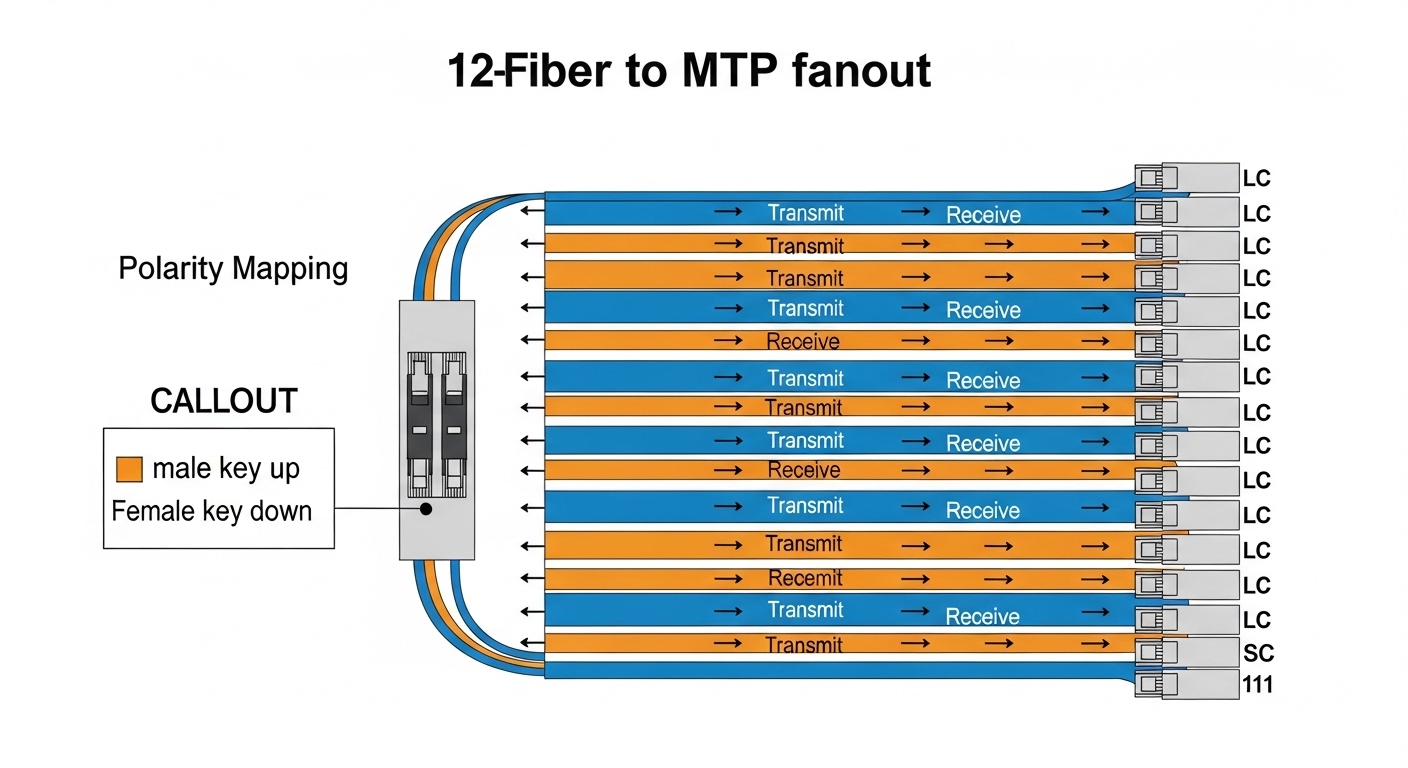
- Connector and polarity discipline: for MPO/MTP, define polarity mapping, cleaning method, and labeling. For LC, verify ferrule cleanliness and endface inspection workflow.
- Vendor lock-in risk: assess whether third-party optics are supported by switch diagnostics and whether firmware updates could block them.
- Lead time and spares strategy: 800G inventory shortages are common during ramp. Include spares holding cost and reorder lead times in TCO.
- Warranty and failure metrics: require clear RMA terms, and track early-life failure rates during pilot.
Where available, map your interface requirements to IEEE Ethernet expectations and to the specific optical interface class used by your switch vendor. For standards context on Ethernet PHY behavior and optical interface integration, see [Source: IEEE 802.3] [[EXT:https://standards.ieee.org/standard/802_3]]
Cost and ROI: realistic ranges and TCO traps
Pricing varies massively by reach, modulation type, and whether you buy OEM or approved third-party. As a realistic planning range for telecom budgeting: short-reach 800G modules often land in the “hundreds to low thousands” per unit, while long-reach and coherent 800G optics can be “high thousands to tens of thousands” per unit depending on the DSP and optics family. OEM parts usually cost more, but they often reduce integration risk and firmware compatibility friction.
For TCO, include:
- Power: if the 800G transceiver draws meaningfully less power per delivered bit than the previous generation, energy savings can be a measurable ROI lever. However, quantify at the switch level, not only at the module level.
- Cooling impact: power savings can reduce cooling load, but only if your data hall thermal design uses that slack.
- Spares and stocking: higher unit cost increases working capital; smaller spares can still be cost-effective if reliability is proven.
- Downtime cost: a single failed optics swap can cost more than the module price if it triggers extended outage windows.
The biggest TCO trap is assuming “same optics behavior” across vendors. DOM field formats, alarm thresholds, and supported optics lists can differ. That is why the optical transceiver value analysis must include compatibility and telemetry validation during the pilot, not after mass deployment.
Common mistakes and troubleshooting that break 800G ROI
Here are field-proven failure modes that commonly show up during 800G bring-up and then quietly erode ROI through extra truck rolls and extended maintenance windows.
MPO polarity reversal causing intermittent link flaps
Root cause: MPO/MTP polarity mismatch or inconsistent polarity labeling across patch panels. Even when the link “comes up,” intermittent flaps can appear under temperature changes or connector re-seating.
Solution: standardize polarity mapping for every trunk (use a documented polarity plan), enforce endface inspection, and implement a re-check step during acceptance. In trials, log LOS/LOF events and correlate to connector touch events.
DOM monitoring mismatch leading to “false confidence”
Root cause: Monitoring system expects one DOM schema but receives different scaling or field availability. Engineers may miss rising bias current or TX power drift until errors spike.
Solution: validate DOM fields end-to-end: transceiver DOM output, your telemetry collector, and alert thresholds. During pilot, compare raw DOM values against switch-reported counters.
Underestimating fiber loss variance across real trunks
Root cause: link budget calculations use average loss, but real trunks include extra patch cords, aged connectors, and uneven splice quality. With 800G tight margins, small losses matter.
Solution: measure loss per trunk using OTDR or calibrated optical power measurements at acceptance time. Use worst-case margins in ROI calculations, not typical-case assumptions.
Firmware and optics profile mismatch after switch upgrade
Root cause: switch OS updates can change supported optics lists or PHY tuning behavior. A transceiver that worked in the pilot may fail after a software change.
Solution: lock firmware versions during pilot, then test compatibility with the planned production firmware. Keep a rollback plan and maintain an approved optics compatibility matrix per OS release.
These issues are solvable, but they must be treated as first-class ROI factors. If you only optimize for unit price, you can lose value through integration delays and reliability surprises.
FAQ: optical transceiver value for 800G telecom upgrades
How do I estimate optical transceiver value when moving from 400G to 800G?
Start with “delivered Tbps per optic” and include the real system impact: fewer ports, fewer transceivers, and any required line card upgrades. Then add OpEx from power, spares holding, and maintenance time. The pilot should validate DOM alarms and error counter stability for at least 30 days to avoid ROI drift.
What optics type should telecom teams choose for metro vs data hall distances?
For short distances inside telecom rooms or data halls, short-reach multi-fiber optics are usually cost-effective. For metro and long spans, coherent optics can reduce middle-span costs but have higher unit price and more DSP-related integration complexity. Always match the optics to the installed fiber loss and connector practices.
Will third-party 800G optics reduce ROI or increase risk?
Third-party optics can improve optical transceiver value if they are truly compatible with your switch OS release and if DOM telemetry integrates cleanly. The risk shows up when firmware updates change supported optics behavior or when DOM fields differ from your monitoring expectations. Mitigate by requiring a compatibility test on your exact switch model and OS version.
What DOM metrics matter for reliability during the first month?
Track TX power trends, bias current drift, and the frequency of LOS/LOF events. Validate that your telemetry pipeline preserves units and scaling, and ensure alerts trigger before error counters climb. In practice, DOM stability often predicts early-life issues better than just link-up success.
How can I avoid link margin surprises during acceptance?
Measure actual trunk loss per route using calibrated methods like OTDR or power metering with known reference points. Include connector cleaning and re-mating effects in your acceptance procedure. Use worst-case margins, not averages, when deciding whether the ROI holds under operational variability.
What is the fastest way to validate ROI before mass deployment?
Run a limited pilot that includes real cabling, your monitoring stack, and your planned switch firmware. Define acceptance criteria: stable link for 30 days, low alarm counts, and no recurring flaps. Then recompute ROI with measured power and maintenance time, not estimated values.
Update date: 2026-05-02. If you want a related next step, read How to calculate fiber link budget for 800G transceivers to tighten the margin assumptions that drive ROI.
Author bio: I build and validate high-density Ethernet optics deployments end-to-end: switch OS, optics compatibility, DOM telemetry, and acceptance testing in live network racks. My focus is rapid PMF for infrastructure processes: measure first, standardize fast, and eliminate integration surprises.
