
If you are staring at an 800G migration spreadsheet, you already know the hard part is not the optics spec sheet. It is the total landed cost: transceivers, switch line cards, fiber plant work, power, spares, and the downtime risk that hits your change window. This article helps data center network engineers and infrastructure leads build a practical 800G cost analysis that survives procurement, operations, and audit questions.
What drives 800G total cost in real deployments
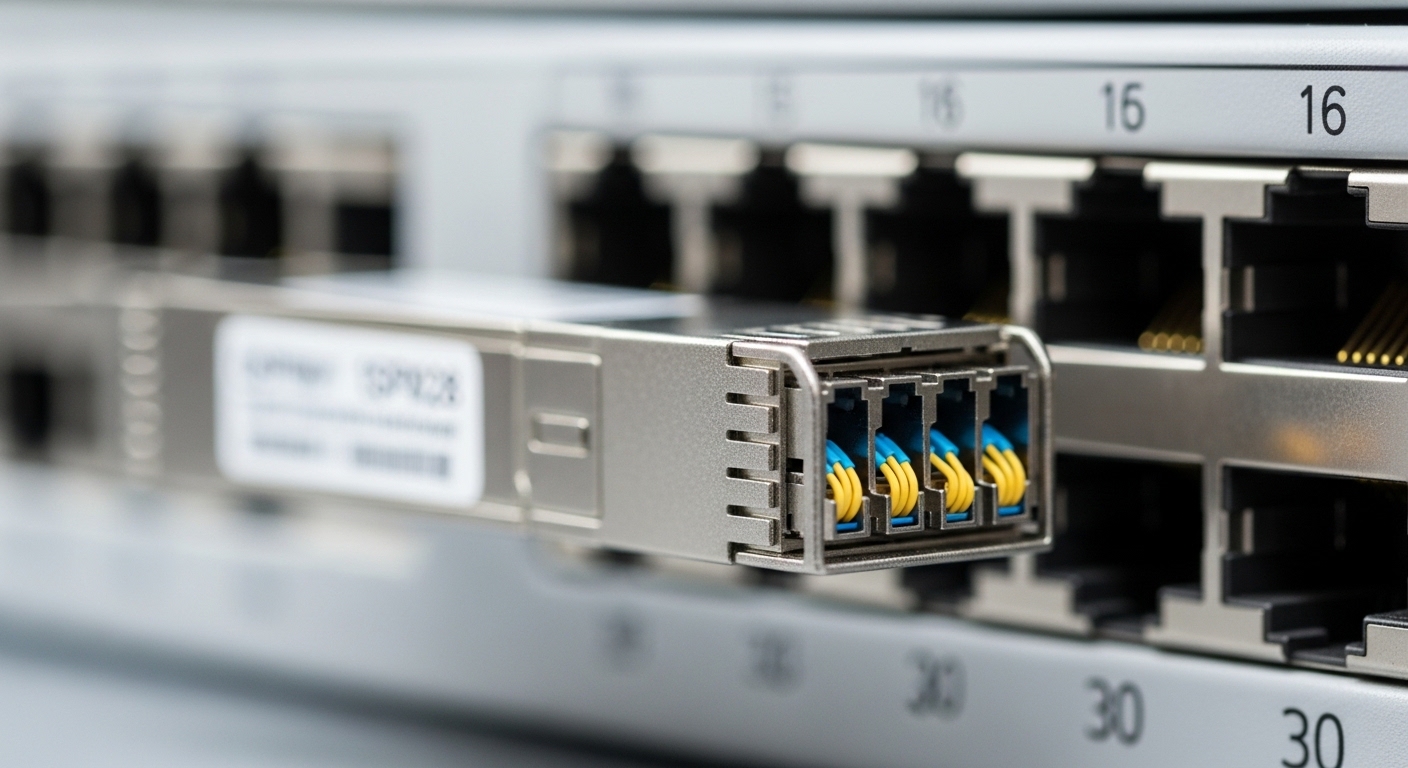
On paper, 800G looks like “just faster optics.” In practice, your cost model is dominated by the bill of materials (transceivers and ports), the fiber reach and connector strategy, and whether your cabling plant needs a rebuild. I have seen teams underestimate how many ports require new optics because of transceiver compatibility rules between switch vendors and line card revisions.
Power is the second big lever. Higher serial rates typically increase baseline power per port, but you may offset that by reducing oversubscription and consolidating uplinks. Still, you should model both transceiver power (Tx/Rx) and switch silicon/line card overhead, because the optics alone rarely explain your facility bill.
Finally, downtime and risk factor pricing is real. If you need a staged cutover with parallel links and careful VLAN/VRF propagation, your “cost” includes labor hours and the probability of a rollback. For change-heavy environments, I often add a risk multiplier to the labor line item during the first migration wave.
800G optics, cabling, and port economics: a spec-first model
The fastest way to get your 800G cost analysis wrong is to select optics by reach alone. You need to map reach requirements to the exact optics type used by your switches, including wavelength, connector, and DOM support for monitoring. Most modern 800G implementations use coherent or short-reach approaches depending on distance; for intra-rack and leaf-spine tiers, short-reach is common.
Key optics parameters to include in your spreadsheet
- Data rate (800G), and whether it is native 800G or built from multiple lanes.
- Wavelength (for short reach, typically 850 nm; for longer reach, different bands and optics types apply).
- Reach target (for example, 70 m vs 100 m affects fiber plant and patch panel changes).
- Connector (MPO-12/MPO-16 variants for many 800G SR solutions; LC for some media converters).
- DOM support (Digital Optical Monitoring) and whether your switch demands a specific vendor EEPROM layout.
- Operating temperature range to match your switch room airflow profile.
Example comparison: common 800G SR optics options
Below is an example comparison you can adapt to your vendor’s supported transceiver list. Always verify exact compatibility with your switch model and line card revision.
| Optics type (example) | Wavelength | Typical reach | Connector | DOM / monitoring | Operating temp | Notes for cost model |
|---|---|---|---|---|---|---|
| SFP-like is not used here; 800G SR uses high-density pluggables | 850 nm | Up to ~70 m (varies by vendor) | MPO-12 (commonly) or MPO-16 (varies) | Usually supported | 0 to 70 C typical | Lower component cost, higher port density; fiber plant constraints |
| Vendor-supported 800G SR4 / SR8 style (naming varies) | 850 nm | Up to ~100 m (varies by vendor and link budget) | MPO-12 or MPO-16 | Usually supported | 0 to 70 C typical | May reduce patching work if your plant fits the budget |
| Longer reach optics (not SR; varies by architecture) | Different bands | Hundreds of meters to km | Varies | Usually supported | Varies | Higher unit cost; can avoid fiber rebuild |
For external reference on Ethernet physical layer frameworks, use IEEE guidance for 100G/400G/800G class link behavior and system constraints. [Source: IEEE 802.3]. For transceiver electrical and optical characteristics, rely on the specific vendor datasheet for your exact part number. [Source: Cisco SFP module documentation] and [Source: Finisar / II-VI transceiver datasheets].
Fiber plant math: why “it should work” turns into truck rolls
Most 800G short-reach migrations fail their cost assumptions because the fiber plant is not “distance only.” Link budget has multiple terms: fiber attenuation, connector insertion loss, patch panel loss, and worst-case polarity or lane mapping issues. MPO cabling is especially sensitive to correct polarity and proper cleaning.
When I build budgets, I break cabling work into three buckets: reuse existing trunks, replace patch cords, and replace or re-terminate trunks. If your current patch panels were built for 400G with different MPO lane mapping, the “upgrade” can quietly force replacement even when the physical fiber is still there.
Do not ignore cleaning and testing costs. A basic plan should include an inspection pass, cleaning supplies, and at least one verification step using appropriate test equipment. If you are targeting 70 m vs 100 m, you may have margin now, but future growth can burn that margin on the next migration wave.
Migration cost model: labor, power, spares, and downtime risk
To make your 800G cost analysis credible, model the migration in waves and assign costs to each wave. For example, a leaf-spine upgrade often starts with the spine uplinks, then ToR downlinks, then interconnect validation, and finally the operational hardening steps like monitoring baselines and rollback drills.
Labor is not just “swap the optics.” You need pre-staging, label updates, VLAN/VRF verification, interface speed checks, and post-change telemetry validation. If your automation expects specific interface naming and transceiver DOM fields, you should budget time for template updates and a smoke test run.
Spares and procurement lead time also matter. If you buy OEM optics, you may get better compatibility confidence, but third-party parts can reduce unit cost and sometimes improve lead time. The risk is higher failure variability and occasional switch compatibility quirks, so I recommend reserving a small OEM “golden set” for the first wave and validating replacements before scaling.
A realistic example scenario for the spreadsheet
In a 3-tier data center leaf-spine topology with 48-port 10G/25G ToR switches and 2-tier spine, imagine upgrading uplinks to 800G from selected ToR groups. If you have 12 ToR switches and you upgrade 8 uplinks per ToR, that is 96 x 800G ports total. With bidirectional links, you need roughly 192 transceivers plus patching and spares (for example, 10% spares). If unit optics pricing ranges from a few hundred to over a thousand dollars depending on vendor and reach, your transceiver line item becomes the largest single cost, but fiber rework and labor can easily become the second or third largest.
Pro Tip: In many migrations, the hidden cost is not the transceiver price; it is the “first-wave compatibility tax.” Plan a short pilot with the exact transceiver part numbers you intend to buy at scale, and confirm DOM fields and lane mapping behavior on your specific switch line card revision before you commit to a full purchase.
Selection criteria checklist for 800G cost control
Use this ordered checklist when you pick optics, cabling strategy, and procurement model. It is the same flow I use during vendor comparisons and pre-implementation reviews.
- Distance and reach: determine the real link span including patch panels and worst-case insertion loss, not just “rack to rack.”
- Switch compatibility: confirm the supported transceiver list for your exact switch model and software version.
- DOM and monitoring support: verify that your switch accepts the DOM format and that telemetry feeds your NMS correctly.
- Connector and MPO polarity: ensure the patching plan matches your polarity method and lane mapping requirements.
- Operating temperature and airflow: match optics temperature rating to your room and cabinet airflow constraints.
- Budget and TCO: estimate total cost of ownership, including spares, testing, and downtime labor.
- Vendor lock-in risk: compare OEM vs third-party unit costs, but include a compatibility and failure variability factor.
Common mistakes and troubleshooting tips during 800G rollouts
Even experienced teams get burned on a few repeat failure modes. Here are the ones I have seen most often, with root causes and fixes.
-
Mistake: Assuming 800G SR optics will work with any MPO polarity or patch layout.
Root cause: Lane mapping and polarity requirements differ by optics architecture and cabling plan.
Fix: Validate polarity method, re-terminate or re-patch using the correct MPO polarity scheme, and confirm with link test results. -
Mistake: Skipping fiber cleaning and inspection before inserting high-density optics.
Root cause: MPO end faces and ferrules trap dust; insertion loss jumps and receivers see degraded signal.
Fix: Use proper fiber inspection, clean with compatible lint-free procedures, and re-test after cleaning. -
Mistake: Buying cheaper optics variants without validating DOM and compatibility on the exact line card revision.
Root cause: Some switches enforce transceiver acceptance checks and DOM formatting expectations.
Fix: Run a pilot with the exact part numbers, confirm interface bring-up, and only then scale procurement. -
Mistake: Underestimating change window and rollback planning.
Root cause: Speed negotiation issues and VLAN/ECMP adjustments can extend downtime beyond the optics swap time.
Fix: Pre-stage configs, rehearse rollback, and verify control-plane and telemetry after link-up.
Cost and ROI note: what usually pencils out
In most migrations, 800G cost analysis shows a mix of near-term capex and longer-term opex benefits. OEM optics often cost more per unit than third-party, but the compatibility confidence can reduce labor and incident risk during your first wave. Third-party optics can cut unit cost, but you should budget for extra testing and keep a small OEM spares pool to handle surprises.
For TCO, include power and cooling implications. If 800G consolidation reduces the number of active uplinks or enables better traffic engineering, you may save power at the network layer, but you must verify with actual facility telemetry. Pricing varies widely by reach and vendor; as a planning range, optics can span from “mid-hundreds” to “over a thousand dollars per transceiver” depending on part type and sourcing, and your total installed cost often multiplies when you add labor, patching, and test equipment.
FAQ
How do I start an 800G cost analysis if I do not know the exact optics yet?
Start with port counts and distance classes. Build a model with ranges for optics price by reach (short-reach vs long-reach) and include a placeholder for spares and labor. Once you pick your switch model and line card revision, replace placeholders with the supported transceiver list and real lead times.
Is third-party optics always cheaper for 800G?
Unit price is often lower, but total cost depends on compatibility success and rework rate. For the first migration wave, I recommend validating the exact third-party part numbers in a pilot, then measuring interface bring-up success and link error counters before scaling.
What is the biggest hidden cost during 800G migration?
It is usually not the transceiver itself. In many shops, fiber patching, polarity fixes, cleaning/inspection time, and extended troubleshooting dominate the budget when MPO cabling standards were not aligned to the new optics architecture.
Do I need to upgrade firmware or software for 800G optics to work?
Often yes. Switch software can include updates to transceiver compatibility checks, telemetry parsing, and speed/feature support. Always test in a staging environment and confirm link-up behavior before scheduling a production cutover.
How should I factor downtime risk into the budget?
Use a wave-based approach: assign a labor cost per change and add a probability-weighted risk multiplier for rollback scenarios. If your environment has strict maintenance windows or high traffic sensitivity, the risk component can rival the optics delta between OEM and third-party.
What should my verification checklist include after migration?
Verify interface state, speed, error counters, and telemetry visibility from DOM. Also confirm VLAN/VRF reachability and routing/ECMP behavior, then run a link quality check using the same test methodology you used during acceptance.
If you want the next step after this cost model, build your cabling and change plan around a repeatable test-and-cutover workflow using fiber polarity and MPO troubleshooting for high density links.
Author bio: I am a veteran network admin focused on routing, switching, and high-density fiber networks, with hands-on work integrating 100G through 800G deployments in production data centers. I write from field experience: compatibility pilots, link bring-up verification, and practical troubleshooting that keeps migrations on schedule.
