
Upgrading to 800G is where many teams discover that optical transceiver investment is not just a procurement line item; it is a multi-year operating decision that touches optics, power, rack density, and migration risk. This article helps network and facilities engineers plan the shift to 800G optical transceivers with practical selection criteria, realistic cost and TCO notes, and troubleshooting patterns seen in production. You will also get a deployment scenario you can map to your own leaf-spine or high-performance computing fabric.
Why 800G optics change the economics of your optical transceiver investment
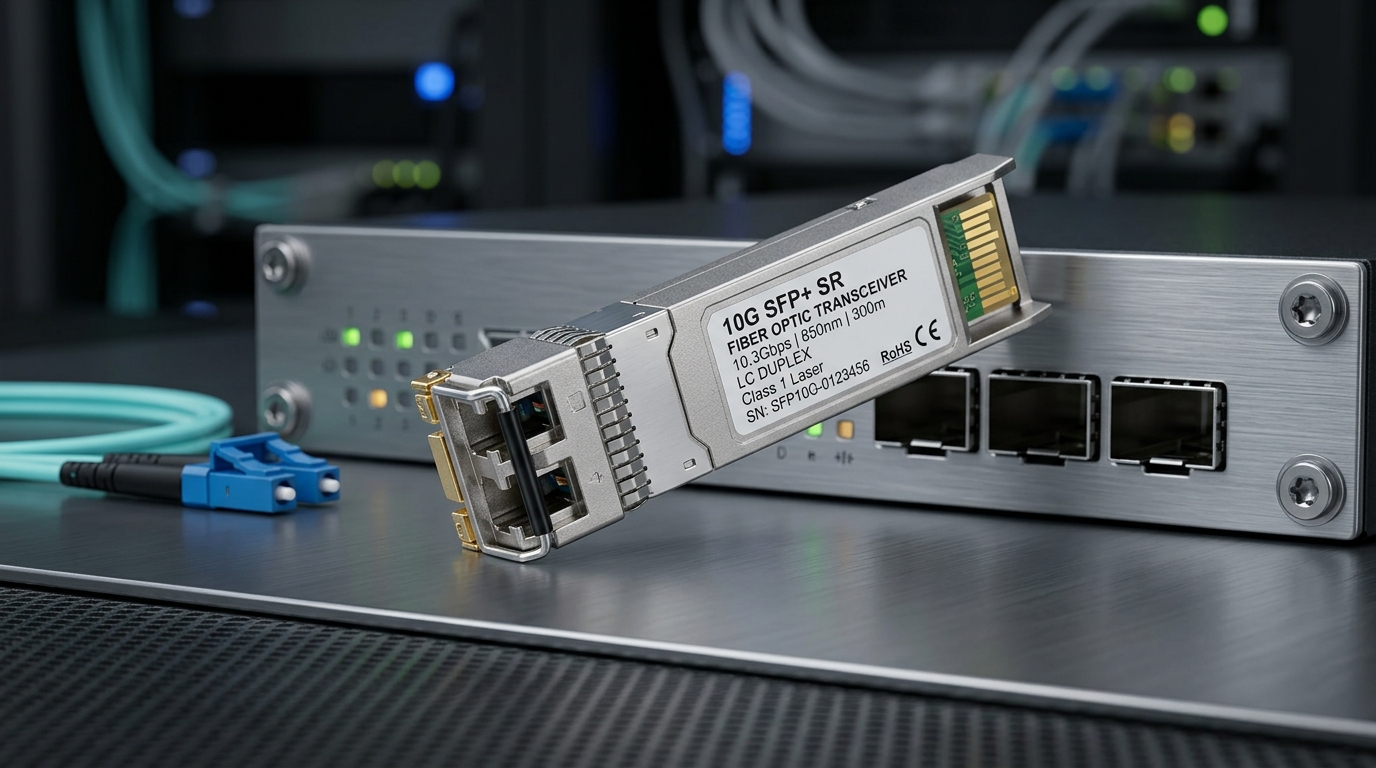
At 800G, the unit economics can improve if you reduce port counts and simplify cabling, but only if your optics match switch requirements and fiber plant constraints. In many modern fabrics, the driver is higher throughput per rack and fewer uplink ports, which can lower the total number of transceivers you buy over time. However, 800G optics also increase sensitivity to link budget, connector cleanliness, and thermal behavior, meaning the “cheapest module” can become the most expensive when it drives truck rolls or replacements.
From a standards perspective, 800G Ethernet optics are typically implemented using 800GBASE variants defined in IEEE 802.3, with common optical approaches including parallel optics over multimode fiber (MMF) and long-reach solutions over single-mode fiber (SMF). Always confirm the exact lane mapping and optical reach expectation for your switch vendor, because “800G” alone does not guarantee that your module will negotiate link parameters as expected. For baseline technical context, review IEEE 802.3 for 800G optical interfaces and vendor-specific implementation notes. Source: IEEE 802.3 standards portal
800G optics in practice: specs that affect link budget and compatibility
Before you spend on optical transceiver investment, document your physical layer constraints: fiber type (OM3/OM4 for MMF, OS2 for SMF), expected span length, patch panel loss, and whether you will exceed the module’s minimum/maximum receive power range. Field failures often happen after migration day, when patch cords are swapped without re-checking loss and polarity, or when vendor-specific diagnostics (DOM) are not supported and monitoring becomes blind.
In the table below, compare common 800G optical categories you will encounter during planning. Exact part numbers vary by switch vendor; use this as a decision scaffold, then validate with the transceiver’s datasheet and your switch optics compatibility list.
| Category | Typical data rate | Wavelength / lane approach | Connector | Reach (typical) | Power (typical) | Operating temp |
|---|---|---|---|---|---|---|
| 800G over MMF (short reach) | 800G | Parallel optics (multi-lane), MMF-optimized | LC (duplex) or MPO/MTP (array) | ~100 m class (varies by OM grade) | Often ~8–15 W | ~0 to 70 C (varies) |
| 800G over SMF (long reach) | 800G | Long-reach optics, single-mode optimized | LC (duplex) or MPO (array) | ~2 km class or more (varies) | Often ~8–18 W | ~0 to 70 C (varies) |
| 800G QSFP-DD / OSFP style (form factor dependent) | 800G | Defined by module type and switch port interface | Varies by form factor | Varies by optics | Varies by vendor | Varies by vendor |
Pro Tip: In many production environments, the biggest hidden cost during an 800G rollout is not the optics price per port; it is the time spent validating fiber loss and polarity after patching. Treat patch-panel rework as part of the optical transceiver investment plan, and budget a lab-style checklist before migration weekend.
Selection checklist: how engineers de-risk 800G optical transceiver investment
Engineers typically weigh distance, switch compatibility, and operational monitoring before they decide between OEM and third-party modules. The goal is to avoid a short-term price cut that turns into downtime, thermal derating issues, or monitoring gaps that slow troubleshooting. Use the ordered checklist below as your pre-buy workflow.
- Distance and link budget: Confirm expected span length plus connector and splice loss against the module’s specified optical budget and receiver sensitivity.
- Switch port compatibility: Verify the exact module form factor and electrical interface supported by your switch model (QSFP-DD, OSFP, or vendor-specific 800G ports).
- Fiber type and optics grade: Match MMF grade (OM3/OM4) or SMF OS2 requirements; do not assume “MMF works” without reach math.
- DOM and observability: Ensure Digital Optical Monitoring (DOM) is supported and visible to your management plane; confirm thresholds and alarm behavior.
- Operating temperature and airflow: Validate that your rack airflow meets the module’s thermal limits; in hot aisles, measure inlet temperatures, not just ambient.
- Vendor lock-in risk: Check whether the switch vendor restricts optics to an allowlist; if yes, budget for OEM or validated compatibles.
- Migration strategy: Plan a staged rollout with parallel fiber verification and a fallback path (for example, temporary use of lower-speed links if the switch supports it).
For concrete reference, OEM and third-party vendors publish datasheets with reach, power, and DOM behavior; treat those documents as binding requirements. For example, optical vendors list specific 10G/25G/100G models and their parameters, and 800G datasheets follow similar patterns for reach, wavelength, and temperature ratings. Source: Finisar (now part of II-VI) product and datasheets
Deployment scenario: leaf-spine upgrade with staged 800G cutover
Consider a 3-tier data center leaf-spine topology with 48-port 10G ToR switches and spine switches upgrading to 800G uplinks. The team plans to add 32 uplinks per spine pair, each spanning 60 m over OM4 MMF through patch panels with an estimated 1.5 dB insertion loss per direction. They schedule a weekend cutover: pre-check fiber continuity and polarity, verify patch loss with an OTDR or calibrated loss test set, and then deploy 800G short-reach optics that match the switch’s port interface.
During commissioning, they log DOM values for at least 24 hours under normal load. If they see RX power drifting near the lower threshold, they do not “wait it out”; they re-clean connectors and re-measure patch loss, because contamination and microbends can shift performance over days. This approach protects the optical transceiver investment by preventing avoidable replacements and by catching plant issues early while the team is still on site.
Common mistakes and troubleshooting patterns during 800G rollout
800G failures often cluster into a few repeatable root causes. Below are practical mistakes field teams make, why they happen, and what to do next. The theme is consistent: treat optical transceiver investment as a system problem that includes optics, fiber, connectors, switch settings, and monitoring.
Link comes up intermittently after patch changes
Root cause: Connector contamination, damaged MPO endfaces, or patch cords swapped without verifying polarity and keying. At 800G, marginal optical budgets show up as errors under load.
Solution: Clean and inspect with a fiber microscope, then re-run loss testing and confirm polarity mapping. If you use MPO/MTP, verify the polarity method required by your transceiver and switch.
DOM alarms but no obvious link faults
Root cause: Threshold mismatch or lack of DOM visibility in the management plane. Some third-party modules may expose DOM values that your switch interprets differently, leading to confusing alerts.
Solution: Confirm that DOM is supported for your switch model and firmware version. Collect raw DOM telemetry (TX bias, RX power, temperature) and compare against the module datasheet operating ranges.
Thermal derating causes gradual degradation
Root cause: Insufficient front-to-back airflow, blocked intake vents, or higher-than-assumed rack inlet temperatures. 800G optics can be sensitive to sustained high temperatures.
Solution: Measure inlet temperatures with calibrated sensors and validate against the module operating spec. Adjust fan profiles or airflow baffles before you replace optics.
“Compatible” optics fail during link training
Root cause: Electrical interface mismatch or switch allowlist enforcement. Even if a module advertises “800G,” the specific lane mapping and supported interface can differ.
Solution: Use the switch vendor’s optics compatibility guide where available, and test a pilot batch before scaling procurement.
Cost and ROI note: balancing upfront spend with downtime risk
Prices vary widely by reach (MMF short reach usually costs less than SMF long reach), form factor, and whether the module is OEM or third-party. As a planning range, many teams see 800G transceiver costs in the ballpark of hundreds to low thousands of dollars per module, but the only reliable numbers come from current vendor quotes and compatibility constraints for your exact switch model.
For ROI, compare not only the purchase price but also the TCO drivers: spares inventory, failure rates, cleaning and testing labor, and the cost of downtime during rollout. OEM modules may carry higher unit cost, but they can reduce compatibility risk and accelerate support resolution. Third-party optics can be cost-effective, yet you must validate DOM behavior and switch firmware interactions to avoid “silent” monitoring gaps that extend mean time to repair.
FAQ: 800G optical transceiver investment questions engineers ask
How do I choose between MMF and SMF for 800G?
Start with your measured span length and the fiber type installed in your plant. If your distances fit within the module’s MMF reach budget and your patch panels are well-characterized, MMF can simplify deployment. For longer runs or where MMF plant quality is uncertain, SMF often reduces risk.
What compatibility checks matter most for 800G optics?
Confirm the exact switch port interface and form factor, then validate that the optics are listed as compatible for your switch model and firmware. Also verify DOM support so your monitoring stack can collect TX/RX power and temperature data for troubleshooting.
Do third-party modules affect reliability or warranty?
They can, depending on how your switch vendor handles optics compatibility and support. If a module is not on the allowlist, you may face limited troubleshooting cooperation. From an ROI standpoint, treat third-party modules as requiring a pilot test and documented acceptance criteria.
How should I budget spares for an 800G rollout?
A common approach is to keep a small pool of spares per optics type and reach category based on your risk tolerance and rollout duration. The right number depends on your historical failure rates, planned maintenance windows, and whether you have fast replacement logistics.
What is the fastest way to diagnose a failed 800G link?
Begin with physical inspection: cleanliness, connector damage, polarity, and proper seating. Then check DOM telemetry, link error counters, and temperature readings to rule out marginal optical power or thermal derating. If the issue persists, swap in a known-good module of the same validated type.
Is there a recommended rollout strategy to protect ROI?
Stage the upgrade: validate on a pilot subset first, then expand once DOM telemetry and error rates are stable under real traffic. This reduces the chance that early fiber plant issues become large-scale downtime during the full optical transceiver investment deployment.
Planning optical transceiver investment for 800G succeeds when you treat optics, fiber loss, thermal conditions, and switch compatibility as one system rather than separate tasks. Next, map your current fiber plant and uplink distances using optical link budget planning for data centers so your procurement decisions align with measurable link budgets.
Author bio: I have worked hands-on with data center commissioning teams deploying high-speed optics across leaf-spine fabrics, including fiber acceptance testing and DOM-driven troubleshooting. I write from field checklists and postmortem patterns to help engineers protect reliability while controlling optical transceiver investment.
