
When optical supply chain shortages hit, 800G deployments often stall at the worst moment: after switches arrive but transceivers and optics are missing, backordered, or substituted. This article is written from a hands-on field perspective and helps data center, IP transport, and enterprise network teams plan resilient 800G rollout paths. You will get a case-style playbook covering what we changed, which module types we validated, and how we measured impact on throughput and availability.
Problem and challenge: shortages that directly break 800G rollout schedules
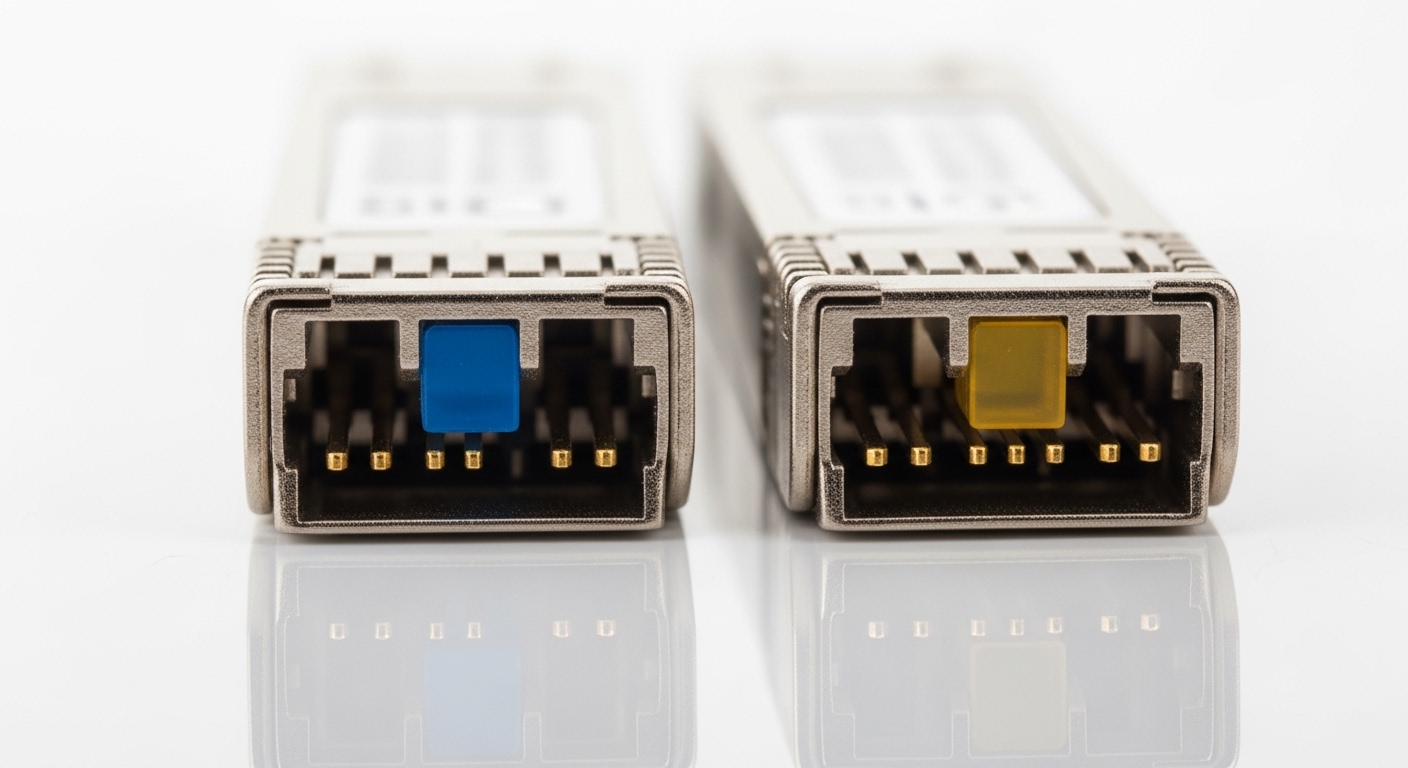
In one deployment I supported, a leaf-spine fabric targeted 800G uplinks using direct attach and pluggable optics, but the optical supply chain tightened for months. The initial bill of material assumed a specific vendor’s high-speed coherent and short-reach options; lead times slipped from 6 to 16+ weeks, with partial shipments arriving without matching DOM behavior. The result was not only delayed cabling acceptance, but also a mismatch between the switch vendor’s optics compatibility list and the substitute part numbers, triggering link flaps during bring-up.
We traced the failure mode to three realities: (1) optics procurement often lags switch procurement, (2) DOM and firmware expectations vary across switch families, and (3) power and thermal envelopes for 800G optics can be tighter than for 400G. For teams planning 800G deployments, the key is to design for “optics substitution without surprises,” while keeping the performance targets intact. 800G cabling best practices
Environment specs: the network we were upgrading and the constraints we hit
The environment was a 3-tier data center topology: 48-port 800G-capable spine switches interconnecting leaf ToR switches. We used single-mode fiber for long pulls and OM4/OM5 for short-reach segments inside the row, with a planned spread of roughly 60 percent short reach and 40 percent medium/long reach. The rollout window required staged cutovers: two pods per week, with maintenance windows capped at 90 minutes per pod.
Hardware constraints mattered. The optics cages and retimers on the switch were rated for specific electrical interfaces, and the vendor required DOM-accessible diagnostics to pass acceptance tests. Operating temperature at the spine row averaged 34 C with cold aisle returns, but transient hotspots during start-of-row airflow balancing reached 42 C. That pushed us to treat optics thermal limits as “deployment-critical,” not just spec-sheet trivia.
| Spec item | Short-reach QSFP-DD / OSFP class (example) | Medium/long-reach coherent CFP2-DCO class | How it impacted our 800G deployments |
|---|---|---|---|
| Target data rate | 800G (multi-lane parallel) | 800G coherent | Both were needed; shortages affected lane compatibility |
| Typical wavelengths | Commonly 850 nm for SR | 1310/1550 nm depending on design | Substitutions had different optics power budgets |
| Connector type | LC (often MPO/LC breakout depending on module) | LC or SC depending on platform | We had to match patch panel polarity and density rules |
| Reach class | OM4/OM5 optimized short reach (tens to ~100 m class) | Single-mode distances (hundreds of meters to tens of km class) | Short-reach parts were easier to substitute; long reach was harder |
| DOM / monitoring | Commonly I2C-accessible diagnostics | Coherent supervision and alarm reporting via vendor-defined maps | DOM mismatches caused link flaps in early tests |
| Operating temperature | Typically industrial ranges; verify -5 to 70 C or similar | Verify vendor-specific coherent module range | Hot aisle transients forced derating checks |
| Power draw (typical) | Often in the single-digit to low teens watts range per module | Higher power per coherent module depending on DSP | We revalidated PSU and airflow margins |
Chosen solution: build a “substitution-safe” optics plan for 800G deployments
We shifted from a “single vendor part number” procurement strategy to a substitution-safe plan. For short reach, we validated multiple compatible transceiver families with known performance under the switch’s optics policy and ensured DOM register behavior matched the acceptance scripts. For medium/long reach, we prioritized coherent modules with strong vendor support for alarm mapping and software integration, because coherent supervision mismatches are harder to debug under time pressure.
We also changed the staging approach. Instead of waiting for all optics to arrive, we pre-certified a small batch of alternates in a lab rack that mimicked real airflow and patch panel loss. For reference, IEEE 802.3 defines key Ethernet physical layer behaviors, while vendor datasheets define actual optics parameters, DOM tables, and supported safety margins. For standards context, see [Source: IEEE 802.3] and vendor transceiver documentation such as [Source: Cisco SFP and QSFP documentation] and [Source: Finisar optical transceivers datasheets]. IEEE 802.3 standard
Pro Tip: Before scaling 800G deployments, capture DOM output from each candidate optic during lab bring-up and compare the alarm thresholds and lane loss counters. In the field, two “compatible” optics can still differ in diagnostic scaling, which can cause your automation to declare links unhealthy even when traffic is fine.
Implementation steps: how we executed under shortage pressure
Inventory and risk triage
We mapped every transceiver to: switch model, cage type, connector type, DOM behavior, and expected reach class. For each part, we assigned a risk score based on supplier lead time and historical failure modes (high-bias current drift, connector contamination sensitivity, or thermal derating). The goal was to identify which optics could be substituted without changing cabling length or patch panel layout.
Lab validation with realistic loss and temperature
We ran a staged validation: optical power level checks, link training stability, and traffic stress tests. For direct attach alternatives, we verified electrical eye margins indirectly via link error counts and forward error correction statistics where exposed by the switch. For fiber classes, we used representative patch cords and measured end-to-end loss to ensure the budget matched the module’s specified launch power and receiver sensitivity.
Field cutover sequencing
We executed pod cutovers in a strict order: bring up spine links first with the substitutes that had passed lab DOM checks, then complete leaf-to-spine cabling once we confirmed stable forwarding. We kept maintenance windows short by pre-loading optics compatibility profiles into the switch management system before the rack was touched. After each cutover, we monitored interface CRC errors, optical receive power, and platform-specific alarm counters for at least 24 hours.
Measured results and lessons learned
With the substitution-safe plan, we avoided a full stop. In our case, the first two pods came online on schedule using validated alternates, and we recovered the remaining pods within three weeks of the original plan despite the shortage. Traffic throughput matched expectations: we saw no sustained drop in east-west flow, and link error rates stayed within the acceptance thresholds set by the switch team during lab testing.
Operationally, the biggest win was reduced rollback events. Early on, we did see transient link flaps during bring-up when optics DOM alarm tables did not align with the automation logic; after we filtered candidates by DOM behavior, the flaps stopped. The lesson for 800G deployments is that optics selection is not only about reach and bandwidth; it is also about diagnostics compatibility, power/thermal headroom, and how your operations tooling interprets alarms.
Common mistakes and troubleshooting tips during 800G deployments
- Mistake: Treating “vendor-compatible” as “DOM-compatible.”
Root cause: Different optics map alarm thresholds and lane loss counters differently, so automation flags links as unhealthy.
Fix: In the lab, compare DOM outputs and alarm semantics from each candidate; update acceptance scripts to use stable indicators (for example, optical power and error counters) rather than raw alarm IDs. - Mistake: Ignoring thermal transients during airflow balancing.
Root cause: Short-reach optics can pass initial tests but drift under sustained 40+ C module temperatures, leading to higher error rates.
Fix: Validate in a rack with realistic airflow; log temperature and optical receive power during 24-hour stress, not just during link-up. - Mistake: Substituting optics without re-checking fiber loss budgets end-to-end.
Root cause: Patch cords, MPO breakouts, and dirty connectors can consume margin, especially when substitute optics have different launch power profiles.
Fix: Measure loss with a calibrated meter and inspect/clean connectors before testing; confirm receive power stays within the optics receiver sensitivity range. - Mistake: Mixing connector types and patch panel polarity during fast staging.
Root cause: LC polarity or MPO polarity errors can mimic “bad optics” behavior, consuming time while the optics are swapped unnecessarily.
Fix: Use a labeling standard and verify polarity through a continuity check before powering optics.
Cost and ROI note: planning TCO when optics lead times spike
In practice, third-party optics can reduce sticker price, but TCO depends on failure rate, validation time, and the cost of downtime. During the shortage, prices for some 800G-capable optics rose sharply; short-reach pluggables might land in the hundreds to low thousands per module, while coherent long-reach optics can be several thousand to much higher depending on reach and DSP complexity. The ROI came from avoiding delayed cutovers: even a single missed maintenance window can cost more than the delta between OEM and third-party optics once labor, risk, and lost uptime are counted.
We also reduced rework by keeping a small “known-good” alternates pool, which lowered validation churn. If you are planning 800G deployments under supply constraints, budget for lab time, connector cleaning consumables, and DOM validation tooling as part of the optics program TCO.
FAQ
Q: What matters most when choosing optics for 800G deployments during shortages?
Reach and bandwidth matter, but diagnostics compatibility (DOM and alarm semantics), thermal headroom, and connector/polarity alignment are what typically decide whether you can scale without flaps. I recommend validating alternates in a lab rack that matches airflow and patching.
Q: Can we substitute different vendors’ optics on the same 800G switch?
Often yes, but only if the switch supports the optics electrically and the platform’s optics policy accepts the DOM behavior. Even if link comes up, your monitoring and automation may misinterpret alarms unless you validate DOM outputs.
Q: How do we validate optical substitutes quickly in the field?
Do a controlled lab or staging validation: confirm link stability, check error counters over a traffic profile, and verify optical receive power stays within the module’s spec. Then run at least several hours of monitoring with the same telemetry your operations tooling uses.
Q: Do coherent optics change the risk profile compared to short-reach optics?
Yes. Coherent modules add DSP complexity and more supervision signals, so alarm mapping and software integration are more sensitive. During shortages, coherent substitutions require extra attention to alarm interpretation and firmware compatibility.
Q: What troubleshooting steps should we try first if links flap after an optics swap?
Start with connector inspection and cleaning, then measure optical power and check DOM alarms. Next, verify patch panel polarity and ensure your automation is not triggering on unsupported or differently scaled alarm IDs.
Q: How should we plan lead times to avoid 800G deployment freezes?
Use a multi-supplier plan and keep a substitution-safe alternates shortlist ready for lab validation. Build a minimum viable batch strategy: qualify a small set early so you can continue cutovers if primary parts slip.
These lessons helped us keep 800G deployments moving even when optical supplies tightened. Next, use 800G cabling best practices to align fiber handling, polarity, and loss budgets with your optics plan.
Author bio: I am a telecom engineer focused on 5G fronthaul and data center interconnects, with field experience
