
When a supplier lead time slips from weeks to quarters, optical resilience becomes a business risk, not just a network goal. This article helps data center and enterprise network engineers keep links stable by planning for transceiver and fiber-path variability, while staying compatible with IEEE and vendor platform constraints. You will get actionable selection criteria, troubleshooting patterns, and a practical cost and ROI view for replacement strategies.
Start with failure-mode mapping, not part numbers
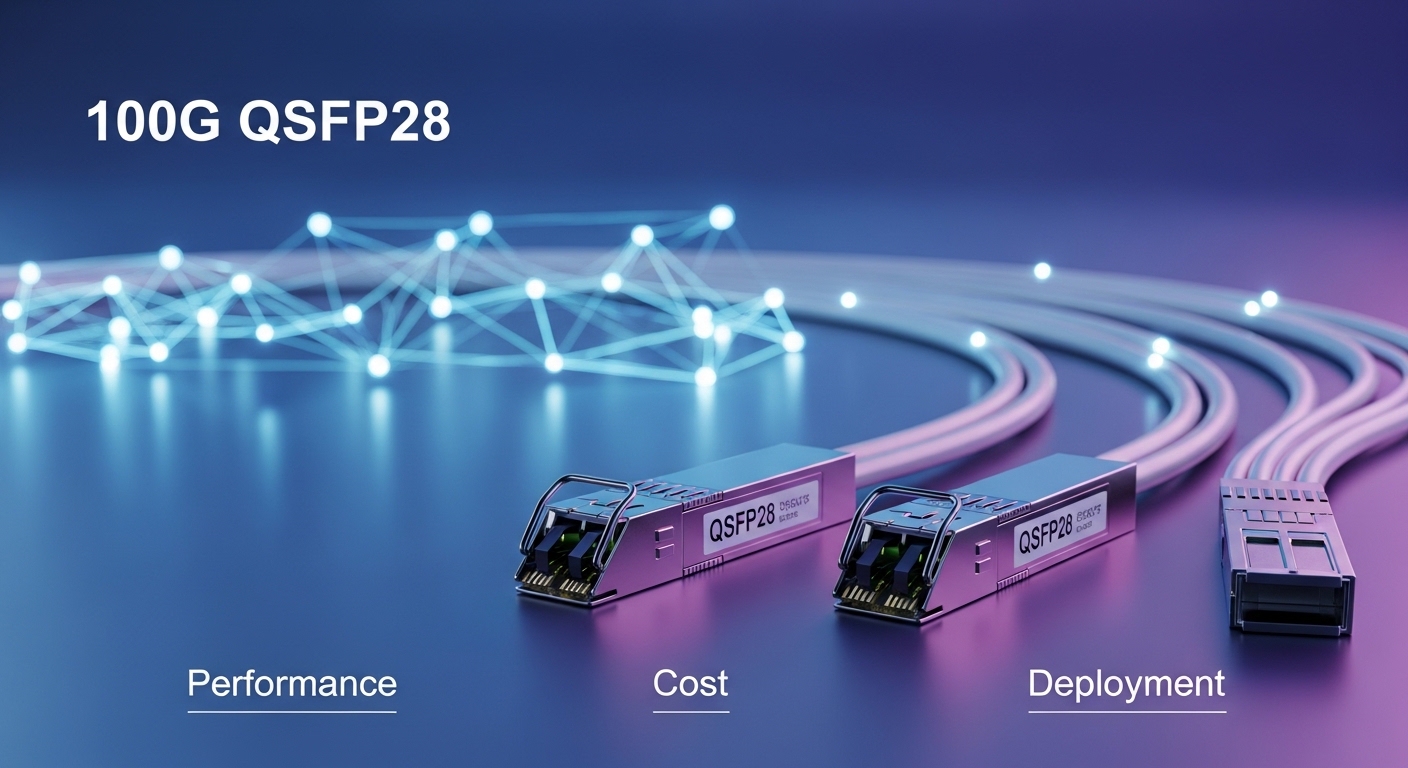
Optical resilience begins by identifying which component failures will actually break service: transceiver optics, optics-to-fiber patching, fiber plant damage, connector contamination, or switch port incompatibility. In supply shortages, the weak point is often not the fiber itself, but the replaceability of the exact optics SKU that your switches currently expect. A failure-mode map should include link budget, expected reach, and the operational environment (temperature swings, dust exposure, and patch panel handling). Treat this as an engineering worksheet you can update when inventory changes.
Build a dependency tree for each critical link
For each critical service path, document: switch model and port type, transceiver type (SFP+, SFP28, QSFP28, QSFP-DD), fiber type (OM3/OM4/OS2), connector style (LC/SC), and the optics electrical standard. Then record the vendor DOM fields you rely on (temperature, bias current, received power) and whether your platform enforces vendor-ID or checks module EEPROM values. This reveals whether you can swap from an OEM module to a third-party module without breaking diagnostics or optics thresholds.
Define acceptable degradation modes during shortages
Not every outage is equal. Decide in advance what “degraded but acceptable” means: for example, switching from 10G SR on OM3 to 10G SR on OM4 may be acceptable if the installed plant supports it, while switching from SR to LR might require different fiber types and patching. During shortages, your goal is to maintain service continuity with the smallest number of changes, while meeting the IEEE reach and optical power requirements for the selected interface.
Standards and optics realities that affect optical resilience
Engineers often assume that “compatible optics” are interchangeable, but optical resilience depends on how closely modules match the interface standard and the host platform’s expectations. For Ethernet optics, IEEE 802.3 defines optical link characteristics by data rate and reach class, while the transceiver behavior is governed by the module’s optical/electrical design and its EEPROM-reported parameters. Vendor transceivers typically align tightly with switch calibration assumptions, while third-party modules can be compatible but may differ in power levels, DOM scaling, or receiver sensitivity margins.
Choose reach class to match fiber plant, not marketing
For short-reach deployments, the most resilient strategy usually centers on SR-class optics with robust link margins on OM4. For longer distances, resilience may require OS2-class optics with tighter attention to fiber attenuation and connector loss. If you are planning for shortages, prioritize optics families that have multiple qualified sources and that operate over a wider temperature range.
Understand DOM and host compatibility constraints
DOM support is essential for resilience because it lets operations detect aging, contamination, or failing modules before a hard outage. Many platforms read DOM values from the module EEPROM and then apply thresholds. If a third-party module reports values that are offset compared to the OEM expectation, alerts may become noisy or, worse, fail to trigger. Before you scale a replacement strategy, validate DOM scaling and alarm thresholds on a staging switch.
Pro Tip: In field validations, you can often improve optical resilience faster by standardizing your patching and DOM threshold policy than by chasing a single “perfect” transceiver SKU. Engineers who align DOM alarms to measured received power percentiles (rather than factory defaults) reduce both false positives and late failures during supply-driven module swaps.
Comparison table: pick optics families that remain swappable
During shortages, resilience improves when you can substitute modules without changing the fiber plant, connector type, or host port mode. The table below compares common Ethernet optics categories used in real deployments, focusing on wavelength, typical reach, connector, and operational temperature. Treat these as engineering baselines; always confirm the exact interface and host support in your switch vendor documentation.
| Category | Example module models | Wavelength | Typical reach (OM/OS) | Connector | Data rate | Operating temp (typ.) | Notes for optical resilience |
|---|---|---|---|---|---|---|---|
| 10G SR | Cisco SFP-10G-SR, Finisar FTLX8571D3BCL | 850 nm | Up to 300 m (OM3), 400 m (OM4) | LC | 10GBASE-SR | 0 C to 70 C (varies) | Often multiple qualified sources; validate DOM scaling and receiver power margin |
| 10G LR | Finisar FTLX1471D3BCL (example LR) | 1310 nm | Up to 10 km (OS2) | LC | 10GBASE-LR | -40 C to 85 C (varies) | More supply variability; fiber attenuation and splice loss dominate link budget |
| 25G SR | FS.com SFP-25GSR (example), OEM equivalents | 850 nm | Up to 100 m (OM3), 150 m (OM4) | LC | 25GBASE-SR | 0 C to 70 C (varies) | Higher bandwidth; ensure consistent OM4 usage and clean connector discipline |
| 40G QSFP+ SR4 | Common QSFP+ SR4 families | 850 nm | Up to 100 m (OM3), 150 m (OM4) | LC | 40GBASE-SR4 | 0 C to 70 C (varies) | Swappability depends on host calibration and split-lane behavior |
For authoritative interface expectations, confirm the Ethernet optics requirements against IEEE 802.3 and the transceiver electrical/optical specifications in the vendor datasheets. Key reference points include link reach classes and receiver sensitivity definitions. IEEE 802.3 standard and vendor datasheets for your specific module and switch platform are your ground truth. [Source: IEEE 802.3] [Source: Cisco transceiver documentation] [Source: Finisar and vendor datasheets]
Selection criteria checklist for optical resilience during shortages
Use this ordered checklist when you must approve an alternative transceiver family. It is designed for fast engineering decisions under time pressure, while still protecting service reliability. The goal is to reduce the probability that “compatible on paper” becomes “failed in production.”
- Distance and fiber type match: confirm OM3 versus OM4 versus OS2, and validate actual measured attenuation from OTDR or fiber certification results.
- Switch compatibility: verify the switch model supports the module type and speed (SFP+ vs SFP28 vs QSFP28) and does not enforce strict vendor-ID policies.
- DOM and threshold behavior: confirm the host reads DOM fields correctly and alarms are calibrated to your measured received power distribution.
- Optical power and link budget margin: compare transmitted power, receiver sensitivity, and expected connector/patch losses; do not rely on maximum reach marketing claims.
- Operating temperature and airflow conditions: ensure the module’s specified temperature range is safe for the rack’s measured inlet air temperature and local hotspot risk.
- Connector and cleaning compatibility: ensure the connector type matches your patch hardware (typically LC) and that your cleaning SOP is enforced.
- Vendor lock-in risk: prefer optics families with multiple qualified vendors and stable EEPROM formats, and pilot third-party replacements before a shortage hits.
- Spare strategy and lead-time buffers: stock modules based on criticality and port utilization, not just total link counts.
Fast validation workflow before production swaps
In a staging window, insert the candidate module into a non-critical port, then run link up/down cycling while monitoring DOM values and switch counters (CRC, FEC, and error states where applicable). For fiber plant verification, measure received optical power with a calibrated power meter or transceiver test set, and compare to your established baseline. If you cannot validate optically, treat the module as non-approved for critical paths.
Common mistakes and troubleshooting patterns
Below are failure modes that frequently reduce optical resilience when teams rush replacements during shortages. Each item includes a root cause and a practical fix you can apply immediately.
“Link-up” but high CRC or intermittent flaps
Root cause: marginal link budget due to higher-than-expected patch panel loss, aging connectors, or a module with lower launch power than the original. Sometimes it is also lane imbalance in multi-lane optics.
Solution: measure received power at the far end, inspect and clean connectors, and verify fiber certification results match the interface reach class. If margins are tight, adjust by moving to OM4-capable SR optics or improving patching loss.
DOM alarms are noisy or never trigger
Root cause: DOM scaling differences between OEM and third-party modules, or host software applying thresholds tuned for the original vendor’s bias current and temperature behavior.
Solution: update monitoring thresholds using measured percentiles from a controlled rollout. Confirm the switch’s DOM interpretation by comparing bias current and received power trends across known-good modules.
Complete link failure after module swap
Root cause: switch port incompatibility, wrong form factor, or strict EEPROM checks where the host rejects modules that do not conform to expected identifiers. Less often, it is a damaged optical ferrule or contamination causing receive failure.
Solution: confirm module type and speed support in the switch compatibility list, verify correct transceiver polarity and patch mapping, and inspect connectors with a fiber scope. Replace only after cleaning and re-measuring; contamination accounts for a large fraction of “it should work” outages.
Temperature-related outages in hot aisles
Root cause: module operating temperature outside spec due to insufficient airflow or a hotspot near the port. Some optics families are less tolerant than others.
Solution: log inlet and outlet temperatures, compare to module datasheet limits, and improve airflow management. If needed, qualify higher-temperature variants and stock them for deployments with hot-spot risk.
Cost and ROI: what optical resilience usually costs
During shortages, the direct cost is usually higher for in-stock modules, but the total cost of ownership depends on failure rates, downtime risk, and engineering time spent on troubleshooting. OEM optics often cost more per unit but can reduce integration time and compatibility uncertainty, especially for DOM and alarm behavior. Third-party optics can cut purchase price, yet you must invest in validation and monitoring tuning to avoid hidden operational costs.
Typical price ranges vary by data rate and reach class: 10G SR modules are often the lowest-cost per port, while 25G and QSFP-DD optics can be significantly higher. In many environments, the ROI comes from avoiding extended outages: even a few hours of downtime in a critical path can outweigh the unit price difference. A practical TCO model should include module cost, expected failure/return handling, labor hours per incident, and the cost of delayed provisioning when spares are not available.
For a realistic planning approach, build a minimum spare pool for each critical optics family and tier it by lead time and swap complexity. When you can standardize on a smaller number of compatible optical families, procurement becomes easier and optical resilience improves.
FAQ
How do I measure optical resilience before a shortage forces action?
Start with an optics-to-fiber dependency map and confirm each critical link’s actual measured reach margin using fiber certification records or OTDR results. Then run a staging validation for at least one alternate module vendor to verify DOM behavior and error counters stability. This gives you a measurable readiness score rather than a theoretical compatibility assumption.
Are third-party transceivers safe during optical resilience planning?
They can be safe if you validate them in your specific switch platform and monitor DOM and error counters under realistic link conditions. The main limitation is not the optical standard itself but host compatibility behavior and DOM scaling differences. Pilot replacements in non-critical ports first, then expand only after thresholds and alerting are tuned.
What fiber plant details matter most for choosing between SR and LR optics?
For SR optics, the key factors are OM3 versus OM4 bandwidth behavior and connector/patch loss. For LR optics, OS2 attenuation, splice loss, and end-to-end loss distribution dominate link budget. In both cases, actual certification data beats assumptions based on cable length.
Why does one module work but another “same class” module flaps intermittently?
This usually indicates a marginal link budget or a contamination/connector issue that is sensitive to received power levels. Another contributor is multi-lane optics lane imbalance where one lane is near sensitivity thresholds. Measuring received power and inspecting connectors with a scope typically identifies the root cause quickly.
How should we stock spares to improve optical resilience under supply constraints?
Stock spares by criticality and substitution complexity: prioritize optics families with multiple qualified sources and low integration risk. Keep a buffer for lead time variability and include at least one alternate vendor during the validation phase. Also ensure that your spare inventory includes the cleaning and inspection tools required to prevent connector-related failures.
Do I need to worry about firmware or software support during transceiver swaps?
Yes. Some platforms change DOM interpretation, threshold defaults, or optics management behavior across software versions. Validate on the intended software release, not just on the current production image, and document which version pairs are known-good for optical resilience.
If you want to operationalize optical resilience, begin by mapping failure modes, then standardize your optics families and validate alternate modules with DOM and error-counter checks. Next, align your change management and monitoring thresholds using measurable baselines; see optical monitoring and DOM thresholds for a practical approach.
Author bio: I have deployed Ethernet optics in enterprise and data center environments, including staged transceiver qualification, DOM threshold tuning, and fiber plant margin validation. I focus on standards-based compatibility and measurable reliability outcomes under supply and lead-time constraints.
