
5G deployments fail in the field more often from mismatched optics than from radio issues. This article helps network and reliability engineers select optical modules for fronthaul, midhaul, and backhaul links by mapping distance, wavelength, power budget, and switch compatibility to real vendor behaviors. You will also get troubleshooting pitfalls, a decision checklist, and an ROI lens for OEM versus third-party optics.
5G transport realities that drive optical module choices
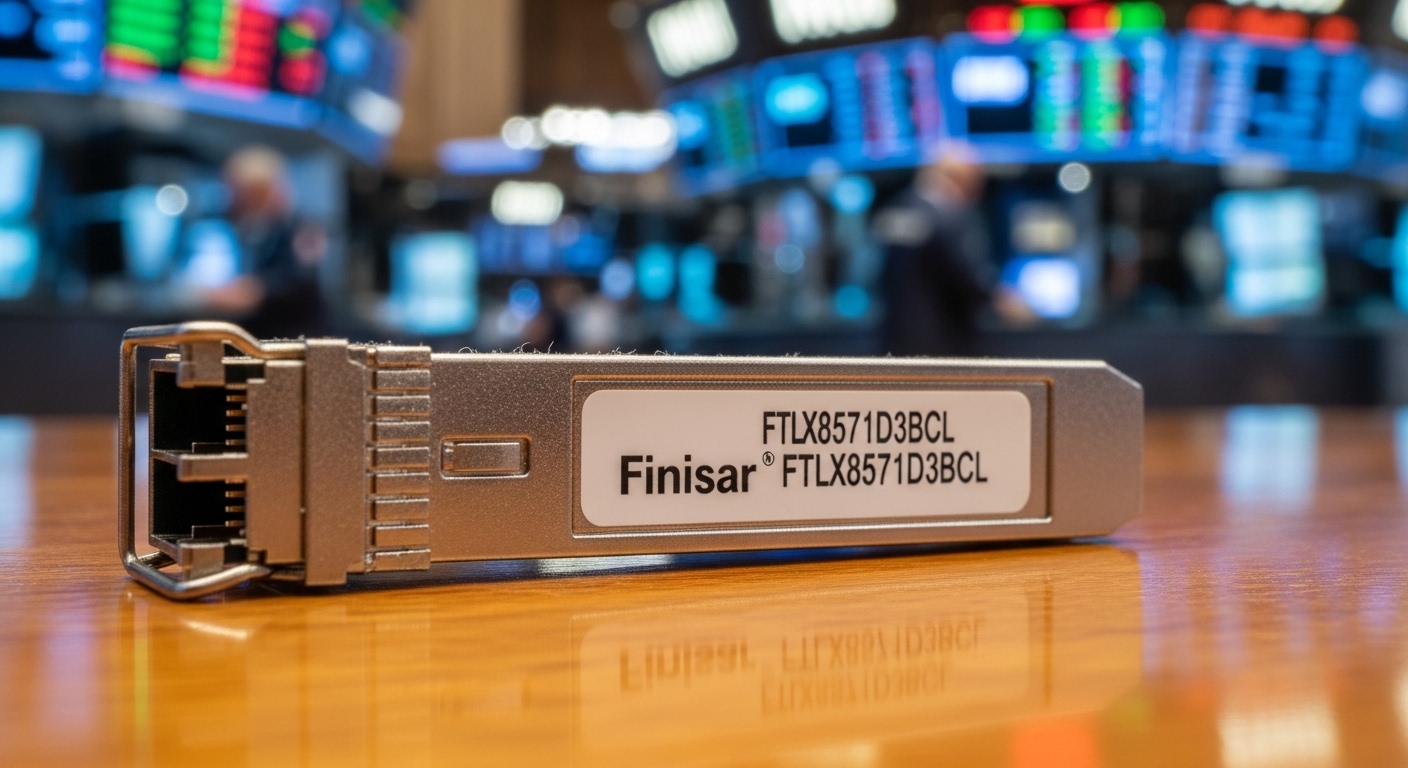
In 5G, fiber links connect distributed units, centralized units, and aggregation layers, often across mixed vendor equipment. Typical constraints include strict latency, frequent maintenance windows, and temperature swings in cabinets and outdoor huts. Engineers usually start with the IEEE physical layer target (for example, IEEE 802.3 Ethernet PHY requirements) and then verify that the optics meet link budget and environmental limits. For standards context, see [Source: IEEE 802.3].
Fronthaul: tighter budgets and higher sensitivity to loss
Fronthaul options such as eCPRI over Ethernet commonly use high data rates with short-to-medium reach, where connector cleanliness and margin become decisive. A small excess loss from dirty LC connectors or aged patch cords can push you beyond the receiver sensitivity and optical power tolerance. In practice, field teams budget for connector loss, splice loss, and fiber attenuation at the module wavelength. If you cannot guarantee cleaning and test results, choose optics with more conservative link margin and validate with an OTDR and live optical power readings during acceptance.
Midhaul and backhaul: reach flexibility but thermal derating matters
Midhaul/backhaul links may span longer distances using SFP28/QSFP28/QSFP-DD or similar module families depending on aggregation rate. Thermal derating is a real reliability driver: many vendors specify temperature ranges like 0 to 70 C (commercial) or -40 to 85 C (extended) and specify performance limits across that range. In outdoor cabinets, internal airflow can be uneven, so modules can run hotter than lab assumptions. Always verify the module’s rated operating temperature and ensure it matches the actual enclosure thermal profile.
Pro Tip: In acceptance tests, record both the module optical transmit power and the received optical power at the far end. Relying only on “link up” hides marginal optical budgets that will fail intermittently during temperature swings or after patch panel re-cabling.
Optical module spec map for 5G: wavelength, reach, data rate, and power
Selection should begin with the transport line rate and the duplex method, then match the wavelength and reach to the fiber plant. Most 5G transport over Ethernet uses SR (short reach), LR (long reach), ER (extended reach), or CWDM/DWDM variants depending on distance and wavelength plan. Engineers also need to check optical power levels, receiver sensitivity, and allowable power range for the exact module model. Vendor datasheets are the authoritative source, but you should also cross-check with Ethernet PHY behavior referenced by IEEE 802.3.
Key specifications engineers must verify
For each candidate module, capture wavelength (nm), nominal reach (km), data rate (Gb/s), connector type (LC/SC/MPO), and compliance class. Then validate optical parameters: transmitter average power, receiver sensitivity, and the allowed optical power range at the receiver. Finally, verify environmental and management details: operating temperature, DOM (Digital Optical Monitoring), and whether the module supports DDMI/MDIO interfaces used by your switches.
Comparison table: common module families used in 5G transport
Below is a practical comparison focusing on the specs that most often cause link failures in the field. Actual values vary by vendor and exact SKU, so treat this as a template for your own datasheet extraction.
| Module family (example SKUs) | Typical wavelength | Connector | Nominal reach | Data rate | Tx / Rx optical power class | Operating temperature | DOM availability |
|---|---|---|---|---|---|---|---|
| SFP28 SR (e.g., Cisco SFP-10G-SR compatible class) | 850 nm (MMF) | LC | 0.1 to 0.3 km (typical with OM3/OM4) | 25 Gb/s | Tx power and Rx sensitivity must be checked per datasheet | 0 to 70 C or -40 to 85 C (by SKU) | Usually yes (DDMI/DOM) |
| QSFP28 SR4 (e.g., Finisar/FS SR4 classes) | 850 nm (MMF) | MPO-12 (often) | 0.15 to 0.4 km (OM3/OM4 dependent) | 100 Gb/s (4 lanes) | Check min/max Tx and Rx power budgets | 0 to 70 C or -40 to 85 C | Usually yes |
| QSFP28 LR4 (e.g., vendor LR4 classes) | 1310 nm (SMF) | LC | 10 km typical | 100 Gb/s (4 lanes) | Verify allowable Rx input power window | 0 to 70 C or -40 to 85 C | Usually yes |
| QSFP28 ER4 (vendor ER4 classes) | 1550 nm (SMF) | LC | 40 km typical | 100 Gb/s | Verify dispersion tolerance and power budget | 0 to 70 C or -40 to 85 C | Usually yes |
If you need concrete examples for procurement and compatibility checks, start by comparing known working optics in your vendor ecosystem. For instance, Finisar and FS.com publish extensive datasheets for 10G/25G/100G optics, such as FS.com SFP-10GSR-85 style part families and Finisar 850 nm SR transceivers. Always confirm exact DOM behavior and temperature grade for the SKU you buy. [Source: vendor datasheets]
Selection criteria checklist for 5G optical module procurement
A good optical module purchase is measurable: it passes acceptance tests on the first deployment, holds margin over temperature, and remains compatible with switch optics monitoring. Use the checklist below in order, and require evidence for each decision point. This approach aligns with reliability practices used in ISO 9001 quality planning: define acceptance criteria, record objective results, and control changes.
- Distance and fiber type: confirm MMF versus SMF, fiber grade (OM3/OM4), and measured end-to-end loss at the target wavelength. Use OTDR or a certified loss test result.
- Data rate and lane mapping: verify the switch port supports the exact module form factor and speed mode. Confirm whether your port expects 25G, 50G, or 100G lane behavior.
- Wavelength and reach class: select SR/LR/ER/CWDM/DWDM based on actual link reach and installed dispersion characteristics. Do not rely on “nominal reach” marketing numbers.
- Optical power budget window: ensure the module transmitter power stays within the receiver’s allowable input range at worst-case conditions. Many failures come from “too much” or “too little” optical power, not only loss.
- DOM and monitoring compatibility: confirm DOM values (DDMI/DOM parameters) and alarm thresholds match what your switch software expects. Validate with a test install before scaling.
- Operating temperature and thermal derating: match module grade to enclosure conditions. If your cabinet can reach sustained high internal temperatures, prefer extended grade optics.
- Switch vendor and firmware compatibility: check optics compatibility lists and known breakages after firmware upgrades. Consider running a small pilot after each major firmware change.
- Vendor lock-in and supply risk: evaluate OEM lead times and second-source options. Third-party can be valid, but require proof of interoperability and a documented return process.
When you compare suppliers, treat the module as a controlled product with traceable lot numbers. For ISO 9001 alignment, require incoming inspection results (optical power, DOM sanity checks) and maintain calibration records for any in-house test equipment used for acceptance.
Common mistakes and troubleshooting for 5G optical module links
Most field issues cluster into a few repeatable failure modes. If you standardize cleaning, measurement, and compatibility validation, you reduce both outage frequency and mean time to repair. Below are concrete mistakes with root causes and practical solutions.
Pitfall 1: “Link up” with no margin, then intermittent flaps
Root cause: the optical budget is marginal, often due to underestimated connector loss, aged patch cords, or wrong fiber grade assumptions (OM3 vs OM4). Temperature changes shift laser output and receiver conditions, triggering link renegotiation.
Solution: during commissioning, measure Tx power and received Rx power end-to-end and compare to the module’s specified sensitivity and power range. Clean connectors using a verified procedure and retest after every cabling change. If possible, perform a controlled temperature soak test for a sample set.
Pitfall 2: DOM mismatch leading to port errors or forced downgrades
Root cause: some switches enforce DOM thresholds or require specific diagnostics behavior. A third-party module might report values with different scaling or alarm semantics, causing the switch to treat the link as degraded.
Solution: validate DOM compatibility in a lab or pilot rack using the exact switch model and firmware version. Capture DOM readings from stable links and confirm that alarms do not trigger under normal operating conditions. If issues occur, fall back to an optics list-approved SKU or negotiate a replacement with matching DOM behavior.
Pitfall 3: Wrong polarity or mis-mapped MPO/MTP breakout lanes
Root cause: polarity errors in duplex fiber or incorrect lane mapping in MPO/MTP trunks can still show partial connectivity but fail at higher utilization or after re-patching. In dense 5G shelters, cables are often moved during upgrades.
Solution: use a polarity test method consistent with your patching standard, and label both ends of every trunk. For MPO/MTP, verify lane mapping against the vendor’s recommended harness and ensure the correct polarity swap or adapter is used. Retest after any patch panel work.
Pitfall 4: Thermal overstress from cabinet airflow constraints
Root cause: modules rated for 0 to 70 C can fail early when installed in enclosures exceeding that internal temperature. Field cabinets can trap heat, especially during summer peaks or when fans degrade.
Solution: instrument the cabinet with temperature probes and verify sustained conditions. Specify extended temperature optics where needed (for example, -40 to 85 C grade), and maintain airflow paths. Track failure counts by location to identify hotspots.
For electrical and optical interface assumptions, consult IEEE 802.3 for PHY behaviors and vendor documentation for module compliance requirements. [Source: IEEE 802.3]
Cost, TCO, and reliability impact in 5G deployments
Optical module pricing varies widely by speed, reach, and temperature grade. In many enterprises and carriers, a typical 10G/25G class module might cost in the range of tens to low hundreds of dollars per unit, while 100G optics can be several hundred dollars depending on SR versus LR versus ER and the connector type. OEM optics can cost more but may reduce compatibility risk and shorten qualification cycles.
For TCO, focus on the full lifecycle: installation labor, test equipment time, spares stocking, and failure handling. A reliability lens matters: if your organization tracks MTBF, treat optics as components with measurable failure rates that depend on thermal stress, connector cleanliness, and handling practices. Third-party can reduce purchase cost, but you may pay back through more frequent RMA cycles or longer outages if interoperability issues appear after firmware upgrades.
Practical budgeting approach: keep an approved optics list for each switch model and firmware baseline, and maintain a spares ratio aligned to your maintenance strategy. For example, for a critical fronthaul aggregation ring, you might stock additional spares for each optic family to reduce MTTR, even if unit cost is higher.
Pro Tip: When comparing OEM versus third-party, compare not only purchase price but also the tested DOM alarm behavior and the return policy terms. In field reliability reviews, these two factors often dominate outage cost when optics are swapped under time pressure.
FAQ: choosing optical modules for 5G links
What fiber type should I assume for 5G fronthaul?
Do not assume. Verify installed plant documentation and measure end-to-end loss. If you have MMF, SR optics may suffice; for longer distances or better aggregation, SMF with LR/ER optics is often required. Use OTDR or certified loss tests for confirmation.
How do I confirm optical module compatibility with my switch?
Start with the switch vendor optics compatibility list and confirm the exact module form factor and speed mode. Then run a pilot install with the same switch firmware version you will deploy. Validate DOM readings and check for port errors or forced downgrades during normal traffic.
Are extended temperature optical modules worth it in outdoor 5G cabinets?
Often yes, when internal cabinet temperatures can exceed the commercial range due to limited airflow. Extended-grade optics reduce early-life failures driven by thermal overstress. Measure enclosure temperature during peak conditions and choose the grade that covers worst-case sustained operation.
What is DOM, and why does it matter for operations?
DOM (Digital Optical Monitoring) provides real-time diagnostics such as transmit power, receive power, and temperature. Operations teams rely on these signals for proactive maintenance and to detect marginal optics before outages. Compatibility between module DOM behavior and switch monitoring thresholds can affect whether alarms trigger correctly.
Can I mix optical modules from different vendors in the same rack?
Yes in many cases, but you must validate interoperability. Even if wavelength and reach match, DOM scaling, alarm thresholds, and firmware enforcement can differ. Use an approved optics list per switch model and standardize on validated SKUs for a given link type.
What troubleshooting steps should I take first during a link failure?
First confirm physical layer basics: connector cleanliness, polarity, and correct lane mapping for MPO/MTP. Next measure optical Tx and Rx power at both ends and compare to the module datasheet limits. Finally, check DOM alarms and switch logs to determine whether the failure is optical budget related, monitoring related, or thermal related.
Selecting optical modules for 5G is a systems job: specs, fiber measurements, switch compatibility, and thermal reality must agree. If you want the next step, use optical module link budget to formalize your acceptance test plan and reduce commissioning surprises.
Author bio: I am a reliability engineer who has commissioned fiber optics in carrier transport and data center leaf-spine networks, focusing on link budgets, DOM monitoring, and failure analysis. I apply ISO 9001 style quality controls and MTBF-minded testing to reduce outage risk from optical module mismatches.
