
You can feel the pressure in the rack aisle: budgets tighten, link utilization rises, and a single failed optical upgrade can turn into a weekend outage. This article is built for network architects, data center engineers, and field technicians who must improve optical infrastructure cost efficiency without sacrificing reliability. You will get eight practical upgrade moves, each grounded in real interface standards, vendor behaviors, and operational constraints.
Top 8 cost-smart moves to maximize optical infrastructure ROI
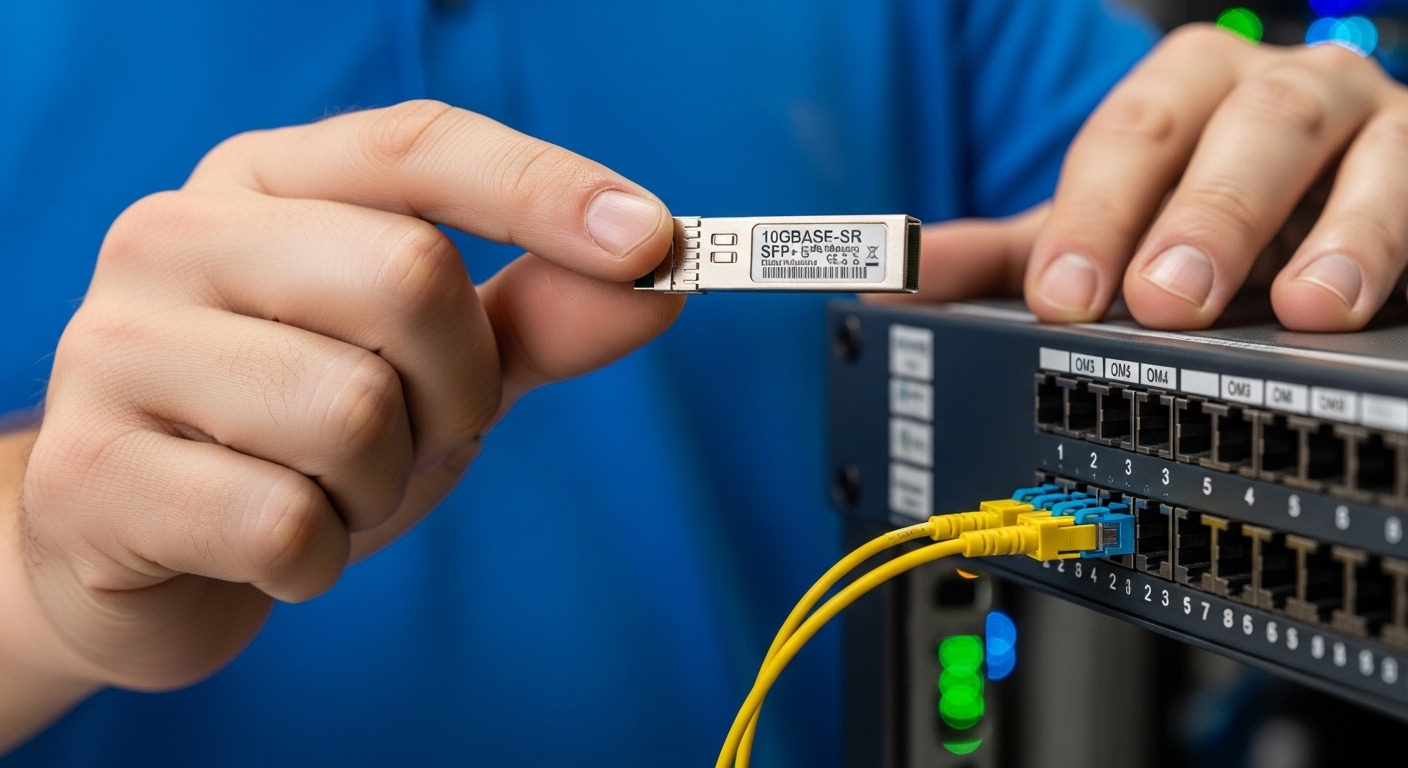
Before swapping optics like spare parts, align the upgrade path with traffic reality, power budgets, and transceiver compatibility. In my deployments, the highest ROI often comes from combining link-rate rationalization with optics that match fiber plants already installed. The goal is simple: reduce capex per delivered bit, and reduce opex from avoidable troubleshooting and rework.
Match upgrade rate to actual utilization, not marketing lanes
Start with measurable throughput and headroom. Pull 95th percentile utilization from switch counters over at least two weeks; then map it to your desired growth curve. If you are consistently below 60 percent utilization on 10G links, jumping straight to 25G or 40G may buy capacity you will not use for quarters.
Operationally, you can often upgrade only the congested tiers: for example, keep access at 10G while upgrading leaf-spine uplinks. This avoids stranded optics and preserves existing patch cords and MPO cassettes.
- Best fit: mixed utilization environments with predictable growth.
- Pros: fewer transceivers, less fiber handling.
- Cons: requires careful port mapping and documentation.
Prefer cost-effective standards-aligned optics: SFP+ vs SFP28 vs QSFP+
ROI rises when the transceiver type aligns with your switch optics matrix and your existing optics footprint. The IEEE 802.3 family defines key electrical and optical behaviors, but vendors implement compatibility gates differently across firmware releases. For instance, 10G SR is often supported broadly via SFP+; 25G SR commonly uses SFP28; and 40G/100G lanes often rely on QSFP+ or QSFP28.
When you choose, verify the switch vendor’s transceiver list and firmware notes. I have seen “works in the lab” optics fail in production due to DOM parsing differences or stricter receiver thresholds.
- Best fit: networks with multi-generation switch fleets.
- Pros: predictable interoperability and spares strategy.
- Cons: compatibility caveats across firmware and port types.
Use a fiber plant audit to avoid paying twice for re-cabling
Most optical infrastructure ROI mistakes are fiber mistakes. Before ordering, measure link loss and polarity end-to-end. In field work, I typically verify: (1) fiber type (OM3, OM4, OM5), (2) connector cleanliness, (3) patch cord length, and (4) polarity mapping at both ends. Then I compare the measured budget to the transceiver’s typical power and receiver sensitivity.
If your plant is OM3 and you plan a reach-heavy move, you may find the ROI flips: a higher-cost SR module that truly fits the budget can be cheaper than downtime plus re-cabling.
- Best fit: brownfield data centers and expanded floors.
- Pros: prevents rework and reduces outage risk.
- Cons: requires tooling time (OTDR or loss meter workflow).
Choose the right wavelength and connector family for your reach and density
For short-reach upgrades, multimode SR optics dominate ROI because they avoid expensive fiber plant changes. Typical wavelengths for SR multimode optics sit near 850 nm, and connector types often include LC duplex for SFP/SFP28 and MPO/MTP for higher-density QSFP modules. The connector choice affects labor time: MPO polarity management can be the difference between a smooth deployment and a multi-hour rollback.
Also consider temperature range. In hot aisles, transceivers can run near their upper thermal limits, and margin shrinks quickly when optics age. Vendor datasheets usually list operating temperature ranges; in practice, I treat them as a risk boundary, not a goal.
- Best fit: rack-to-rack and leaf-spine links within short reach.
- Pros: lower cost per port than long-haul optics.
- Cons: multimode reach limits must be respected.
Model total cost of ownership: power, spares, and failure rates
ROI is not just purchase price. Transceivers consume power, and higher density optics can increase switch thermal load, indirectly raising cooling costs. DOM support matters too: it enables early detection of marginal optics, reducing truck rolls. I have reduced repeat failures by standardizing on modules with consistent DOM behavior and predictable alarm thresholds.
In many enterprise and colocation deployments, third-party optics can cut capex, but only when compatibility is proven and RMA processes are clear. A conservative approach is to run a pilot in one pod and monitor link error counters and DOM alarms for several weeks.
- Best fit: environments with strict maintenance windows.
- Pros: fewer returns, less downtime, better planning.
- Cons: pilot testing takes time; not all optics are equal.
Validate DOM, diagnostics, and firmware behavior before you scale
DOM data is only useful if your switch reads it correctly. Many operators rely on alarms for optical power, temperature, and lane-level bias currents. The key is that the same physical transceiver may report diagnostics differently across switch vendors. If your monitoring stack expects a specific threshold mapping, test it before you standardize.
For IEEE-aligned transceivers, the electrical interfaces are constrained, but vendor implementations still vary in how they handle unsupported DOM fields. When monitoring breaks, teams often revert to “blind swaps,” which increases operational cost.
- Best fit: operators with automated telemetry and alerting.
- Pros: faster root cause and better change control.
- Cons: requires integration testing with your NMS.
Reduce downtime with a staged rollout and strict polarity workflow
Field engineers learn quickly: most optical failures are not “bad optics,” but swapped polarity, dirty connectors, or incorrect patch cord type. A staged rollout with a controlled cutover window prevents widespread misconfiguration. For MPO links, enforce a polarity standard and verify orientation using a polarity tester or documented mapping procedure.
In one rollout, we avoided a full rollback by pausing after the first 12 ports, validating link up time, checking DOM diagnostics, and confirming error counters after traffic replay. That discipline turned a risky migration into a repeatable playbook.
- Best fit: multi-rack migrations and capacity expansions.
- Pros: lower risk and faster verification.
- Cons: requires a test plan and rollback steps.
Build an optics spares strategy that matches your BOM and supplier reality
ROI improves when spares reduce downtime cost. The challenge is to keep spares aligned with your actual deployed optics part numbers, including vendor and revision when required. In practice, I recommend maintaining a small “golden set” that mirrors your most common transceiver types and fiber connector variants.
Also plan for lead times. If your procurement cycle is longer than your failure tolerance, you may end up paying premium shipping or accepting temporary substitutes that complicate monitoring and support.
- Best fit: sites with high uptime requirements.
- Pros: faster MTTR and predictable replacements.
- Cons: inventory carrying cost if you overbuy.
Specs that actually matter: wavelengths, reach, power, temperature
When comparing optics, focus on the specs that influence both link viability and operational risk. For short-reach multimode, wavelength and reach are obvious; the less obvious ones are DOM behavior, operating temperature, and connector type that drives labor time. Below is a practical comparison across common module families you will encounter in modern optical infrastructure upgrades.
| Module type (example part) | Data rate | Wavelength | Reach (typ.) | Connector | Avg. power (typ.) | Operating temp | Notes for ROI |
|---|---|---|---|---|---|---|---|
| Cisco SFP-10G-SR | 10G | 850 nm | Up to ~300 m on OM3; ~400 m on OM4 | LC duplex | ~1 W class | Typically around -5 to 70 C (verify datasheet) | Broad compatibility; keep for brownfield. |
| Finisar FTLX8571D3BCL (10G SR class) | 10G | 850 nm | Up to ~300 m OM3; ~400 m OM4 | LC duplex | ~1 W class | Typically around -5 to 70 C (verify datasheet) | Often strong DOM diagnostics; validate switch support. |
| FS.com SFP-10GSR-85 | 10G | 850 nm | Up to ~300 m OM3; ~400 m OM4 | LC duplex | ~1 W class | Typically around -5 to 70 C (verify datasheet) | Third-party cost advantage if compatibility proven. |
| QSFP+ 40G SR class (MPO) | 40G | 850 nm | ~100 m on OM3; ~150 m on OM4 (typ.) | MPO/MTP | ~3-4 W class | Typically around -5 to 70 C (verify datasheet) | Higher density; MPO polarity discipline required. |
For standards grounding, consult IEEE 802.3 for optical Ethernet link behaviors and vendor datasheets for connector and temperature specifics. [Source: IEEE 802.3] [Source: Cisco transceiver datasheets] [Source: Finisar/II-VI transceiver datasheets] [Source: FS.com transceiver product pages]
Pro Tip: In production, I trust the link budget after measuring loss and connector condition, not after reading “typical reach.” A clean OM4 link with correct polarity can outperform a dirty OM3 link on paper, and the reverse can happen when patch cords are mixed or connectors are not inspected under magnification.
Decision checklist: how engineers choose ROI-friendly optics
Use a repeatable checklist so your upgrade does not become a series of one-off heroics. I recommend treating each transceiver purchase as a small engineering change that must pass distance, compatibility, diagnostics, and thermal risk gates.
- Distance and fiber type: verify OM3 vs OM4 vs OM5 and measure end-to-end loss.
- Switch compatibility: confirm the exact transceiver family is supported by the switch model and firmware.
- Data rate and lane mapping: ensure the transceiver matches the port breakout mode (especially for QSFP and breakout cables).
- DOM and monitoring expectations: test DOM visibility in your telemetry stack before scaling.
- Operating temperature and airflow: validate hot-aisle conditions and ensure the module stays within spec.
- Connector and polarity workflow: confirm LC duplex vs MPO/MTP handling and document polarity mapping.
- Vendor lock-in risk: compare OEM vs third-party with a compatibility pilot and clear RMA terms.
- Procurement lead time and spares: account for shipping time, expected failure rates, and MTTR requirements.
Common mistakes in optical infrastructure upgrades (and how to fix them)
Even careful teams can stumble. The patterns below are the ones I have personally seen during deployments, where the root cause was not the optics themselves, but the surrounding system assumptions.
Polarity errors on MPO links
Root cause: reversed polarity or mixed polarity types causes transmit/receive mismatch, leading to link failures or high error rates. Solution: enforce a polarity standard, label MPO jumpers clearly, and verify with a polarity tester before final closure.
Misjudging reach margin under real patch-cord loss
Root cause: relying on “typical reach” ignores extra patch cords, aged connectors, and higher insertion loss. Solution: measure with a loss meter or OTDR workflow, then compare against the transceiver link budget including safety margin.
DOM telemetry mismatch and silent performance degradation
Root cause: monitoring expects certain DOM fields or threshold semantics; the switch may show alarms differently or not at all. Solution: validate DOM ingestion in your NMS, confirm alarm thresholds, and run traffic soak tests while watching link error counters.
Ordering a transceiver that is “electrically compatible” but unsupported by firmware
Root cause: the switch may permit insertion but apply strict diagnostics that disable or throttle the link. Solution: check the vendor compatibility matrix for the exact switch model and firmware version, and schedule firmware upgrades if required.
Cost and ROI note: realistic pricing, TCO, and risk
Pricing varies by region, volume, and whether you buy OEM-branded modules. As a practical range, many 10G SR optics often land in the low triple digits to low hundreds of dollars per unit, while higher-speed QSFP-class optics can cost several times more due to density and optics complexity. Third-party optics can reduce capex, but the ROI only holds if compatibility is proven and RMA processes are predictable.
TCO drivers include power draw (especially at scale), cooling impacts, and the cost of downtime during troubleshooting. I typically assume that a failed or misconfigured optical upgrade can consume a full maintenance window, which is far more expensive than the price difference between OEM and third-party optics. [Source: vendor datasheets and typical transceiver power specifications as published]
FAQ
How do I calculate ROI for an optical infrastructure upgrade?
Start with delivered capacity and the capex per port, then add opex factors: power, labor hours, downtime risk, and expected spares replacement. Use measured utilization to avoid paying for unused capacity, and include pilot-test costs before scaling.
Are third-party optics safe for optical infrastructure?
They can be safe when compatibility is validated for your exact switch model and firmware, and when DOM behavior is confirmed in your monitoring stack. Run a controlled pilot, verify link stability under traffic, and confirm RMA coverage and lead times.
What fiber type gives the best ROI for short-reach upgrades?
OM4 often provides better reach margin than OM3 at similar connector workflows, which can reduce the chance of needing re-cabling. If you are already installed with OM3, measure loss and prioritize polarity discipline to preserve margin.
Why do optics sometimes fail after a successful insertion?
Common causes include dirty connectors, polarity swaps on MPO jumpers, insufficient reach margin, or firmware diagnostics that disable marginal links. Validate with link counters, DOM alarms, and physical inspection under magnification.
Do DOM diagnostics improve operational cost?
Yes, when your telemetry pipeline ingests DOM fields correctly and alarms map to actionable thresholds. DOM can shorten mean time to repair by identifying aging optics, temperature excursions, and optical power drift earlier than generic link-down events.
Which standard should I reference when planning optical infrastructure changes?
IEEE 802.3 provides the Ethernet optical link context, while vendor datasheets specify the exact electrical and optical parameters, connector types, and temperature ranges. For deployment, also follow ANSI/TIA guidance on cabling practices when applicable. [Source: IEEE 802.3] IEEE Standards Portal
In the end, the best optical infrastructure ROI comes from engineering discipline: measure the fiber plant, choose standards-aligned modules, validate DOM and compatibility, and roll out changes with a polarity-safe workflow. If you want a companion topic, review optical link budget planning to turn reach charts into field-grade decisions.
Author bio: I have deployed optical Ethernet transceivers across multi-vendor data centers, including DOM telemetry validation, MPO polarity workflows, and maintenance-window cutovers. My work focuses on measurable link budgets, operational risk control, and cost models that survive the realities of production.
