
When engineers try to standardize configuration and telemetry across optical networks using OpenConfig, the biggest surprises usually come from physics, not software. This article helps network architects, automation leads, and field engineers understand where OpenConfig assumptions break down in real WDM, OTN, and coherent transport environments. You will get practical selection criteria, a troubleshooting playbook, and a ranked path to minimize risk during deployment.
Top 8 OpenConfig challenges in optical networks (and what to do)
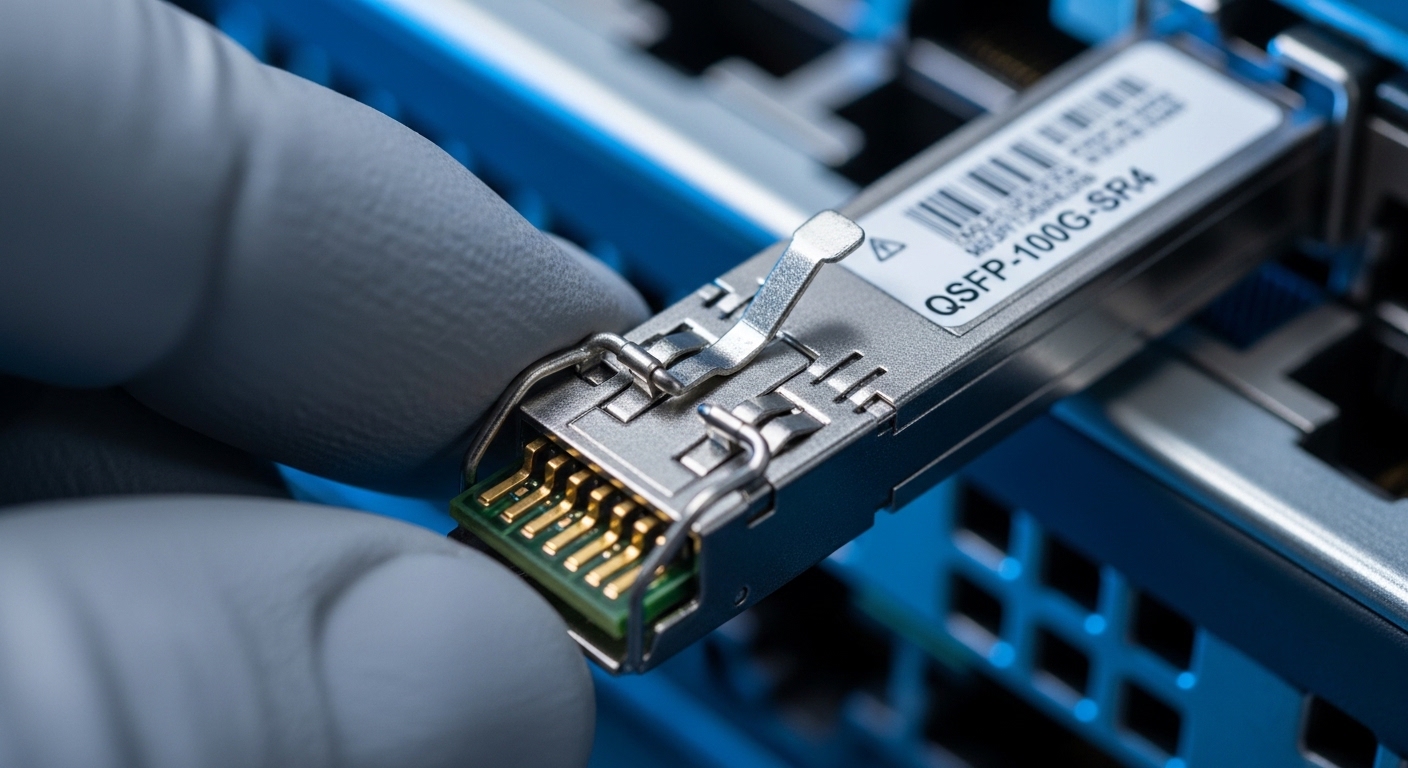
Data model mismatch: intent vs the reality of transceivers
OpenConfig is strongest when the device cleanly exposes configurable objects that map to the same abstractions across vendors. In optical networks, many “settings” are actually coupled constraints across optics, DSP modes, line interfaces, and protection states. For example, changing a coherent module’s operating mode can require coordinated changes to the transponder, muxponder/OTN wrapper, and the line system settings, even if OpenConfig presents them as separate leaves.
In practice, you may find that OpenConfig coverage is partial: it models link-level parameters well for Ethernet interfaces, but optical parameters (laser bias, FEC mode availability, optical power thresholds) are exposed via vendor-specific RPCs or vendor YANG modules. That creates a “works in lab, diverges in production” gap. A common mitigation is a hybrid approach: keep OpenConfig for the transport-facing interface objects, but gate optical-specific operations through vendor APIs.
- Best fit scenario: Leaf-spine Ethernet overlays on top of transport layers where only a subset of optical parameters must be automated.
- Pros: Faster standardization; less vendor-specific branching.
- Cons: Optical parameters may remain out of model coverage.
Capability discovery failures: “supported” leaves are not always usable
OpenConfig workflows often assume capability discovery is accurate and stable. In optical networks, capability sets can be conditional on warm-up state, optics insertion detection, or the current protection role. A transponder may advertise that a tuning or power setting is writable, but the device can reject the operation if the line system is in a protected switching state or if the module temperature is outside a safe range.
Field engineers see this as intermittent “validation errors” that vanish after a reboot or after the optics complete initialization. To avoid churn, build idempotent automation that includes pre-checks for operational state and alarms, not only schema support.
Pro Tip: Treat OpenConfig “supported” as a schema claim, not an operational guarantee. In coherent systems, the same writable leaf can be blocked during protection events or while the DSP is re-acquiring carrier; enforce a two-phase workflow: validate operational state, then apply configuration, then re-verify.
- Best fit scenario: Environments with frequent protection switching or planned maintenance windows.
- Pros: Fewer failed commits and fewer manual rollbacks.
- Cons: Requires additional operational-state logic beyond schema checks.
Telemetry gaps: streaming metrics are not uniform across optical layers
OpenConfig telemetry is often implemented via gNMI/streaming and relies on consistent metric naming, sampling behavior, and timestamping. Optical networks, however, span multiple layers: optical transceivers, OTN wrappers, and switching elements. Some devices expose optical power and BER/SNR-derived metrics; others expose only aggregated link health. Even when metrics exist, sampling rates and update latency can differ widely, which breaks correlation during incident response.
For example, a coherent transponder might update OSNR every 1 second, while the OTN layer updates FEC status every 5 seconds and the alarm subsystem updates on threshold crossing. If your automation expects synchronized time series, you will misdiagnose root cause. The fix is to define an “observability contract” per layer: choose canonical metrics, document update cadence, and implement tolerances in analytics.
- Best fit scenario: NOC workflows that need consistent alerting across sites.
- Pros: Better incident accuracy if you standardize metric behavior.
- Cons: Requires upfront telemetry mapping and acceptance testing.
Transaction semantics: commits, rollbacks, and partial reconfiguration
OpenConfig typically relies on transaction-like commit behavior. Optical devices often perform partial reconfiguration behind the scenes: a “commit” may trigger a sequence of actions that temporarily disrupt traffic or renegotiate FEC/protection. Some platforms cannot guarantee atomic commit across multiple optics and line interfaces. Instead, they apply changes in stages, which can leave the network in a transient mixed state.
This is especially risky in multi-chassis or ring topologies where traffic steering depends on stable protection roles. If your automation assumes atomicity, you can cause brief outages or protection flaps. Mitigation includes staged rollouts with maintenance windows, pre-emptive route draining, and post-change verification tied to optical KPIs (e.g., optical power levels, FEC lock, alarms cleared).
- Best fit scenario: Controlled change windows with automation guardrails.
- Pros: Reduced human error compared to manual CLI.
- Cons: Requires careful orchestration for atomicity limitations.
Timing and synchronization: optical tuning isn’t instantaneous
Unlike Ethernet interface settings, coherent tuning involves DSP training, carrier acquisition, and FEC mode engagement. OpenConfig configuration pushes can arrive faster than the device can converge. If you poll for readiness using only generic operational status, you may proceed too early and then see cascading failures.
Engineers often deploy a “convergence gate”: after applying a change, wait for specific optical readiness indicators such as FEC lock state, Rx power above threshold, and absence of LOS/LOF alarms. This is where field measurements matter: typical convergence can range from tens of seconds to a few minutes depending on module type and line conditions.
- Best fit scenario: Automated provisioning of coherent links across multiple sites.
- Pros: More reliable end-to-end provisioning.
- Cons: Slower workflows due to convergence waits.
Fiber and optics constraints: what OpenConfig cannot infer
OpenConfig does not “know” your physical plant. But optical networks are constrained by fiber attenuation, dispersion, connector cleanliness, and patch panel routing. Two links with the same logical configuration can behave differently if one has higher insertion loss or if a transceiver is marginally within operating temperature. In the field, these differences show up as increased error rates or OSNR degradation, not as configuration mismatches.
To manage this, treat OpenConfig as configuration standardization, not an excuse to skip optical plant verification. Integrate plant checks such as OTDR results and connector inspection into your provisioning workflow, and use optical performance baselines per route.
- Best fit scenario: Multi-site deployments where physical variability is expected.
- Pros: Better correlation between config and performance.
- Cons: Adds process steps and data collection requirements.
Interoperability and vendor lock-in risk
OpenConfig aims to reduce vendor-specific drift, but optical systems still depend on vendor implementations of transceiver management, alarm thresholds, and protection behaviors. If you rely on vendor-specific extensions to achieve full optical coverage, you reintroduce lock-in. Conversely, if you constrain yourself to the common OpenConfig subset, you may lose critical optical controls.
A pragmatic approach is to define a portability boundary: identify which configuration objects are truly cross-vendor and which are “best-effort.” Keep a compatibility matrix during procurement so that your automation pipeline can enforce minimum feature support across transponder families.
- Best fit scenario: Procurement-driven standardization with multiple vendors.
- Pros: Lower lock-in if you stay within validated objects.
- Cons: Some optical features remain vendor-dependent.
Safety limits: thresholds, alarms, and safe defaults
OpenConfig can set thresholds for alarms and performance metrics, but optical devices also have inherent safety rules for laser power, temperature, and protection mode transitions. If your automation sets overly aggressive thresholds, it can create alert storms or trigger protective shutdown behavior. If it sets thresholds too loosely, you may miss early degradation.
In operations, you want thresholds aligned to vendor recommended ranges and to your link’s historical performance. This typically requires a calibration phase: observe baseline metrics under nominal traffic, then adjust thresholds with conservative margins.
- Best fit scenario: Large-scale deployments where alert fatigue must be controlled.
- Pros: More stable NOC operations.
- Cons: Needs baseline data and change management.
Optical module specs you must reconcile with OpenConfig
Even if OpenConfig standardizes configuration, the optical layer still hinges on transceiver capabilities: wavelength band, reach, power budget, connector type, and operating temperature. The table below illustrates how common short-reach optics differ, which impacts what tuning and thresholds are realistic for your automation.
| Transceiver example | Data rate | Wavelength | Reach | Connector | Typical power (TX/RX) | Operating temperature | Relevance to OpenConfig |
|---|---|---|---|---|---|---|---|
| Cisco SFP-10G-SR | 10G | 850 nm | ~300 m (OM3) | LC | Low mW class | 0 to 70 C (typical) | DOM thresholds and link state modeling |
| Finisar FTLX8571D3BCL | 10G | 850 nm | ~300 m (OM3) | LC | Low mW class | 0 to 70 C (typical) | DOM support and alarm mapping consistency |
| FS.com SFP-10GSR-85 | 10G | 850 nm | ~300 m (OM3) | LC | Low mW class | 0 to 70 C (typical) | Vendor variance in DOM behavior affects telemetry |
For coherent pluggables and long-reach optics, the variance is even larger: reach depends on modulation format, line amplification, and dispersion compensation. Your OpenConfig design should therefore include an optics capability inventory and validate that your telemetry mapping covers the DOM fields or vendor telemetry objects you rely on.
Selection criteria checklist for OpenConfig in optical networks
Use this ordered checklist to decide how far you can push OpenConfig standardization without risking instability. The goal is to reduce operational surprises while keeping enough control to manage optical KPIs.
- Distance and link budget: confirm reach assumptions and fiber plant quality; ensure your optical KPIs align with expected OSNR/SNR behavior.
- Switch and transponder compatibility: validate OpenConfig coverage and any vendor YANG modules for the exact hardware families.
- DOM and telemetry support: verify which DOM fields exist (TX power, RX power, temperature, bias currents) and whether telemetry cadence is documented.
- Commit and rollback behavior: test whether changes are atomic or staged; measure traffic impact and convergence time.
- Operating temperature and safety limits: confirm module temperature ranges and how thresholds interact with protective shutdown.
- Interoperability and vendor lock-in risk: define a portability boundary; track which objects require vendor extensions.
- Operational guardrails: implement “two-phase apply” (state validation then apply) and “verify then release” (post-change KPI checks).
Common mistakes and troubleshooting tips in OpenConfig optical deployments
Below are failure modes that appear repeatedly in real deployments, along with root causes and concrete solutions. Treat these as acceptance-test items before scaling to additional sites.
Mistake: assuming uniform telemetry timestamps across layers
Root cause: optical subsystems update at different cadences; some alarms are event-driven while others are polled. Your analytics then correlate the wrong samples during incidents.
Solution: measure telemetry update intervals for each device class; define tolerances (for example, accept a KPI within a time window) and align alert logic to event semantics. Confirm behavior during a controlled impairment test.
Mistake: applying configuration immediately after optics insertion
Root cause: after module insertion, optics and DSP require initialization time; OpenConfig commits can be rejected or partially applied while the device is unstable.
Solution: implement a convergence gate based on operational state and FEC lock/LOS/LOF indicators. Wait for stable thresholds (e.g., RX power present and alarms cleared) before pushing dependent settings.
Mistake: relying on schema support but ignoring operational constraints
Root cause: a leaf may be writable in the model but blocked by protection role, line conditions, or safety rules.
Solution: add pre-checks for protection mode and alarm state, then re-check after commit. Keep an automated rollback strategy that restores the last known-good configuration snapshot.
Mistake: mismatched optics capability assumptions across sites
Root cause: procurement substitutions (even within “same reach” optics) can change DOM behavior, power budget, and threshold sensitivity. OpenConfig automation then behaves inconsistently.
Solution: enforce an optics BOM validation step: record vendor part numbers and DOM capability at deployment time. If you use third-party optics, confirm DOM and alarm mapping behavior in a pilot site.
Cost and ROI considerations (what usually wins)
In many optical networks projects, the ROI is not from “standardization alone,” but from reducing change risk and accelerating mean time to recovery. Typical pricing varies by platform and vendor, but operational TCO is often dominated by engineering labor, downtime costs, and support contracts rather than the model itself.
For transceivers, OEM optics can cost roughly 1.2x to 2.0x third-party pricing depending on market and vendor; however, third-party optics may have different DOM telemetry behaviors and higher variance in failure rates under harsh temperature swings. For automation, OpenConfig adoption can reduce per-change verification effort, but only if you fund acceptance testing and telemetry mapping. Expect a pilot phase with dedicated validation work to be the difference between scalable success and repeated firefights.
Reference points: IEEE 802.3 defines Ethernet optical link concepts, while vendor datasheets and DOM documentation define the reality of what is measurable. IEEE 802.3 overview and [Source: vendor transceiver datasheets and DOM implementation notes] are essential reading for accurate threshold and telemetry planning.
Summary ranking table: best path by maturity level
Use the table to decide where to start. Higher maturity teams can standardize more objects; earlier-stage teams should focus on safe subsets and robust verification.
| Rank | Approach | Primary benefit | Main risk | Best for |
|---|---|---|---|---|
| 1 | OpenConfig for interface intent + vendor extensions for optical KPIs | Faster standardization with operational control | Partial portability | Mixed-vendor optical transport |
| 2 | Strict observability contract (telemetry mapping + cadence tolerances) | Better incident correlation | Extra upfront testing | High NOC ticket volume |
| 3 | Two-phase apply with convergence gates | Fewer failed commits and flaps | Slower change cycles | Coherent or protection-heavy systems |
| 4 | Threshold calibration using baselines per route | Reduced alert storms | More initial data collection | Large multi-site deployments |
| 5 | Full-model standardization attempt across all optical objects | Maximum uniformity | High integration effort and risk | Single-vendor homogenous networks |
FAQ
What does OpenConfig change for optical networks automation?
OpenConfig provides a consistent configuration and telemetry framework, which can reduce vendor-specific scripts. In optical networks, it still requires careful mapping because optical KPIs and safety constraints may not be fully represented in the common model set.
Will OpenConfig eliminate vendor lock-in in coherent transport?
Not by itself. Coherent optics and protection behavior often require vendor-specific YANG modules or APIs for full control, so portability depends on how much you restrict automation to validated common objects.
How do I validate telemetry in an OpenConfig optical deployment?
Measure telemetry cadence, timestamp behavior, and alarm semantics per device class. Then run a controlled impairment test to confirm that your chosen canonical metrics respond as expected and that alert correlation does not drift due to sampling differences.
What is the most common cause of failed OpenConfig commits in optical systems?
A frequent cause is applying changes during transient states such as optics initialization or protection role transitions. Fix it by adding operational-state pre-checks and a convergence gate that waits for stable optical KPIs.
Do I need DOM support for OpenConfig to be useful?
DOM support is not strictly required for every workflow, but it is critical if you rely on optical power, temperature, and bias telemetry for verification and alarms. Without consistent DOM fields, you will need alternative telemetry sources or vendor-specific mappings.
Can third-party optics work with OpenConfig-based automation?
They can, but you must validate DOM telemetry behavior and threshold interactions in a pilot. Even when optics meet reach requirements, differences in telemetry scaling or alarm thresholds can cause false positives or missed degradation.
If you want optical networks automation to succeed, treat OpenConfig as the control plane framework and explicitly design for optical-layer constraints. Next step: review your device capability and telemetry mapping plan using optical networks telemetry mapping and run a staged pilot with convergence gates and acceptance tests.
Author bio: I build and operate network automation for optical transport, focusing on model-to-hardware mappings, commit semantics, and telemetry validation in production change windows
