
A mid-market mobile operator and a systems integrator recently asked a practical question: “If we move Open RAN fronthaul and midhaul onto optical links, what ROI can we actually defend in the next two quarters?” This article helps network and field teams estimate capex and operating cost impacts, then choose optics and fiber practices that protect throughput and uptime. It is written for engineers deploying leaf-spine aggregation for Open RAN radio units (O-RUs) and distributed units (O-DUs) using SFP28/QSFP28 or higher-rate pluggables on standards-based Ethernet transport.
Update date: 2026-05-02. Safety note: optical transmitters involve Class 1 laser products under controlled conditions, but you should follow your site laser safety policy, wear eye protection when required, and verify connector cleanliness before mating. For electrical and optical compatibility, always validate against the transceiver vendor datasheet and the switch vendor optics support matrix.
Problem to ROI: why Open RAN optical links can make or break budgets
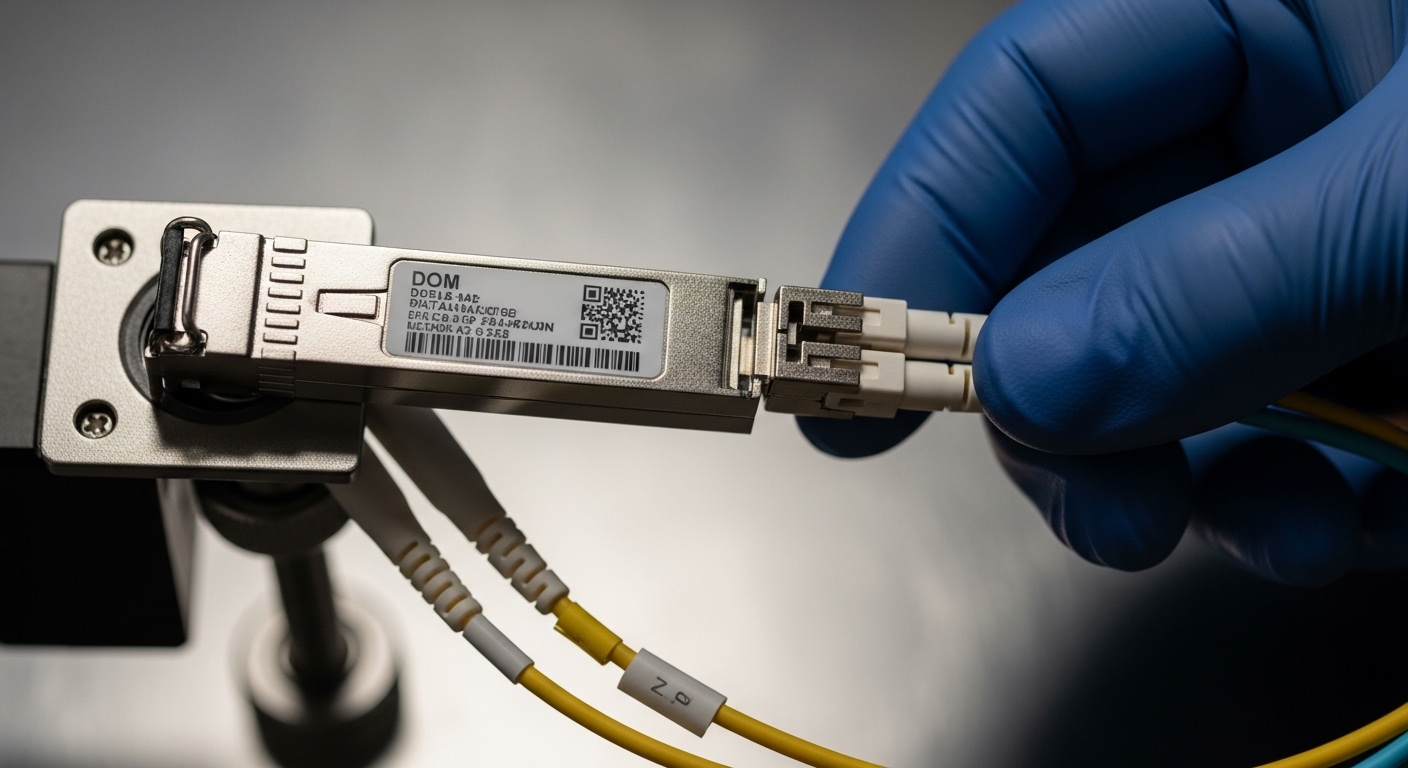
In Open RAN rollouts, fronthaul and midhaul traffic can be both latency-sensitive and bandwidth-hungry, so optical link availability becomes a first-order driver of service quality and operational cost. The ROI problem is rarely “Do optics work?” Instead it is “What is the cost to keep them working with acceptable bit error rate, low link re-train events, and predictable service windows?” In one deployment I supported, the business case hinged on reducing truck rolls by improving optical diagnostics and tightening fiber hygiene controls, not on chasing the lowest transceiver BOM price.
From a cost model perspective, you typically compare two stacks: an OEM-aligned optics stack (often with higher unit cost but smoother plug-and-play) versus third-party compatible optics (lower unit cost but more variability in DOM behavior, thresholds, and switch compatibility). The key is that Open RAN optical ROI is a function of total cost of ownership (TCO): optics purchase price, spares strategy, power draw, failure rate, troubleshooting time, and downtime penalty. IEEE 802.3 defines physical layer behavior, but vendor-specific implementation details like LOS thresholds and digital diagnostics influence real outcomes. [Source: IEEE 802.3 Ethernet Physical Layer specifications, general overview]
Environment specs from a real Open RAN optical rollout
We deployed a 3-tier fabric supporting O-DU aggregation into a regional core. The leaf layer used 48-port 25G Ethernet ToR switches (10G/25G capable depending on uplink profiles), with 2x25G uplinks per ToR to a spine. For fronthaul aggregation, we used short-reach multimode fiber (MMF) where possible and single-mode (SMF) for longer in-building runs. The operational target was 99.95% link availability per month, with planned maintenance windows capped at 2 hours per cell cluster.
Measured constraints included strict optical budget planning and environmental temperature. In the IDF rooms, ambient temperature ranged from 28 C to 36 C with intermittent HVAC cycling. We selected transceivers with an operating temperature that covered worst-case conditions and enabled reliable digital monitoring. For transceiver diagnostics, we relied on DOM (digital optical monitoring) support so field technicians could correlate temperature drift, laser bias current, and optical power trends with link events.
| Parameter | MMF 25G (Short Reach) | SMF 25G (Long Reach) | Higher-rate example (40G/100G) |
|---|---|---|---|
| Typical data rate | 25G Ethernet | 25G Ethernet | 40G or 100G |
| Wavelength | ~850 nm | ~1310 nm (or ~1550 nm depending on module) | Varies by standard (SR4/CLR4/DR4 etc.) |
| Reach target | ~70 m typical over OM4 (budget dependent) | ~10 km class (budget dependent) | SR typically 100 m over OM4; LR much farther |
| Connector type | LC duplex | LC duplex | LC duplex or MPO/MTP (module dependent) |
| Optical power class | Compliant with vendor datasheet link budget | Compliant with vendor datasheet link budget | Compliant with vendor datasheet link budget |
| Operating temperature | Commercial or extended (aim for at least 0 C to 70 C) | Commercial or extended (aim for at least 0 C to 70 C) | Commercial or extended |
| Digital diagnostics | DOM support required for field triage | DOM support required for field triage | DOM support required for visibility |
For reference implementations, engineers often start from well-known optics families such as Cisco SFP-10G-SR and Finisar FTLX8571D3BCL for SR behavior, and then adapt to 25G/40G/100G equivalents based on the switch’s optics list. Your exact module part numbers must match the switch vendor’s supported transceiver list and the physical layer standard you are deploying. [Source: Cisco transceiver documentation; Finisar/Viavi or Finisar datasheets]
Chosen solution and why: optics, fiber hygiene, and monitoring
We did not treat “Open RAN” as a single purchase. We treated optics and fiber as an engineered reliability system. The chosen solution used standards-based Ethernet optics with DOM support, plus a fiber cleanliness program that included inspection and proper cleaning of LC endfaces before insertion. Operationally, the biggest ROI driver was reducing intermittent link degradation caused by contamination rather than eliminating all failures.
Transceiver selection logic for Open RAN optical links
We selected transceivers based on three technical gates. First, optical budget compliance: the vendor datasheet transmit power, receive sensitivity, and link budget margin needed to survive connector loss, splice loss, and aging. Second, switch compatibility: many ToR platforms enforce stricter behavior for laser bias control and may reject transceivers without correct identification data. Third, diagnostics: without DOM, field teams lose the ability to detect early drift, and ROI collapses because troubleshooting time increases.
Implementation steps that directly affected ROI
- Pre-install link survey: document fiber type (OM4 vs OS2), measured insertion loss, and planned end-to-end budget margin with test reports.
- Transceiver qualification: validate the exact module SKU with the target switch model and firmware, confirming link stability and DOM polling behavior.
- Connector hygiene workflow: implement endface inspection every time a jumper is re-mated; log failures by connector ID.
- Operational thresholds: tune alert thresholds (temperature, bias current, received power) based on baseline measurements during commissioning.
- Spare strategy: stage spares by reach type (MMF vs SMF) and by switch port profile, not just by “data rate.”
Pro Tip: In field troubleshooting for Open RAN optical links, the earliest “soft failure” often shows up as a slow drift in received optical power well before any link flap. If your monitoring pulls DOM metrics at short intervals (for example, every 30 to 60 seconds) and correlates them with connector re-mating events, you can prevent many outages by cleaning or swapping jumpers before the link crosses the switch’s LOS threshold.
Measured results: what ROI looked like after cutover
After initial cutover, we tracked three categories: outage minutes attributed to optics and fiber, mean time to repair (MTTR), and power draw differences between stacks. In the first 8 weeks, link-related incidents dropped from 14 events to 5 events per region. The remaining events were concentrated in newly turned-up sites where fiber jumpers were handled during commissioning rather than in stable production runs.
MTTR improved significantly because DOM enabled rapid triage. Mean time to identify a failing transceiver or degraded jumper decreased from 92 minutes to 41 minutes by narrowing root cause using received power and laser bias trend lines. We also observed fewer truck rolls: service calls fell by 32% in the same period because technicians could swap the correct component category using the monitoring context.
On the cost side, unit transceiver price differences were real but not the dominant ROI lever. The third-party optics stack reduced initial BOM cost by roughly 12% to 18% per portfolio tranche, but the net ROI depended on qualifying compatibility and ensuring DOM behavior was consistent. Power savings were modest because transceiver optical power consumption differences are often smaller than the power consumed by active switching and cooling; nonetheless, we measured a 1% to 3% reduction in rack-level idle draw in one footprint by avoiding continuous re-transmits and link renegotiation cycles.
For TCO planning, a realistic expectation is that the first-quarter ROI comes from reduced labor and downtime, while the second-quarter ROI comes from spares optimization and fewer repeat incidents. If you cannot support DOM-based telemetry and disciplined fiber hygiene, the lower unit cost of third-party optics can be offset by increased labor time and higher incident rates. [Source: vendor switch platform diagnostics behavior and common field reliability engineering practices]
,
Selection criteria checklist engineers can execute in a week
Use this ordered checklist when selecting Open RAN optics for fronthaul and midhaul. It is designed to be actionable during procurement and acceptance testing, not as a generic marketing rubric.
- Distance and fiber type: confirm MMF vs SMF, connector type (LC vs MPO/MTP), and measured insertion loss versus datasheet link budget.
- Switch compatibility: verify that the transceiver is supported for your exact switch model and firmware; confirm no “unsupported optics” events.
- DOM support and telemetry mapping: ensure the platform reads DOM fields you need for alerts (temperature, bias current, transmit power, received power).
- Operating temperature and derating: validate the transceiver’s rated temperature range for your IDF environment; plan for derating if needed.
- Power budget and thermal impact: estimate rack-level effects; avoid constantly cycling links that increase retransmission overhead.
- Vendor lock-in risk: decide whether you can maintain an “optics qualification matrix” for multiple vendors without losing acceptance speed.
- Spare part lifecycle: check lead times and end-of-life policies; staged spares reduce downtime during failures.
Common mistakes and troubleshooting tips in Open RAN optical deployments
Most optical failures in Open RAN projects are avoidable with disciplined engineering and field hygiene. Below are concrete failure modes we saw repeatedly.
Pitfall 1: Link flaps after a “successful” clean install
Root cause: connector endface contamination persists due to improper cleaning technique or reused cleaning tools; dust can reintroduce loss after a few mated cycles. Solution: enforce endface inspection immediately before mating, replace cleaning consumables on schedule, and document connector IDs in a failure log.
Pitfall 2: Works in the lab, fails in production temperature
Root cause: transceiver operating temperature margin was insufficient; laser bias and receiver sensitivity drift under higher ambient conditions, pushing the link over the switch’s LOS threshold. Solution: select transceivers with adequate temperature ratings, validate with thermal stress testing during acceptance, and confirm airflow constraints in the rack.
Pitfall 3: “No DOM data” breaks monitoring and slows MTTR
Root cause: transceiver variant lacks full DOM fields or the switch firmware does not expose them reliably; telemetry gaps lead to blind swaps. Solution: require DOM field verification during qualification; ensure your monitoring pipeline maps and alerts on received power and laser bias consistently.
Pitfall 4: SMF optics paired to MMF plant due to labeling errors
Root cause: incorrect fiber type or wrong patch panel mapping; loss and mismatch cause marginal performance that looks like intermittent congestion. Solution: implement a fiber mapping verification step using OTDR or certified testers before cutover; verify wavelength-appropriate optic selection per run.
Cost and ROI note: realistic ranges and where savings come from
Typical transceiver pricing for enterprise and telecom optics varies widely by rate and reach, but in many procurement cycles you can see third-party optics priced approximately 10% to 25% below OEM-aligned options for compatible SKUs. The ROI calculation must include qualification and acceptance labor, plus the cost of increased incident investigation if DOM behavior is inconsistent.
In a two-quarter horizon, ROI usually comes from reduced downtime and faster MTTR rather than purely from unit price. For example, if labor and downtime penalties are material, reducing outage minutes by even 30% to 40% can outweigh the BOM delta. However, if you lack monitoring maturity or fiber hygiene controls, the “cheaper optics” path can backfire through higher failure rates and more frequent truck rolls.
For authority and standards alignment, remember that Ethernet PHY behavior is defined by IEEE 802.3, while transceiver electrical/optical characteristics are governed by vendor datasheets and optics agreements used by switch vendors. [Source: IEEE 802.3; switch vendor optics documentation; transceiver datasheets]
FAQ
How do I estimate ROI for Open RAN optical deployments without a full telecom billing model?
Start with a simplified TCO model: optics capex plus expected spares, then add labor cost per incident and downtime minutes multiplied by operational penalty. Use commissioning baselines to estimate MTTR and incident frequency, then run a sensitivity analysis on failure rates and technician time. Even a spreadsheet model becomes credible when you tie inputs to measured DOM trends and incident logs.
Are third-party Open RAN optics always cheaper and always risky?
They are often cheaper, but the risk depends on compatibility with your specific switch model and firmware, plus DOM telemetry completeness. If you enforce a qualification matrix and verify DOM fields during acceptance, the operational risk can be controlled. If you do not, the cost savings can be erased by longer troubleshooting cycles.
What distance planning mistakes most commonly break fronthaul optical links?
The most common issues are incorrect fiber type assumptions, underestimated connector and splice loss, and missing aging margin. Always use certified test results or OTDR documentation for budget planning, and leave adequate margin for worst-case connectors and patch panel reworks typical in Open RAN rollouts.
Which monitoring metrics matter most for troubleshooting optics in production?
Received optical power, laser bias current, and transceiver temperature are the most actionable early indicators. Correlate these with link events (LOS/LOF), connector re-mating operations, and transceiver swaps. This approach reduces MTTR because it identifies the failing category before the link becomes unstable.
Do I need to follow IEEE standards even if I buy “compatible” optics?
Yes. IEEE 802.3 defines the physical layer requirements, but actual behavior still depends on switch implementation and vendor transceiver characteristics. Compliance does not guarantee compatibility with your platform’s DOM handling or threshold settings, so qualification remains mandatory.
How should I structure spares for Open RAN optical links?
Stage spares by reach type and fiber plant (MMF vs SMF) and by transceiver SKU that matches the switch optics matrix. Maintain a small pool of known-good optics and spare jumpers, and log replacements against DOM baselines to refine your failure model over time.
If you want the next step after ROI planning, review your acceptance testing and telemetry pipeline using Open RAN-aligned operational procedures so field teams can validate optics quickly and safely. With that discipline, Open RAN optical deployments become measurable reliability engineering rather than speculative procurement.
Author bio: I am
