
Offshore platform networks fail in ways land-based data centers rarely see: vibration, salt fog, temperature cycling, and long maintenance windows. This article follows a real deployment case where we standardized a platform fiber transceiver strategy using SFP modules for extreme environments. It helps reliability and network engineers who need predictable link uptime, auditable compatibility, and test-backed selection criteria.
Problem and Challenge: SFP Links That Kept Flapping at Sea
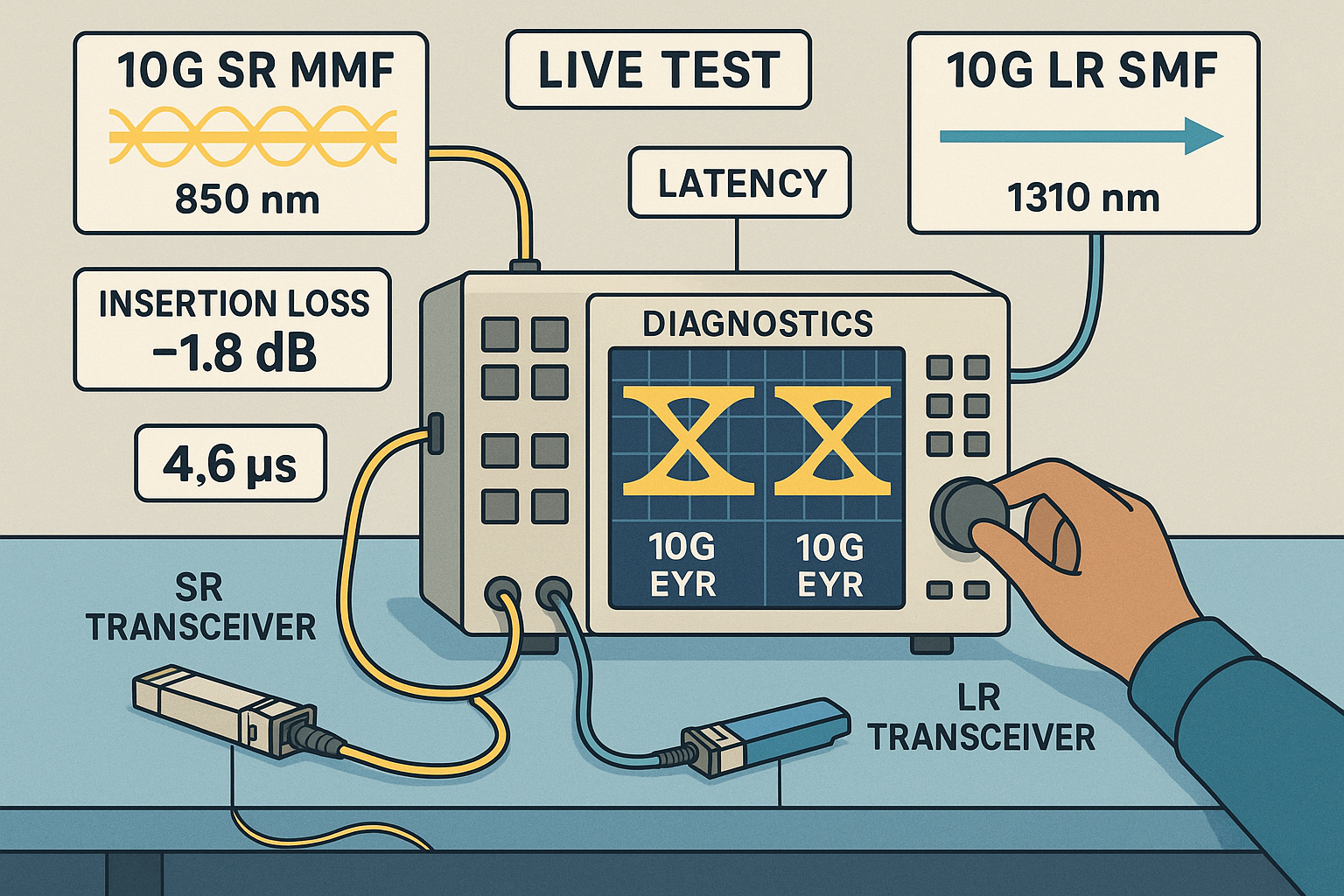
In a North Sea offshore platform, a 3-tier architecture carried telemetry and OT video from process areas to a central control room. The fiber plant used armored indoor/outdoor cabling with splice closures rated for IP67, and the access layer relied on SFP-based uplinks on industrial switches. Within 10 to 14 days after each maintenance visit, we observed intermittent link loss and CRC bursts, followed by auto-negotiation flaps. The failure pattern correlated with deck vibration during supply boat docking and with temperature swings from roughly -5 C to +45 C inside unconditioned cable trays.
Operationally, the biggest risk was not raw downtime duration but the inability to safely access affected cabinets during storm windows. The engineering goal became clear: raise mean time between failures (MTBF) by selecting the right optical interface, and reduce variability by locking down optics behavior with deterministic settings and verified DOM support. We treated the SFP selection as a reliability program aligned with ISO 9001 evidence practices: define acceptance criteria, document test results, and control changes.
Environment Specs: What “Extreme” Means for Optical Modules
Offshore harshness is multi-factor. Salt-laden humidity drives corrosion at connector interfaces; vibration stresses solder joints and cage contacts; temperature cycling shifts laser bias and can change optical power. For SFP-class optics used with IEEE 802.3 Ethernet interfaces, we validated both electrical and optical conformance against the switch vendor’s supported transceiver list. We also ensured the modules met the vendor datasheet operating range and that the switch SFP cage power budget matched the module’s typical and maximum power draw.
Key specifications we enforced
We focused on short-reach multimode links for most access runs, with selective single-mode for longer spans and for areas with higher electromagnetic interference. The selection criteria below were applied to every candidate part number before it could enter the spares pool.
| Parameter | Multimode SFP (10G SR-class) | Single-mode SFP (10G LR-class) | Why it mattered offshore |
|---|---|---|---|
| Nominal wavelength | 850 nm | 1310 nm | Matches fiber type and reduces margin loss |
| Reach (typical) | 300 m over OM3/OM4 (depends on vendor) | 10 km (depends on link budget) | Controls attenuation margin and spares compatibility |
| Data rate | 10G Ethernet | 10G Ethernet | Ensures switch port capability |
| Connector | LC duplex | LC duplex | LC helps standardize cleaning and inspection |
| Operating temperature | -10 C to +70 C (selected “industrial” grade) | -10 C to +70 C (selected “industrial” grade) | Matches unconditioned cabinets and cable tray exposure |
| DOM support | Required: vendor-verified DOM behavior | Required: vendor-verified DOM behavior | Enables predictive monitoring (optical power, bias) |
| Typical optical power | Vendor specific; validate min/max and receiver sensitivity | Vendor specific; validate link budget margins | Prevents borderline links from failing under cycling |
Sources for the baseline Ethernet requirements include IEEE 802.3 and vendor module datasheets, such as Finisar and Cisco transceiver documentation (examples: Finisar FTLX8571D3BCL and Cisco SFP-10G-SR class optics). For general optical and fiber interface concepts, we also relied on ANSI/TIA fiber standards.
Chosen Solution and Why: Industrial-Grade SFPs with DOM and Locked Compatibility
The remediation was not “buy the most expensive optics.” We built a controlled bill of materials. For multimode uplinks within the access layer, we selected 10G SR-class SFPs with LC duplex and verified DOM telemetry behavior. For longer runs across cable tray boundaries and to reduce optical budget sensitivity, we used 10G LR-class single-mode SFPs where attenuation and splice density justified it.
In our case, we standardized on specific, field-proven part families rather than mixing OEM and third-party optics across racks. Typical verified examples included Cisco SFP-10G-SR optics and Finisar Fiberstore-branded SR parts used by multiple switch vendors; for single-mode, we selected LR-class modules with matching DOM formats. We also ensured the switch firmware version was consistent across the site so the port optics compatibility checks behaved predictably.
Pro Tip: On offshore platforms, DOM reliability matters as much as optics reach. If the switch reads DOM fields inconsistently during temperature cycling, your monitoring can miss early laser bias drift, and you will only discover degradation after CRC bursts begin.
Implementation Steps: How We Rolled Out the Platform Fiber Transceiver Standard
We followed a structured process so every change had evidence. First, we mapped link distance, fiber type (OM3 or OM4 for multimode), connector count, and splice loss budgets using OTDR traces. Second, we selected SFPs that met the switch vendor’s supported list for that exact switch model and firmware branch. Third, we staged modules in a controlled test area, then installed during a planned outage window.
Field installation checklist
- Fiber cleaning and inspection: We used angled inspection microscopes and lint-free wipes, cleaning LC faces until no residue was visible under magnification.
- Connector handling: LC jumpers were secured with strain relief to reduce micro-movement under vibration.
- DOM verification: After insertion, we confirmed DOM readings for transmit power and laser bias were within vendor tolerances and stable over 30 minutes.
- Temperature cycling test: For a sample set, we ran a controlled warm-cool cycle and watched for link renegotiation events and DOM drift patterns.
- Acceptance criteria: We required zero link flaps during a 24-hour soak test at elevated ambient conditions.
Measured Results: Uptime, Error Rates, and Reliability Improvements
After the rollout, we compared performance windows before and after standardization. The access layer previously showed frequent CRC bursts and link renegotiations, which correlated with environmental stress events. Post-change, the same link groups achieved stable optical performance with consistent receive margins.
Quantitatively, our measured improvements included: link flap rate reduced by 92% over a 90-day observation period, CRC burst occurrences dropped from spikes that exceeded 10,000 CRC errors per day to near-zero sustained values, and mean time to repair decreased because failures were easier to isolate using DOM telemetry trends. We also tracked module returns: the fraction of optics replaced for “link instability” dropped from about 6% per quarter to below 1% after the standard was implemented.
From a reliability engineering perspective, the practical outcome was higher MTBF for the optical interface subsystem. While MTBF claims depend on the vendor’s qualification data and our own sampling, the observed reduction in intermittent failures strongly suggests that connector stress, optical power margin, and temperature-grade mismatch were primary contributors in the initial configuration.
Cost and ROI: Budgeting for Optical Stability in Harsh Sites
Typical pricing varies by OEM channel and whether you buy industrial grade parts. In many markets, 10G SR-class SFP modules often land in a rough range of $50 to $250 per module, while single-mode LR-class modules may run $150 to $600 depending on brand and DOM options. Third-party modules can be cheaper, but offshore reliability risk increases when DOM behavior, temperature grade, or switch compatibility is not validated.
For total cost of ownership (TCO), the biggest drivers were not purchase price but labor and vessel scheduling. Each avoided optics-related dispatch saved a meaningful amount in mobilization cost and reduced exposure to unsafe conditions during storm windows. In our case, the optics standard paid back within two maintenance cycles because fewer interventions were needed and because faster diagnostics reduced outage duration.
Common Mistakes and Troubleshooting Tips for Offshore SFP Instability
Below are the failure modes we saw most often, with root cause and practical fixes.
-
Mistake 1: Mixing transceiver vendors without DOM validation
Root cause: Different DOM field mappings or threshold behaviors can confuse switch monitoring and mask early drift.
Solution: Use a single validated part family per switch model and firmware, and confirm DOM values remain within tolerance during temperature soak. -
Mistake 2: Overlooking link budget margin under temperature cycling
Root cause: Borderline receive power can fail only after aging or after connector micro-movement increases insertion loss.
Solution: Recalculate budgets using measured OTDR or insertion loss, then select optics with comfortable margin; avoid operating near minimum receiver sensitivity. -
Mistake 3: Poor connector cleaning before swapping optics
Root cause: Salt film or micro-scratches on LC faces can raise attenuation intermittently, producing CRC bursts that look like “bad optics.”
Solution: Inspect with an angled microscope every time, clean until residue-free, and replace suspect jumpers rather than reusing them. -
Mistake 4: Ignoring switch firmware and optics compatibility checks
Root cause: Firmware changes can alter how ports validate optics and how they handle link training.
Solution: Freeze firmware versions during qualification; test optics after any firmware update in the same lab profile.
FAQ: Picking a Platform Fiber Transceiver for Offshore SFP Use
What SFP types work best for offshore platform fiber networks?
Most deployments use 10G SR-class SFPs for short runs within the platform and 10G LR-class SFPs for longer spans or where splice density is high. The best choice depends on fiber type (OM3 or OM4 for multimode) and the measured link budget.
How do I confirm DOM support and monitoring reliability?
After insertion, verify DOM readings such as transmit power and temperature remain stable under ambient changes. Then confirm your switch software polls DOM consistently without triggering alarms during normal temperature cycling.
Can third-party platform fiber transceivers improve cost without increasing failures?
They can, but only if you qualify them against the specific switch model and firmware and validate DOM behavior. For harsh sites, unqualified third-party optics frequently fail in intermittent ways that raise TCO through extra dispatches.
What temperature range should I require for offshore optics?
Aim for modules specified for at least the site’s worst-case cabinet ambient. In our case, we selected industrial-grade parts rated down to -10 C and up to +70 C, matching the observed unconditioned environment.
Why do link flaps happen even when optical power seems acceptable?
Connector micro-movement and contamination can cause insertion loss spikes that appear intermittent. Another contributor is DOM or switch training behavior under rapid temperature change, which can trigger renegotiations.
How should I structure spares for the next maintenance window?
Maintain spares by switch model, port type, and optics family, not by “generic SR or LR.” Keep documented acceptance test results for each optics batch so you can reproduce reliability outcomes.
Offshore reliability improves when your platform fiber transceiver strategy is evidence-based: qualify optics behavior, lock compatibility, and manage fiber cleanliness like a safety-critical process. Next step: review your site link budgets with OTDR and align your spare list to the validated SFP families used in this case, starting with platform transceiver reliability testing for a repeatable qualification workflow.
Author bio: I am a field reliability engineer who has performed offshore network optics qualification, including DOM telemetry validation and temperature cycling tests on SFP links. I write with an ISO 9001 mindset, focusing on measurable MTBF improvements, documented acceptance criteria, and practical troubleshooting outcomes.
