
Safety-grade connectivity in nuclear power plants depends on reliable nuclear instrumentation fiber links that meet stringent availability expectations under harsh environmental conditions. This article helps plant engineers and integrators choose optical transceivers that fit safety-grade architectures, including monitoring, control, and interlock communication over fiber. You will get a practical top-N checklist, a spec comparison table, and field troubleshooting patterns that reduce downtime. Updated: 2026-05-02.
Top 8 selection criteria for nuclear instrumentation fiber transceivers
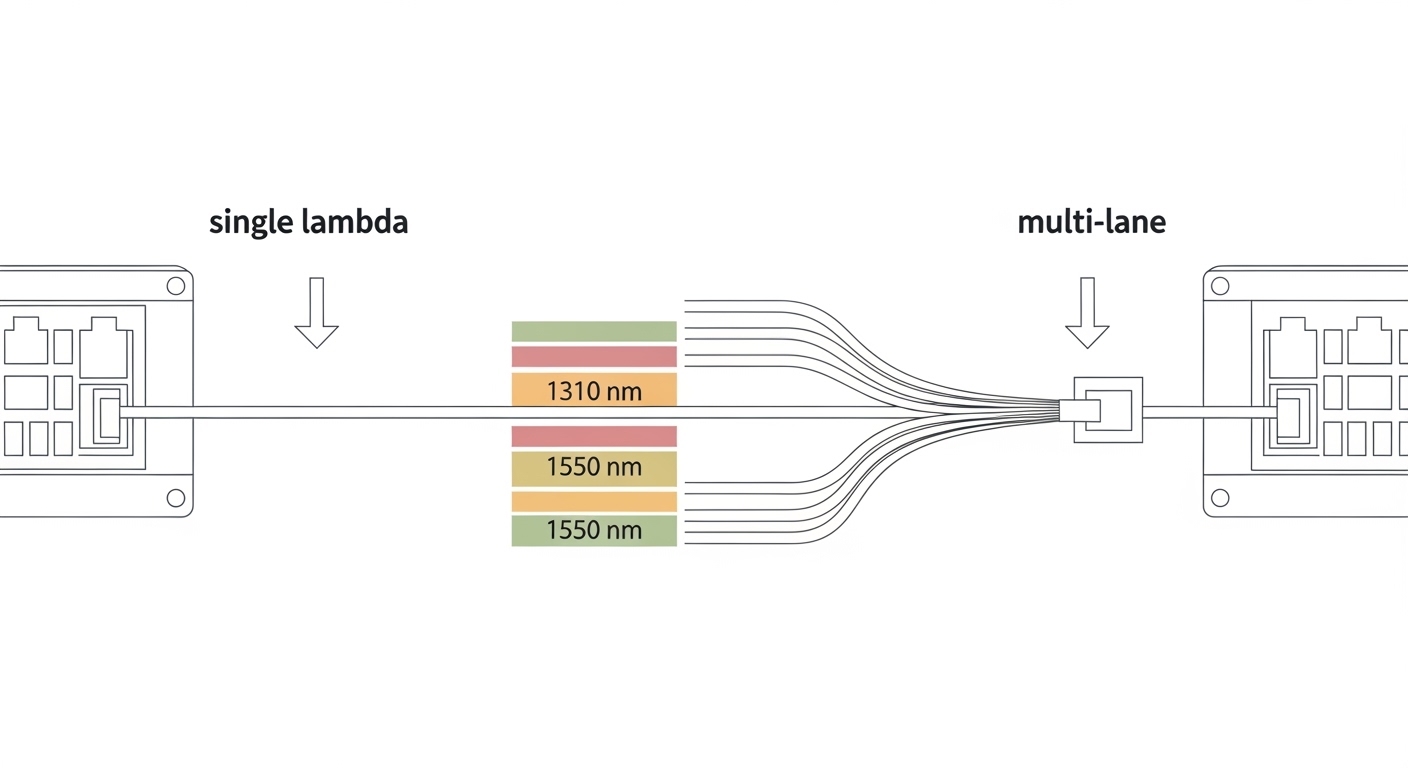
When procurement and commissioning collide, the wrong transceiver can fail acceptance tests or violate safety-case assumptions. For plant networks, engineers typically prioritize deterministic compatibility with the host switch, predictable optical budgets, and traceable quality controls. The goal is not only link reach, but also stable operation across temperature swings, vibration, and long-term aging. In safety-grade contexts, document discipline matters as much as optics.
Key specs/details engineers verify include wavelength band, reach, receiver sensitivity, DOM (digital optical monitoring) support, and connector type. Many teams also require an auditable supply chain and component-level traceability for maintenance evidence.
- Distance and link budget: confirm margin using vendor optical power and receiver sensitivity
- Data rate and interface: match IEEE 802.3 PHY behavior and host transceiver expectations
- Switch compatibility: validate EEPROM/ID behavior and laser safety class
- DOM support: monitor temperature, bias current, and optical power for trending
- Operating temperature: verify extended ranges for containment-adjacent equipment rooms
- Vendor lock-in risk: assess interchangeability and spare strategy
- Safety and qualification evidence: align with your plant quality plan and acceptance documentation
- Connector and cleaning requirements: minimize insertion loss variability during maintenance
Pro Tip: In plant environments, the biggest “mystery” link failures are often not laser drift but connector contamination that changes loss after thermal cycling. Build a routine that includes fiber endface inspection and cleaning verification before you replace any transceiver.
Top 8 safety-grade transceiver form factors and what they imply
Form factor determines mechanical fit, thermal path, and interoperability with the host optics cage. In safety-grade nuclear instrumentation fiber designs, the most common choices map to standard pluggables, because they simplify maintenance and allow consistent spare handling. However, the safety case requires that the transceiver behavior remains predictable under repeated insertion cycles and temperature extremes.
Key specs/details to check include channel spacing (for CWDM/DWDM where applicable), whether you use single-mode versus multimode fiber, and whether the transceiver supports the exact optical interface your plant cabling was engineered for.
- SFP/SFP+: common for 1G/10G control and monitoring segments
- SFP28: often used for 25G uplinks where the host supports it
- XFP/QSFP/QSFP28: used for higher density aggregation where cooling permits
- Long-reach single-mode variants: preferred for instrumentation runs with attenuation budget constraints
Top 8 core optical parameters: wavelength, reach, and power budget
Optical parameters define whether the link survives worst-case attenuation and aging. For nuclear instrumentation fiber, you typically want a conservative optical margin to tolerate connector rework, splices added during repairs, and gradual laser aging. The selection must also align with the fiber type installed in the plant, usually single-mode for long runs.
Key specs/details include nominal wavelength, reach in kilometers, receiver sensitivity, and optical transmit power. These values are specified at the transceiver level, but your link budget must include fiber attenuation, splice loss, connector loss, and any aging allowances.
| Transceiver type (example) | Wavelength | Typical reach | Data rate | Connector | DOM | Operating temp |
|---|---|---|---|---|---|---|
| Cisco SFP-10G-SR (illustrative) | 850 nm | ~300 m (MMF) | 10G | LC | Often supported | Typical commercial/extended depends on SKU |
| Finisar FTLX8571D3BCL (illustrative) | 850 nm | ~300 m (MMF) | 10G | LC | Varies by exact module | Varies by grade |
| FS.com SFP-10GSR-85 (illustrative) | 850 nm | ~300 m (MMF) | 10G | LC | Varies | Extended grade options |
| Plant long-reach single-mode module (typical) | 1310 nm or 1550 nm | Up to tens of km | 10G/25G/40G | LC | Commonly supported | Extended industrial grade preferred |
Because nuclear instrumentation fiber plant designs often use long single-mode runs, many teams standardize on 1310/1550 nm single-mode optics for the backbone and reserve 850 nm for shorter intra-room segments. Validate your exact fiber plant (core diameter, attenuation, bend tolerance, and patch panel loss). For standards context, consult IEEE 802.3 for the electrical/optical interface expectations and host behavior. IEEE 802.3 standard
Top 8 compatibility checks with host switches and PHY expectations
Transceivers are not isolated components; they are negotiated with the host through electrical signaling, module identification, and sometimes digital diagnostics. A safety-grade network may use hardened switches or industrial Ethernet gateways, where transceiver compatibility requirements can be strict. If the host rejects the module or misreads its capability, you can get link flaps that are hard to diagnose during commissioning.
Key specs/details include whether the module is compliant with the host’s pluggable standard (SFP/SFP+/QSFP), and whether the module’s management interface exposes DOM fields your monitoring system expects. Many OEM hosts enforce allowed vendor IDs; third-party modules can work but sometimes fail in edge firmware revisions.
- Confirm the host supports the module type and DOM feature set
- Validate link bring-up at temperature extremes, not just at room temperature
- Check whether the host enforces specific optical power levels or thresholds
- Use a spare-testing jig to verify EEPROM/ID and optics before shipment to the plant
Top 8 DOM, monitoring, and maintenance evidence for safety cases
DOM transforms optics from a “black box” into a monitored asset, enabling predictive maintenance rather than reactive replacement. In nuclear instrumentation fiber deployments, trending can show slow degradation patterns such as rising transmit power requirements or receiver margin shrinkage. This helps operators build maintenance evidence for availability goals and reduces unplanned outages.
Key specs/details include DOM temperature, laser bias current, transmit optical power, and received optical power. Engineers should confirm that the monitoring system can poll and store DOM fields reliably, with alarms tied to thresholds that match your optical budget and acceptable degradation rates.
Pro Tip: Use DOM trending to detect connector issues: a sudden received power drop paired with stable transmit power often indicates a patch/connector contamination event rather than a failing laser.
Top 8 connector, cleaning, and installation practices that prevent silent failures
Even when the transceiver is “correct,” installation can dominate reliability. Safety-grade plant work typically includes many maintenance windows, and every remating event can introduce micro-scratches, dust, or polish defects on fiber endfaces. These issues can cause intermittent link loss that surfaces only under vibration or temperature gradients.
Key specs/details to align with your plant practices include connector type (LC/SC), ferrule geometry, and whether you use APC versus UPC polishing where applicable. Define inspection and cleaning intervals and standardize the tools used by technicians to avoid variability.
- Inspect endfaces with a scope before every critical reconnection
- Use lint-free wipes and approved cleaning solvent or dry cleaning methods per your procedure
- Minimize repeated insertions; track connector wear in your maintenance logs
- Confirm bend radius compliance to avoid long-term microbending loss
Top 8 common mistakes and troubleshooting patterns
Field experience shows that optics problems often cluster into a few repeatable failure modes. The key is to diagnose methodically before swapping modules, because swapping can mask the root cause and increase outage duration. Below are common pitfalls with likely root causes and corrective actions.
-
Mistake: Installing a module that is “electrically compatible” but not accepted by the host ID logic.
Root cause: Host firmware enforces module ID/vendor constraints or expects specific DOM fields.
Solution: Validate with the exact switch model and firmware; pre-test modules in a staging rack. -
Mistake: Assuming reach based on nominal “km” ratings without a margin.
Root cause: Underestimated splice/connector loss, aging allowances, or unexpected patch panel attenuation.
Solution: Recompute link budget using measured end-to-end loss and vendor receiver sensitivity; add conservative margin. -
Mistake: Replacing a transceiver when the received power drop is intermittent.
Root cause: Connector contamination or microbends that change with temperature and vibration.
Solution: Inspect and clean both ends, verify bend radius, and use DOM to correlate transmit vs receive power changes. -
Mistake: Using the wrong fiber type or patch mapping.
Root cause: MMF versus SMF mismatch (850 nm modules on single-mode runs, or reversed fibers in panels).
Solution: Verify fiber type and OTDR results; label and audit patch mapping before commissioning.
Cost and ROI note for nuclear instrumentation fiber transceivers
Typical transceiver pricing varies widely by grade, reach, and qualification documentation. In industrial procurement, OEM-branded 10G/25G optics often land in the $150 to $600 per module range, while third-party equivalents can be lower, commonly $60 to $250, depending on DOM and temperature grade. TCO is driven by failure rates, spare inventory, and outage cost; a slightly higher upfront cost for extended-temperature, well-documented optics can reduce maintenance churn. If your plant requires strict traceability, factor qualification and receiving test labor into ROI.
| Option | Typical unit cost range | TCO drivers | Best-fit scenario |
|---|---|---|---|
| OEM safety-grade aligned module | $150 to $600 | Lower integration risk, higher documentation readiness | Safety-case critical links with strict acceptance evidence |
| Third-party extended-temp module | $60 to $250 | Compatibility validation and higher receiving testing | Non-critical segments or when host compatibility is proven |
| Re-certified spares (refurbished) | $40 to $180 | Uncertain aging profile, higher inspection effort | Short-term spares with strict incoming test procedures |
Summary ranking: best nuclear instrumentation fiber choices by constraint
Use this ranking table when you need a quick decision under schedule pressure. It ranks options by engineering risk, maintainability, and
