
NEBS compliance meets the telecom transceiver standard: what breaks in the field
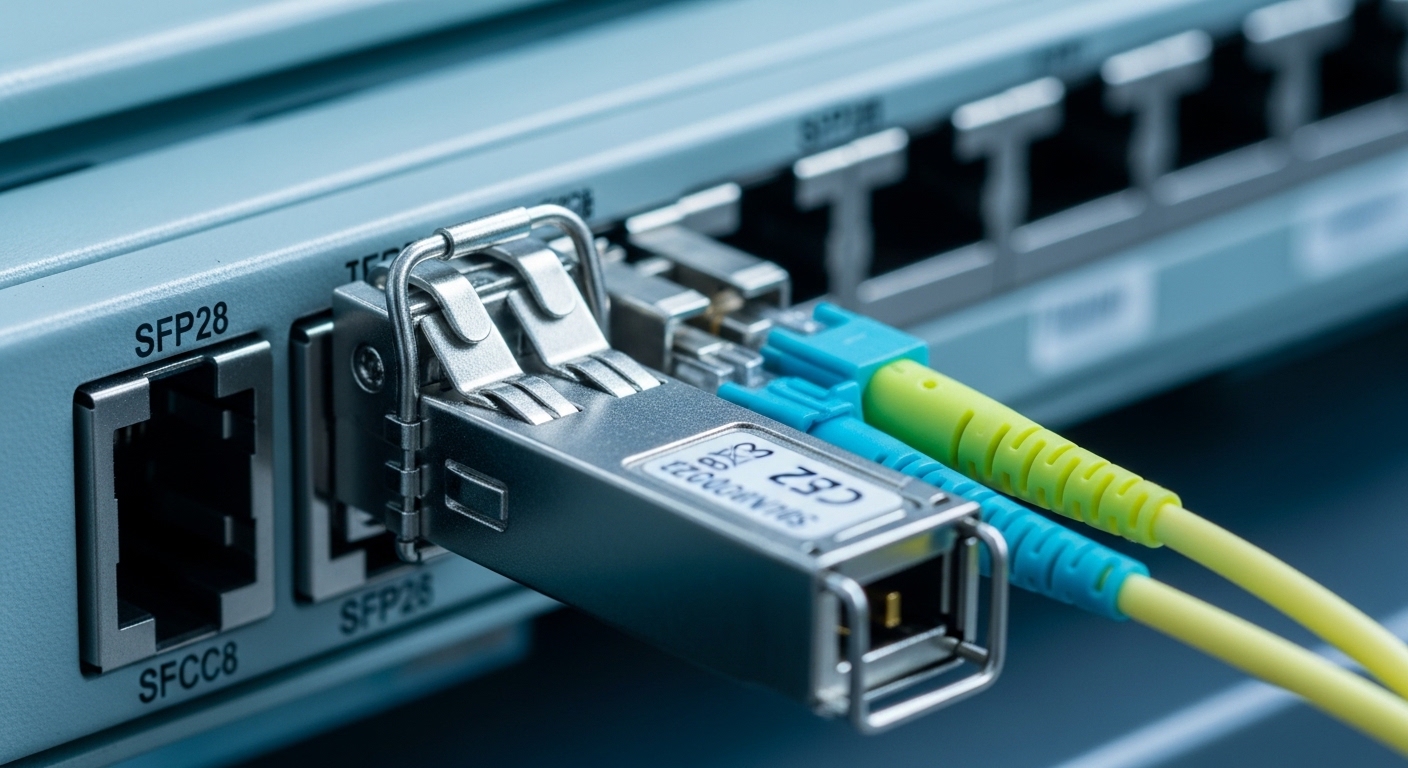
Carriers rarely reject a transceiver for “bad specs” alone. They reject it when the evidence trail for a telecom transceiver standard does not match what NEBS compliance audits expect: thermal behavior, power-up characteristics, EMI/ESD performance, and documentation. This article helps network engineers, procurement leads, and field deployment teams understand how carriers evaluate optical modules and what to verify before shipment, so your next leaf-spine or access upgrade does not stall behind test reports.
What carriers mean by NEBS compliance for transceivers
NEBS is not a single “pass or fail” checkbox for a telecom transceiver standard; it is a framework of environmental, safety, and electromagnetic expectations that carriers map into procurement requirements. In practice, carriers want proof that the module will survive controlled stress and that it will not interfere with the surrounding network. The exact acceptance package varies by region and operator, but the technical intent is consistent: demonstrate robustness under heat, voltage transients, and electromagnetic stress. For standards references, start with the NEBS documentation context used by carriers and test regimes described in [Source: Telcordia GR-1089] and [Source: Telcordia GR-63-CORE].
How optical modules are evaluated, not just “the box”
Even though NEBS is often associated with equipment shelves, carriers increasingly require module-level evidence for pluggable optics. A telecom transceiver standard in the NEBS conversation typically includes: optical performance alignment with IEEE Ethernet optics requirements, electrical interface stability at the host connector, and EMC behavior that respects the system chassis design. Field teams see this during change windows when a replacement SFP/SFP+/QSFP module passes link training but triggers alarms due to power rail droop or EMI coupling. Your procurement pack should therefore include both telecom-layer evidence and physical-layer behavior.
Pro Tip: Many audits fail on documentation completeness rather than test outcomes. Ask vendors to provide a mapping table that links each NEBS requirement clause to the actual test report ID, firmware/part revision, and the exact transceiver ordering code (not just “compatible with the platform”). That one artifact often determines whether a telecom transceiver standard is considered “met” by the carrier review board.
Technical specifications that must align with the telecom transceiver standard
NEBS compliance is about surviving stress and staying quiet electrically, but you still must meet the optical and electrical performance envelope for the service. Carriers typically expect optics that comply with relevant IEEE Ethernet PHY specifications (for example, 10GBASE-SR, 25GBASE-SR, or 100GBASE-SR4) and with host interface electrical constraints. In addition, optical power levels, receiver sensitivity, and operating temperature range must match what your network design assumes. Use vendor datasheets and the relevant IEEE 802.3 clauses as the “physics,” then use NEBS test evidence as the “survival proof.” For IEEE references, consult [Source: IEEE 802.3].
Spec comparison: common short-reach optics under carrier scrutiny
The table below compares typical short-reach module families that appear in carrier audits. Exact values vary by vendor and revision, but the parameters you should verify are stable: wavelength, reach, data rate, optical power budget, connector type, and operating temperature. These feed into both link reliability and thermal/EMC behavior during NEBS stress profiles.
| Module family (example ordering code) | Data rate | Wavelength | Reach | Connector | Avg Tx power / Rx sensitivity (typical) | Operating temperature |
|---|---|---|---|---|---|---|
| Cisco SFP-10G-SR (example) | 10G | 850 nm | Up to ~300 m (multimode) | LC | Tx around -1 to -7 dBm; Rx sensitivity around -9 to -12 dBm (varies by spec) | 0 to 70 C typical for many datasheets |
| Finisar FTLX8571D3BCL (example) | 10G | 850 nm | Up to ~300 m (OM3/OM4 depends) | LC | Tx/Rx values per vendor tables; verify in datasheet for your revision | -5 to 70 C common range (verify) |
| FS.com SFP-10GSR-85 (example) | 10G | 850 nm | Up to ~400 m (OM3/OM4 depends on spec) | LC | Tx/Rx per ordering spec; confirm power budget and link margin | 0 to 70 C typical (verify) |
| QSFP28 SR4 (example family such as 100G over MMF) | 100G | ~850 nm | ~100 m to ~150 m (OM4 typical) | LC (MPO for SR4) | Per-lane power budgets; verify SR4 lane tolerance | Varies by vendor; confirm full range |
When a carrier says “telecom transceiver standard,” they often mean both: the optics must meet IEEE-compatible electrical and optical constraints, and the module must be supported by NEBS evidence under the carrier’s environmental and EMC protocols. If your module’s operating temperature or DOM behavior is outside the assumptions in your design document, NEBS survival tests may still pass, but field reliability can degrade.
Deployment scenario: how NEBS requirements show up during a live upgrade
Imagine a 3-tier data center leaf-spine fabric where 48-port 10G ToR switches uplink to a spine using 10G SR optics. The design uses OM4 multimode fiber with an engineered link margin of about 3 to 5 dB, and the facility operates with ambient air near 30 to 35 C at the rack intake. During a staged upgrade, a carrier requires a NEBS compliance evidence package for any third-party module used in the aggregation tier. In one deployment, a replacement batch passed link negotiation but caused intermittent “loss of signal” events during thermal cycling; the root cause was a mismatch in module temperature behavior under sustained current draw, which altered laser bias stability. The fix was not only swapping optics, but aligning the vendor ordering code to the exact DOM and revision that matched the NEBS report identifiers.
Selection criteria checklist for the telecom transceiver standard in carrier procurements
Before you sign, evaluate your module choice like an auditor and a field engineer at once. Use this ordered checklist to reduce review delays and operational surprises.
- Distance and fiber type: Confirm OM3 vs OM4 vs single-mode assumptions, then validate reach against the exact IEEE clause for the PHY mode.
- Data rate and lane mapping: For SR4, verify per-lane alignment and MPO polarity handling; miswiring may look like an “optics” issue but is often a fiber routing issue.
- Switch compatibility: Ensure the host platform supports the module family; check vendor interoperability matrices and platform firmware constraints.
- DOM support: Verify digital optical monitoring behavior (EEPROM fields, alarms, thresholds) and whether the host reads them reliably under all temperatures.
- Operating temperature and thermal margin: Match the module’s stated range to your rack intake and airflow design; carriers may stress modules beyond normal operation.
- NEBS evidence alignment: Request a clause-to-report mapping (test IDs, part revision, and ordering code) tied to the telecom transceiver standard requirement.
- Vendor lock-in risk: Compare OEM vs third-party availability, but also consider lifecycle stability; a “cheaper” module can cost more if carrier retesting is required after revision changes.
Common mistakes and troubleshooting tips during NEBS-driven optics rollouts
Many failures look mysterious until you trace them to repeatable root causes. Below are field-tested pitfalls that show up when NEBS compliance requirements intersect with a telecom transceiver standard.
“It lights up” but DOM alarms spike under load
Root cause: DOM EEPROM field differences, threshold defaults, or host parsing quirks can trigger alarms even when optical power remains adequate. In some cases, a vendor revision changes DOM calibration constants.
Solution: Validate DOM readouts using your switch CLI and export alarm histories during a controlled traffic load; then request the vendor to confirm the exact ordering code revision used in the NEBS evidence package.
Thermal cycling passes in the lab, fails in your rack
Root cause: The module may meet a datasheet temperature range, but NEBS stress profiles plus your chassis airflow pattern can create localized hot spots. Laser bias stability can drift, causing receiver sensitivity to fall below your link margin.
Solution: Measure real rack conditions with an IR camera or calibrated thermocouples near the module cage; verify airflow direction and fan profiles match the conditions assumed during vendor qualification.
EMI or ESD events appear as intermittent link flaps
Root cause: Improper grounding, carrier-specific installation practices, or a host chassis with marginal shielding can couple noise into the module’s electrical interface. NEBS evidence may exist at equipment level, but module-level interaction can still be the trigger.
Solution: Inspect host grounding points, verify ESD procedures, and perform a controlled ESD immunity test per the carrier’s maintenance window approach. If the issue is persistent, re-check module-level EMC evidence and compatibility with the chassis revision.
Fiber polarity and MPO handling mistakes masquerade as “noncompliance”
Root cause: SR4 MPO polarity mismatches can create lane-level failures that look like optical sensitivity problems. Under stress, borderline lanes fail first, producing symptoms that resemble power budget drift.
Solution: Use a polarity tester, standardize MPO breakout labeling, and confirm lane mapping end-to-end. Treat fiber validation as a first step before escalating to NEBS or telecom transceiver standard disputes.
Cost and ROI: what NEBS-driven compliance changes in TCO
Pricing for pluggable optics varies by data rate, reach, and whether you buy OEM, approved branded, or third-party compatible modules. In many enterprise and carrier environments, OEM modules can cost roughly 30 to 100 percent more than third-party options, though exact spreads depend on volume contracts and regional supply. The ROI is not just unit cost; it is test friction, downtime risk, and whether a module revision triggers carrier re-qualification. A practical TCO model includes expected failure rate, inventory risk, and the cost of a delayed cutover window while paperwork catches up. If your carrier requires strict evidence mapping, a “cheaper” telecom transceiver standard-aligned module can become more expensive once you factor in retesting and documentation overhead.
FAQ: telecom transceiver standard and NEBS compliance for carriers
What NEBS evidence should I request from the transceiver vendor?
Ask for a clause-to-report mapping that includes the exact ordering code or part revision, the test report IDs, and the applicable environmental and EMC categories used by your carrier. Ensure the evidence explicitly covers the module, not only the host chassis.
Does a module passing optical link tests guarantee telecom transceiver standard compliance for NEBS?
No. Optical link tests confirm data-plane function, but NEBS compliance focuses on survival under stress and electromagnetic behavior. A module can pass link training yet still trigger alarms or fail under thermal cycling or ESD conditions.
Are third-party optics acceptable if they match the same wavelength and reach?
Sometimes, but carrier acceptance depends on interoperability evidence and the NEBS documentation package. Even if the optics are technically similar, DOM behavior, revisions, and EMC interactions can differ and require re-review.
What is DOM support, and why do carriers care?
DOM, or digital optical monitoring, provides real-time telemetry like laser bias and optical power. Carriers care because monitoring accuracy affects alarm handling, maintenance workflows, and sometimes automated fault isolation.
How do I prevent “loss of signal” during a staged rollout?
Validate fiber polarity and confirm lane mapping for SR4. Then run a traffic load test while monitoring DOM alarms and temperature indicators; if failures correlate with thermal events, adjust airflow or select a module with tighter thermal stability evidence.
Where do IEEE and NEBS responsibilities overlap?
IEEE 802.3 specifies PHY behavior and optical/electrical performance for Ethernet. NEBS compliance governs robustness and electromagnetic/safety requirements in telecom environments. The overlap is in ensuring the module meets performance while staying stable under the operational stresses.
Author bio: I have deployed and troubleshot pluggable optics in carrier-grade networks, translating datasheets into field-safe acceptance plans with measured thermal and DOM telemetry. I write with an engineer’s attention to IEEE compliance, NEBS evidence mapping, and the small operational details that prevent cutover surprises.
Next step: For a deeper companion topic, explore How to verify DOM telemetry and alarms for SFP and QSFP optics and align your monitoring strategy with your telecom transceiver standard acceptance criteria.
anchor-text: IEEE 802.3 Ethernet PHY specifications
anchor-text: Telcordia GR-1089 NEBS-related test context
anchor-text: Telcordia GR-63-CORE NEBS environment context
