
Multi-cloud connectivity fails in the boring ways: the wrong optics for the fiber plant, mismatched DOM settings, or oversubscribed links that expose latency and BER issues. This article helps network and field engineers choose 400G transceivers that actually interoperate across vendors and cloud-facing fabrics. You will get deployment-oriented specs, a decision checklist, troubleshooting patterns, and a ranked selection table tuned for multi-cloud WAN to data center handoffs.
Top 8 400G transceiver choices for multi-cloud connectivity
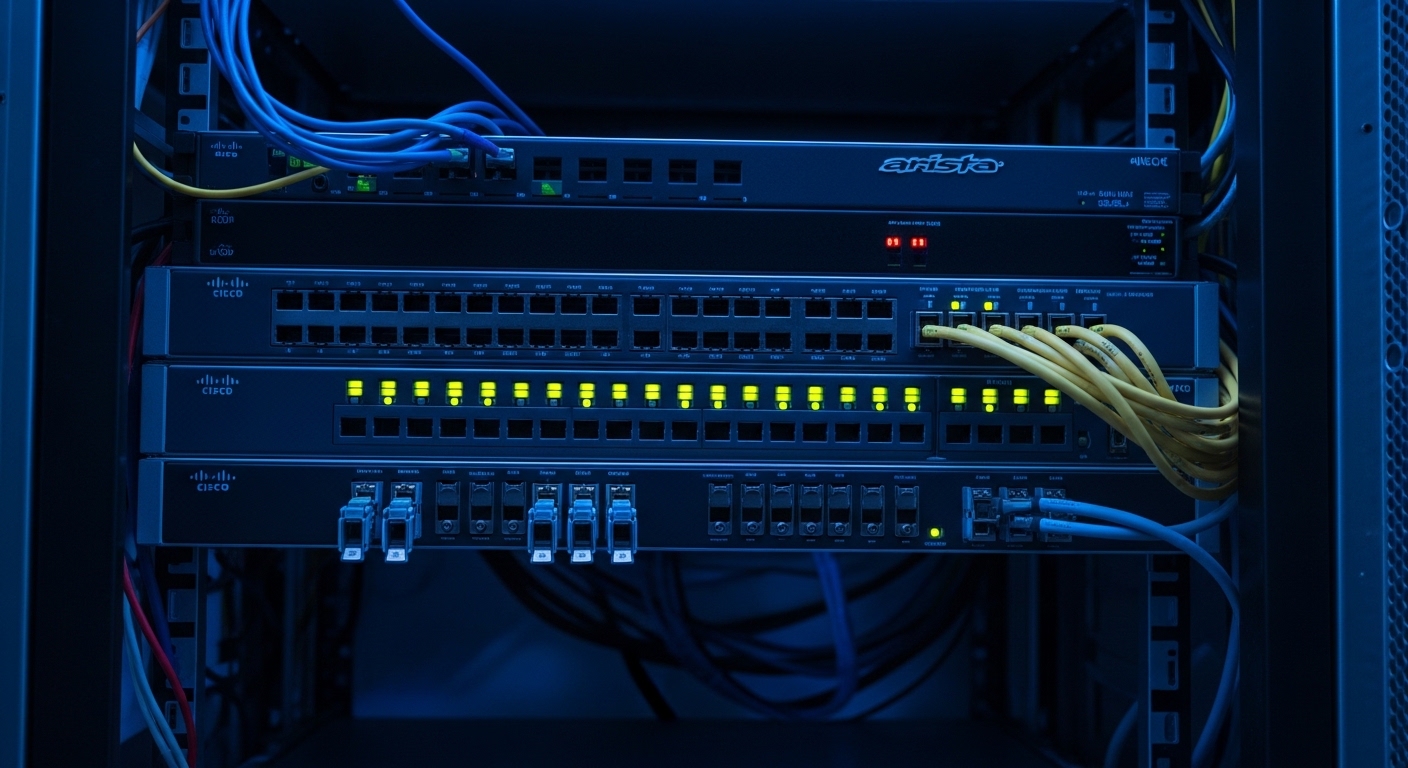
In multi-cloud designs, you typically span multiple physical domains: campus-to-colo, colo-to-colo, or data center to carrier cloud interconnect. The practical selection is driven less by “brand” and more by wavelength, reach, connector type, and the optical budget your fiber can support. I group the common 400G transceivers into eight operationally distinct options you can map to your topology.
400G QSFP-DD SR8 for short-reach leaf-spine and fabric uplinks
Best-fit scenario: Inside a data center where ToR and leaf-spine links run under 100 m using OM4/OM5 fiber, and you need high port density. SR8 is the default when you want predictable provisioning and minimal optical budget tuning. Typical parts include QSFP-DD optics such as Finisar FTLX8574D3BCL style SR8 class modules and compatible QSFP-DD SR8 offerings from major vendors; always verify exact part number and reach spec in the datasheet.
Key specs to match: Data rate is 400G (often implemented as 8 lanes at 50G each), wavelength around 850 nm for multimode, and reach typically 70 m on OM4 or 100 m on OM5 depending on module class and vendor. Connector is usually LC. Temperature range is commonly 0 to 70 C for standard, with optional extended variants.
- Pros: Lowest cost per port for short runs; good availability; straightforward patch-panel management.
- Cons: Limited reach; multimode plant quality and patch loss matter; not ideal for metro or WAN.
400G QSFP-DD FR8 for 2 km style metro reach on single-mode
Best-fit scenario: When your multi-cloud interconnect spans a few kilometers across a colo campus, and you want a simple single-mode option without complex DWDM planning. FR8 is commonly used for short metro runs where you can control fiber type and splice losses.
Key specs to match: FR8 uses single-mode fiber with wavelength around 1550 nm and typical reach in the 2 km class. You will often see variants labeled FR8 or ER4/FR4-like families depending on vendor lane mapping, but for 400G QSFP-DD FR8 the datasheet is the authority. Connector is typically LC, and DOM support varies by vendor but is widely available.
- Pros: Better reach than SR8; uses standard single-mode cabling; good for colo cross-connects.
- Cons: Costs more than SR8; fiber plant attenuation and connector polish quality become critical.
400G QSFP-DD LR8 for longer single-mode links
Best-fit scenario: When multi-cloud connectivity requires longer reach between aggregation points, such as data center to nearby carrier cloud POP or a regional edge site. LR8 helps when you want a “plug in and run” optics class without DWDM.
Key specs to match: LR8 is usually specified for around 10 km reach on single-mode fiber, using 1550 nm wavelength band operation. DOM is commonly present; confirm compliance with your switch vendor’s optics profile requirements.
- Pros: Extends multi-cloud path length; reduces need for intermediate regeneration.
- Cons: Higher module cost; sensitive to total optical path loss and dispersion budget.
400G ZR4 or ZR-class coherent optics for long-haul interconnect
Best-fit scenario: For multi-cloud connectivity across long distances where you need tens to hundreds of kilometers, often with coherent optics and external optics control. ZR-class coherent modules are typically not “simple optics” in the same way as SR8/LR8; they may require specific line-side support and careful configuration.
Key specs to match: Coherent 400G typically uses tunable or fixed lasers with a long reach budget and may integrate forward error correction (FEC) appropriate to the vendor implementation. Reach can be 80 km and beyond depending on configuration and fiber. Temperature and power draw are also higher than short-reach modules.
- Pros: Long reach without regeneration; supports multi-site interconnect.
- Cons: Requires switch or transponder support; higher power and cost; compatibility constraints are common.
400G CPO-like integrated optics (when your platform supports it)
Best-fit scenario: High-density multi-cloud edge clusters where you want reduced latency and fewer external optics components. Integrated or CPO-like approaches appear in specific platforms; they are not universal optics replacements.
Key specs to match: You must validate platform compatibility first; the “module” may not follow the same standard insertion model as QSFP-DD. If your switch supports an integrated optical assembly, you still need to confirm link budget, connectorization, and serviceability.
- Pros: Potential power efficiency and density gains; fewer optical interfaces.
- Cons: Vendor lock-in; limited swap flexibility; service constraints.
400G “active optical cable” (AOC) for rack-to-rack or short inter-rack
Best-fit scenario: When you need short reach within a room or between adjacent racks, and you want fast cable management with reduced connector count. AOCs are often useful for multi-cloud lab networks and migration phases.
Key specs to match: Reach is typically in the 10 to 100 m class depending on design. Since AOCs are active, you must check compliance with switch retimers, lane mapping, and link training behavior. Power is usually drawn from the host.
- Pros: Cleaner cabling; fast deployment; fewer patch panels.
- Cons: Not ideal for harsh environments; higher replacement cost than passive cables.
400G direct attach copper (DAC) for very short, cost-sensitive runs
Best-fit scenario: When multi-cloud connectivity includes server-to-spine or leaf-to-spine within a single row, and you want the cheapest optics alternative that still stays within the electrical reach limits. DAC is often the first choice during early build-out and for in-rack connectivity.
Key specs to match: DAC reach can be 1 to 7 m depending on speed class and cable quality. You must check switch support for 400G electrical interfaces and ensure the cable is rated for the exact port type.
- Pros: Lowest incremental cost; simple to deploy.
- Cons: Distance-limited; cable management and bend radius constraints.
Vendor-compatible third-party 400G transceivers with DOM and firmware profiles
Best-fit scenario: When you need multi-cloud scale quickly and want to control capex, while still meeting optics certification and operational monitoring. Third-party modules can work well, but in practice you need a compatibility validation plan.
Key specs to match: Confirm wavelength, reach, connector type, DOM capability, and FEC behavior where relevant. Many switches enforce optics vendor allow-lists; plan for that or run a staged rollout with link verification. Real examples of widely used optics families include vendor modules like Cisco-compatible optics or widely deployed transceivers from manufacturers such as Finisar-style and FS-style product lines; always match exact part numbers.
- Pros: Often lower cost; broader sourcing; faster procurement.
- Cons: Compatibility and DOM profile mismatches; warranty and RMAs can be slower.
400G transceiver specs that determine multi-cloud success
For multi-cloud connectivity, the link budget is the deciding factor. Engineers should treat each optical option as an engineered system: transmitter power, receiver sensitivity, fiber attenuation, connector loss, and dispersion limits. Standards and vendor datasheets define the baseline; your installed plant determines whether the link trains and stays error-free.
| 400G transceiver type | Typical wavelength | Reach class | Fiber / connector | Data rate / lanes | DOM / monitoring | Operating temperature |
|---|---|---|---|---|---|---|
| QSFP-DD SR8 | 850 nm | 70 m (OM4) / 100 m (OM5) | Multimode, LC | 400G, 8 lanes at 50G | Commonly supported (vendor dependent) | 0 to 70 C typical |
| QSFP-DD FR8 | ~1550 nm | ~2 km | Single-mode, LC | 400G, 8 lanes at 50G | Commonly supported | 0 to 70 C typical |
| QSFP-DD LR8 | ~1550 nm | ~10 km | Single-mode, LC | 400G, 8 lanes at 50G | Commonly supported | 0 to 70 C typical |
| Coherent ZR-class | 1550 nm band | 80 km+ (config dependent) | Single-mode, vendor-specific interface | 400G coherent (modulation/FEC dependent) | Advanced telemetry | Varies by module |
Standards and references: Ethernet 400G behavior is defined across IEEE 802.3 families and optics interoperability is reflected in vendor datasheets and implementation notes. For baseline Ethernet requirements and link behavior, review [Source: IEEE 802.3]. For practical optics and transceiver categories, cross-check vendor DS and switch compatibility matrices via [Source: Cisco Optics Compatibility Matrix] and [Source: Juniper Optics Compatibility].
Pro Tip: In multi-cloud rollouts, treat DOM telemetry thresholds as part of your acceptance test. I have seen “it links up” optics that still violate vendor receiver power or temperature alarms after a few weeks because patch-panel cleanliness and seasonal temperature drift change the operating margin. Log DOM values at install and during the first maintenance window, not only during bring-up.
How to plan a multi-cloud 400G transceiver rollout
Planning is where most failures are prevented. Start from the physical paths between sites and racks, then map each segment to a reach class and connector standard. In parallel, validate your switch and router support for the exact transceiver family, including DOM behavior and FEC assumptions.
Real-world deployment scenario
In a 3-tier data center leaf-spine topology supporting multi-cloud connectivity, a team runs 48-port 400G uplinks from ToR switches to a pair of spine switches. They use QSFP-DD SR8 for 60 to 90 m within the facility across OM4/OM5, and QSFP-DD LR8 for 7 to 12 km between an on-prem aggregation and a carrier cloud POP in the same metro. Each link is provisioned with a target BER and monitored with switch counters; acceptance requires stable link up time and no optical power alarms for 72 hours after installation. The team also stages third-party optics in a single rack first to verify the switch’s optics allow-list behavior before scaling.
Selection criteria and decision checklist
- Distance and installed fiber type: Verify OM4 vs OM5, and confirm total link attenuation with OTDR or documented loss budgets.
- Reach class vs optical margin: Use vendor link budgets; include connector loss (often 0.3 dB class per mated pair) and patch cord aging.
- Switch compatibility: Check your exact switch model optics matrix; 400G ports can be sensitive to DOM and lane mapping.
- DOM and telemetry behavior: Ensure alarms and readings map correctly to your monitoring stack; plan threshold baselines.
- Operating temperature and airflow: Confirm module specs for your room and rack thermal profile.
- FEC and error correction expectations: Confirm vendor implementation and ensure consistent configuration across ends.
- Vendor lock-in risk: Decide whether you will standardize on OEM only or allow third-party with a staged validation plan.
- Procurement lead time and RMA process: In multi-cloud operations, swap speed matters during outages; compare warranty terms and logistics.
Common mistakes when choosing 400G transceivers
Most transceiver issues show up as intermittent link resets, rising error counters, or optics alarms that get ignored. Below are concrete failure modes I have seen in the field, with root causes and fixes you can apply quickly.
Wrong fiber type or optimistic reach assumptions
Root cause: Using SR8 optics on a plant that is effectively closer to OM3 performance, or using patch cords with unexpected high insertion loss. Multimode systems are especially sensitive to patch quality and differential mode delay.
Solution: Validate fiber type and measure end-to-end insertion loss and patch loss; repatch with validated OM4/OM5 cords and clean connectors. Re-run link bring-up and monitor DOM optical power for the first 48 to 72 hours.
DOM profile mismatch and optics allow-list rejection
Root cause: Third-party 400G transceivers can present DOM fields differently, triggering switch refusal or degraded link training. Some platforms enforce an allow-list tied to vendor IDs or calibration data.
Solution: Use the switch vendor compatibility matrix and test with a single pair of optics in a non-critical link first. If your monitoring shows missing or skewed DOM telemetry, align thresholds and confirm that alarms are not suppressed by your monitoring integration.
Connector contamination and insufficient cleaning discipline
Root cause: Even when the optics are correct, dirty LC connectors can create intermittent optical power drops that push the receiver near sensitivity limits, increasing FEC error events.
Solution: Enforce a cleaning workflow: inspect with a scope, clean with approved methods, and use dust caps when not connected. After cleaning, verify optical power and error counters; do not assume “it linked once” means the optical path is stable.
Temperature and airflow mismatch in dense multi-cloud racks
Root cause: SR8 and LR8 modules can run near thermal limits in high-density bays, and the chassis airflow may differ from the design assumptions. Thermal drift changes laser bias and receiver performance.
Solution: Confirm rack airflow direction, check module temperature readings via DOM, and ensure front-to-back cooling is unobstructed. If needed, throttle fan curves only after validating with measured airflow and temperature logs.
Cost and ROI considerations for 400G transceivers
Pricing varies widely by reach class, vendor, and whether you choose OEM or third-party. In typical procurement cycles, OEM QSFP-DD optics for SR8 and LR8 may cost more than third-party by a meaningful margin, while coherent ZR-class can dominate the budget due to complexity and platform constraints. For ROI, include not only unit cost but also downtime cost, swap time, and RMA turnaround.
As a realistic planning heuristic, short-reach 400G optics often have better cost-per-meter economics, while long-haul coherent optics reduce the need for regeneration but carry higher capex and operational complexity. Over a 3 to 5 year lifecycle, TCO is frequently driven by failure rate, module availability, and the speed to restore service during multi-cloud incidents. If you operate many sites, standardizing on a limited set of reach classes and optics families reduces inventory fragmentation and lowers operational risk.
Summary ranking table for multi-cloud 400G transceiver selection
Use this ranking to quickly map options to common multi-cloud segments. Final selection still depends on your fiber plant, switch compatibility matrix, and acceptance test results.
