
AI training and inference move data faster than most enterprise networks were built to handle. This article helps network and infrastructure engineers choose the optical networking components that keep machine learning clusters reliable under real latency, power, and temperature constraints. You will get an engineer-focused top list of the most important optical networking applications and the practical transceiver and fiber decisions behind them.
Top 8 optical networking applications that directly power machine learning
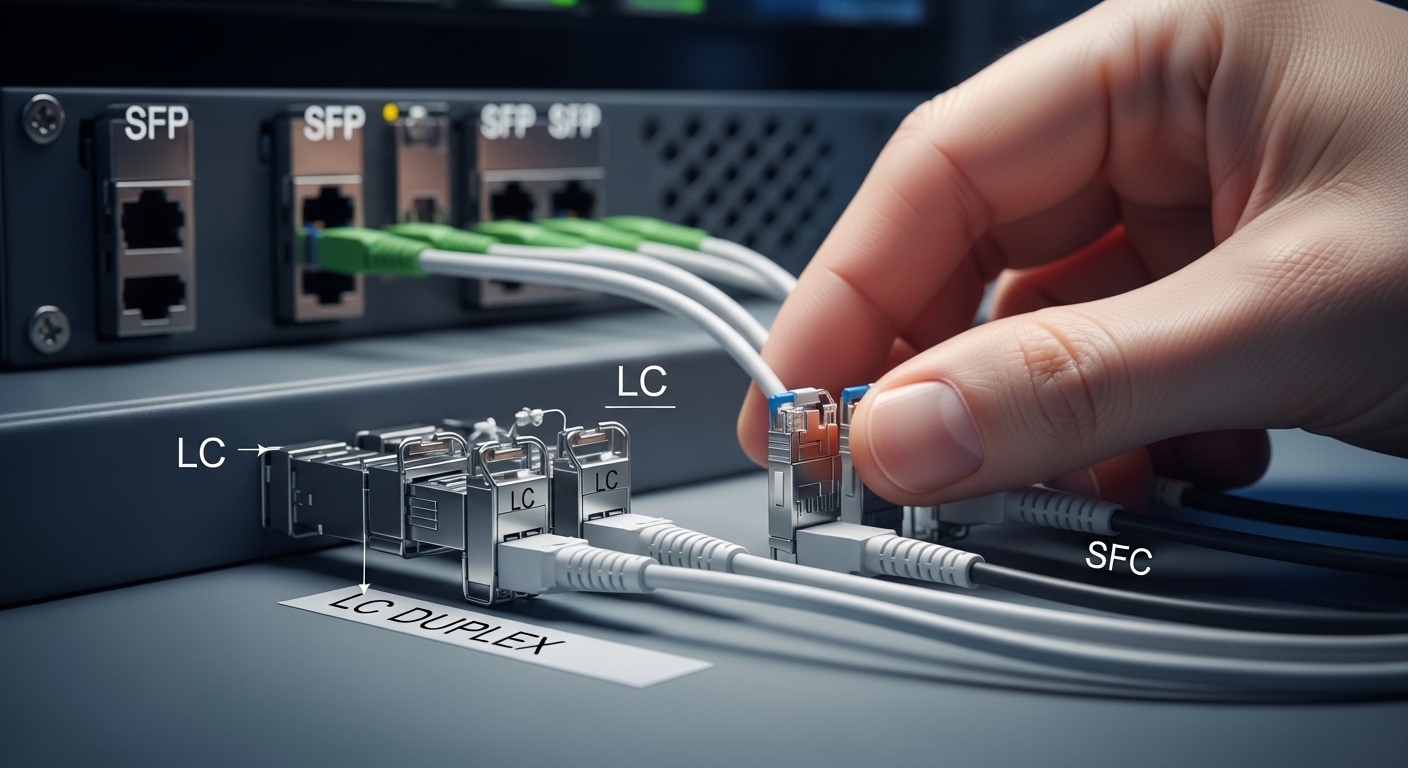
In production, machine learning performance is limited less by GPU compute and more by how quickly gradients, activations, and feature batches move between racks. Optical networking is the transport layer that makes high-bandwidth east-west traffic feasible, while also meeting strict power and noise budgets in dense data halls. Below are the eight most common applications, each with the practical details engineers must validate.
Low-latency east-west links for distributed training traffic
Distributed training (data parallelism, tensor parallelism, or pipeline parallelism) creates a constant stream of collective communication patterns: all-reduce, all-gather, and reduce-scatter. Optical links reduce serialization delay and support higher throughput per port, which helps keep GPU utilization stable. In practice, engineers target predictable link behavior under oversubscription and congestion.
Key specs to validate: Ethernet PHY type (for example, 100G/200G/400G optics), link rate (25G/50G/100G per lane), and deterministic latency expectations from the switch fabric. For fiber, confirm the transceiver’s supported fiber type (OM3/OM4/MMF vs OS2/SMF) and the vendor’s specified link budget with margin.
Best-fit scenario: A 3-tier data center leaf-spine design with 48-port top-of-rack (ToR) switches using 100G uplinks and 25G/50G downlinks for servers. If your training job saturates 80% of available east-west capacity, you want optics that sustain margin across patch cords and couplers.
Pros: Higher port density, lower per-bit latency than older copper in dense racks. Cons: Requires careful fiber hygiene and switch transceiver compatibility checks.
High-throughput parameter exchange for inference at scale
Large language model inference is dominated by data movement for batching, KV cache reads/writes, and model offload patterns. Even when inference is compute-heavy, the network must handle bursty, synchronized traffic across model replicas and service tiers. Optical networking enables higher fan-out and reduces head-of-line blocking in congested paths.
Key specs to validate: end-to-end bandwidth per service tier, supported link reach for your topology, and optical power class. For multi-tenant environments, validate that your optics support DOM (Digital Optical Monitoring) so operations can detect degradation before link flaps.
Best-fit scenario: A microservices deployment where inference requests fan out to 6 model replicas across different pods, using 25G or 100G optics depending on oversubscription. If your mean time between failures matters, DOM-based monitoring can cut mean time to repair by enabling early detection of rising receive power or temperature drift.
Pros: Supports bursty traffic and higher service fan-out. Cons: Misconfigured optics can cause intermittent CRC errors under temperature swings.
AI data ingestion pipelines from object storage to training clusters
Training throughput is often gated by how fast datasets move from storage to compute. Optical links help when you have multiple data movers, sharded dataset reads, and frequent checkpoint uploads. If your pipeline uses parallel NFS/SMB/HTTP flows or block storage replication, you need bandwidth headroom and stable link error rates.
Key specs to validate: sustained throughput under load, acceptable BER (bit error rate) targets implied by the PHY, and error counters at the switch. While IEEE Ethernet standards target extremely low error rates, real systems still depend on correct transceiver and clean fiber interfaces.
Best-fit scenario: A cluster with 512 GPUs where each node pulls dataset shards at startup and then streams mini-batches. Engineers commonly overprovision network during the first hour; optics must handle sustained utilization without thermal throttling.
Pros: Faster dataset availability reduces training wall-clock time. Cons: Storage-to-network bottlenecks can shift; you may need end-to-end profiling.
Backplane and rack-scale consolidation using pluggable optics
Optical networking in AI facilities often relies on pluggable transceivers to scale port counts without redesigning the switch. The key is matching your switch’s optics support matrix (including vendor and part number compatibility) and ensuring consistent DOM behavior across the fleet. This becomes critical when you mix OEM and third-party optics.
Example transceivers engineers commonly consider: Cisco SFP-10G-SR (10G, MMF), Finisar FTLX8571D3BCL (common 10G SR family), and FS.com SFP-10GSR-85. For higher speeds, you may use QSFP28/QSFP56 or similar families depending on your switch.
Pros: Faster upgrades, higher density, simpler spares management. Cons: Compatibility quirks and DOM differences can complicate operations.
Fiber reach engineering with link budgets for patch cords and harsh environments
AI sites frequently have non-ideal fiber paths: extra patch cord length, consolidation points, and occasional route changes. Engineers must compute link budgets that include connector loss, splice loss, and aging margins. This is not just theory; field failures often trace back to underestimated patch cord attenuation or dirty connectors.
Key specs to validate: wavelength (850 nm for SR-class MMF; 1310/1550 nm for LR/ER/ZR-class SMF), reach at a specified reference (often in meters), and optical transmit/receive power ranges. Confirm the transceiver’s supported temperature range, especially in rooms with strong HVAC gradients.
Best-fit scenario: A rack row with 30 m horizontal cabling plus 5 m patch cords on each side. If you are using an SR-class optic, ensure your total channel attenuation stays within the vendor’s specified link budget with margin for connectors and future maintenance.
Pros: Fewer surprises during installs and moves. Cons: Requires disciplined documentation and fiber testing.
Power and thermal management to keep optics stable during peak training
AI clusters can run for days, and optics are small thermal devices inside airflow-constrained racks. Optical transceivers dissipate power that adds to the switch and server thermal envelope. Stable temperature helps maintain laser bias and reduces the risk of receiver sensitivity drift.
Key specs to validate: transceiver power consumption, operating temperature range, and whether the switch enforces thermal thresholds that might downshift or disable ports. DOM can show real-time temperature and bias current, which helps correlate link errors with thermal events.
Best-fit scenario: A facility where inlet air temperature swings by 5 C during nighttime load changes. Engineers use DOM alarms and threshold tuning to catch early degradation before a training run fails mid-epoch.
Pros: Improves uptime and reduces surprise link flaps. Cons: Extra monitoring and alert tuning takes time.
Network telemetry and machine learning observability using DOM and optical metrics
Ironically, machine learning systems benefit from their own learning loops: predictive maintenance for optics. DOM telemetry provides temperature, supply voltage, transmit power, and receive power. When combined with switch counters (CRC errors, link flaps, FEC status), you can build models that predict which links will fail based on subtle drift.
Key specs to validate: DOM availability and granularity, support for standard telemetry interfaces (vendor-specific but often accessible via switch APIs), and the consistency of thresholds across optics batches. Also check whether your optics expose vendor-defined alarms that your monitoring stack can ingest.
Best-fit scenario: A fleet of 10,000 links where the mean time to failure is low but the cost of a single training interruption is high. Engineers use telemetry windows (for example, daily aggregates plus event-based retention) to train anomaly models.
Pro Tip: In many deployments, the earliest warning is not a sudden drop in receive power. Instead, engineers see a slow drift in both temperature and bias current that precedes a rise in uncorrectable errors. If your monitoring only triggers on link-down events, you will miss the drift phase and lose time during root cause analysis.
Security and isolation for multi-tenant AI workloads using optical zoning
AI platforms commonly host multiple tenants and environments (dev, staging, production). While optics are not a security boundary by themselves, fiber topology choices can enforce isolation and reduce blast radius. Dedicated fiber paths, controlled consolidation points, and change management around patching reduce accidental cross-connects that can leak traffic or break SLAs.
Key specs to validate: physical labeling discipline, patch panel governance, and operational runbooks for moves/adds/changes. Where possible, use automation for inventory and cross-connect records, and align with your data center change windows.
Best-fit scenario: A regulated environment where the AI platform must segregate tenants by risk tier. Engineers enforce strict patching workflows and maintain tested documentation for each fiber segment.
Pros: Reduced operational risk and clearer incident boundaries. Cons: Isolation increases cabling complexity and requires better inventory tools.
Optical transceiver choice: specifications that affect machine learning links
Optics selection is the practical bottleneck: the wrong module type can cause link failures, higher error rates, or thermal issues. Use the table below as a baseline for common short-reach and long-reach patterns. Always confirm compatibility with your switch vendor’s validated optics list.
| Option (typical use) | Wavelength | Reach (typical) | Data rate class | Connector / Fiber | DOM | Operating temperature |
|---|---|---|---|---|---|---|
| SFP+ SR-class (10G MMF) | 850 nm | ~300 m to ~400 m on OM3/OM4 (varies) | 10G (per lane) | LC, MMF (OM3/OM4) | Common | 0 C to 70 C (varies by vendor) |
| SFP+ LR-class (10G SMF) | 1310 nm | ~10 km (varies) | 10G | LC, SMF (OS2) | Common | -5 C to 70 C (varies by vendor) |
| QSFP28 SR-class (25G/100G aggregate) | ~850 nm | ~70 m to ~100 m on OM4 (varies) | 100G aggregate | QSFP28, MPO/LC depends on design | Common | 0 C to 70 C (varies by vendor) |
Compatibility caveat: Even if a transceiver meets optical specs, your switch may enforce strict vendor and DOM behavior checks. IEEE Ethernet PHY requirements cover electrical signaling and link behavior, but optics vendor implementation details can still differ. For standards context, see [Source: IEEE 802.3 Ethernet].
Authority references: IEEE 802.3 Ethernet standard and vendor datasheets for the specific transceiver part numbers you deploy (for example, Cisco and Finisar families).
Selection criteria checklist for machine learning optical links
Engineers typically rank the following factors when choosing optics for machine learning environments. Use this ordered checklist during procurement and pre-install validation.
- Distance and fiber type: Confirm MMF vs SMF, OM3 vs OM4, and total channel length including patch cords and couplers.
- Switch compatibility: Validate against the switch vendor’s optics support list and firmware release notes.
- Data rate and lane mapping: Match the transceiver form factor and expected lane count (for example, 4 lanes for 100G in common QSFP28 designs).
- DOM support and telemetry: Require DOM so operations can monitor temperature and optical power drift.
- Operating temperature and airflow: Ensure module temperature range fits your worst-case inlet conditions and airflow pattern.
- Vendor lock-in risk: Decide whether you will standardize on OEM optics or allow third-party modules with a compatibility test plan.
- Testing and acceptance: Plan fiber certification (end-to-end) and optical link validation before cutover.
- Spare strategy: Stock the exact part numbers needed for fast replacement during training windows.
Common mistakes and troubleshooting tips in AI optical deployments
Even experienced teams run into predictable failure modes. Below are concrete pitfalls that frequently impact machine learning clusters, along with root causes and practical fixes.
-
Mistake: Using the correct transceiver type but with the wrong fiber polarity or miswired MPO/LC mapping.
Root cause: Signal paths do not align with the receiver lanes; the link may fail to come up or flap intermittently.
Solution: Verify polarity handling per your transceiver and patch panel design; use end-to-end lane mapping documentation and re-terminate if needed. -
Mistake: Underestimating patch cord loss and connector contamination after repeated maintenance.
Root cause: Dirty connectors raise attenuation and degrade receiver margin, especially after thermal cycling.
Solution: Inspect and clean connectors with approved tools, then re-test with an optical power meter or OTDR where applicable. -
Mistake: Mixing third-party optics without validating DOM alarms and switch behavior.
Root cause: Some optics report thresholds differently or do not trigger the same alarm semantics, delaying detection.
Solution: Run a staged compatibility test: check link stability, DOM readings, and switch error counters under controlled temperature conditions. -
Mistake: Ignoring thermal airflow differences between aisles or rack sides.
Root cause: Laser bias and receiver sensitivity can drift with temperature, increasing uncorrectable errors.
Solution: Compare DOM temperature trends with switch error counters; adjust airflow management and confirm module temperature range.
Cost and ROI note for machine learning optical networking
Optics cost varies widely by speed and reach. As a practical budgeting range, many 10G SR-class SFP+ optics land in the tens to low hundreds of dollars per unit depending on OEM vs third-party channel pricing, while 100G-class optics typically cost more and can be sensitive to form factor and vendor. Over a multi-year AI deployment, the real ROI often comes from reduced training downtime, lower replacement logistics, and improved monitoring—especially when you use DOM-based telemetry for predictive maintenance.
TCO considerations: OEM optics may reduce compatibility risk but can increase unit price; third-party optics can lower acquisition cost but require a compatibility test and a stricter acceptance process. Also include the cost of fiber certification tools, cleaning supplies, and operational time for incident response. If one training run interruption costs more than the optics savings, reliability and monitoring maturity become the dominant ROI drivers.
Summary ranking: which optical application to prioritize first
Below is a quick ranking table to help you decide what to tackle first when planning optical networking for machine learning workloads. Use it as a prioritization starting point; validate with your traffic profile and topology constraints.
