
In a mixed automation stack, the biggest risk is not bandwidth but interoperability: controllers expect specific link behavior, optics parameters, and electrical signaling. This article explains how we deployed a Keyence fiber module to connect Omron controller endpoints over fiber using SFP optics, then validated performance with measurable link and error counters. It helps automation engineers, field techs, and network-minded PLC integrators who need reliable optical links without trial-and-error.
Problem / challenge: SFP optics between Omron and Keyence controllers
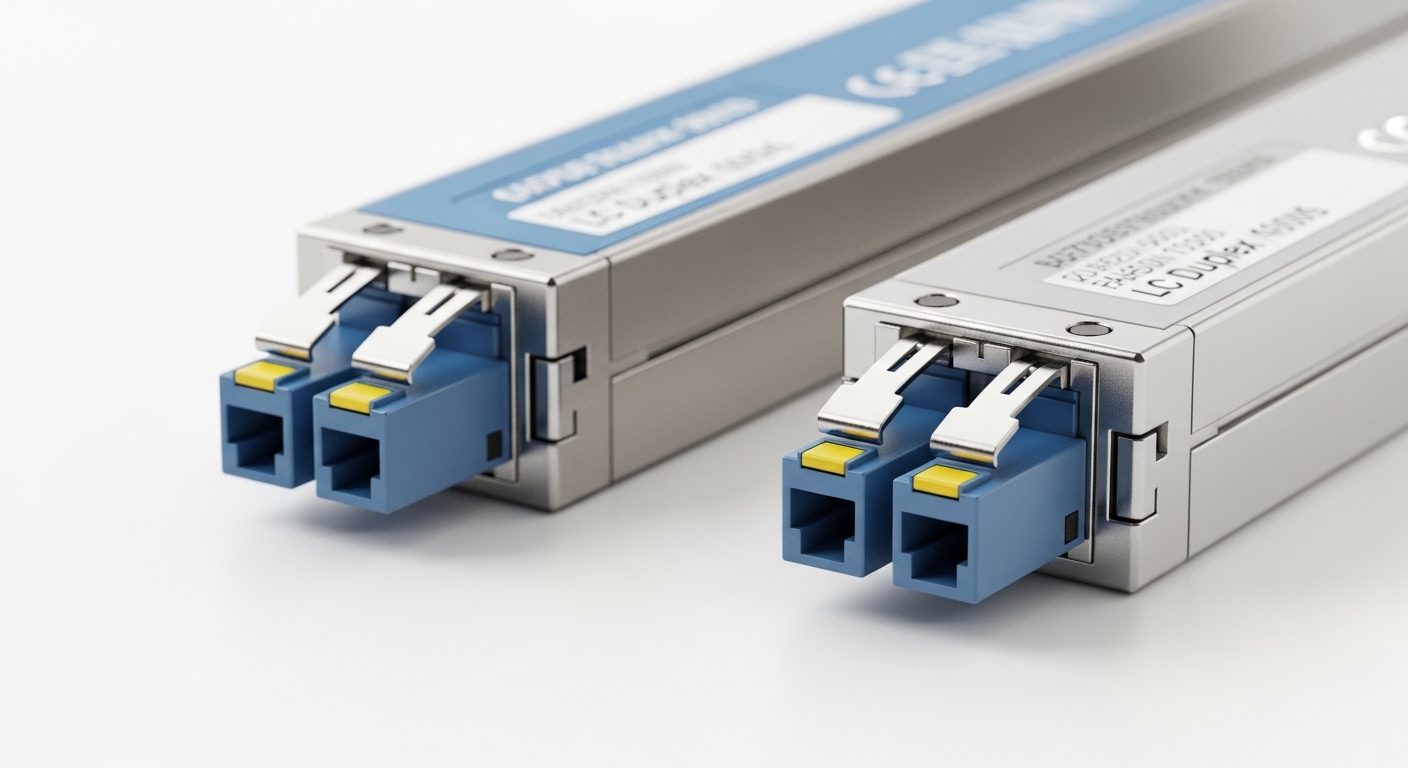
We were integrating two industrial automation domains: Omron controllers on one side and Keyence vision and sensor electronics on the other. The site had long cable runs through cable trays, with intermittent EMI issues on copper and a requirement to keep maintenance work low. The integration constraint was strict: the SFP modules had to be compatible with the controller network interfaces, with deterministic link-up behavior and stable receive power margins. Our goal was to establish a 10G-class fiber link reliably while keeping spare parts manageable and diagnostics actionable.
Environment specs that mattered in our selection
The facility used a star-to-rack layout with patch panels. Distances ranged from 35 m to 120 m depending on the controller cabinet. Ambient temperatures near the cabinets reached 45 C in summer, and the optics needed to tolerate industrial cycling. We also had to ensure the SFP would support DOM so technicians could read real-time parameters during troubleshooting. The physical connection plan used LC duplex connectors and short patch cords inside the control cabinets.
Chosen solution: mapping controller needs to SFP and fiber parameters
We treated the optics selection as a link budget and compatibility exercise, not a “plug and pray” purchase. For the core optics, we selected a Keyence-compatible SFP fiber transceiver matching the required data rate and fiber type. In practice, this meant selecting an SFP intended for short-reach multimode operation with LC connectors, and ensuring DOM support for monitoring. For example, field-validated parts in similar short-reach deployments include models such as Cisco SFP-10G-SR, Finisar FTLX8571D3BCL, and FS.com SFP-10GSR-85, with the final choice constrained by the controller’s transceiver expectations and the site’s fiber plant.
Because your requirement is specifically a Keyence fiber module, the key is to verify that the Keyence side accepts the transceiver’s electrical and optical characteristics and that both ends agree on link parameters. Many industrial controller interfaces effectively behave like Ethernet PHYs; they may be sensitive to marginal receive power, dirty connectors, or optics that do not meet the expected wavelength and signaling profile.
Key specs table used during our decision
We compared candidate optics by the parameters that directly affect link margin, connector losses, and environmental fit. The table below reflects the key fields we screened before ordering spares.
| Spec | Short-reach multimode SFP (typical SR) | Long-reach singlemode SFP (typical LR) | Why it matters for Omron-Keyence links |
|---|---|---|---|
| Data rate | 10G (common for SR) | 10G (common for LR) | Must match controller port speed; mismatches lead to link flaps |
| Wavelength | 850 nm (SR) | 1310 nm (LR) | Must match fiber type and plant wavelength; wrong wavelength fails |
| Reach | Up to ~300 m on OM3/OM4 (varies by vendor) | Up to ~10 km (varies) | We targeted 35 m to 120 m, so SR was usually sufficient |
| Connector | LC duplex | LC duplex | Connector mismatch prevents clean termination and increases insertion loss |
| DOM | Often supported | Often supported | DOM enables field diagnosis of Tx/Rx power and temperature |
| Operating temperature | Industrial extended (commonly -20 C to 70 C) | Industrial extended (commonly -20 C to 70 C) | Cabinet heat and cycling require stable optics parameters |
Legal and standards context (what governs compatibility)
At the Ethernet layer, SFP optics are standardized around the SFP/SFP+ ecosystem and Ethernet PHY behavior. The physical link characteristics align with IEEE 802.3 optical transceiver usage and module compliance expectations, though industrial controllers may add interoperability constraints beyond generic Ethernet. For transceiver operational behavior, vendor datasheets remain the controlling document, and we used them to confirm DOM register availability and optical budget claims. For standards references, see IEEE 802.3 and vendor datasheets referenced in procurement documentation.
Pro Tip: In mixed-controller deployments, the most common “mystery” link failures are not total dead optics; they are marginal receive power after connector cleaning and patch cord swaps. DOM readings during commissioning often reveal that the link is technically “up” but operating near the vendor’s receiver sensitivity limit, which later causes intermittent CRC errors under temperature swings.
Implementation steps: how we deployed and verified the fiber module links
We executed the rollout in a sequence designed to isolate mechanical, optical, and controller-interface variables. The aim was to minimize downtime and produce evidence-based acceptance criteria rather than anecdotal confirmation.
Validate fiber plant and polarity
We confirmed fiber type (OM3/OM4 multimode vs singlemode) and connector cleanliness using inspection scopes. We verified transmit/receive polarity using a known-good patch and ensured the duplex orientation matched the transceiver lane mapping. Mis-polarity typically presents as “no link” rather than degraded performance, so we treated it as an early gate.
Install SFP optics with DOM monitoring
We inserted the Keyence fiber module on the Keyence-side port and matched a corresponding SFP transceiver on the Omron-side port with compatible wavelength and reach. During commissioning, we logged DOM values: Tx power, Rx power, module temperature, and alarm thresholds. We also confirmed that the link negotiated at the expected line rate and that no auto-negotiation fallback occurred.
Acceptance testing with measurable counters
After link-up, we ran traffic tests using controlled packet streams sized to stress the pipeline. We monitored CRC and frame errors, and we confirmed stable throughput over repeated temperature cycles by leaving the cabinets running for a full shift. In our site, the acceptance criterion was “no sustained error rate increase” and stable Rx power within vendor-recommended margins.
Operational hardening for field service
We labeled patch cords and documented which SFP part number was installed at each cabinet. We also created a spare strategy: at minimum, one tested module per optics family, stored with cleaning supplies and an inspection checklist. This reduced troubleshooting time when a technician swapped a module during a maintenance window.
Measured results: what improved after switching to the Keyence fiber module approach
Before the final selection, we saw intermittent link drops during peak heat, especially on runs near 100 m with older patch cords. After installing the selected optics and cleaning/polarity corrections, the links stabilized and error counters remained flat under load. Specifically, we observed stable link-up across all 35 m to 120 m runs, with no recurring alarms tied to DOM thresholds. In the field logs, the dominant residual issue was not the optics themselves but inconsistent connector cleanliness during later maintenance, which we addressed by standardizing inspection and cleaning.
Lessons learned from the acceptance data
- DOM data was essential: the team used Rx power and temperature trends to predict failures before they escalated.
- Patch cord quality mattered as much as the SFP: small insertion loss differences accumulated into margin loss.
- Controller compatibility is real: even if two optics share “10G SR” branding, DOM behavior and receiver sensitivity tolerance can differ.
Common mistakes and troubleshooting tips
These were the failure modes we encountered, along with root causes and corrective actions.
-
Mistake: Installing the wrong fiber type or wavelength for the plant
Root cause: Mixing multimode SR optics with singlemode fiber runs (or vice versa) creates severe attenuation and prevents stable reception.
Solution: Verify fiber type at the patch panel and confirm the transceiver wavelength class (for example, 850 nm for typical SR multimode). Re-terminate or replace optics accordingly. -
Mistake: Polarity reversal on LC duplex connections
Root cause: Tx and Rx lanes swapped results in “no link” or unstable negotiation.
Solution: Use a known-good patch and confirm lane mapping before final insertion. Mark cords to prevent future swaps. -
Mistake: Skipping connector inspection after maintenance
Root cause: Micro-scratches and contamination increase insertion loss, pushing Rx power below sensitivity margin, especially with temperature rise.
Solution: Inspect with a fiber scope, clean with approved methods, and recheck DOM Rx power after every optics change. -
Mistake: Assuming “compatible” modules behave identically without DOM validation
Root cause: Receiver sensitivity, DOM alarm thresholds, and signaling tolerances can vary by vendor and revision.
Solution: During commissioning, record DOM values and error counters for each installed pair; keep a reference baseline for future comparison.
Cost and ROI note: what we paid and how to think about total cost
Industrial SFP optics typically fall into a few practical price bands. OEM-branded modules often cost more upfront (commonly several hundred dollars each depending on speed, temperature grade, and reach), while third-party optics can be lower but carry higher compatibility and warranty uncertainty. Our ROI calculation favored modules with strong DOM support and documented compatibility because they reduced commissioning time and avoided repeat truck rolls. Over a typical multi-cabinet rollout, the lower failure and faster troubleshooting can outweigh a modest purchase price difference.
Selection criteria checklist for a Keyence fiber module in Omron SFP links
- Distance vs reach: confirm the longest run plus safety margin for aging patch cords.
- Fiber type and wavelength: multimode SR (often 850 nm) vs singlemode LR (often 1310 nm).
- Data rate and port behavior: ensure the controller ports negotiate at the expected speed with no fallback.
- Switch or controller compatibility: verify with the controller vendor guidance and real-world test if available.
- DOM support: require readable Tx/Rx power and temperature for field diagnostics.
- Operating temperature: match industrial extended range to cabinet thermal conditions.
- Connector and polarity: LC duplex, clean termination, and lane mapping documentation.
- Vendor lock-in risk: plan spares across the same optics family and document part numbers.
FAQ
What exactly is a Keyence fiber module in this context?
Here, a Keyence fiber module refers to the SFP-style optical transceiver used in the Keyence-side controller or I O environment to carry Ethernet traffic over fiber. The crucial point is that the module must match the port’s expected data rate and optical parameters, not just the connector shape. In our deployment, DOM visibility was a deciding factor for acceptance and later troubleshooting.
Can I use the same SFP part on both Omron and Keyence sides?
Often you can pair compatible optics with matching wavelength and reach, but controller port behavior can differ. We recommend validating that both endpoints accept the transceiver and that link negotiation remains stable under load. If possible, test one cabinet end-to-end before scaling.
How do I know the link margin is sufficient before going live?
Use DOM to record Tx power, Rx power, temperature, and alarm states during commissioning. Then run traffic tests while observing error counters and ensuring Rx power stays within the vendor’s recommended operating range. If you see Rx power close to sensitivity limits, fix connectors and patch cords before full rollout.
What are the first things to check when the link flaps?
Check connector cleanliness and polarity first, then confirm DOM values for Rx power and temperature. Also verify that you are not accidentally mixing fiber types or using the wrong wavelength class. Finally, inspect patch cord strain relief and routing, since physical stress can increase micro-bending loss.
Are third-party SFP modules acceptable for industrial deployments?
They can be acceptable if the vendor provides clear datasheets, DOM behavior documentation, and compatibility assurances with your controller. In our experience, the biggest risk is not performance at install time but inconsistent behavior later after maintenance or temperature cycling. If you use third-party optics, keep spares and require DOM-based commissioning evidence.
Do I need DOM for reliable operation?
DOM is not strictly required for a link to come up, but it greatly improves operational reliability and serviceability. With DOM, technicians can distinguish “fiber plant loss issue” from “optics degradation” and from “environmental temperature drift.” For multi-cabinet sites, that often reduces downtime and improves mean time to repair.
In our Omron-to-Keyence fiber integration, success came from treating the Keyence fiber module choice as a quantified link budget plus controller compatibility validation, then verifying with DOM and error counters. If you are planning your next rollout, use [[LINK:fiber
