
Hydroelectric plants increasingly rely on fiber links to connect turbine control, spillway monitoring, and substation telemetry. When these links ride through harsh sites, the wrong hydroelectric fiber SFP can trigger intermittent alarms, protection relay delays, or unexpected link flaps. This article helps control engineers and field network technicians select, deploy, and troubleshoot SFP-based fiber transceivers for dam control systems.
Why dam control networks stress SFP optics differently
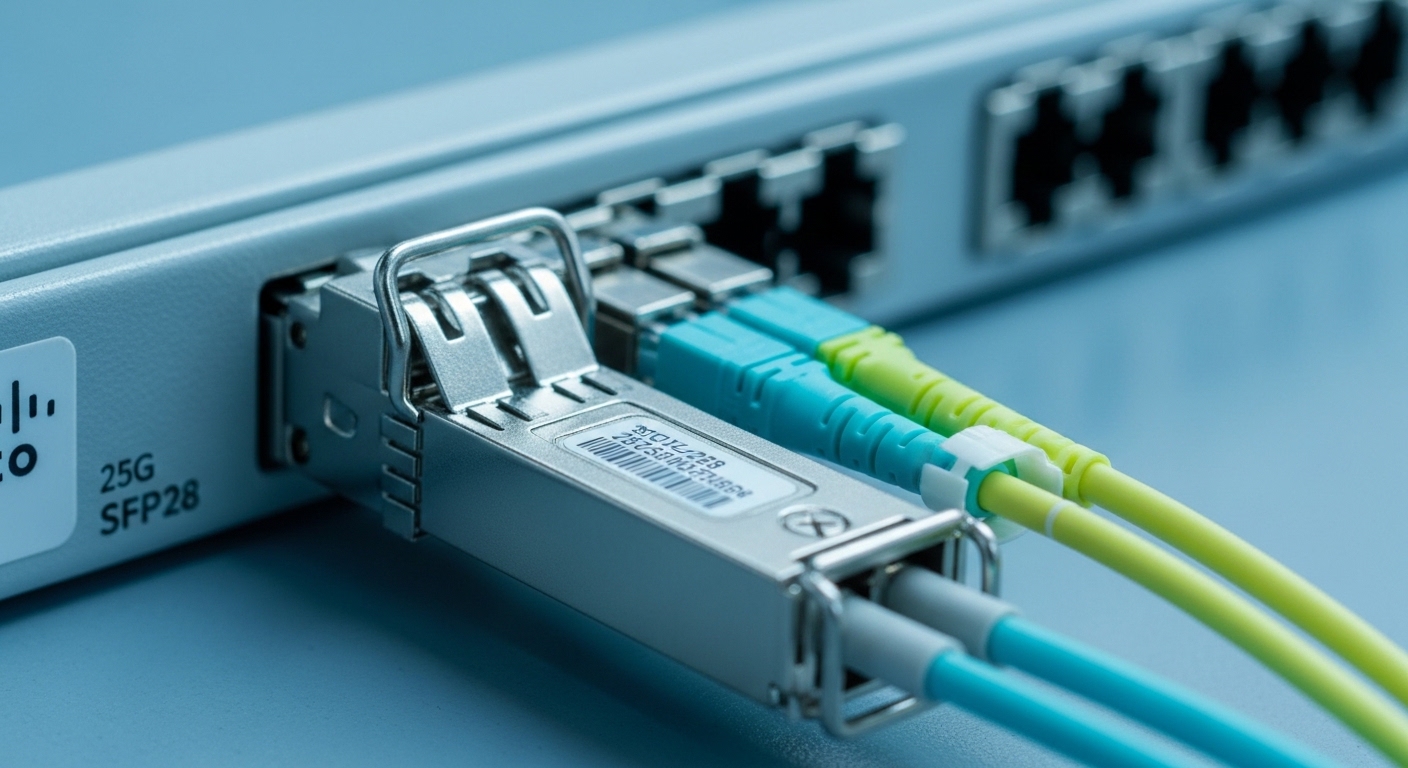
Dam control environments combine high electrical noise, vibration, temperature swings, and long cable runs across outdoor yards. Even if the optical budget is technically sufficient, installed performance can degrade due to connector contamination, micro-bending in conduits, and power-supply transients during generator load changes. In practice, control traffic often needs deterministic behavior; a link that renegotiates or drops can cascade into telemetry gaps and stale control states.
From a standards perspective, most modern dam networks use Ethernet over fiber in line with IEEE 802.3 physical-layer behaviors (e.g., 10GBASE-SR, 1000BASE-SX). The SFP must match the switch or media converter’s expected signaling and optics class, and it must tolerate the site’s thermal profile. For field reliability, engineers also look for Digital Optical Monitoring (DOM) support so they can trend received power and laser bias current before failure.
Key SFP choices for hydroelectric fiber runs
For dam control systems, the two biggest selection axes are optical type (multimode vs single-mode) and data rate (1G, 10G, or higher). Multimode short-reach optics can reduce cost and simplify patching, but they are sensitive to legacy cabling quality and modal bandwidth limitations. Single-mode optics generally cover longer distances with fewer constraints, though splice and connector workmanship becomes even more critical.
Typical module families used in control cabinets
Common deployments use SFP or SFP+ modules such as Cisco SFP-10G-SR (multimode) for short internal runs, and Finisar or FS.com single-mode 10G SFPs for longer spans. For example, Finisar FTLX8571D3BCL is a widely referenced 10G single-mode option in many enterprise and industrial builds, while FS.com SFP-10GSR-85 targets 10G multimode reach. Exact part numbers and supported DOM features vary by vendor and switch platform.
Technical specifications comparison for dam control planning
Use the table below as a planning baseline. Your exact budget depends on fiber type, connector/splice losses, and safety margin policies.
| Parameter | 10GBASE-SR (Multimode) | 10GBASE-LR (Single-mode) | 1GBASE-SX (Multimode) |
|---|---|---|---|
| Wavelength | 850 nm | 1310 nm | 850 nm |
| Nominal reach | Up to 300 m (varies by cable) | Up to 10 km | Up to 550 m (OM2 typical) |
| Connector | LC | LC | LC |
| Data rate | 10.3125 Gbps | 10.3125 Gbps | 1.25 Gbps |
| DOM support | Often available (vendor-dependent) | Often available (vendor-dependent) | Sometimes available |
| Typical operating temp | 0 to 70 C (common), industrial options lower/higher exist | -40 to 85 C (industrial options common) | -40 to 85 C (industrial options common) |
| Best fit in dam sites | Control cabinets and indoor runs | Cross-valley spans and outdoor yards | Legacy telemetry backbones |
Selection checklist: choosing hydroelectric fiber SFPs that survive the field
When you are selecting a hydroelectric fiber SFP for dam control systems, treat it as a reliability component, not just a connectivity accessory. Start with physics (distance and optics), then move to operational constraints (temperature, monitoring, and compatibility).
- Distance and fiber type: Measure actual run lengths and confirm OM grade (OM2/OM3/OM4) or single-mode fiber specs. Include patch cords, jumpers, and any splitters.
- Optical budget with margin: Account for connector loss, splice loss, and aging margin. A practical field target is to keep engineered received power well above the vendor minimum, leaving headroom for contamination.
- Switch/SFP compatibility: Verify the host switch model’s compatibility list. Some platforms enforce SFP ID checks; others rely on standard compliance with vendor-specific quirks.
- DOM and alarm behavior: Prefer modules that expose transmit power, received power, and temperature via DOM. Confirm the switch reads DOM correctly and that alarms do not flood monitoring systems.
- Operating temperature and derating: Dam sites can swing widely. Choose industrial temperature SFPs when cabinets are not climate-controlled; validate that the module supports the required range.
- Connector cleanliness plan: LC endfaces are easily contaminated. Ensure you have a field-cleaning workflow (inspection scope, lint-free wipes, and approved alcohol) and that spares are packaged with caps.
- Vendor lock-in and spares strategy: OEM modules can reduce compatibility risk but raise replacement cost. Third-party modules may be cheaper, but confirm DOM functionality and warranty terms.
- Regulatory and safety constraints: For control systems, document link behavior during power cycling and maintenance windows. Ensure change control aligns with your plant’s commissioning procedures.
Pro Tip: In dam control cabinets, the most common SFP “optical failures” are not laser faults but connector contamination that drives received power below threshold. If your switch supports DOM, trend received power weekly; a slow drift toward the minimum often predicts a future link flap long before alarms fire.
Real-world deployment scenario: leaf-spine telemetry across a dam
Consider a 3-tier architecture at a mid-size hydroelectric plant: two redundant leaf switches in each turbine control building uplink to a pair of aggregation switches, which then connect to a central monitoring VLAN. In one deployment, engineers used 10GBASE-SR for short cabinet-to-cabinet links (about 120 m per run using OM4 patching) and 10GBASE-LR for outdoor spans between buildings (about 4.8 km across buried single-mode fiber). They enabled DOM polling every minute and set threshold alarms for received power and module temperature.
During commissioning, they also validated behavior under load changes. When generators shifted from low to high output, cabinet power supplies experienced brief dips; the network remained stable because the modules were rated for the enclosure temperature and the switch PSU design prevented module brownout. Field technicians used a handheld optical power meter to verify link margin at acceptance testing, then scheduled monthly connector inspections with an inspection scope. This reduced “mystery” telemetry gaps that previously occurred after maintenance work on patch panels.
Common mistakes and troubleshooting in hydroelectric fiber SFP links
Even experienced teams can lose hours when symptoms look like “bad optics.” Below are frequent failure modes seen in industrial fiber deployments, with root cause and corrective action.
Link flaps after maintenance, not after installation
Root cause: Connector endfaces were touched or exposed to airborne dust during patching. This can raise insertion loss enough to cross the receiver threshold intermittently. Solution: Inspect with a fiber scope, clean both mating ends, and re-seat connectors with protective caps afterward. If you have DOM, compare received power behavior before and after the maintenance window.
Works at first, then degrades over weeks
Root cause: Cable routing introduces micro-bending or strain relief failures as outdoor temperatures shift. Some conduits also settle, increasing stress on patch cords and stressing bulkhead adapters. Solution: Perform a physical layer audit: check bend radius compliance, add strain relief, and verify bulkhead adapter condition. Re-measure optical power after stabilization to confirm margin remains healthy.
SFP is “compatible” but DOM alarms are wrong or missing
Root cause: The module uses a DOM implementation the switch does not interpret correctly, or the platform expects a specific EEPROM layout. Engineers then either miss early warnings or receive misleading alarms. Solution: Validate DOM readouts in a lab or acceptance rack with the exact switch model. Confirm alarm thresholds and confirm that the monitoring system maps DOM fields correctly.
Temperature-induced receiver margin loss
Root cause: The SFP is not rated for the enclosure temperature profile, causing output power or sensitivity to drift under thermal stress. Solution: Use industrial-rated modules, improve cabinet ventilation, and confirm module temperature via DOM. If you must use standard temperature parts, implement strict derating and verify with thermal tests.
Cost and ROI: balancing OEM reliability with lifecycle expenses
In dam control systems, transceivers are low-cost per port but high-impact during outages. Typical street pricing varies widely by vendor, data rate, and temperature grade. As a realistic planning range, many 1G SFPs can cost roughly USD 20 to 80 each, while 10G SFPs often land around USD 80 to 250 depending on reach and DOM support; industrial temperature models can be higher. OEM modules may reduce compatibility risk and shorten troubleshooting time, which is a direct operational cost saving.
From a TCO perspective, include spares logistics, fiber cleaning consumables, and labor for diagnostics. Third-party optics can be cost-effective if DOM works and the host switch supports them reliably, but warranty terms matter: a failed module during peak season can cost more than the unit price. A practical ROI approach is to standardize on two or three approved part numbers per switch family, stock spares sized to your MTTR and maintenance schedule, and enforce connector cleanliness discipline.
FAQ
What does “hydroelectric fiber SFP” mean in practice?
It generally refers to using SFP fiber transceivers in hydroelectric plant networks, especially dam control and telemetry links. The key is not a special brand name, but the combination of industrial environment constraints, correct optics type, and reliable monitoring behavior.
Should I use multimode or single-mode for dam control links?
Use multimode for shorter indoor or controlled runs where OM-grade cabling is known and maintained. Use single-mode when you need long outdoor spans, higher link stability across distance, or you want to avoid multimode bandwidth surprises.
How do I verify optical budget before ordering SFP modules?
Measure run lengths and count connectors and splices, then apply expected loss values from your cabling records. Validate with acceptance testing using an optical power meter and confirm margin relative to the vendor’s minimum received power for the specific transceiver.
Do I need DOM support for dam control systems?
DOM is strongly recommended because it enables trend-based maintenance. Received power drift and temperature rise can indicate contamination or thermal issues before a full link failure, which is critical for control networks with strict operational windows.
Are third-party hydroelectric fiber SFP modules safe to deploy?
They can be safe if they are explicitly validated with your switch model and if DOM functionality is confirmed. The safest approach is to test in an acceptance rack, verify alarm behavior, and keep a clear rollback plan.
What is the fastest way to troubleshoot a down link?
Start with physical checks: connector seating, cleanliness, and fiber continuity. Then check switch port diagnostics, DOM readings, and received optical power; if received power is near threshold, cleaning and re-verification usually resolve the issue.
Field-ready dam networks depend on disciplined optics selection, verification, and monitoring—especially when using hydroelectric fiber SFP modules in control cabinets. Next, review your plant’s fiber run documentation and build an approved transceiver list per switch model using the checklist above.
Author bio: I am a network reliability engineer who has deployed fiber transceivers in industrial control environments and validated optical budgets with in-field measurements. I write from hands-on commissioning experience, focusing on compatibility, DOM monitoring, and practical failure prevention.
